Quick answer
Homeowners policies often cover sudden, accidental leaks that start indoors, such as a burst supply line or a failed water heater. They usually exclude flooding from outside, slow leaks that went on for months, and sewer backup unless you added that coverage. Flood damage normally needs a separate flood policy. Your own policy wording decides, so read it and ask your agent.
What this guide can and cannot tell you
We clean up and dry houses. We do not sell insurance, and we cannot tell you whether a claim will be paid. Every policy has its own wording, endorsements and exclusions, and two neighbors with the same carrier can hold different coverage. What follows is the general pattern we see on water jobs, meant to help you read your own policy and ask your agent sharper questions. It is not legal advice.
Burst hoses, failed tanks and other sudden leaks
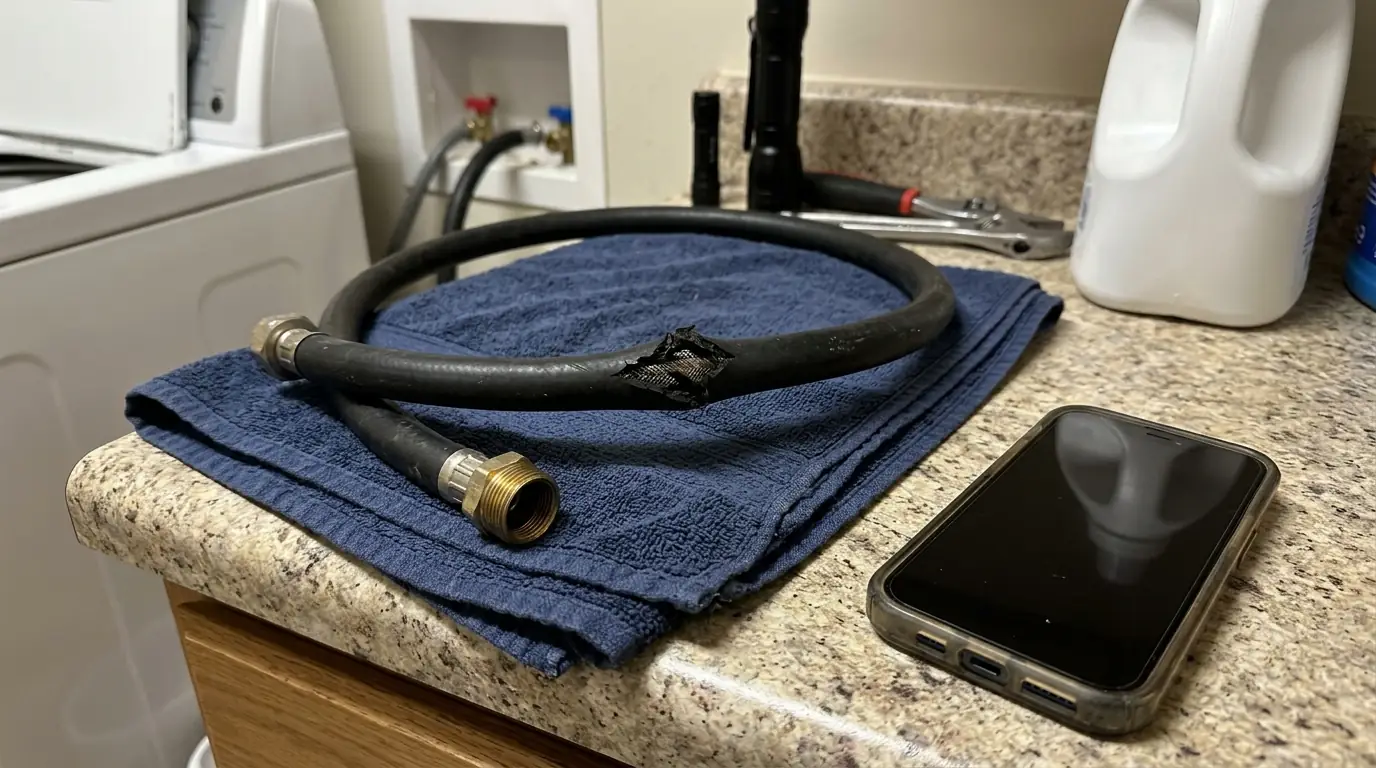
Most homeowners policies are built around sudden and accidental damage. A braided supply hose that splits, a washing machine hose that bursts, a water heater tank that fails or an AC drain line that overflows usually falls into that group. The resulting damage to floors, walls and belongings is often covered, minus your deductible. A burst pipe or failed supply line is the textbook example.
The part that failed is a different matter. Many policies pay to tear out and replace the drywall or flooring needed to reach a leak, but not to fix the leaking pipe or replace the worn-out water heater itself. That repair is often treated as maintenance. Look for language about tearing out and replacing to reach a system, and ask your agent how it applies.
Slow leaks, wear and mold
Water that seeped for weeks or months is where many claims run into trouble. Policies commonly exclude repeated or continuous seepage, deterioration and wear and tear. A shower pan leaking behind the tile for a year, or a slow drip that rotted a sink cabinet floor, often lands on the homeowner side of that line.
Mold coverage is often limited. Some policies pay for mold only when it results from a covered water loss, and many cap the amount. That is one reason to report a sudden leak right away and start drying quickly. The longer a covered leak sits, the harder it becomes to separate its damage from what grew later.
Flood is a separate policy
Standard homeowners policies exclude flood, meaning surface water that rises and comes in from outside: a creek over its banks, a street that fills in a downpour, or storm surge from the bay. Flood coverage is sold separately, through the National Flood Insurance Program or private flood carriers, often through the same agent. It has its own deductible, and it typically splits building coverage from contents coverage.
Flood policies usually carry a waiting period before they take effect, so buying one when a storm is already in the Gulf is often too late. Lenders require flood coverage on some properties, while many homes outside mapped high-risk zones go without it. About 19,000 houses and structures in Galveston County were damaged by Harvey. After a storm on that scale, the first thing to sort out on any claim is whether water rose from outside or came in some other way. Our flood cleanup page covers the work itself.
Need the photos and readings your adjuster will ask for? Call us.
Call (832) 737-0315Storms, wind-driven rain and sewer backup
Hurricanes blur the lines. Rain that enters through a roof opening made by wind is often handled differently from water that rose from the ground. Along the Texas coast, wind and hail are sometimes carried on a separate windstorm policy, for example through the Texas Windstorm Insurance Association. Coastal policies also tend to use a separate, percentage-based deductible for wind or named storms, so one storm can mean more than one claim and more than one deductible.
Sewer and drain backup is usually excluded from a base homeowners policy. Many carriers sell a water backup endorsement that adds it back, often with a lower limit. If you have never looked for that line on your declarations page, check it before a sewage backup makes the question urgent.
What your policy expects from you after a leak
Policies put duties on the homeowner after a loss, and reading yours now saves arguments later. The usual list looks like this.
- Report the loss promptly and write down the claim number.
- Take reasonable steps to stop more damage, such as shutting off water and starting drying.
- Photograph the damage and keep the failed part if there is one.
- Keep receipts for emergency work, supplies and any hotel stay.
- List damaged belongings, and keep removed items or clear photos of them until the adjuster says otherwise.
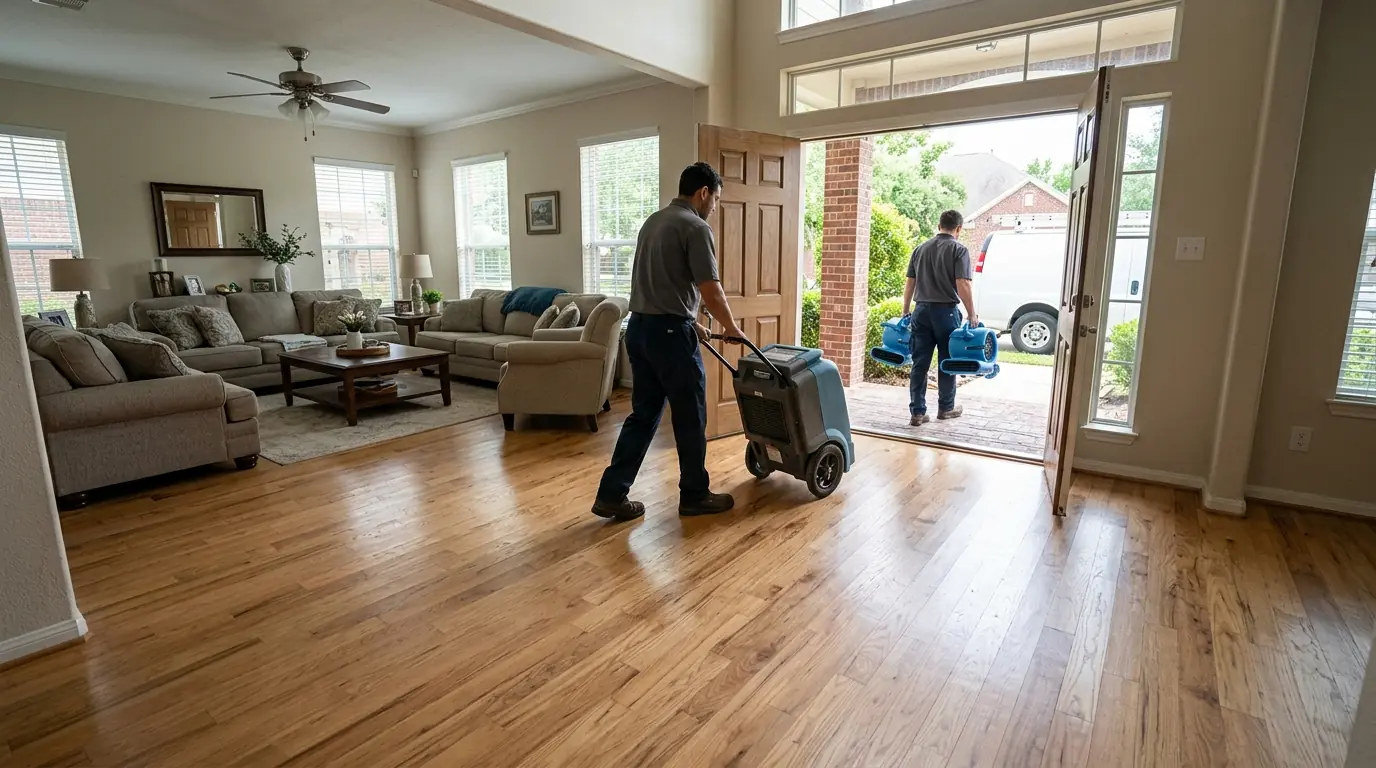
Starting emergency water extraction before the adjuster visits is normally expected. Waiting for permission while water sits can make the damage worse, and a carrier may question damage that spread after the leak was found.
How good documentation helps a claim along
Adjusters work from evidence: photos, moisture readings, a scope of work and a clear record of what was removed and why. On water jobs we photograph the rooms before and during the work, log readings at marked spots on each visit, and write an itemized scope. Our insurance claim help puts that file in your hands to send to your carrier. The readings from moisture mapping show where the water went, even after the walls are dry.
We do not negotiate claims or make coverage decisions. If a claim is denied or underpaid and you disagree, ask the carrier to explain the decision in writing and point to the policy language it relied on. The Texas Department of Insurance publishes consumer guides on homeowners and flood coverage and takes complaints. For a dispute over money or policy terms, talk with your agent or an attorney.
Insurance questions after a water leak
It depends on your carrier, Texas rules and your claim history, and we cannot predict it. Your agent can explain how your company treats water claims. Most policies require prompt notice of a loss, so do not sit on a large leak while you decide.
Sometimes, and often only up to a set limit. Mold that grows from a covered sudden leak is more likely to be included than mold from a long-running drip or high humidity. Look for a mold or fungi section in your policy and ask your agent what it means.
Policies vary. Many cover the water damage from a sudden slab leak, and some cover breaking into the slab to reach the pipe, while the pipe repair itself may be excluded. Read the water and plumbing sections of your policy and confirm with your agent before work starts.
That is a decision for you and your agent. Homes outside mapped high-risk zones do flood, and a standard homeowners policy will not pay for rising water. Ask what a flood policy would cost, what it covers and how long it takes to start.
A regular deductible is usually a flat amount. Many coastal policies use a separate deductible for wind or named storms, often figured as a percentage of the dwelling coverage, which can be much larger. Your declarations page lists both.
