Updated October 2026
Quick answer
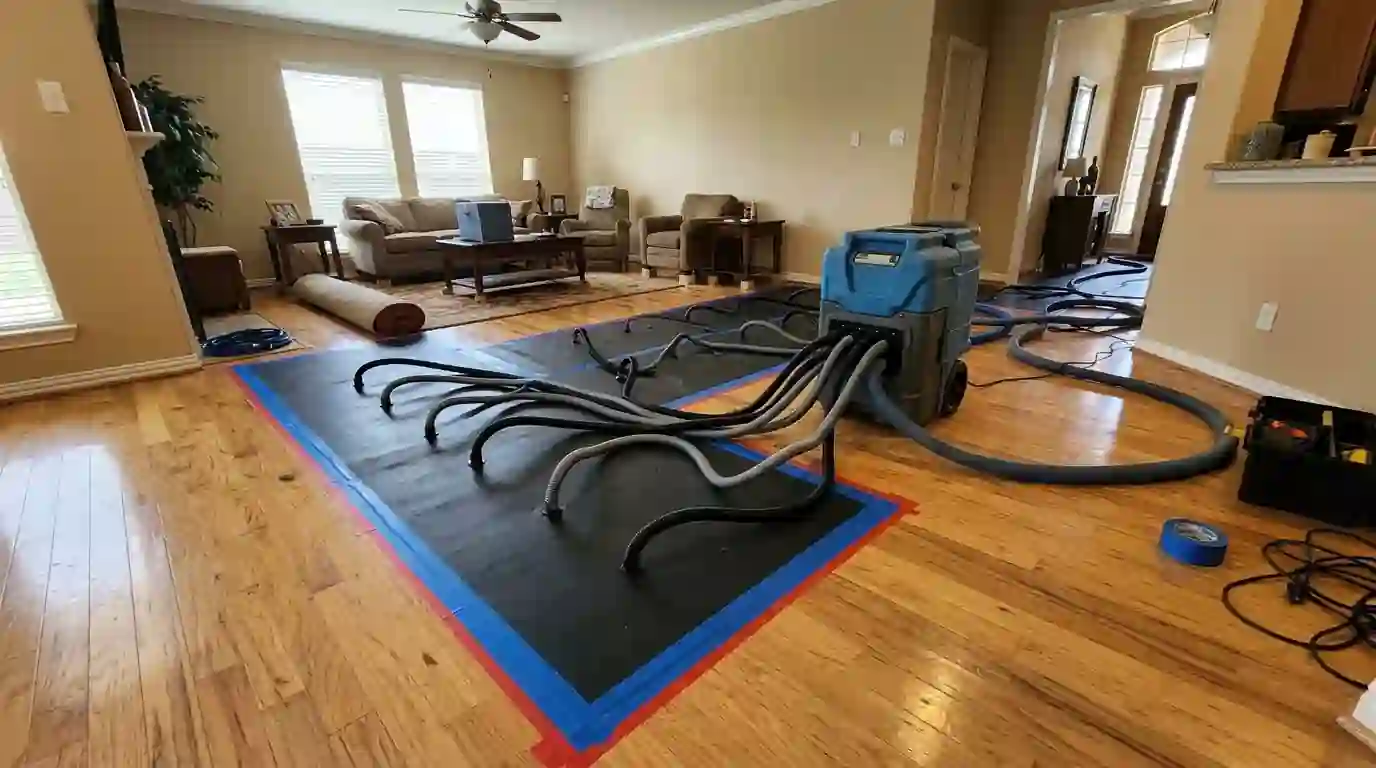
Wet hardwood in a League City home is dried with suction mats on the boards and dehumidifiers in the room until the wet boards match the moisture content of dry boards elsewhere in the house. Sanding waits until then, because a cupped floor sanded early crowns once it dries.
Why wood floors need slow, measured drying
Wood takes water into its cells, mostly from the underside, and swells across the width of each board. Dry it too fast from the top and the surface shrinks while the bottom stays swollen, which can crack the finish and split boards. The goal is even, steady drying.
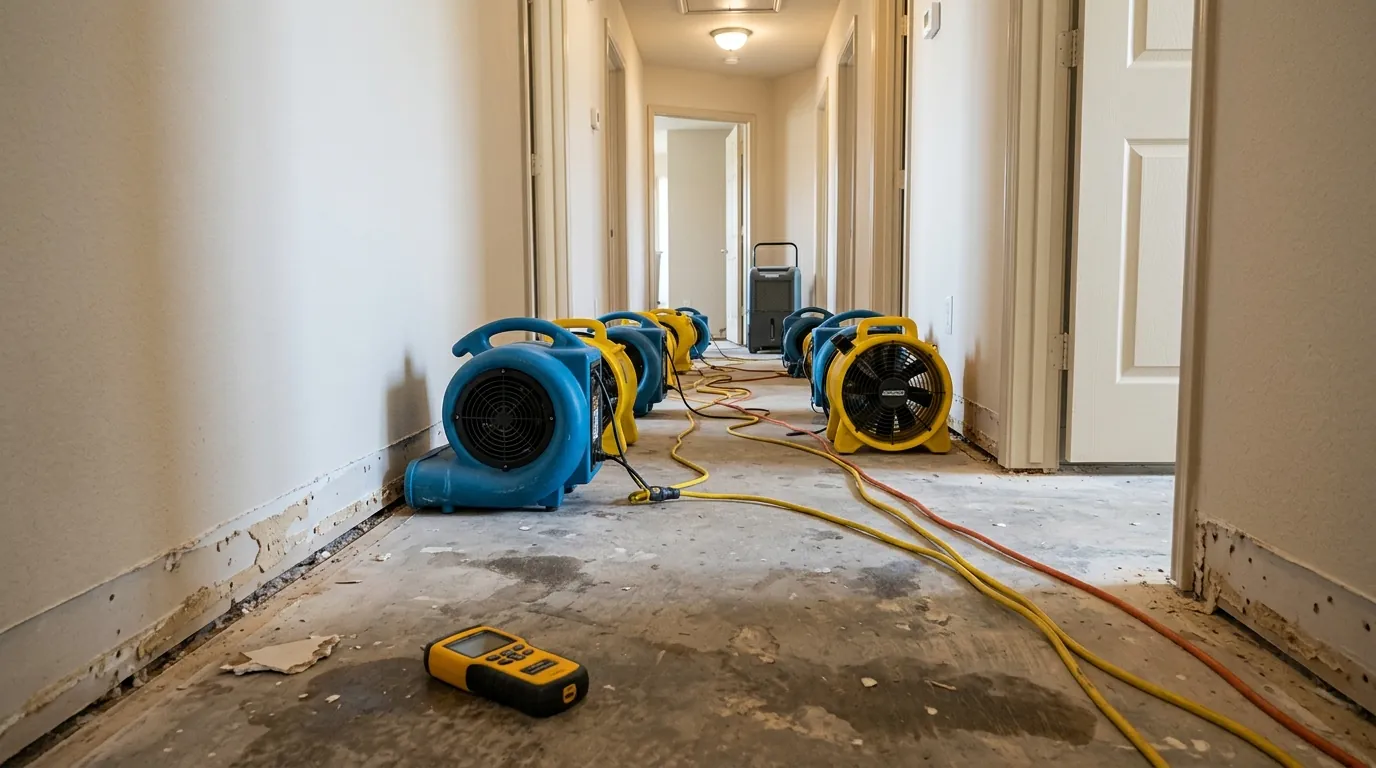
We use floor drying mats that seal to the boards and draw moisture up through the seams under suction, while dehumidifiers built by companies like Dri-Eaz and Phoenix hold the room air dry. Wood moisture meters such as Delmhorst and Protimeter models track each board against dry boards in the same house. When water also reached the walls, the floor becomes part of a larger structural drying job.
Cupped hardwood
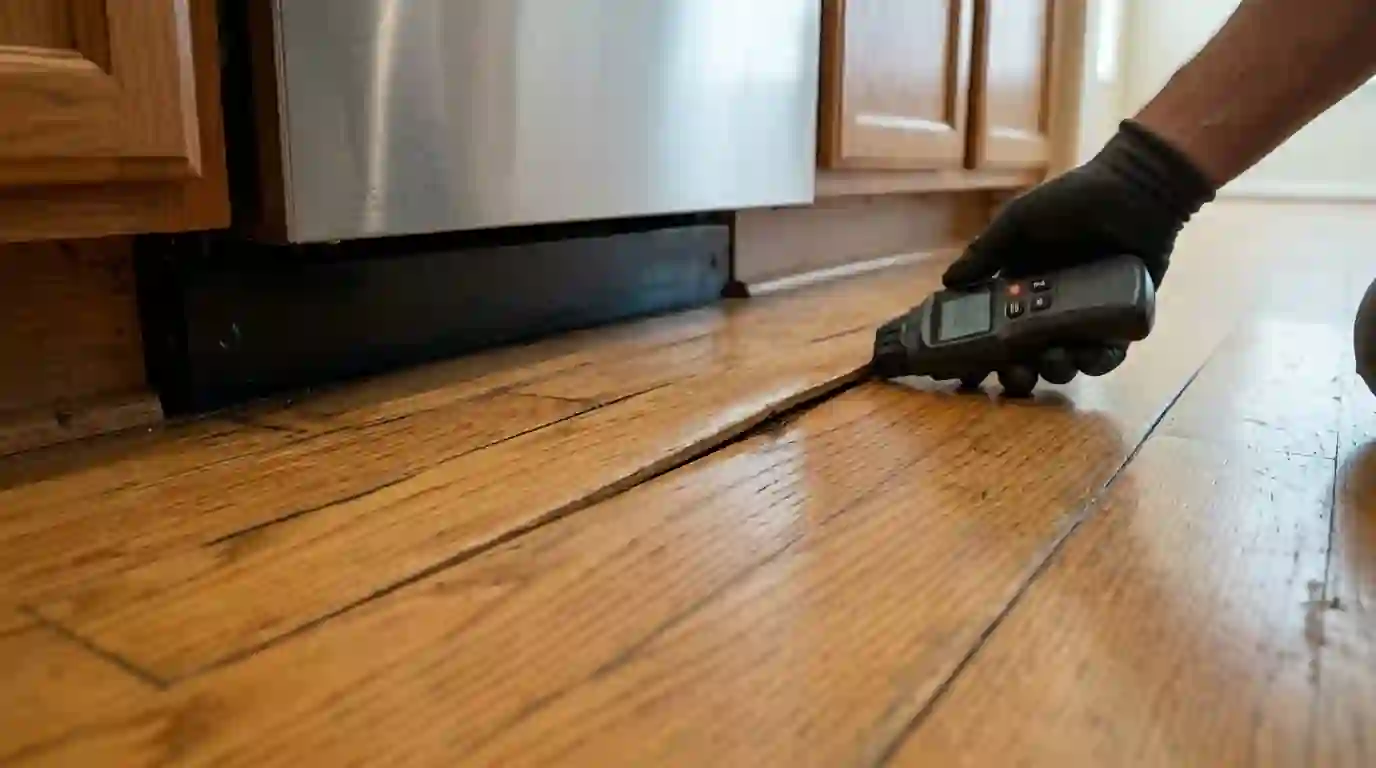
Cupping means the edges of each board stand higher than the middle. It happens because the underside took on water and swelled more than the top. It is a moisture symptom, not proof of a ruined floor. Once the boards dry back to the reading of unaffected boards, many cupped floors settle flat or close to it. Boards that buckled off the subfloor, split or pulled loose are replaced. Sanding while the floor is still cupped shaves the raised edges, and when it finishes drying, the centers end up higher than the edges.
Engineered wood floors
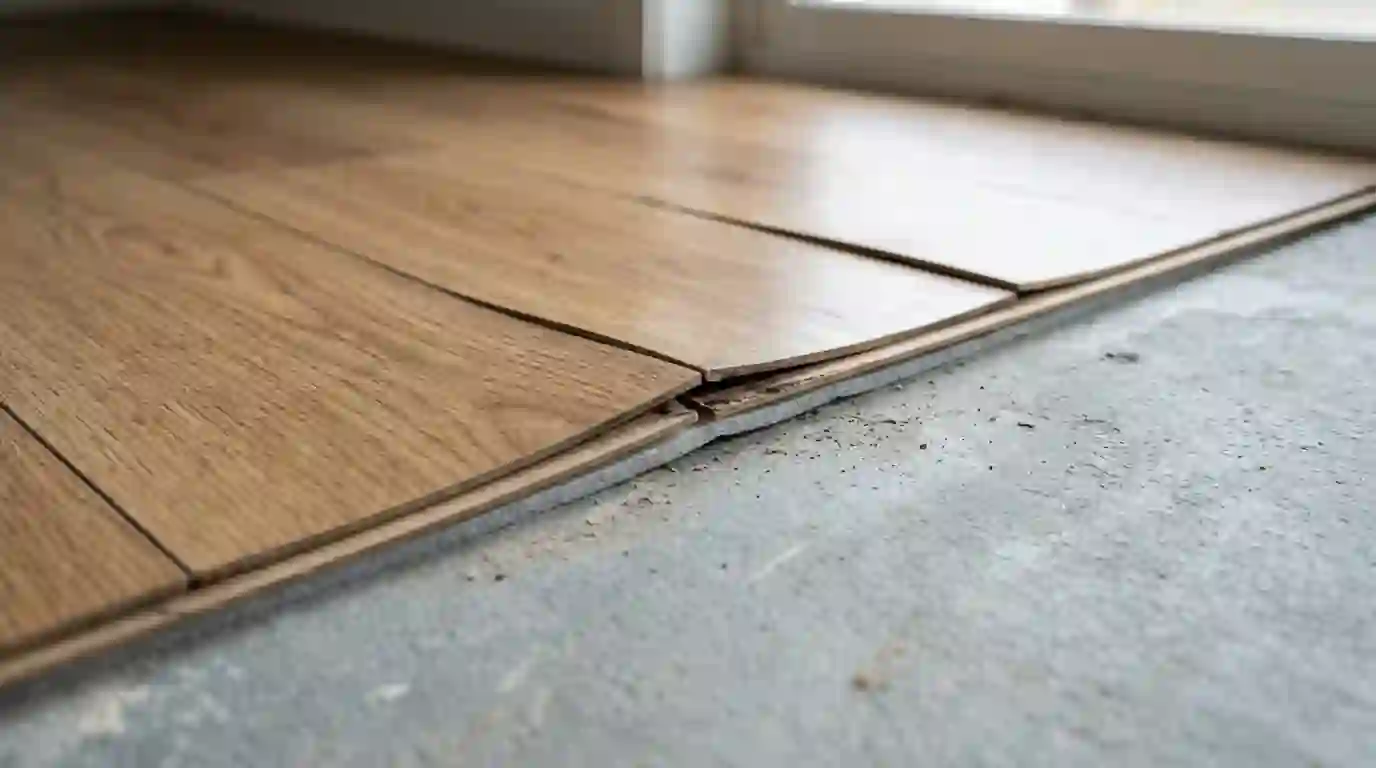
Engineered flooring is a thin hardwood wear layer glued to a plywood or fiberboard core. In slab houses it is often glued straight to the concrete or floated over a pad. The core is the weak point. Water can loosen the glue between layers, and once the wear layer starts to lift, drying cannot reverse it. Glued-down boards whose layers hold together and stay flat can be dried with mats. Floating planks are usually lifted so the slab and underlayment can dry, and the thin wear layer limits how much refinishing a damaged plank can take.
Laminate and vinyl plank
Laminate looks like wood but has a fiberboard core that swells at the edges when wet and does not shrink back, so soaked laminate is removed rather than dried. Vinyl plank is a different case. The planks themselves are not hurt by water, but water slips through the seams and sits on the slab or underlayment. Click-together vinyl can often be lifted, the floor beneath it dried, and undamaged planks laid back down. Glue-down vinyl is read section by section, since water under it can loosen the adhesive.
How a wood floor goes from cupped to dry
Read wet and dry boards
Meters set the target from unaffected flooring in your house.
Open the edges
Pulling baseboards lets air reach the expansion gap at the wall.
Lay the mats
Suction mats go over the wettest boards and seal to the surface.
Run dehumidifiers
The room air is kept dry while water moves out of the wood.
Wait, then decide
Once readings match, we look at what flattened and what needs replacing or refinishing.
Why wood floors take longer than walls
Drywall gives up water quickly. Solid wood releases it slowly through a finish designed to keep water out, so a wood floor is usually the last thing to come off the equipment list. Thicker boards, a slab underneath and water that sat for days all add time.
We do not hurry it with heat or high fans, since that is how boards crack. The mats come off when the wet boards match the dry ones.
Wood floors on League City slabs
With slab foundations under most League City houses, wood flooring has no crawlspace beneath it to dry from. Water that gets under the boards can only leave up through the wood or out at the edges, which is why we often pull the baseboard to open the expansion gap at the wall. Gulf Coast humidity also swells wood a little every summer, so we judge dry by comparing against unaffected boards in the same house, not by a textbook number.
Dry in place or tear out? It depends on the floor
| Floor | Can it be dried in place? | What usually happens |
|---|---|---|
| Solid hardwood | Often, if caught early | Mats and dehumidifiers, then a refinishing check once flat |
| Engineered, glued to slab | Sometimes | Kept if the layers hold together, replaced where they separate |
| Engineered or laminate, floating | Rarely | Lifted so the slab can dry; swollen laminate is discarded |
| Click-together vinyl plank | The planks, yes | Lifted, slab dried, sound planks laid back down |
| Glue-down vinyl plank | Sometimes | Kept where the adhesive holds, replaced where it let go |
Equipment makers in professional drying, moisture detection and carpet extraction
What sets the cost of drying a wood floor
Wood floor drying is priced on the area, the floor type and how long the equipment stays, which the readings decide.
- Floor type
- Solid, engineered, laminate and vinyl each take a different approach.
- Installation
- Nailed, glued and floating floors dry and come apart differently.
- Time wet
- Boards that sat wet for days hold more water and take longer.
- Square footage
- More boards mean more mats and more dehumidifier capacity.
- Refinishing
- Sanding and finishing after the dry is a separate step, if it is needed at all.
Wood floor water damage questions
Not on high, aimed at the surface, since fast drying from the top can split boards. Pick up standing water and keep the AC running.
Often it gets close once the boards dry evenly, but not always. Boards that buckled or split are replaced, and some floors need a light sanding afterward.
Yes, though it is slower than over plywood because no air reaches the underside. Mats on the surface and dry room air do most of the work.
We compare wet boards to dry boards of the same floor elsewhere in the house, using wood meters of the kind Tramex and Delmhorst make.
Sometimes, especially for laminate, which rarely dries back. For solid hardwood, drying often costs less than tear-out, new boards and refinishing a whole connected floor.
