Updated October 2026
Quick answer
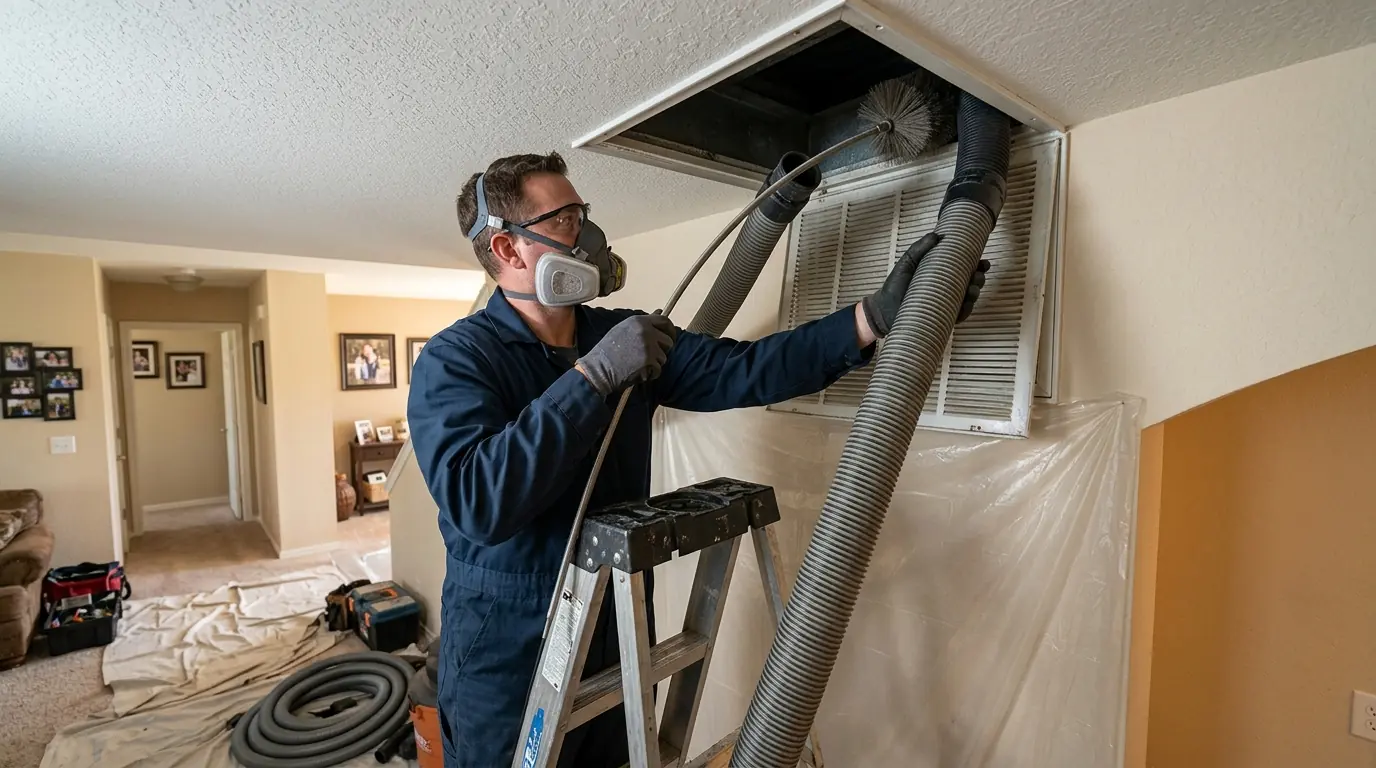
Dryer vent cleaning in a League City house clears lint from the whole run, from the transition hose behind the dryer to the cap on the roof or wall. Lint piles up first at elbows and at the cap, and a blocked run makes the dryer run hot and slow.
Where lint goes once it gets past the screen
The lint screen catches most of the fiber, but some always passes into the vent and sticks wherever the air slows: at elbows, at low spots in a sagging run and at the outside cap. As the passage narrows, the dryer moves less air, runs longer and gets hotter. Lint ignites easily, so a clogged vent is a fire risk, not only a slow dryer.
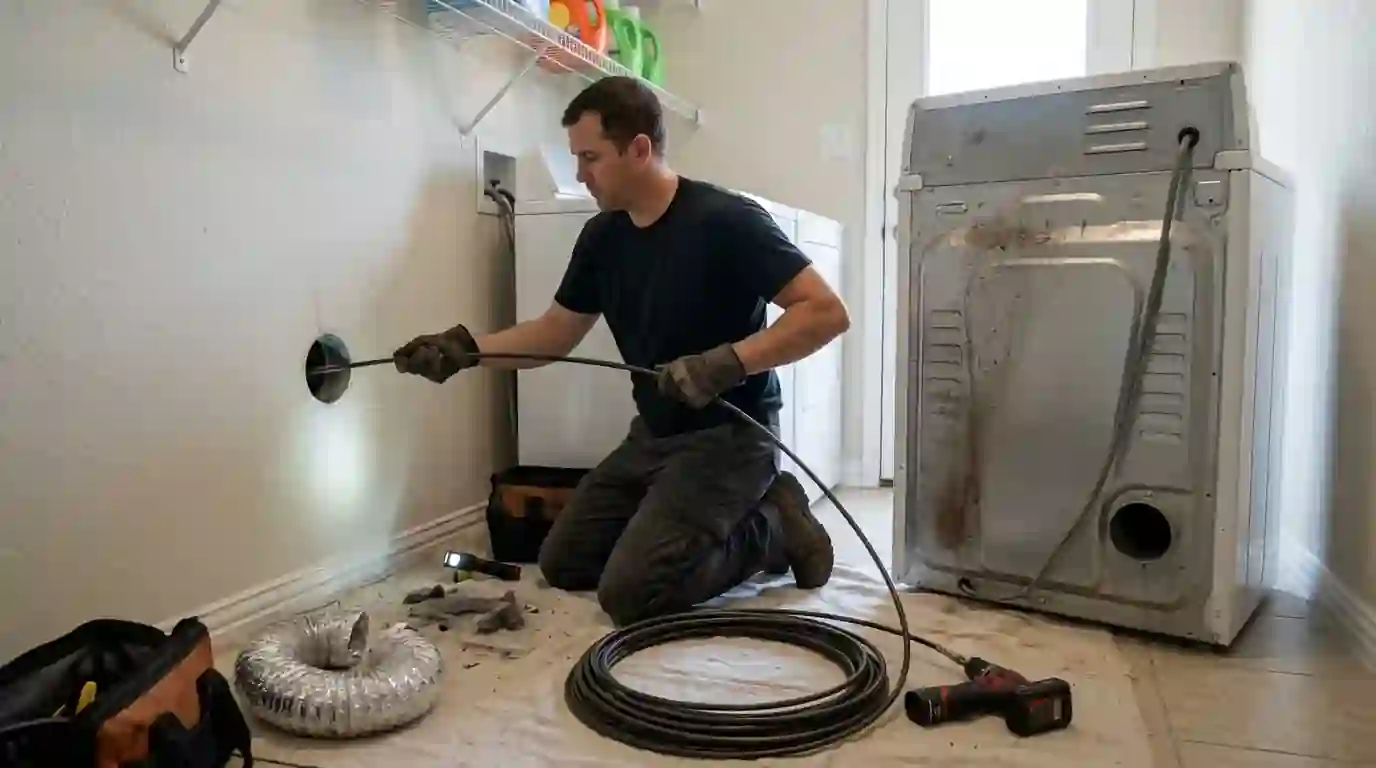
We pull the dryer out, disconnect the transition hose and run a rotary brush through the vent from inside, from the cap, or both. Loosened lint is vacuumed out, the cap is cleared and airflow is checked at the cap with the dryer running. Vent work is separate from air duct cleaning, though both rely on rotary brushes and vacuum.
Signs your dryer vent is clogged
Loads need a second cycle
Towels and jeans come out damp after a normal run.
Hot laundry room
The room heats up because the dryer cannot push air outside.
Hot dryer cabinet
The top is too hot to rest a hand on during a cycle.
Scorched smell
A burnt lint odor near the dryer or in the laundry room.
Flap stays shut
The outside cap barely moves while the dryer runs.
Lint packed into long runs through the attic or walls
A dryer on an inside wall or in an upstairs laundry often vents through a long run with several elbows. Each turn slows the air and gives lint a place to settle. The signs are towels still damp after a full cycle and a dryer that overheats and cuts out mid-load. We brush the run in sections, from both ends on long runs, and vacuum out what comes loose. Rigid metal runs are cleaned and kept. Foil or vinyl duct hidden in a wall or attic is noted for replacement with metal.
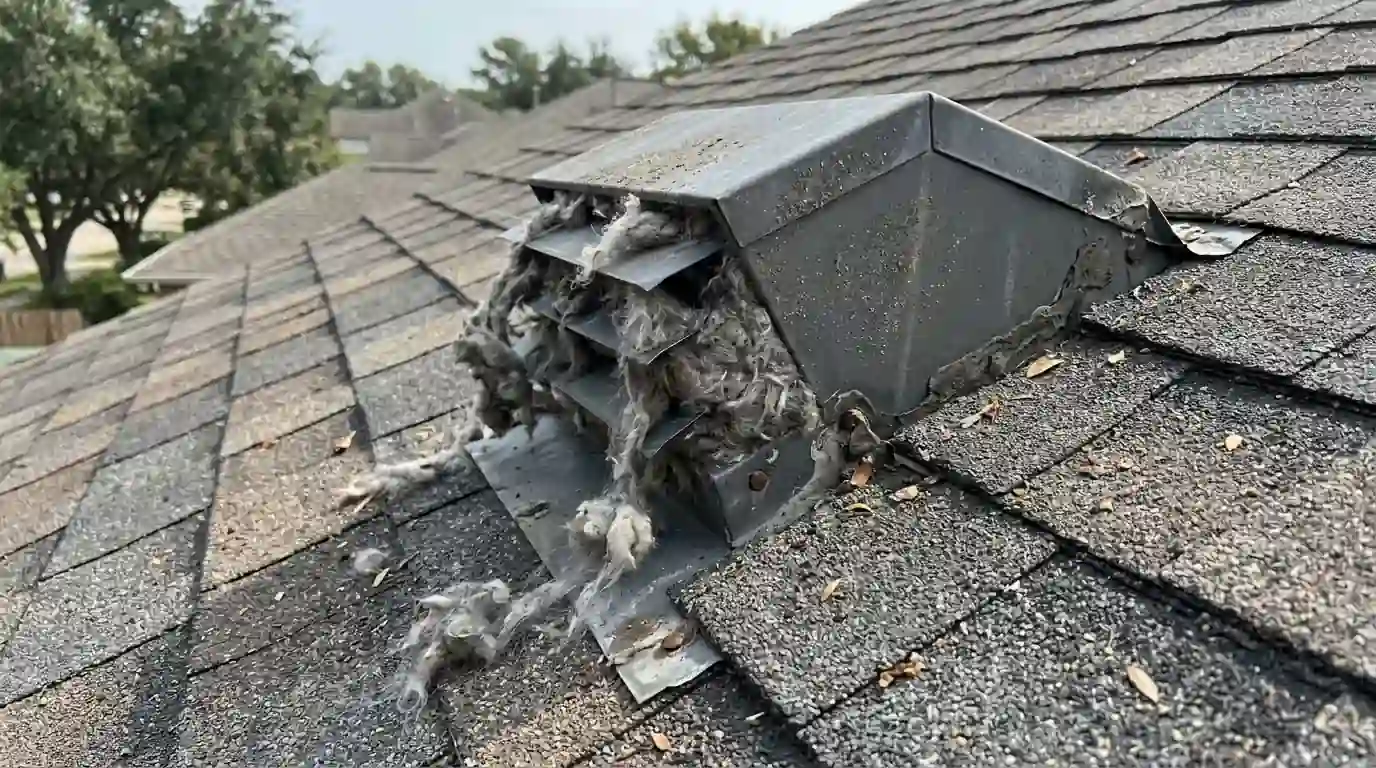
Roof caps and wall caps that trap lint
The outside cap is where many runs clog first. A stuck flap, a bird nest behind the louvers or lint matted on the hood stops airflow at the end of the line. Roof caps are harder to see, so a clog up there can build unnoticed. Some were installed with a screen, which catches lint by design and does not belong on a dryer vent. We clear the cap, pull out nesting and lint, and watch the flap open with the dryer running. Screened or broken caps are flagged for a dryer-rated replacement.
Crushed or kinked transition hoses behind the dryer
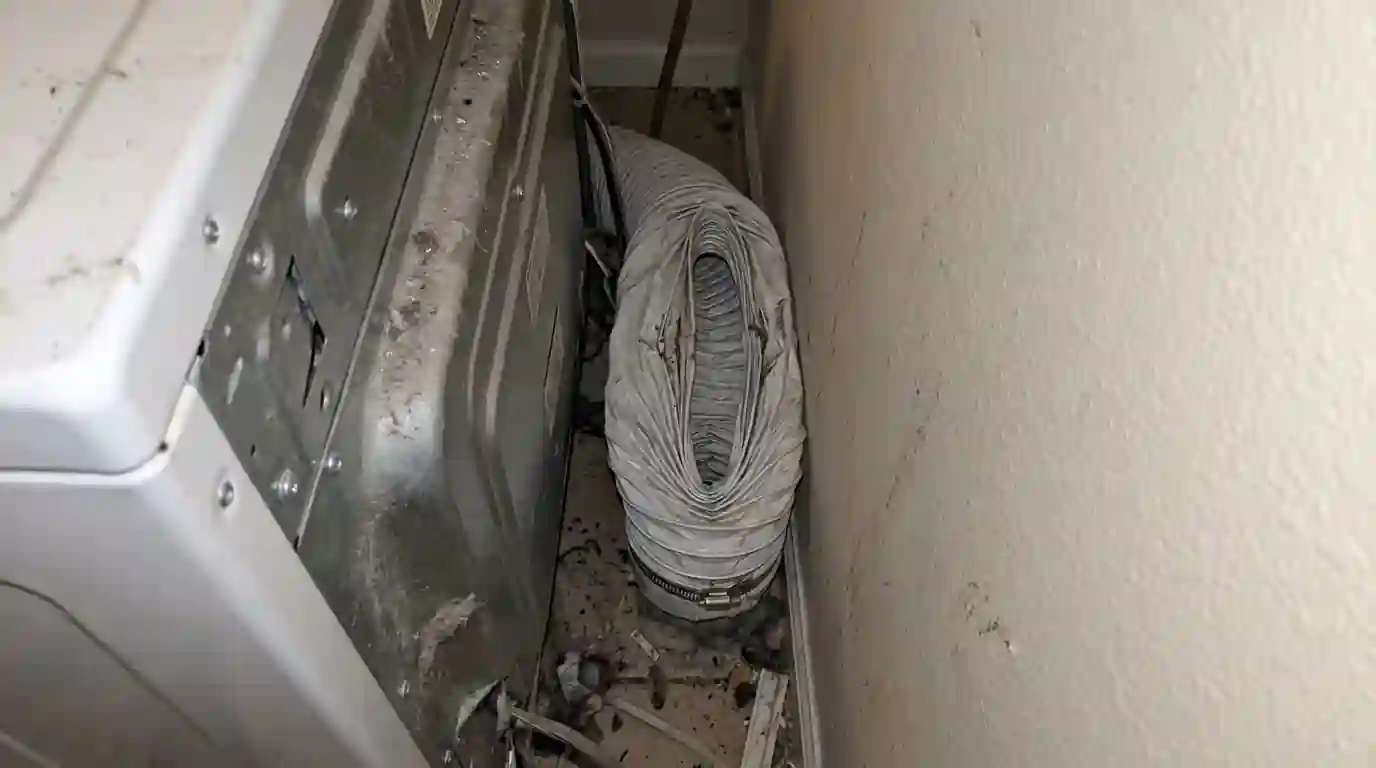
The short hose between the dryer and the wall gets crushed each time the dryer is pushed back, choking airflow at the source even when the rest of the run is clean. Thin white vinyl and loose foil accordion hoses also sag and hold lint in their ridges. We remove the hose, clean the dryer outlet and wall connection, and swap a crushed or plastic hose for a semi-rigid metal connector sized to the gap. Leave enough room behind the dryer that the new connector does not fold.
Why most League City dryer vents are the owner's job
About 77 percent of League City homes are detached single-family houses, and only about 8 percent sit in buildings of 50 or more units. So most dryer vents here belong to the homeowner, not a building manager, and they are easy to forget because nearly all of the run is hidden. Laundry rooms sit off garages, in hallways and upstairs, and the farther the dryer is from an outside wall, the longer its run.
What a dryer vent visit looks like
Check the run
We note the symptoms and how the vent is routed.
Disconnect and inspect
The dryer comes out and the hose and wall connection are checked.
Brush and vacuum
A rotary brush clears the run while a vacuum collects the lint.
Clear the cap
Lint, nests and debris come out of the roof or wall cap.
Reconnect and test
The hose goes back on without kinks and airflow is checked.
Dryer care you can handle, and when to call
Safe to handle yourself
- Pull the lint off the screen before each load
- Wash the screen if dryer sheets leave a film
- Straighten a kinked hose behind the dryer
- Clear lint from a wall cap within reach
- Keep clutter away from the back of the dryer
Time to call us
- The vent exits through the roof
- The run goes through an attic, ceiling or long wall
- You smell burning or scorched lint
- Birds have nested in the cap
- The hose is crushed or made of plastic
Roof exits, long runs and other things that move the price
Most of the price comes from where the vent ends and how long the run is.
- Wall or roof exit
- A roof termination adds ladder and roof time.
- Run length and elbows
- Long runs with several turns take more brushing.
- Blockage
- A nest or packed lint plug takes longer than routine buildup.
- Transition hose
- Replacing a crushed or plastic hose adds the part.
- Cap condition
- A broken flap or screened cap may need replacing.
Published national planning ranges
- Dryer vent cleaning: $80 to $185 typical, national average $130 (homeguide.com, 2024)
- Dryer vent cleaning, roof vent: $150 to $250 (homeguide.com, 2024)
These are national figures from published cost guides, shown for planning only. They are not a quote and not our price list; your job is priced after we see it.
Dryer vent questions, answered plainly
It depends on use. Long runs, roof exits, big households and pets fill a vent faster. If drying times start creeping up, the vent is due.
Yes. Lint is dry, fine fiber that ignites easily, and a blocked vent traps heat in the dryer and the duct. Clearing the run lowers that risk.
Yes. We clear the run from inside and from the roof cap when the roof is safe to walk. A steep or wet roof may change how we reach it.
If the vent was the restriction, yes. If drying stays slow with a clear vent, the heating element, thermostat or moisture sensor may need repair.
Someone needs to let us in and clear the space behind the dryer. Before we leave, you see the lint that came out.
