
Quick answer
Half of Texas City's houses date from 1984 or earlier, and close to 39 percent were built from 1950 to 1979. When a pipe or drain fails in a house that age, the water gets sorted by category first, because clean supply water and sewage call for very different cleanup.
What Texas City's housing age means for pipes and drains
Texas City's median home was built in 1984, and close to 39 percent of its housing dates from 1950 through 1979, according to Census survey figures. That is a large share of houses where drain lines, shutoff valves and water heater connections have been in service for decades.
Houses from those decades were commonly plumbed with cast iron drain lines and, in the earliest ones, galvanized steel supply pipe. Cast iron can crack or scale inside until a backup sends sewage up the lowest fixture. Galvanized pipe corrodes from the inside and tends to give out at threaded joints. Both usually drop hints first, like slow drains or rust-tinted water, though most owners notice only when water is on the floor.
We note the pipe material on the first visit, because it tells us whether to expect a single failure or a pattern.
Texas City jobs that trace back to older plumbing
Warning signs worth acting on in an older Texas City house
Slow drains at several fixtures
When the tub, sinks and toilet all drain slowly, the main line is likely partly blocked. Have it cleared before it overflows.
Rust-tinted water at the tap
Brown water after the faucet sits can point to corroded galvanized pipe. Have a plumber look before a joint gives out.
Valves that will not turn
Old shutoff valves under sinks and behind toilets can seize. Test each one and replace any that stick.
A sewer smell with no clear source
Run water into unused showers, tubs and sinks to refill their traps. If the smell stays, a drain line may be cracked.
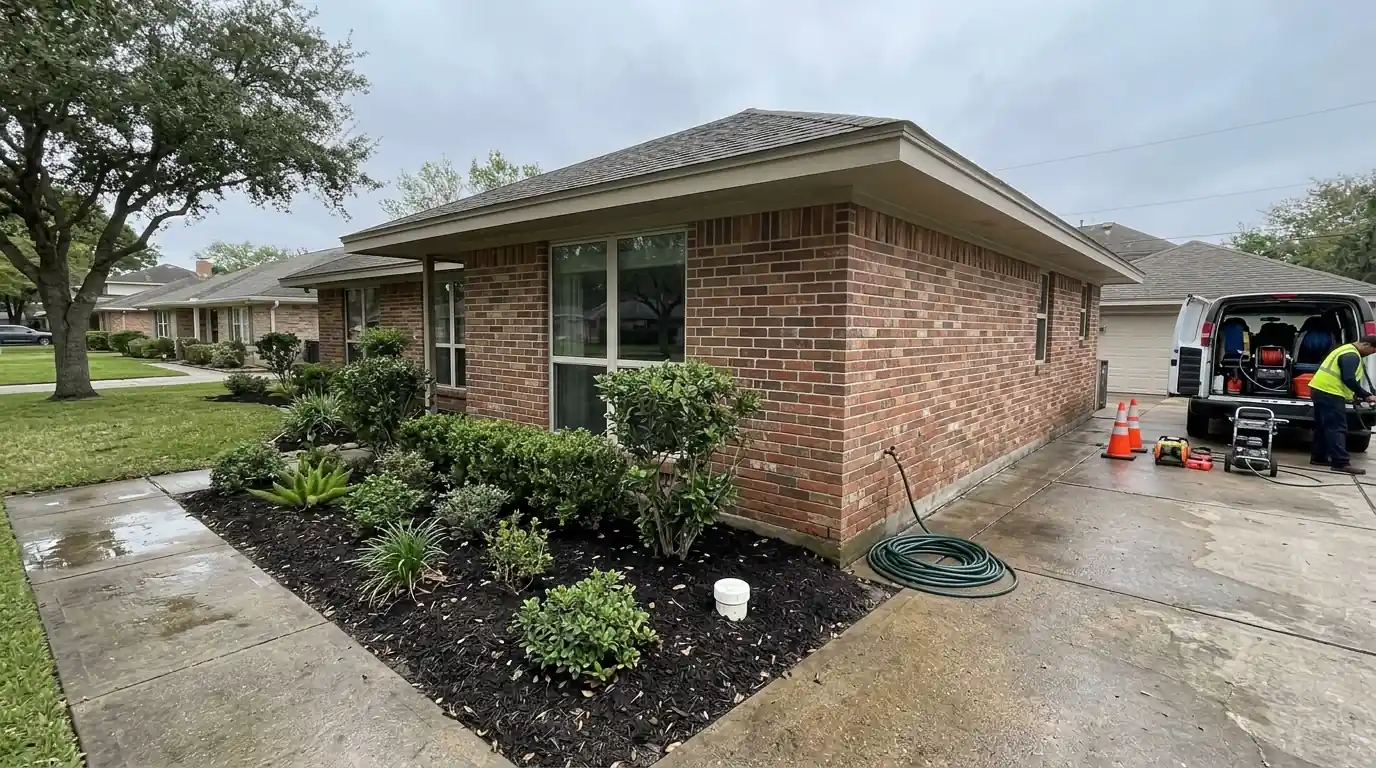
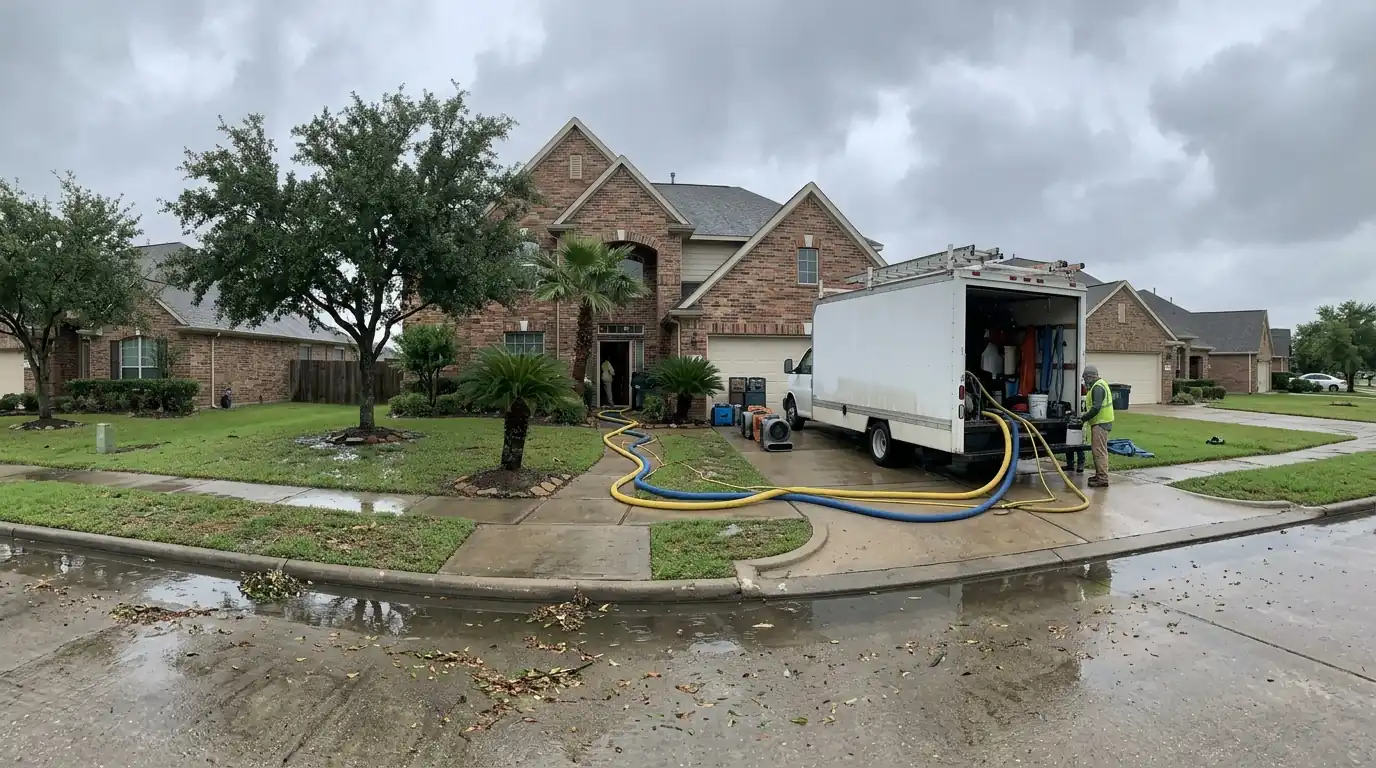
Water in a Texas City home right now? Call any hour.
Call (832) 737-0315Texas City plumbing leak and backup questions
Yes. Texas City is part of our Galveston County coverage, and the phone is answered at any hour. Tell us whether the water is from a supply line or a drain, and we will tell you what to shut off.
It depends on where the blockage sits. A plumber can run a camera down the line and show whether it is your service line or the city main. The cleanup inside starts either way once the flow stops.
Sound drywall wetted by clean water usually dries where it hangs. Board that has sagged, or any wall soaked by sewage, is removed. Meter readings tell us which is which before we cut.
Carpet, pad, soaked drywall and anything porous the water touched. Tile, sealed concrete and hard furniture are cleaned, disinfected and dried, and we photograph what comes out for your records.
Sudden pipe failure is commonly covered, but slow leaks and wear usually are not. Keep the failed fitting so the adjuster can see it, and check our first-hour steps while you wait.
