Updated October 2026
Quick answer
In League City attics, mold usually traces to a roof leak, an AC drain problem or a bath fan venting into the attic. The fix is to stop that moisture, read the wood with a meter, then clean the decking in place, since surface growth rarely means replacement.
How attic mold is cleaned without tearing off the roof
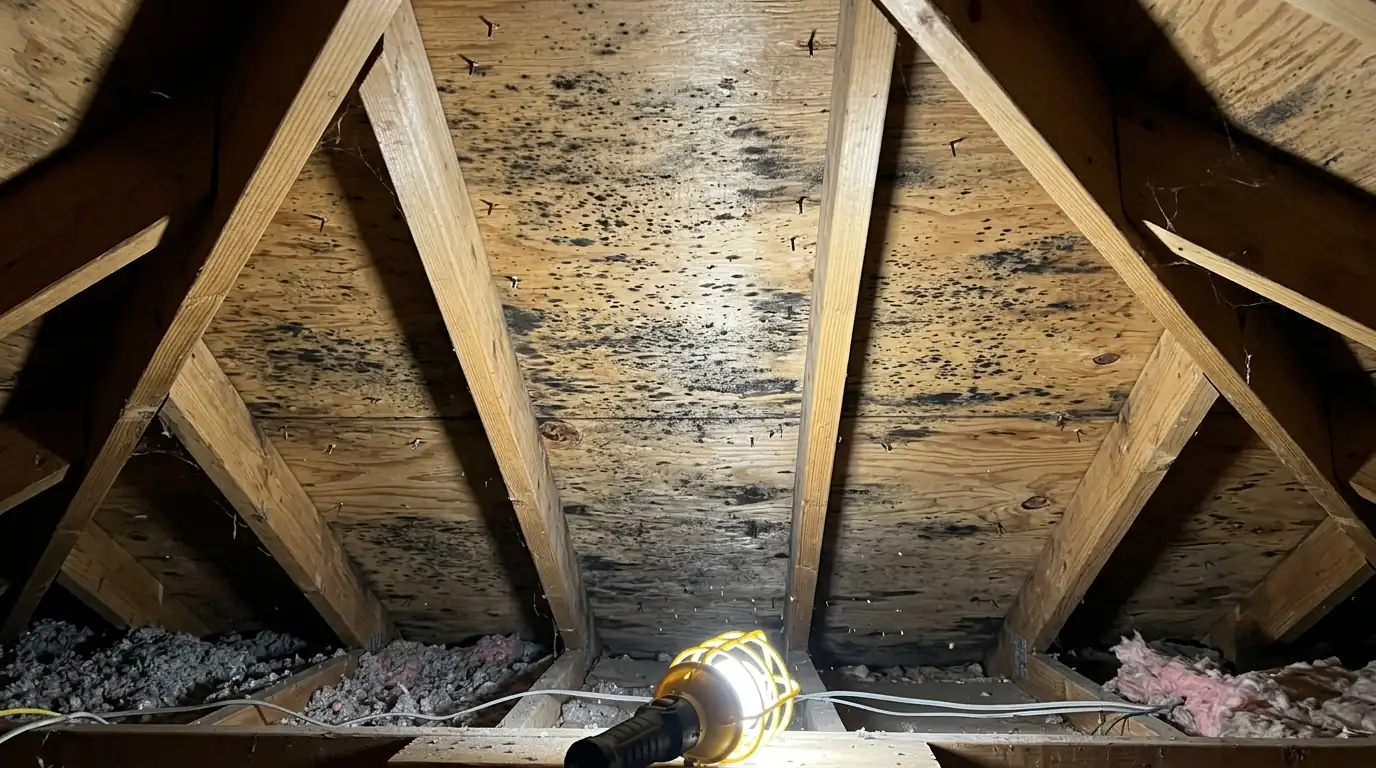
Attic mold grows on the underside of the roof decking, on rafters and on the paper face of the ceiling drywall, wherever warm, humid air meets a damp surface. The growth usually sits on the wood rather than through it, so decking can be cleaned in place: HEPA vacuuming, scrubbing or sanding the affected boards, then a second HEPA pass.
Before any of that, we read the wood. Dark staining is sometimes old growth from when the lumber was stored, and it reads dry and has not spread. Active growth sits on wood that is still wet. Under a roof leak, the soaked fill comes out too, through wet insulation removal.
What decides the cost of attic mold work
Attic mold is priced after we have been up the ladder, since access and spread matter most.
- Decking area with growth
- Growth over one bathroom is far less work than a whole slope.
- Headroom and access
- A low pitch and tight eaves slow the cleaning.
- Insulation removal
- Wet or matted fill adds removal and later replacement.
- Source repair
- Fan ducting, drain line or roof work is a separate fix.
Published national planning ranges
- Mold remediation: $1,373 to $3,325, average $2,347 (lawnstarter.com, 2026)
These are national figures from published cost guides, shown for planning only. They are not a quote and not our price list; your job is priced after we see it.
Clean in place, seal, or replace the decking?
| Option | When it fits | What it involves |
|---|---|---|
| Clean in place | Surface growth on sound, dry decking | HEPA vacuuming, scrubbing or sanding, then a final HEPA pass |
| Clean, then seal | Cleaned wood that still shows staining | A mold-resistant coating over the cleaned surface, never instead of cleaning |
| Replace sections | Decking that is rotted, soft or delaminated | Roofing work from above, usually tied to a leak repair |
| Spray only | Not a complete fix in any attic | Leaves the growth on the wood and the moisture source untouched |
Mold across the roof decking
Spotty black or gray growth on the plywood or OSB overhead is the most common attic finding. A cluster around one spot points to a roof leak, often at a vent boot, a valley or a lifted nail. Growth spread evenly along one slope can mean weak airflow between the soffit and ridge vents. We read each patch, clean the boards with growth and check the wood for softness. A soft or delaminating board is a roofing repair, and we call it out instead of cleaning it and walking away.
Mold around the attic air handler and ducts
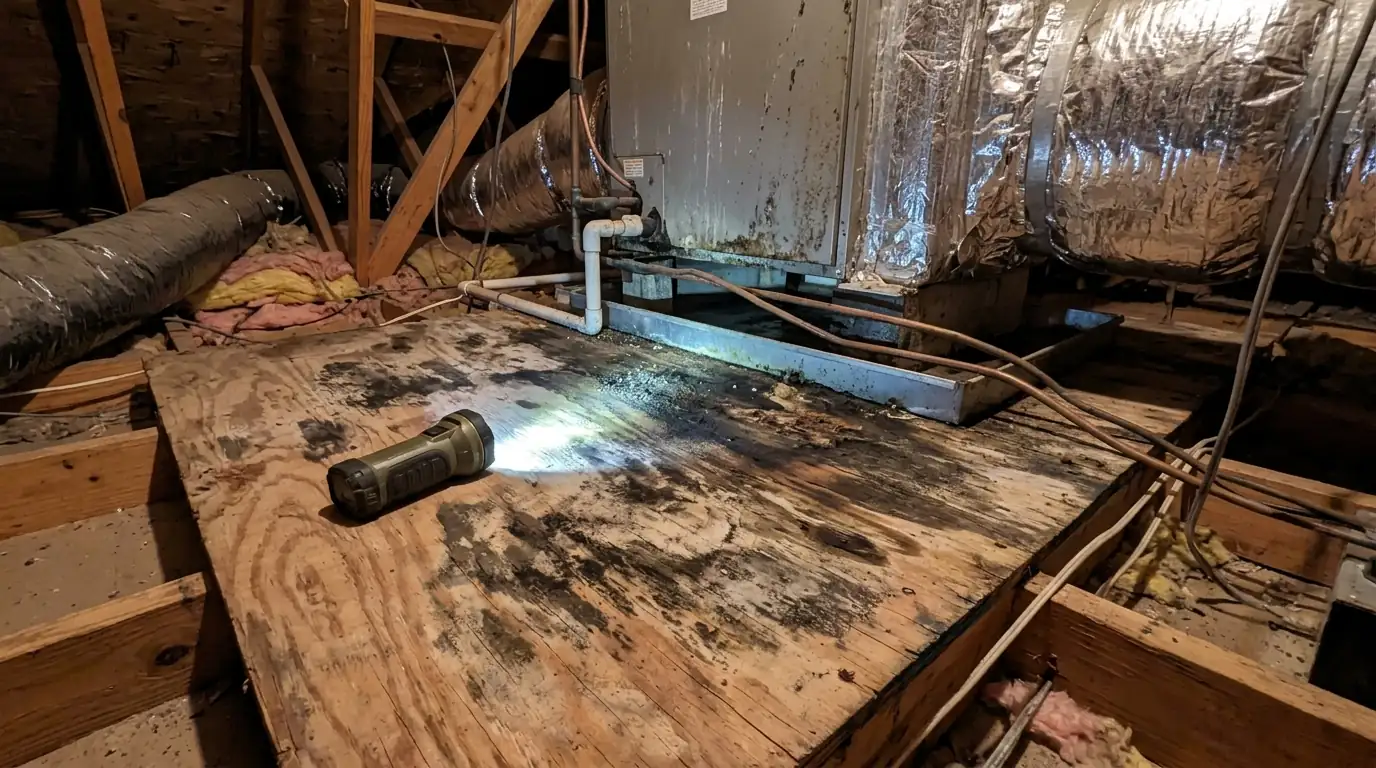
An attic air handler sits in the hottest part of the house and makes water every hour it cools. Mold shows up on the plywood platform under it, around the drain pan, and on fill where an overflow soaked in. Supply ducts and register boots that sweat leave rings of growth on the ceiling drywall around each vent. We clean the wood and drywall faces, remove insulation that stayed wet, and show you whether the pan, the drain line or the duct wrap is the cause, so the right trade can correct it.
Bath fans that vent into the attic
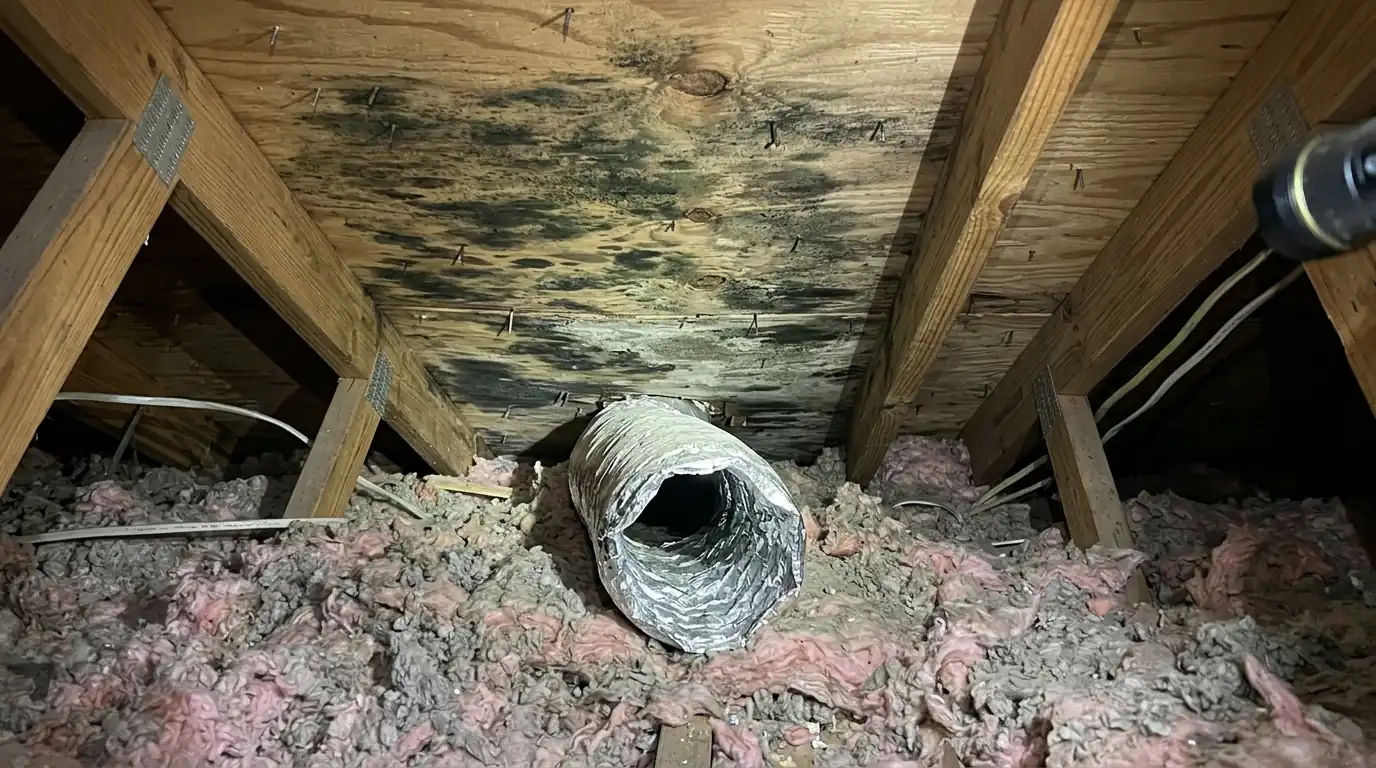
A bathroom fan is supposed to push steam outdoors. In many houses the duct ends loose in the attic, or it has slipped off the roof cap, so every shower sends warm, wet air straight onto the decking and insulation nearby. The pattern is easy to read once you know it: growth concentrated over the bathrooms and fading with distance. We clean the growth and remove matted insulation around the fan. The lasting fix is a duct run all the way to a roof or wall cap, because cleaning without it only buys a short break.
Steps from the hatch to a clean attic
Walk the attic
We inspect with a light and a meter and photograph each area.
Name the moisture source
You hear whether it is a leak, AC drainage, duct sweat or a bath fan.
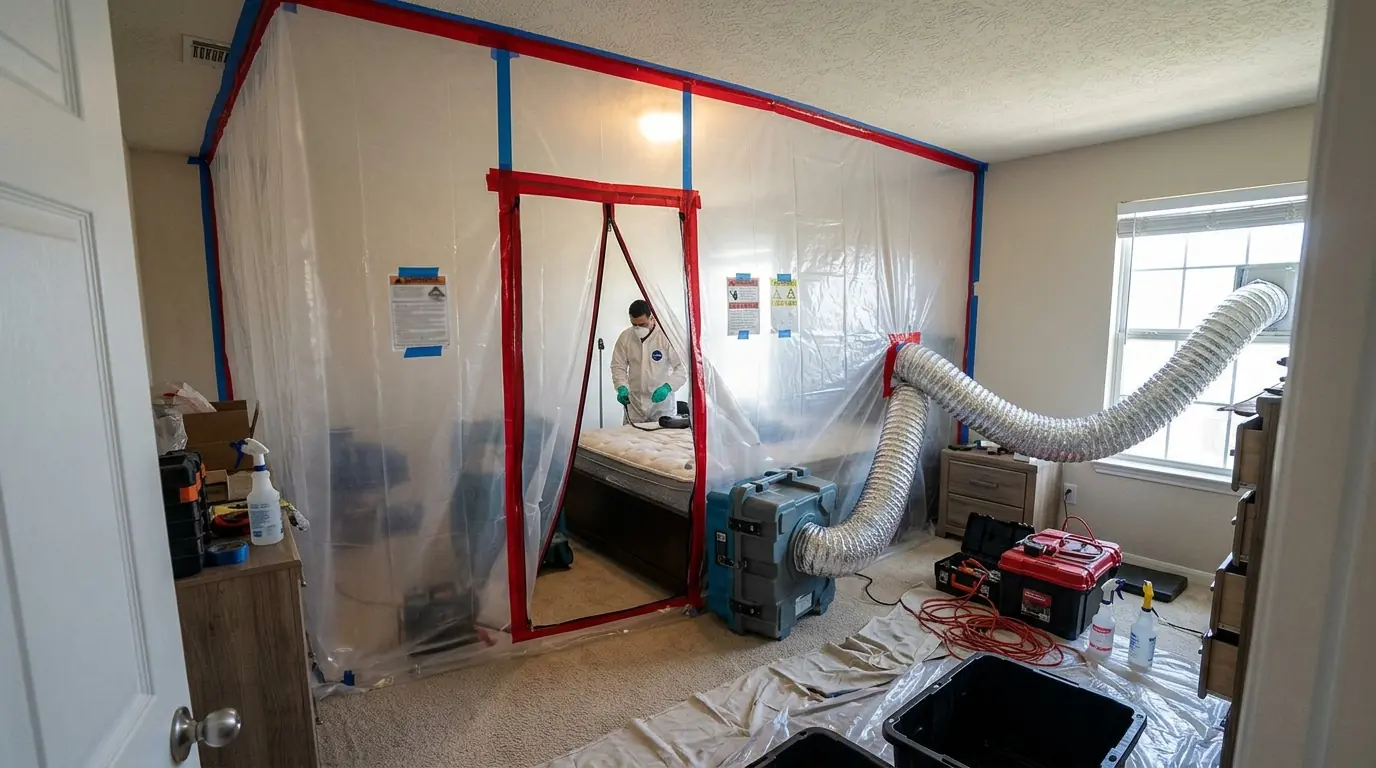
Protect the rooms below
The hatch and the path through the house are covered.
Clean the wood
Growth comes off the boards by brush or sander between two HEPA vacuum passes.
Recheck and report
Readings and photos confirm the wood is clean and dry.
Summer heat over League City attics
From late May until late September, League City is in its hot season, and August highs average 91 degrees. An attic under that sun runs far hotter than the outdoor air, and it is where many houses here keep the air handler and most of the ductwork. Cold ducts and a running AC coil in a hot, humid attic condense water on any poorly sealed or insulated surface. So the hot months are when sweating ducts, overflowing pans and bath fan moisture turn into attic mold.
Clues from downstairs that the attic has mold
Musty air when the AC starts
A leaky return duct in the attic can pull attic air inside.
Rings around ceiling vents
Stains around registers often mean sweating ducts above.
Spots on the bathroom ceiling
Growth near the fan hints that it vents into the attic.
Rusty nail tips overhead
Rust on nails through the decking shows repeated condensation.
Dark streaks seen from the hatch
The flashlight only reaches part of the decking.
Attic mold questions we hear most
It can when the house pulls attic air through gaps around lights, the hatch or leaky return ducts. That is why the source and the cleaning both matter.
Rarely. Most growth sits on the surface of sound decking and cleans in place. Only rotted or delaminated boards need replacing, and that is roofing work.
It will if the moisture stays. Once the source is corrected and the wood is clean and dry, the conditions that grew it are gone.
Color does not tell you the species or the risk. Any active growth should be cleaned, and anyone with asthma should stay out of the attic during the work.
Spraying leaves dead growth on the wood and ignores the moisture. A small spot near the hatch is one thing, but a whole slope needs containment and cleaning.
