Updated October 2026
Quick answer
Commercial water damage cleanup in League City follows the same drying science as a house, but each wet area is mapped and logged separately for the owner, tenants and insurers. Work is planned around business hours, building systems and occupied units, so access and safety are settled first.
How a commercial water job differs from a house
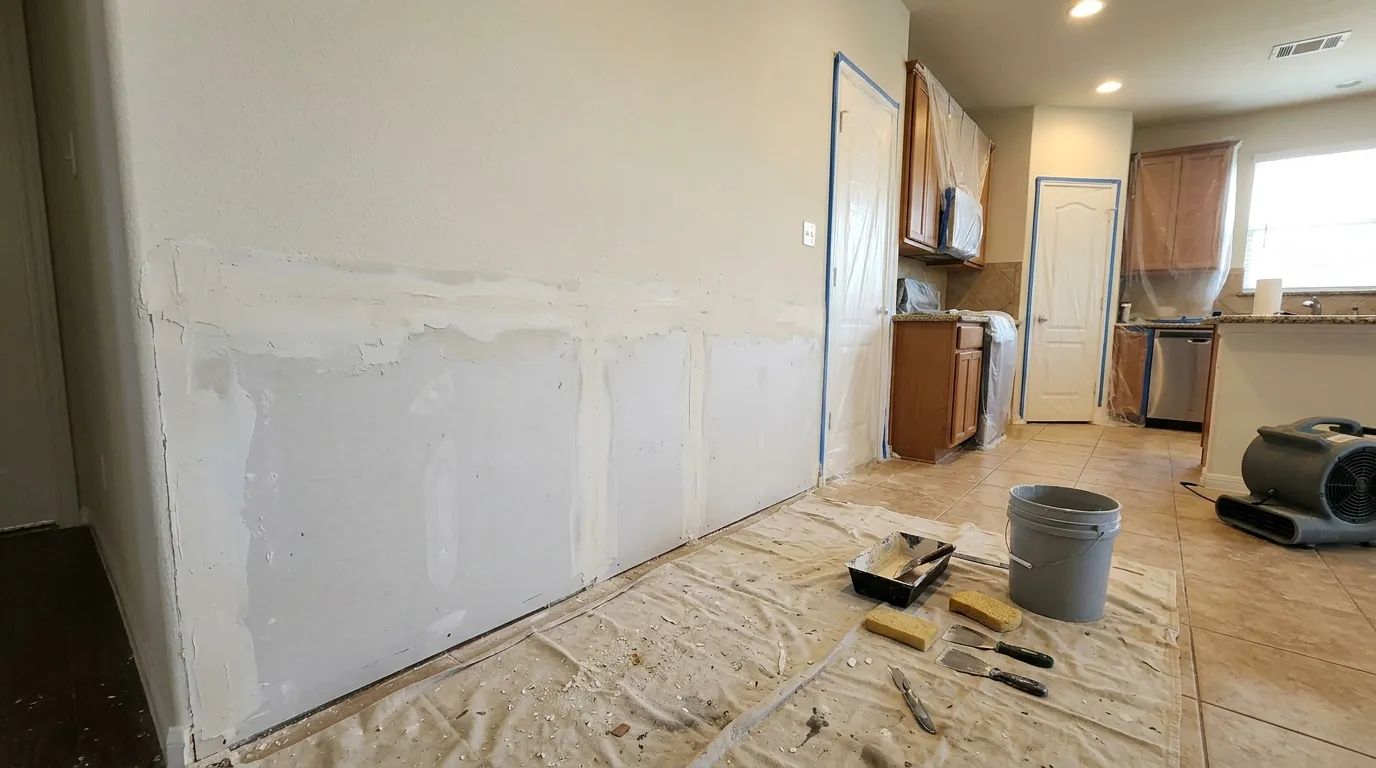
Commercial buildings hold water in different places. Carpet tile and glue-down carpet sit on concrete, metal-stud walls hide insulation and cabling, and suspended ceiling tiles soak up leaks from above. A single source can run under demising walls into the next suite, so we map moisture across the whole floor, not just the room where the water showed up.
Drying runs on a schedule the business can live with. Dehumidifiers and air movers can often keep running overnight, with walkways clear and cords secured. Each suite, store or unit gets its own readings and photos, which matters when an owner, a tenant and two insurers are involved. Carpet that survives the drying can be deep cleaned afterward through commercial carpet cleaning.
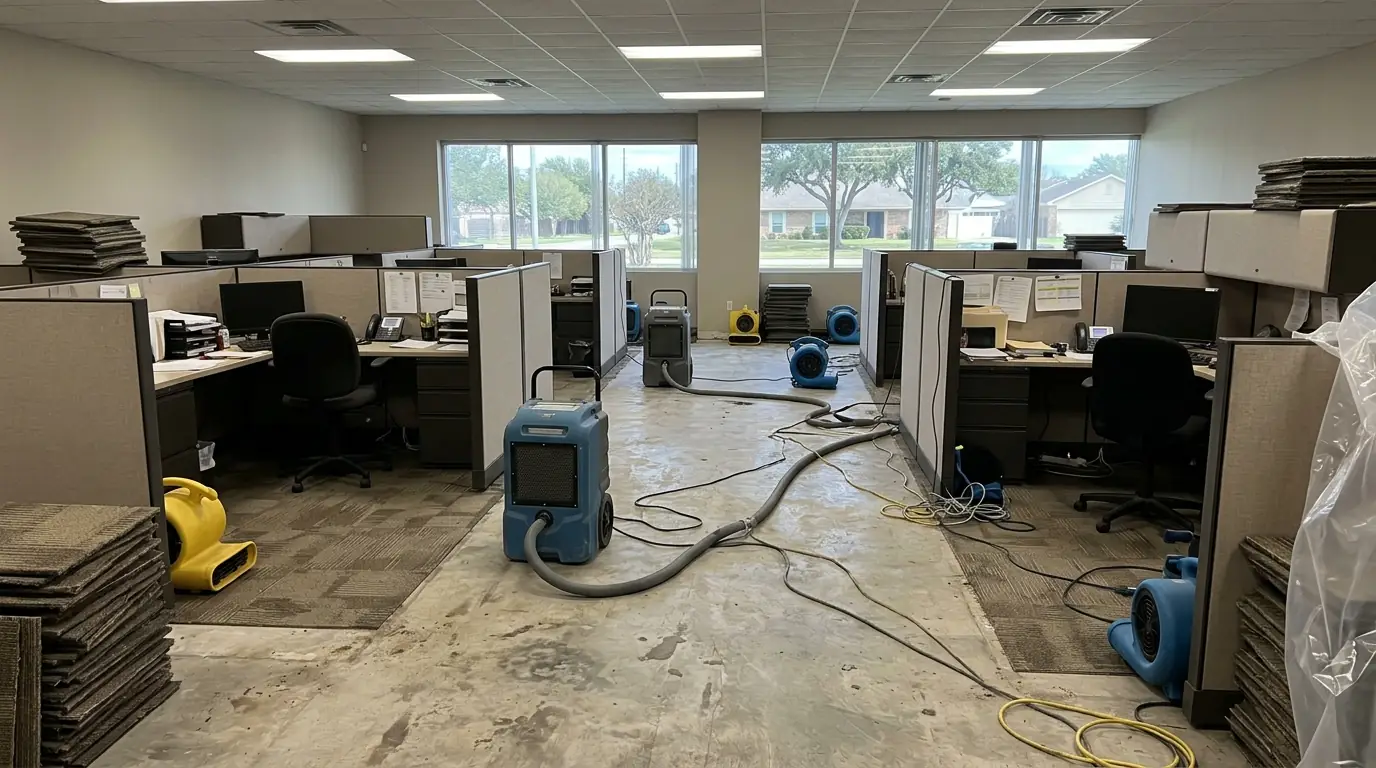
Office suites with carpet tile and ceiling grids
In offices, water usually arrives from a ceiling leak, a restroom line or a break room sink. Stained ceiling tiles, damp carpet tile at cubicle edges and swollen bottoms on particleboard desks are what staff notice first. We extract the carpet, lift tiles that trapped water against the slab, and pull wet ceiling tiles, which are replaced rather than dried. Metal-stud walls are opened only where readings stay high. Electronics and files move first. Clean-water carpet tile can often be dried and relaid, while swollen particleboard furniture is listed for the owner or tenant.
Retail floors and restaurant kitchens
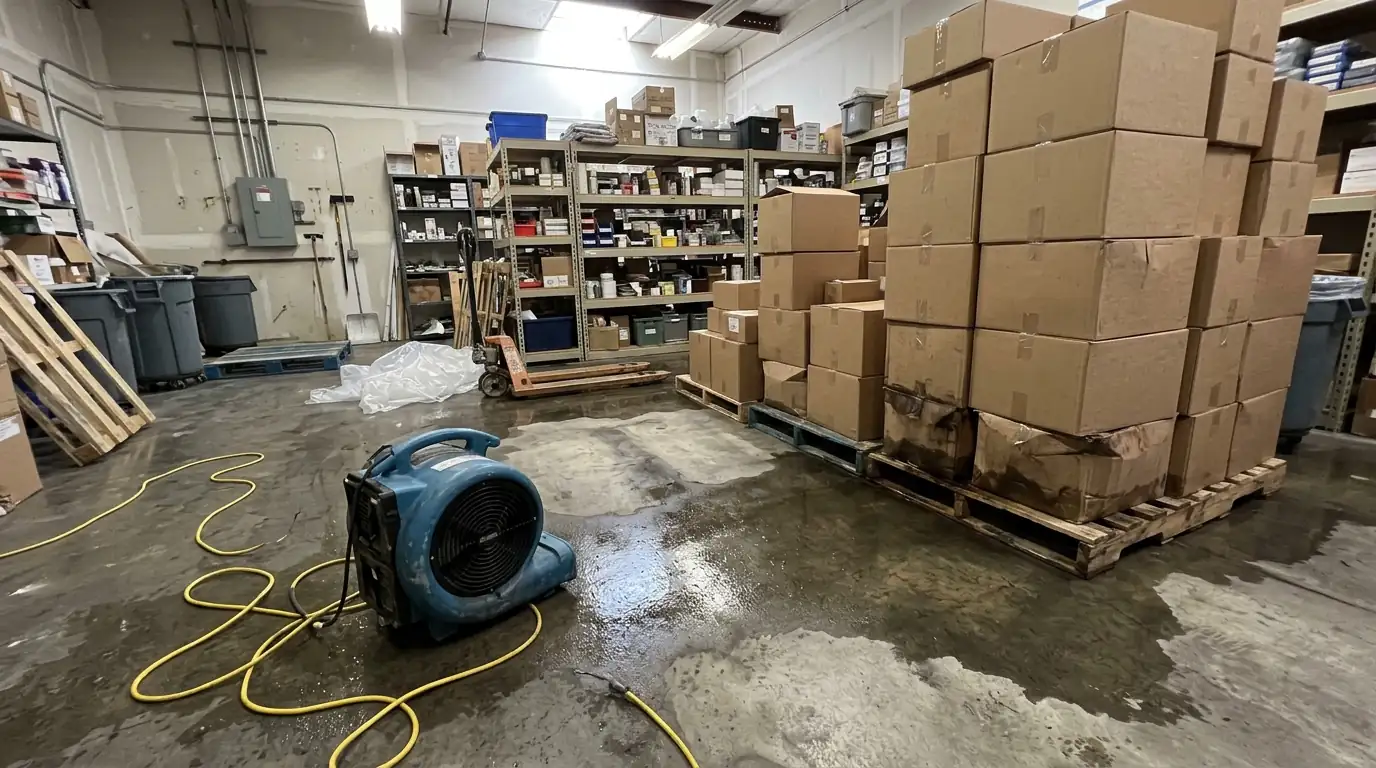
In a store, water wicks into cardboard boxes, slatwall and the lowest shelves quickly, so stock comes off the floor first and is photographed for the inventory claim. In a restaurant, a backed-up floor drain is sewage-grade Category 3 water, and anything porous it touched is discarded. We clean and disinfect hard surfaces in the kitchen and work behind coolers and cooking lines where water collects. Your local health authority may need to clear the kitchen before you reopen, so the cleaning record matters as much as the drying.
Apartments and multi-unit buildings where water drops floor to floor
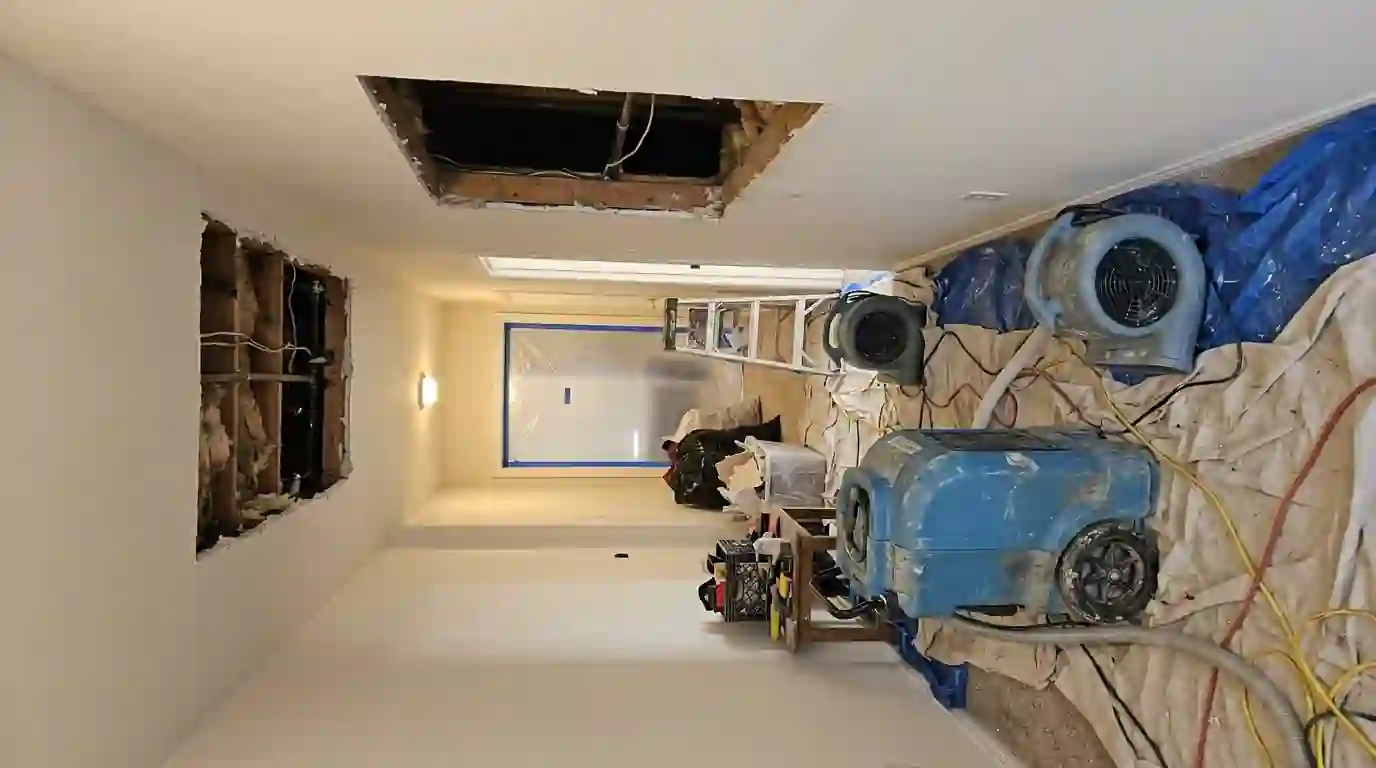
In a multi-unit building, one failed water heater or supply line upstairs can wet the units below through ceilings and wall cavities. Each unit has a different occupant, different belongings and often a different insurance policy. We trace the water down the stack, set drying in every affected unit, and keep a separate photo set and moisture log for each one. Shared corridors are documented apart from the units. Residents' furniture and belongings usually fall under their own renters policies, so we list them by unit for the manager and the residents.
How we run a commercial water job
Stop the source with your building contact
We locate shutoffs and confirm which systems are affected.
Walk and map every area
Meters and photos mark each space that took water.
Extract and protect
Standing water comes out, and stock or electronics move to a dry area.
Dry on a working schedule
Equipment runs in phases or overnight, with readings logged per area.
Close out each area
Each space is released with its own readings once it is dry.
How long a business or building stays in drying
The building's materials set the pace. Carpet tile and open ceilings dry quickly once the water is out. Concrete slabs, glue-down flooring, insulated walls and stacked units take longer, and a Category 3 area needs cleaning and removal before drying starts.
Access matters too. A store that can close a section dries faster than one where equipment moves every morning. We give a working estimate after the first readings and update it as each area dries.
Renters, apartments and mixed buildings around League City
League City is mainly a city of detached houses, about 77 percent of its housing, with buildings of 50 or more units adding about 8 percent. Nearby Webster runs the other way, mostly renters at about 78 percent, with about 22 percent of its homes in buildings that size. In a large complex a leak can easily cross into neighboring units, and managers need the drying records sorted by unit.
First-visit priorities in a commercial building
- Source stopped and shutoffs located with your building contact
- Electrical hazards in wet areas identified first
- Every wet suite, unit or store mapped with readings
- Standing water extracted, traffic areas first
- Inventory, files and electronics moved off wet floors
- Drying plan set around business hours and access
- Per-area photo and reading log started
Floor area, units and hours: what commercial drying is priced on
Commercial drying is priced mostly by area, then adjusted for the building and the schedule.
- Square footage
- Large open floors take more extraction and equipment.
- Materials
- Glue-down carpet, ceiling tile and insulated walls change what is removed.
- Water category
- Drain backups call for disinfection and more removal.
- Suites or units affected
- Each one needs its own drying setup and log.
- Working hours
- Phased work to keep a business open adds labor.
- Contents
- Moving inventory, furniture and files adds time.
Published national planning ranges
- Water damage restoration, per square foot: $3.15 to $7.40 per sq ft (lawnstarter.com, 2026)
These are national figures from published cost guides, shown for planning only. They are not a quote and not our price list; your job is priced after we see it.
Commercial water damage questions from owners and managers
Often, yes. Equipment can be set in sections, run overnight or placed behind barriers so part of the space stays in use. Category 3 areas stay closed off until cleaned.
Yes. We report to whoever authorizes the work and keep records sorted by unit or suite, so the owner, the manager and each tenant can see what happened in their space.
The cause of the leak and the policies on each side settle that, and the insurers make the call. Our part is documenting the source and the path the water took, which those insurers will ask for.
Stained or sagging acoustic tiles are replaced, not dried, since they rarely dry flat and are simple to swap. The grid is checked and the space above it is dried.
Move what you can safely lift off wet floors, and photograph it first. Keep damaged stock for the adjuster instead of discarding it, and leave wet electronics unplugged.
