Updated October 2026
Quick answer
Insurance claim help for League City water damage means documenting the loss during the cleanup with photos, moisture logs and an itemized scope. We do not decide coverage, act as a public adjuster or negotiate your settlement. The file gives you and your adjuster the facts of the loss to work from.
What a clear water damage claim file contains
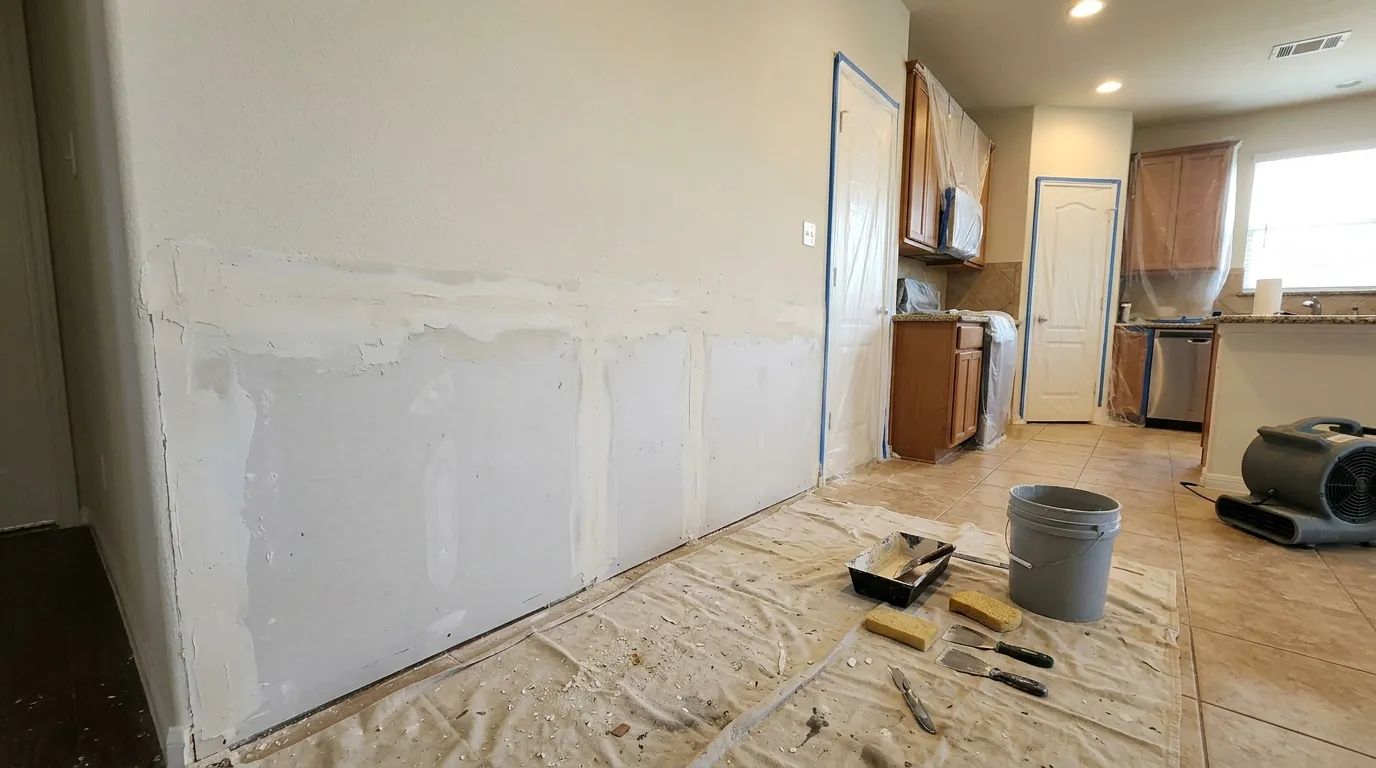
An adjuster has to answer three questions: what caused the water, what it damaged, and whether the work done was needed. A file that answers them plainly leaves less room for back and forth. Most of that evidence disappears once drying starts, so it has to be captured on the first visit, before pad is pulled or drywall is cut.
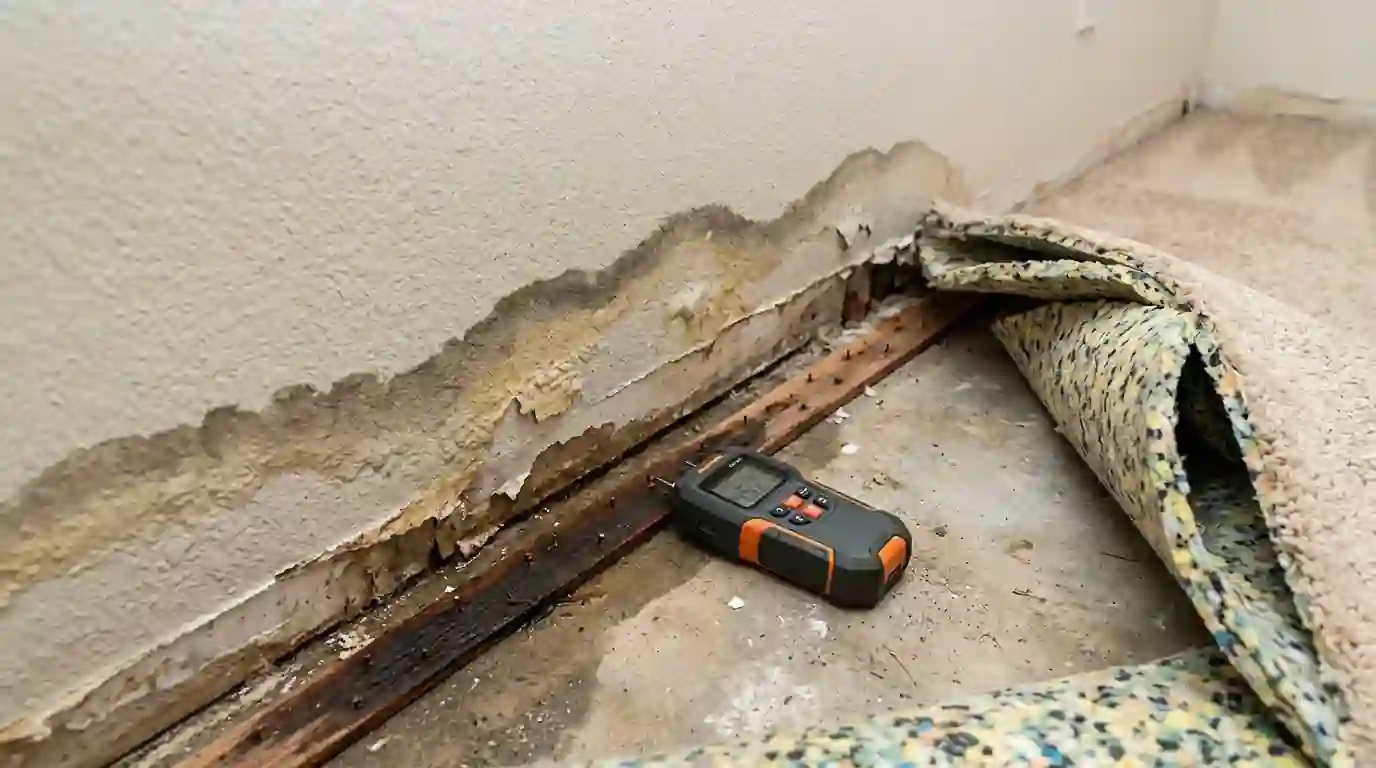
We photograph the source and every affected room before anything moves, record moisture readings on a sketch of the space, and repeat those readings every visit until the job is dry. The cleanup itself is covered on our water damage restoration page, and our guide on what homeowners policies usually cover explains the coverage side.
What makes a water damage bill larger or smaller
The bill follows the work. What your policy pays toward it depends on your coverage and deductible, which only your insurer decides.
- Water category
- Sewage or gray water moves more materials from drying to tear-out.
- Wet area
- More wet floor and wall means more equipment and labor.
- Removal
- Pad, drywall, insulation and cabinets that cannot be dried add tear-out.
- Equipment days
- Hardwood, slab and wall cavities hold water and keep machines running longer.
- Contents
- Moving, cleaning or packing belongings is its own line on the scope.
Published national planning ranges
- Water damage restoration, overall: $1,270 to $5,375 typical, national average $3,250 (lawnstarter.com, 2026)
These are national figures from published cost guides, shown for planning only. They are not a quote and not our price list; your job is priced after we see it.
Dated photos and moisture logs from the first visit
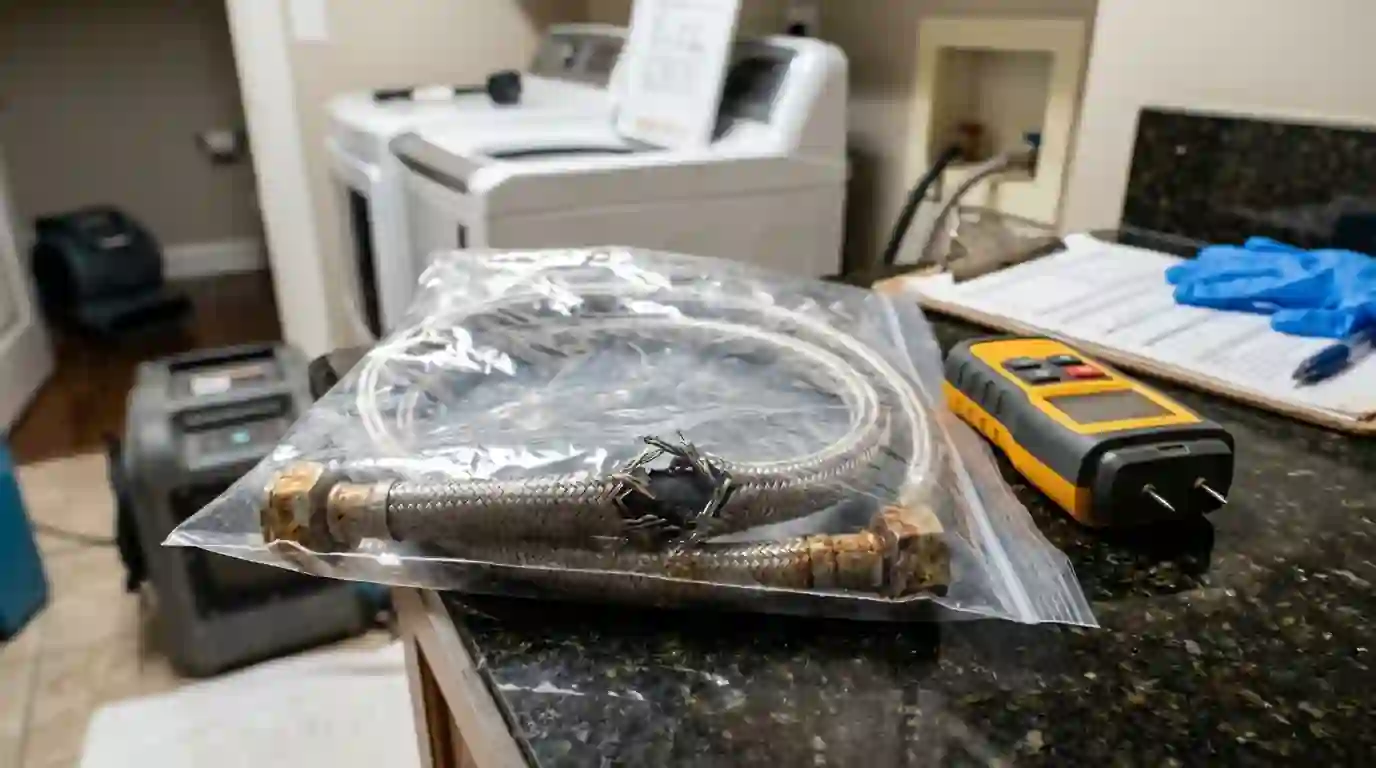
Adjusters often see a loss after the water is gone, so photos stand in for what they missed. We shoot wide room views, close-ups of the source and the waterline, and the model labels on damaged appliances before anything moves. Moisture readings go on a floor sketch, each spot numbered so later visits read the same places. Those logs show when each material reached its dry target, which explains why equipment stayed or left. Keep the failed part, such as a split supply line or a leaking valve, because the adjuster may ask to see it.
An itemized scope the adjuster can check line by line
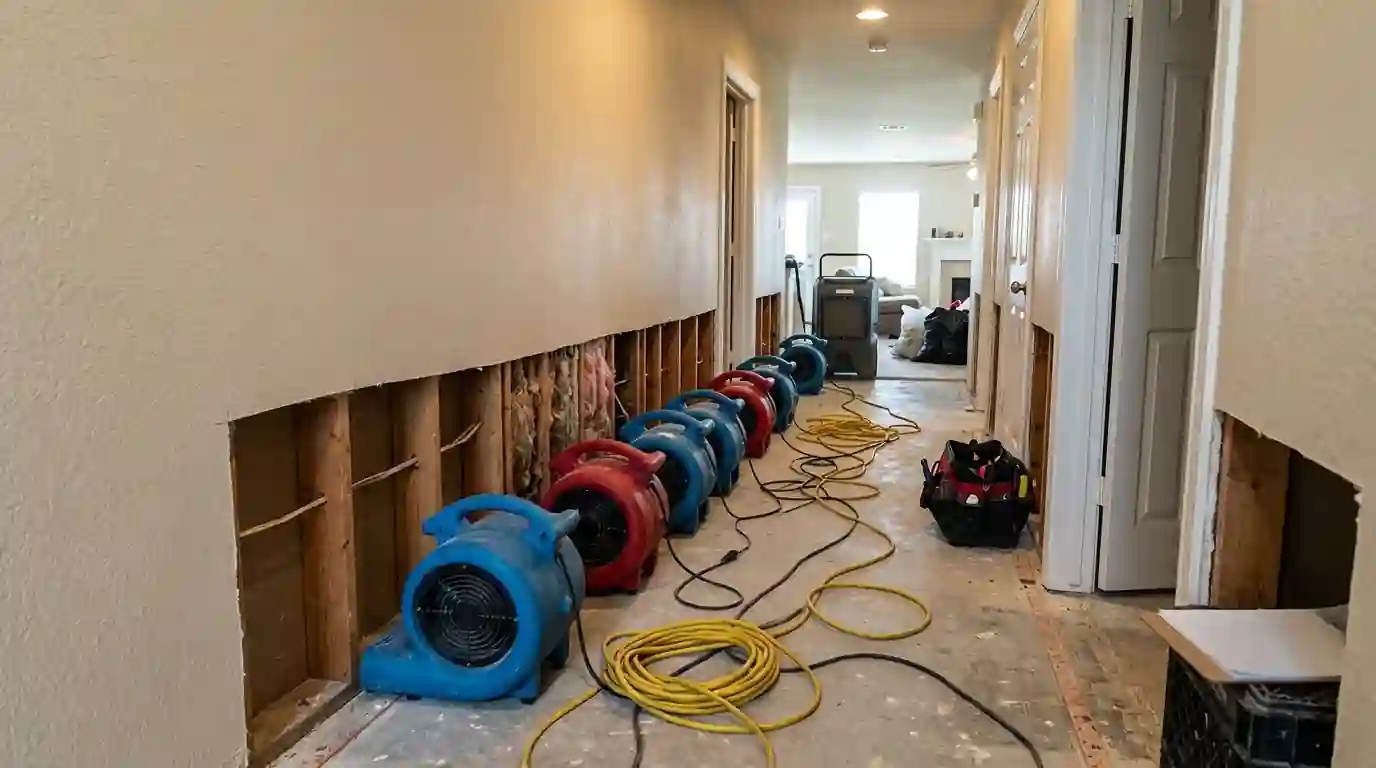
A one-line invoice for water mitigation invites questions. An itemized scope answers them up front. Each line names one task and its quantity: square feet of carpet extracted, linear feet of baseboard removed, drywall cut to a stated height, air movers and dehumidifiers per day, and antimicrobial applied. Photos and readings tie back to the lines, so an adjuster can see why a cut was made where it was. The scope covers mitigation, the work of stopping and drying. Rebuild work such as new drywall, paint and flooring is scoped separately once the structure is dry.
Meeting your adjuster, and where our role stops
If you want us there, we walk the adjuster through the readings, the photos and the reason behind each line. When a line is questioned, we show what the evidence says, and if it does not support the line, we revise it. We do not act as a public adjuster, we do not negotiate your settlement, and we cannot tell you what your policy covers. Those questions stay between you and your insurance company, or a professional you hire for that purpose. Our part is making the facts of the loss clear and complete.
What goes into your documentation file
- Photos of the water source and the failed part
- Wide and close-up photos of every affected room
- Moisture map with numbered reading points
- Reading log for each visit until materials reach dry targets
- Equipment list by room and by day
- Itemized mitigation scope with quantities
- Photos of removed materials before disposal
How your claim file gets built as the work happens
Photograph before moving anything
The source, each room and damaged items are recorded first.
Map and log moisture
Readings go on a numbered sketch and are repeated every visit.
Write the scope
Each task gets its own line, quantity and supporting photo.
Walk the adjuster through it
If you want, we explain the readings and the reason for each removal.
Hand over the file
You receive photos, logs and the scope together, ready to send.
How long a water damage claim can take
The drying does not wait for the claim. Policies generally expect you to take reasonable steps to stop further damage, so extraction and drying begin while the claim is being opened. Mitigation is often finished before anything is settled.
The claim timeline depends on your insurer, how busy adjusters are after a regional storm, and how quickly questions get answered. A complete file removes one common delay: a request for information nobody recorded.
Lessons from Harvey for Galveston County claims
Harvey damaged about 19,000 houses and structures across Galveston County. When that many claims open at once, every file waits its turn, and one that already shows the cause, the readings and a clear scope is easier to review. Harvey also made the line between policies plain: standard homeowners policies exclude rising flood water, which falls to separate flood insurance, while a pipe bursting inside is a homeowners claim. In League City, that question comes first.
Insurance questions we hear on water jobs
Only your policy and adjuster can say. Generally, a sudden break inside the house is what these policies are written for, while gradual leaks and rising flood water are typically excluded.
Call both. Report the loss promptly, but do not wait for the adjuster to start extraction and drying. Delay lets damage spread, and policies generally expect you to limit it.
No. We do not represent you in the claim or negotiate with your insurer. We document the damage and the work and explain the technical side to you and your adjuster.
Not until they are photographed and listed. Note brand and model where you can, and keep the failed part for the adjuster.
We go through the readings and photos behind that line. If the evidence supports it, we show why, and if it does not, we revise it. Payment decisions stay with your insurer.
