
Updated October 2026
Quick answer
Insulation soaked by a leak in a League City attic or wall usually has to come out, because cellulose packs down and batts hold water against the studs. We remove it, bag it, and dry the ceiling drywall and framing to a measured reading before anything new goes back in.
What happens to insulation once water reaches it
Blown cellulose is ground paper, so it soaks up water, mats into a heavy layer and can drag the ceiling drywall down with it. Fiberglass absorbs little water itself, but its fibers trap water against whatever they touch. Either way the material loses its loft, and insulation without loft stops insulating.
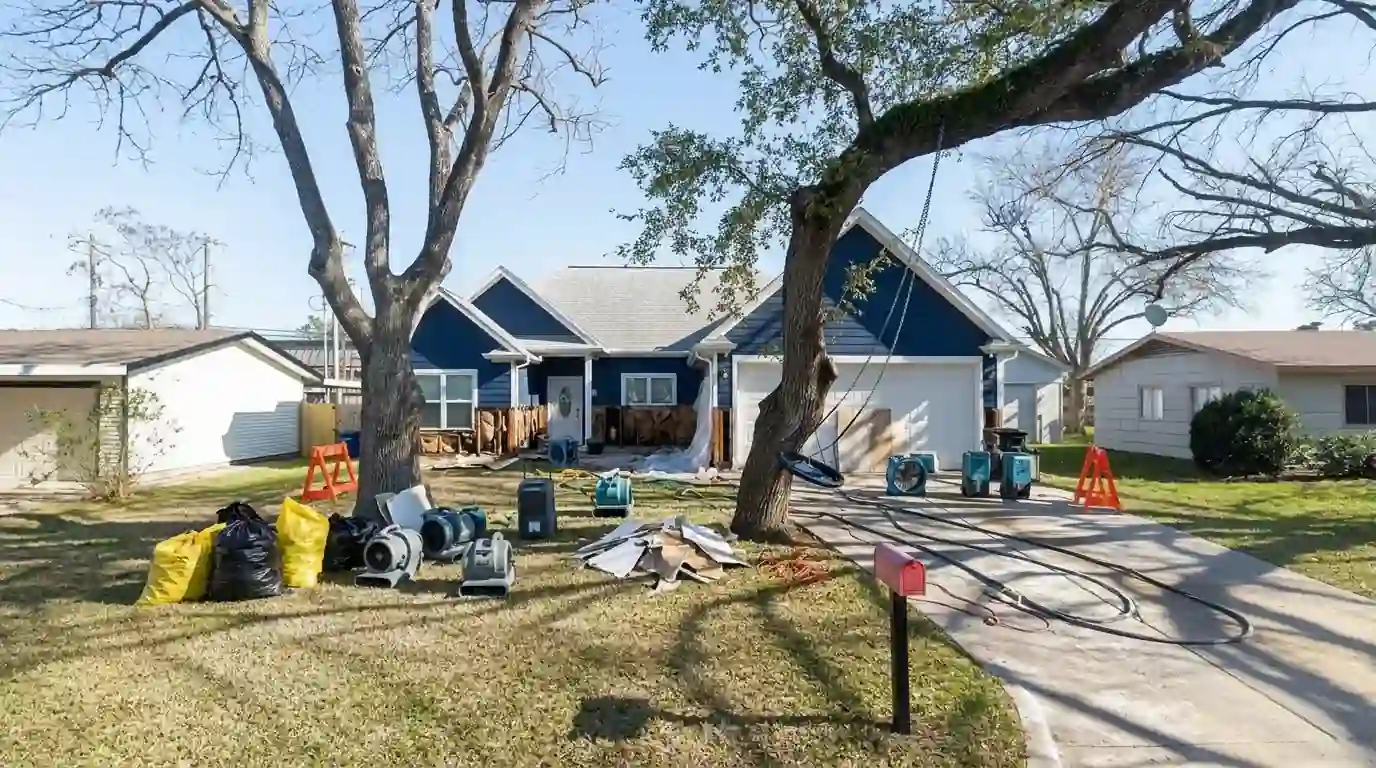
Removal starts below, with readings that mark the edges of the wet area. In an attic, an insulation vacuum sends loose fill straight into bags instead of carrying it down through the house by the armful. In walls, the drywall comes off first and the batts come out by hand. The exposed framing and board then go on dehumidifier and air mover drying.
What changes the price of an insulation tear-out
Insulation jobs are priced on site, because access and spread matter more than the insulation itself.
- Area affected
- A patch around one leak costs far less than an attic soaked end to end.
- Attic access
- A low roof pitch, tight eaves and a small hatch slow every bag.
- Water type
- Flood or gray water means more removal and cleaning before drying.
- Replacement
- New insulation and drywall repair are separate from removal and dry-out.
Keep or replace: how each insulation type handles water
| Insulation type | After a clean water leak | After flood or gray water |
|---|---|---|
| Blown cellulose | Removed where wet, since it will not regain depth | Removed and bagged |
| Loose fiberglass | Wet section removed, dry fill stays | Removed and bagged |
| Unfaced fiberglass batts | Sometimes trimmed if only an edge was damp | Removed |
| Kraft-faced batts | Usually replaced, since the paper holds water | Removed |
| Closed-cell spray foam | Usually stays, since it absorbs little water | Often cleaned and kept if still stuck firmly to the framing |
Blown-in attic insulation after a roof leak
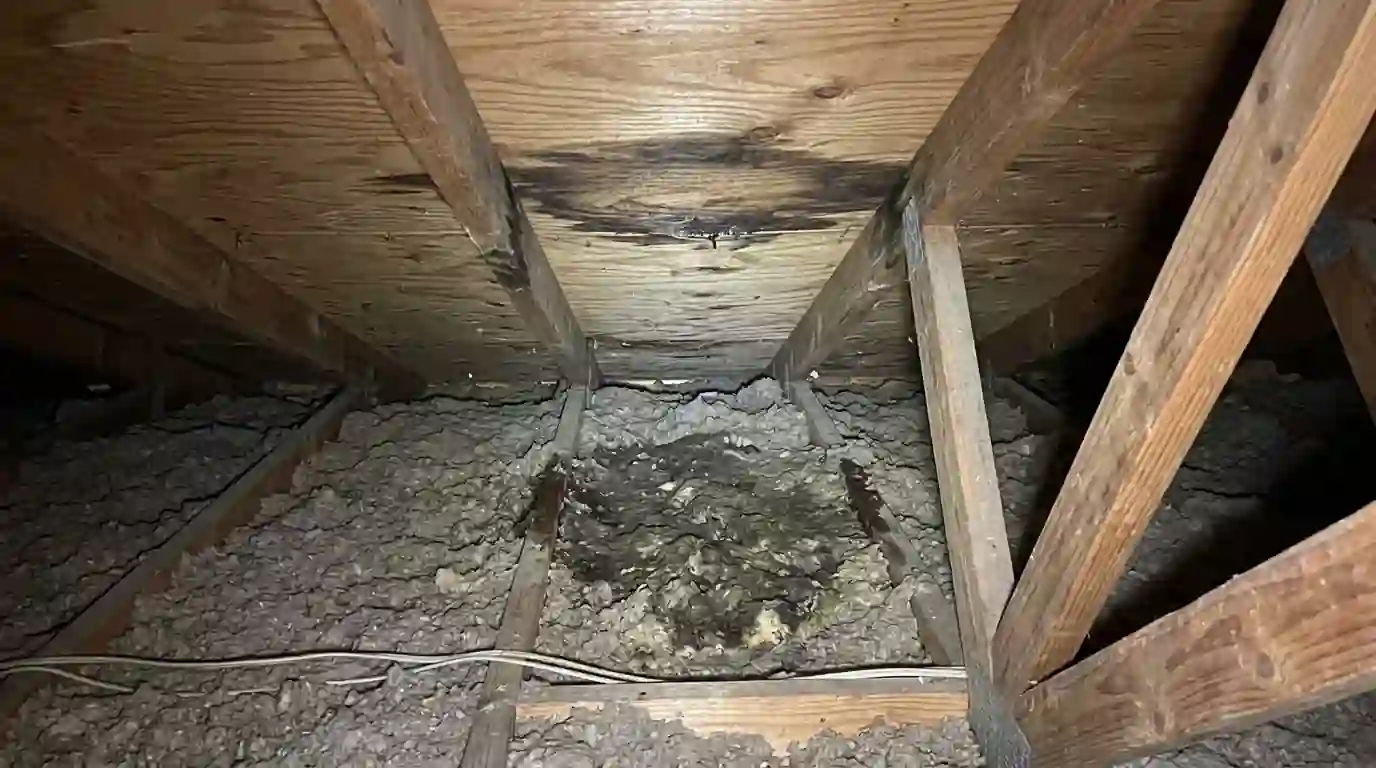
From the room below, it starts as a brown ring on the ceiling or a soft spot near a light fixture. Above it, the cellulose or loose fiberglass has packed into a damp mat that never fluffs back to its original depth. We vacuum out the wet section plus a margin around it, then read the drywall from the attic side. Board that held its shape and reads dry can stay, while board that sagged or crumbled at the screws comes down. Dry fill beyond the wet zone stays where it is.
Batt insulation inside wet walls
Batts in an exterior wall get wet from a window leak, rising flood water or a pipe inside the cavity. The clues are baseboards that stay damp and drywall that reads wet well above the visible line. The fibers trap water and a paper facing wicks it upward, so the batt holds moisture against the studs. Once the drywall is cut, every wet batt is bagged. After flood or gray water, batts are removed, not dried for reuse. An unfaced batt damp only at its bottom edge from a clean leak can sometimes be trimmed instead.
Insulation under a leaking attic AC unit
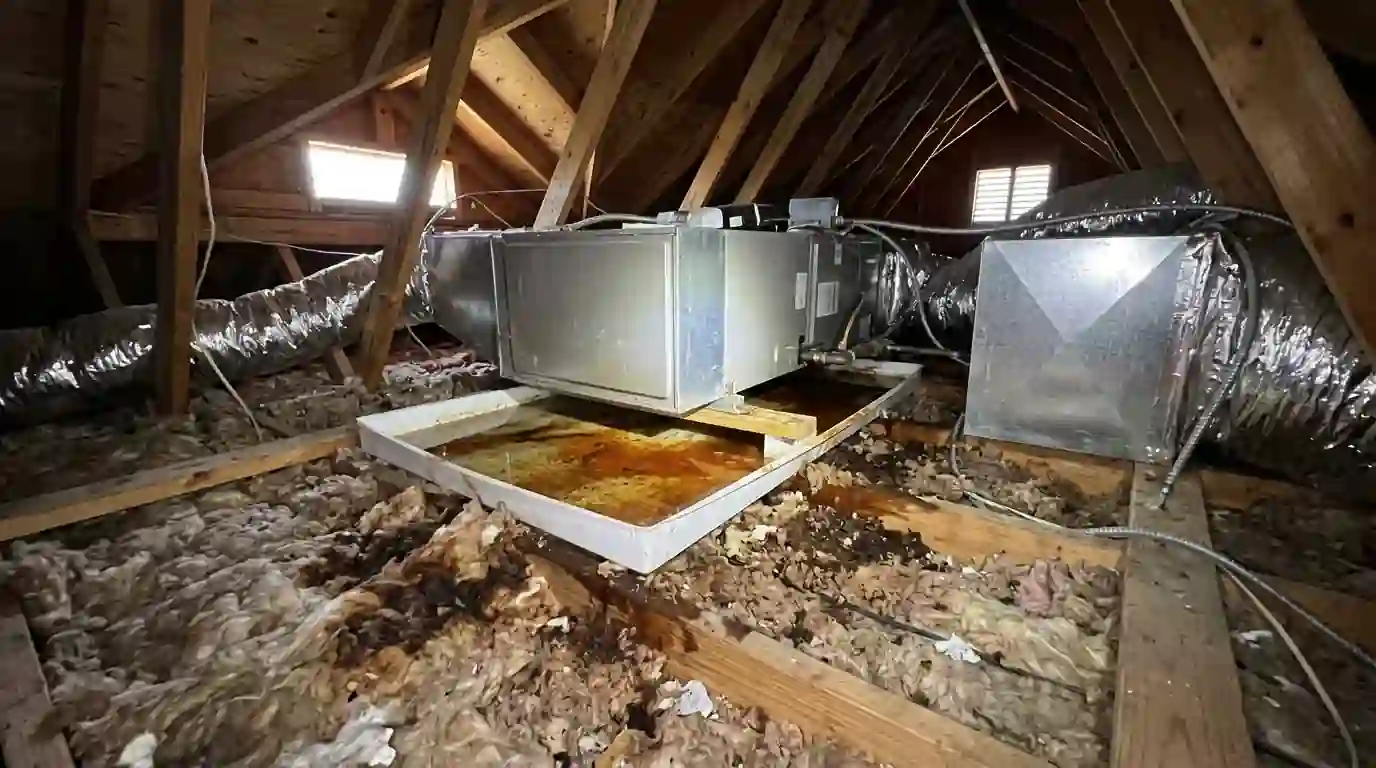
Many Houston-area houses keep the air handler in the attic, sitting in a drain pan over the ceiling. When the condensate line clogs and the float switch fails or was never installed, the pan fills and spills onto the insulation around it. The first sign is often a stain near a hall return, or a ceiling drip in the hottest weeks, when the system pulls the most water from the air. We clear the wet fill around the platform, dry the ceiling and joists, and point out the pan, line and switch so the HVAC side gets fixed first.
What an insulation removal visit covers
- Readings that mark the wet edges on the ceiling or wall
- Photos of the wet insulation before it is moved
- Plastic over the attic hatch and the path below it
- Vacuum or hand removal into sealed bags
- Readings on joists, studs and drywall once it is out
- Drying equipment set on the exposed framing
- Final readings and photos for your file
From first reading to an empty, dry cavity
Confirm the source is stopped
We check that the leak, pan or flood water is no longer feeding the area.
Map the wet area
Meters read the drywall from below and the framing from above.
Remove and bag
Wet insulation leaves by the shortest route out of the house.
Dry what was underneath
Joists, studs and board get air and dehumidification until they read dry.
Clear for replacement
You get readings showing the cavity is ready for new insulation.
Flooded walls and summer attics around League City
Wet insulation around here comes from two very different events. One is flooding: Harvey dropped up to 30 to 40 inches of rain on Pearland over four days and flooded an estimated 1,000 homes there, and flooded exterior walls come with soaked batts behind the drywall. The other is summer. League City's hot season runs about four months, late May to late September, with August highs averaging 91 degrees, the stretch when attic AC systems run longest and an overflowing pan does the most harm.
Questions about wet insulation
Fiberglass from a small clean leak sometimes can, but cellulose packs down and loses its depth for good. Anything touched by flood or gray water should go.
It can be. Insulation holds moisture against wood and drywall paper, which is where mold starts. Removing it and drying the framing takes that condition away.
Not always. Drywall that kept its shape and reads dry once the insulation is out can usually stay. Sagging board or crumbling screw holes mean replacement.
When the water came from a sudden leak inside the house, removal is often included in the claim. Flood water from outside normally falls under a flood policy.
It can be dusty, so we cover the hatch and the floor below it and vacuum the material straight into bags, keeping it out of your rooms.
