Updated October 2026
Quick answer
Mold remediation in a League City home means finding the moisture source, sealing the work area under negative air, and removing or cleaning every material the growth reached. Surface bleach is not remediation, because growth inside drywall paper and wood survives it.
Containment, removal and drying, in that order
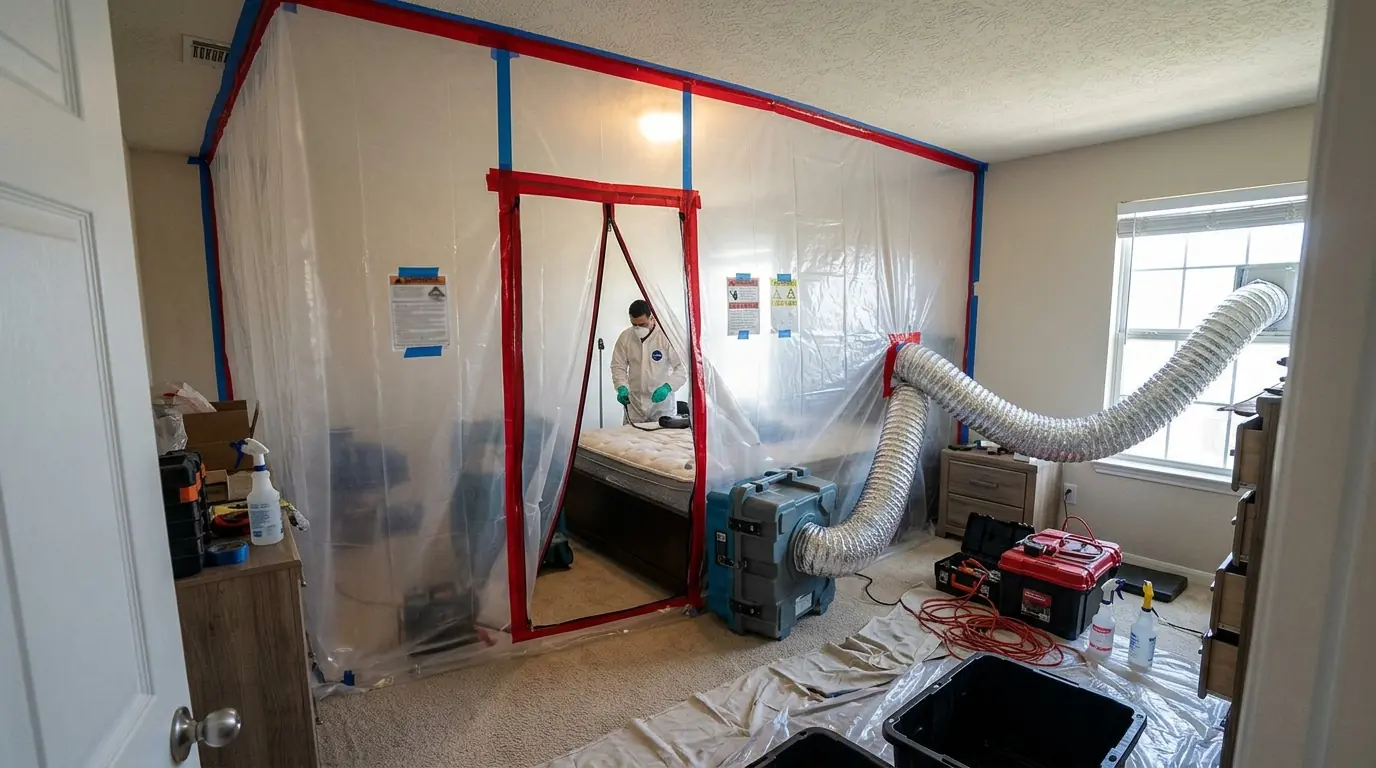
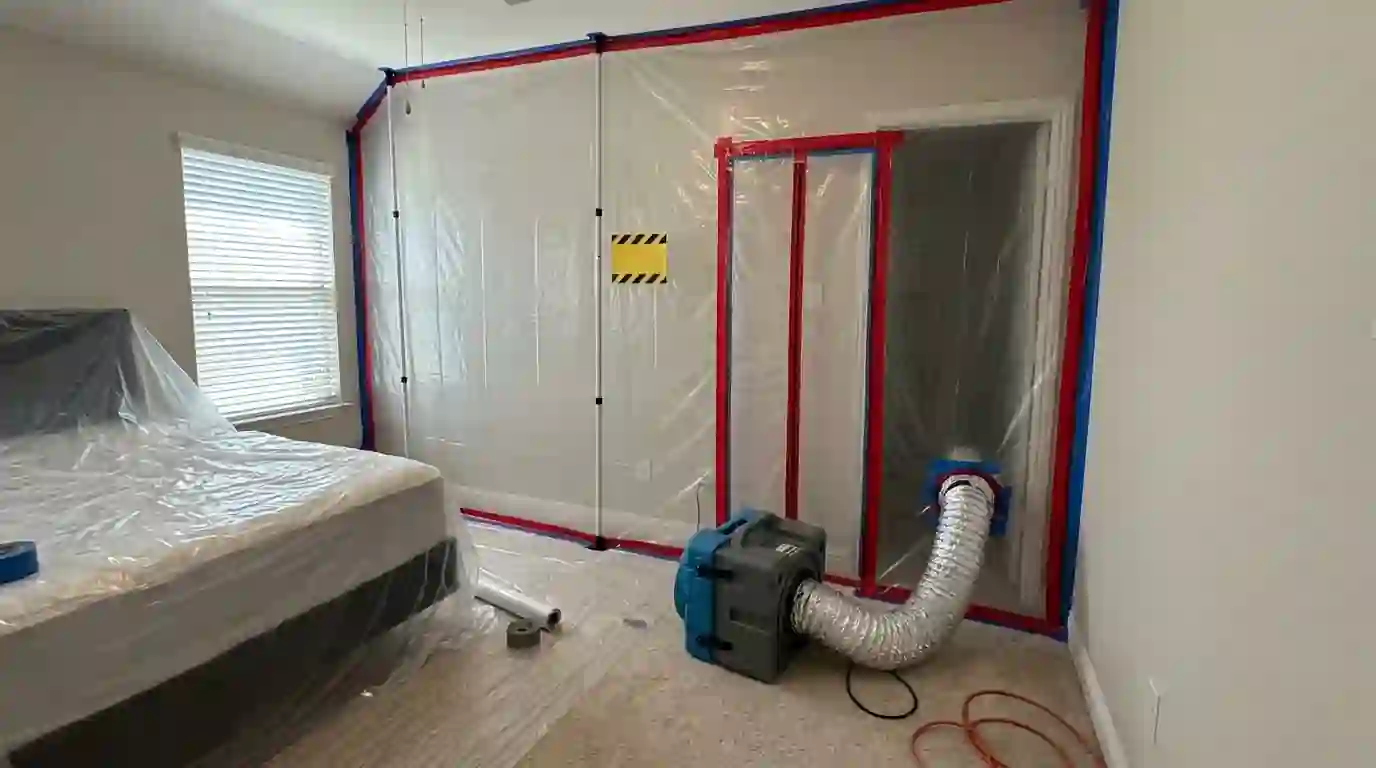
Plastic sheeting closes off the room or wall, and a HEPA air scrubber exhausts air from it, so spores drift inward instead of into the hallway. Drywall, pad and insulation with growth through them are cut out and bagged inside the zone, and framing is HEPA vacuumed, scrubbed or sanded clean.
Then the moisture source is fixed and the area dried to a meter reading, since mold removed from a wall that stays wet grows back. An old leak nobody found usually turns up through moisture mapping.
What sets the price of a mold job
Mold work is priced after the inspection, mostly by the size of the containment and what has to come out.
- Affected area
- One sink base is a small job; a whole room is not.
- Containment size
- Sealing one bathroom costs less than isolating two bedrooms.
- Materials removed
- Drywall, cabinets, pad and insulation add labor and disposal.
- Hidden growth
- Mold behind the first opening can widen the scope.
Published national planning ranges
- Mold remediation: $1,373 to $3,325, average $2,347 (lawnstarter.com, 2026)
These are national figures from published cost guides, shown for planning only. They are not a quote and not our price list; your job is priced after we see it.
A small patch you can clean, and when to stop
EPA homeowner guidance puts the do-it-yourself limit at roughly 10 square feet, once the water problem is fixed.
Safe to handle yourself
- Scrub hard surfaces with detergent and water
- Wear an N95 mask, gloves and goggles
- Fix the drip so the area dries
- Discard moldy cardboard and paper
Time to call us
- Growth beyond a small patch
- Mold inside a wall or cabinet base
- Mold after flood or sewage water
- Anyone at home with asthma or weak immunity
Mold inside walls after a leak
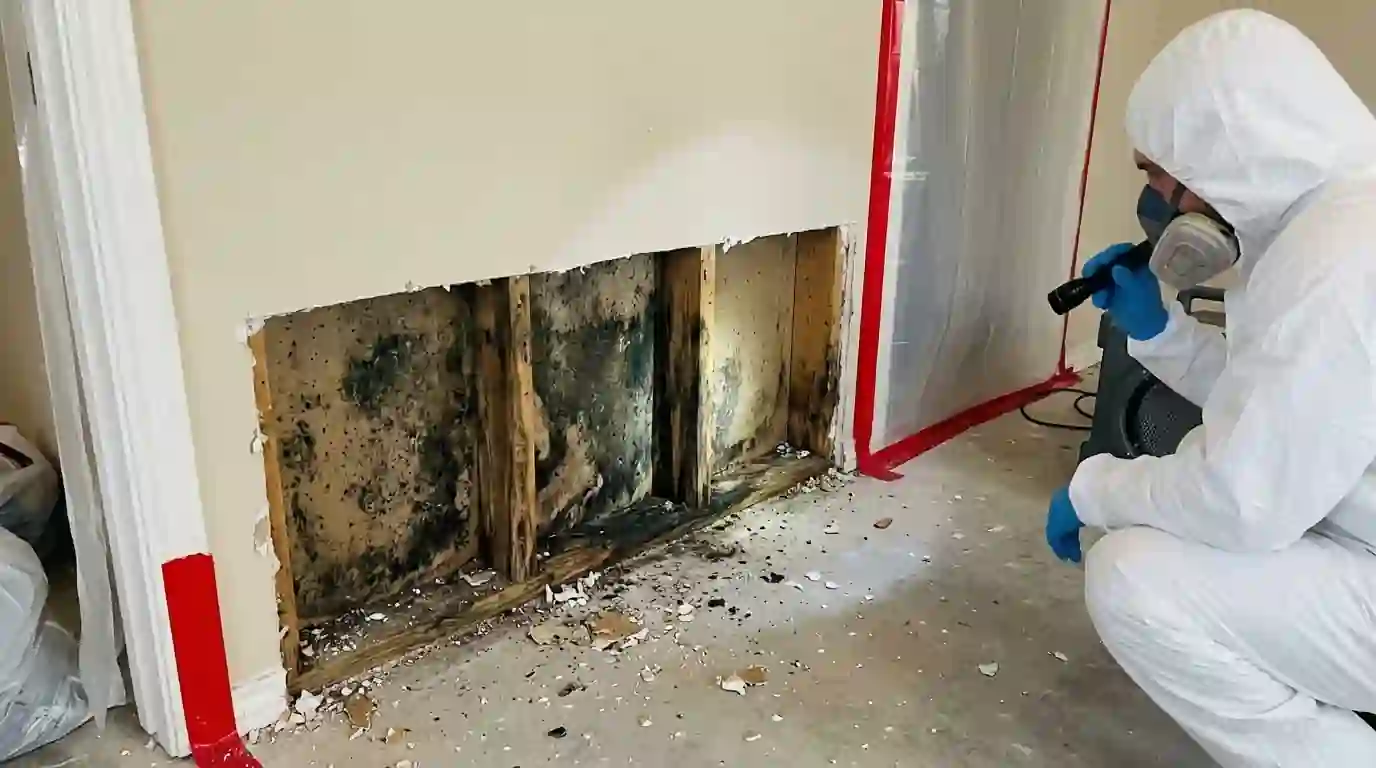
Wall mold tends to show up late: a stain that returns after painting, crumbling baseboard, or a musty smell near a bathroom. The growth is often worse on the back of the drywall and on the bottom plate than anything visible from the room. We open the wall inside containment, cut the board back to clean material and bag it, along with the insulation in that bay. Studs and plates are cleaned and dried, and framing is replaced only when rot has weakened it.
Mold under sinks and in base cabinets
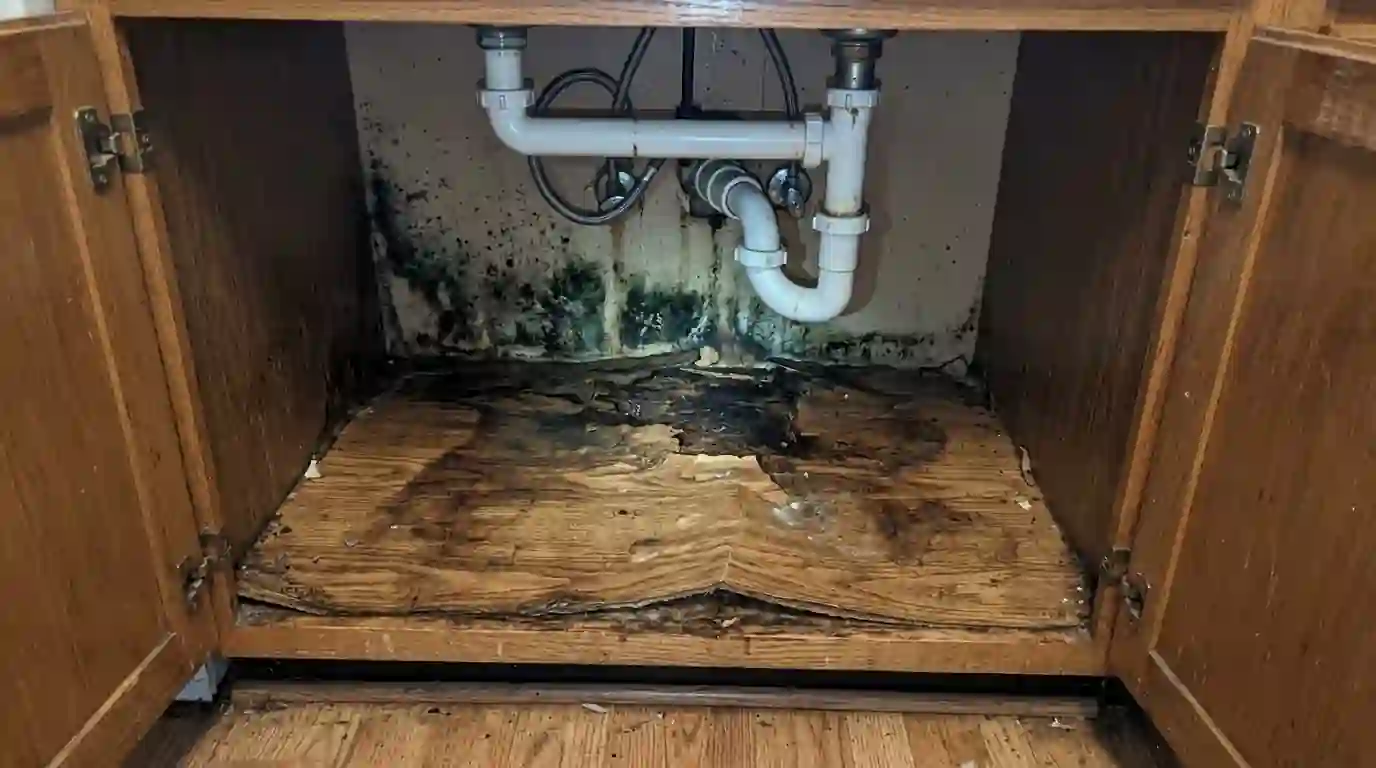
A slow drip from a trap, valve or dishwasher connection can run for months inside a cabinet. You notice the sink base floor swelling, a dark edge along the back panel, or a smell when the door opens. Particleboard and thin hardboard backs soak up water and grow mold through, so those parts usually come out. The wall behind and the floor under the toe kick get checked too. Solid wood doors and face frames can usually be cleaned and kept.
Bathroom mold beyond the grout line
Some bathroom mold is surface growth on grout and caulk, and it scrubs off. The kind that needs remediation returns soon after scrubbing, darkens the ceiling around the exhaust fan, or creeps out from behind the tub surround. Those patterns point to a failed shower pan, a valve leaking inside the wall, or a fan that moves almost no air. A leaking shower is the usual culprit. Wet backer board behind tile comes out, while tile on a sound, dry wall stays.
Mold on furniture and stored belongings
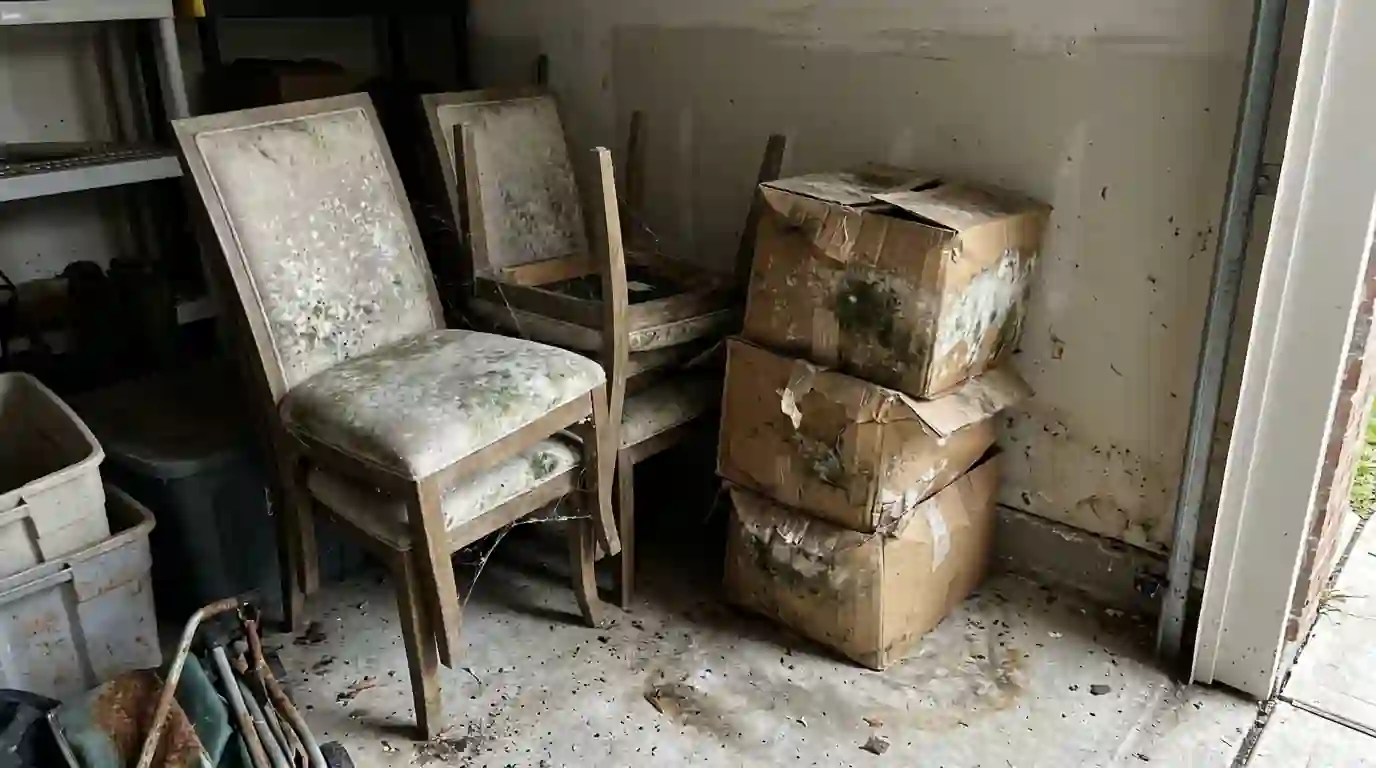
Belongings get mold when a room stays damp: a closed-up closet after a leak, boxes in a garage, a sofa pushed against a wet wall. Glass, metal, plastic and sealed wood clean well with HEPA vacuuming and a damp wipe. Mattresses, upholstered pieces, cardboard and paper with growth into the material are usually discarded, while clothing with light growth often comes clean in the laundry. We sort items with you, photograph what goes, and move what stays through a contents pack-out.
Musty smell you cannot trace? Call and we will help you find the water.
Call (832) 737-0315What a mold remediation visit includes
- Moisture readings to find the water source
- Photos of each area before work starts
- Plastic containment with a zippered entry
- HEPA air scrubber holding negative pressure
- Bagged removal of porous materials with growth
- HEPA vacuuming and wiping of all surfaces
- Final readings before the containment comes down
From first call to a clean wall
Talk it through
We ask about smells, stains and past leaks.
Read the moisture
Meters show where the water is and how far it spread.
Contain the area
Sheeting and negative air go up before anything is disturbed.
Remove and clean
Growth is cut out or cleaned off, then HEPA vacuumed.
Dry and hand back
Materials reach target readings, and you get photos and notes.
Why mold gets a head start in League City air
WeatherSpark puts League City's muggy period at about 7.2 months a year, April 1 to November 8, with July the muggiest. Through that stretch, outdoor air is too humid to dry a wet wall, so open windows add moisture instead of removing it. Harvey flooded an estimated 3,000 homes in neighboring Friendswood, and after a flood that size, walls dry far better with dehumidifiers running and the house shut than with windows open.
Signs a mold problem is bigger than one spot
A smell that keeps returning
It is back a day after airing out the room.
Spots bleeding through paint
Painted-over growth reappears on a damp wall.
Soft or swollen baseboard
Trim near a wet wall breaks down first.
Growth on several surfaces
Mold on walls, furniture and shoes points to damp air.
Dark edges at the floor
Staining along the bottom of drywall marks old water.
What League City homeowners ask about mold
Not on drywall or wood. Bleach lightens the surface but misses growth in the paper or grain, and its water feeds regrowth.
The EPA says growth can start within 24 to 48 hours on wet materials. Here is how that timeline usually plays out.
Usually not. The sealed work area stays under negative air, and the rest of the house remains usable while we work.
We measure moisture, which shows where mold can grow. Lab sampling or clearance testing should come from an independent assessor, not the people who did the removal.
Mold after a sudden covered leak is often part of the water claim, though many policies cap it. Slow leaks and humidity are usually excluded.
