Updated October 2026
Quick answer
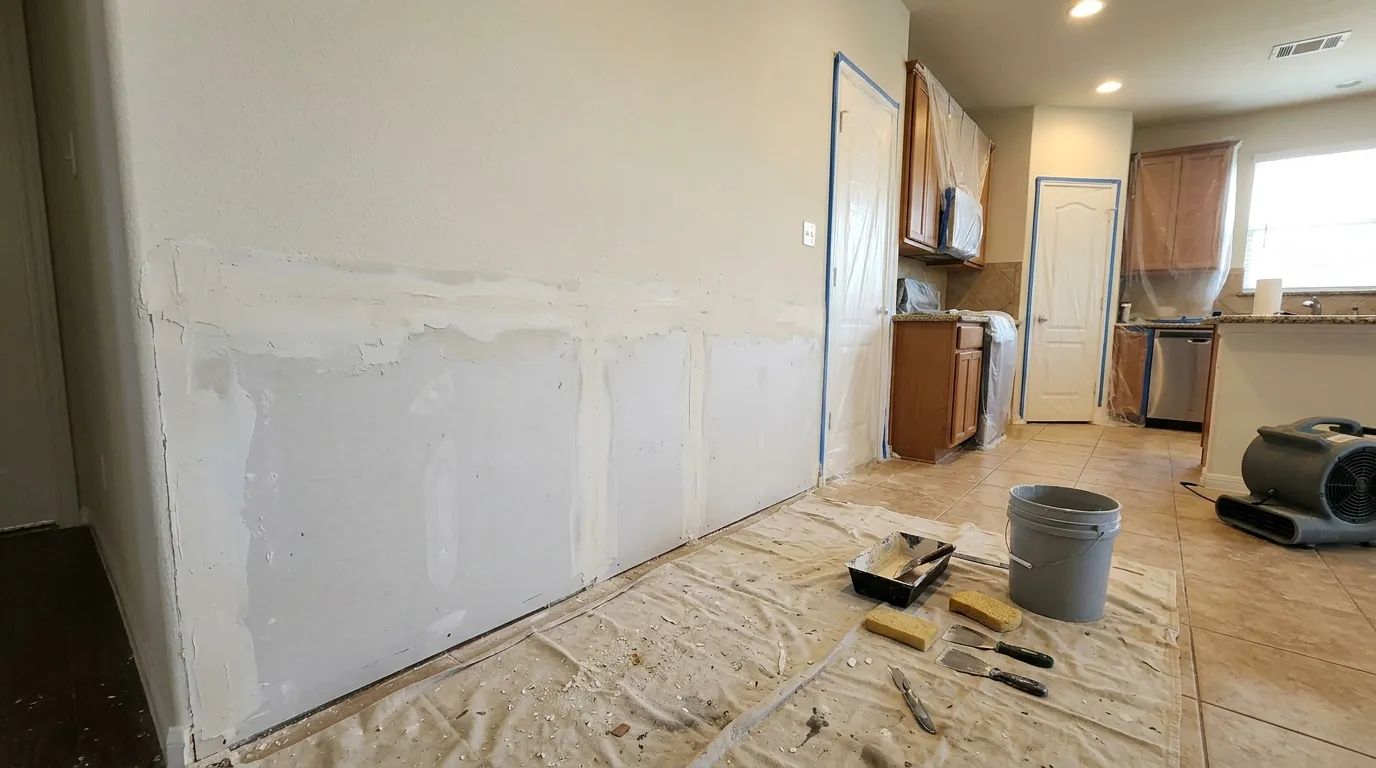
Rebuilding a League City room after water damage starts only once the framing and slab read dry, then moves from drywall to texture, paint, trim and flooring in that order. Matching what is already there, from the texture pattern to the baseboard profile, takes most of the skill.
From open walls to finished paint
Repair starts only when the moisture readings say the structure is dry. A wall closed too early traps moisture behind new drywall, and the paint blisters or mold returns. From there the work runs in a fixed order: drywall, tape and mud, texture, primer and paint, trim, then flooring, so no step damages the one before it.
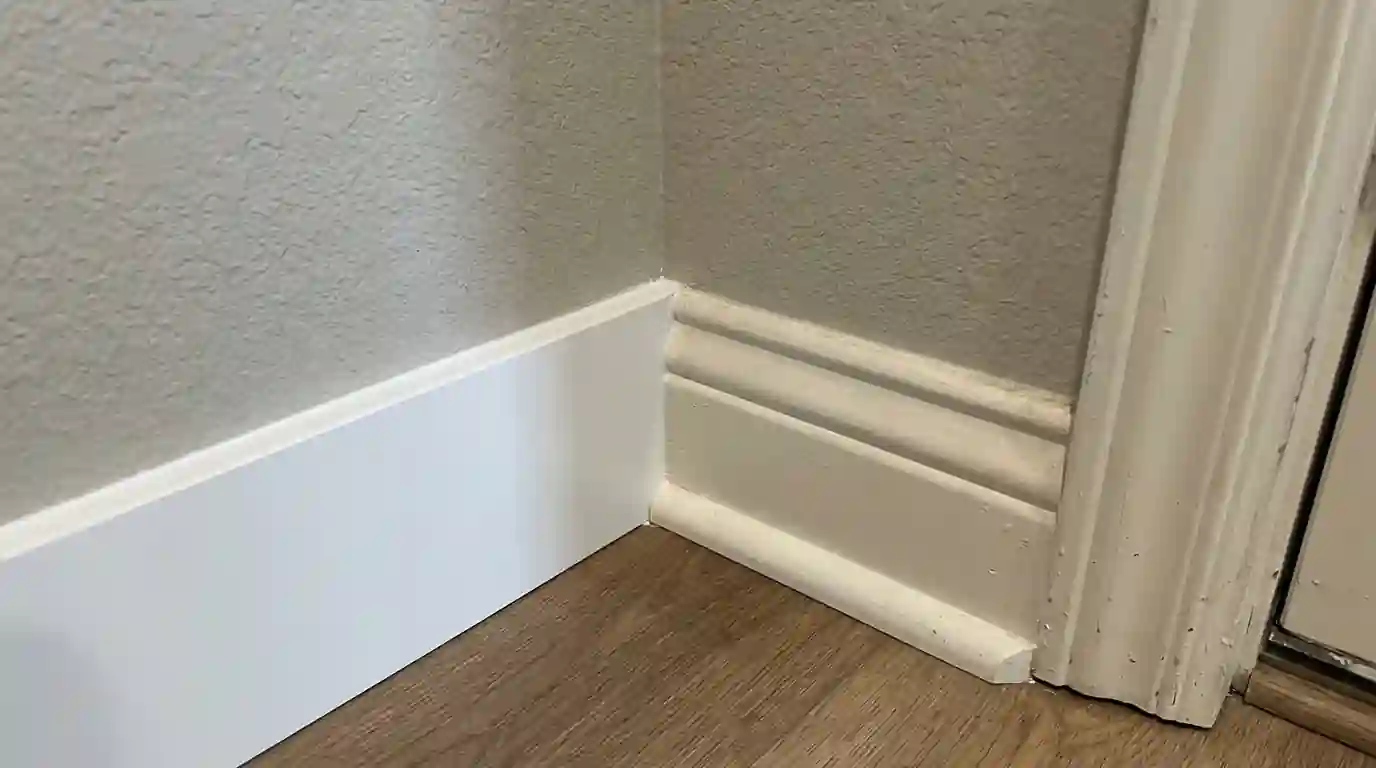
Most of the effort goes into matching. A flat, square patch with the wrong texture shows whenever light rakes across it. Older baseboard profiles and flooring lines may be discontinued, so we find the closest match or plan a break point, such as a doorway. Straight flood cuts make the patch line easier to hide.
What the repair bill depends on
Repairs are quoted room by room from a written scope after the dry-out.
- Length of cut drywall
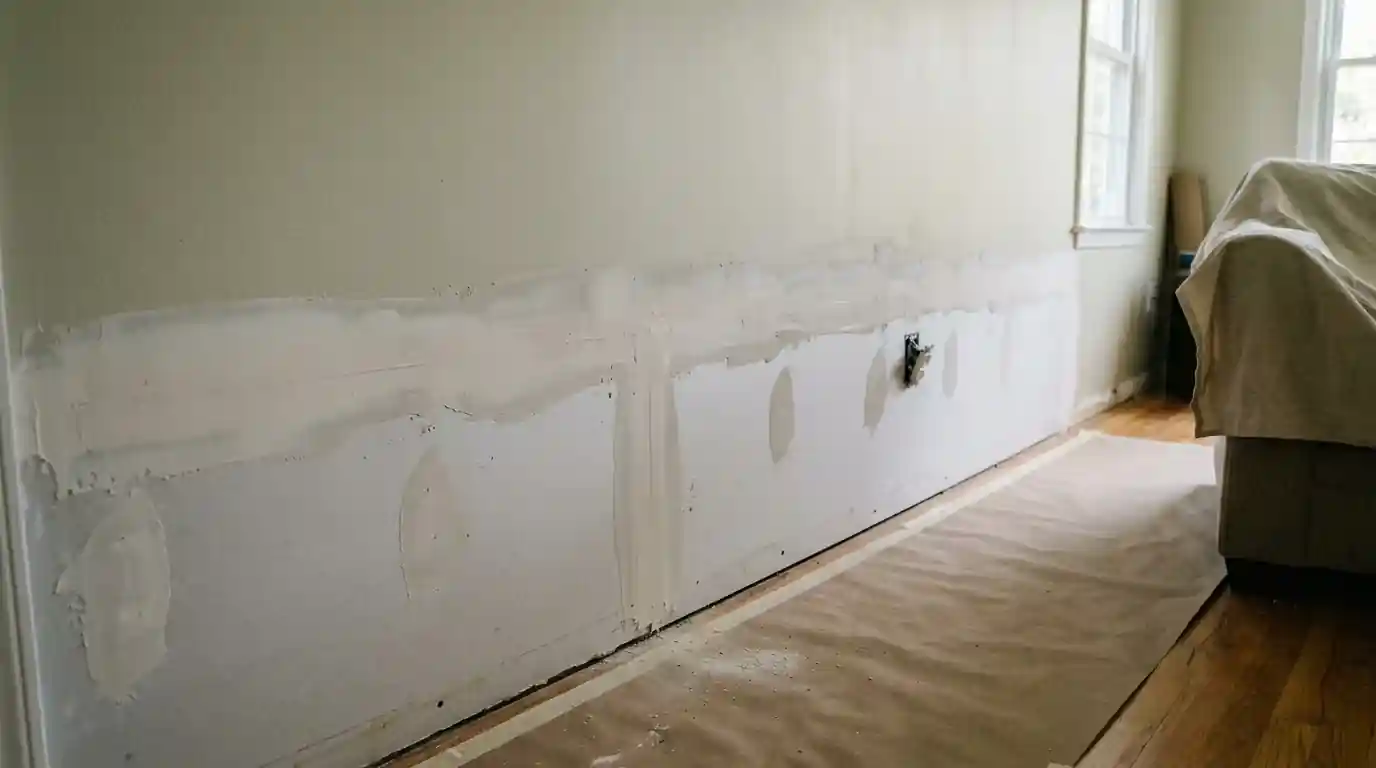
- A flood cut around a whole room means far more finishing than one opening.
- Texture and ceiling height
- Matching knockdown on a tall wall or a ceiling adds time.
- Trim profile
- Stock baseboard is quick, while a discontinued profile needs a close match.
- Flooring choice
- Replacing a whole connected floor costs more than patching one room.
Replacing cut-out drywall
After a leak, walls usually come back with a straight band of new board along the bottom or a square opening around the source. New drywall is screwed to the dry studs, the joints are taped, and the mud is built up in thin coats with drying time between them. Moisture-resistant board goes back in bathrooms and laundry rooms. Board at the bottom of a wall can sit slightly off the floor, hidden by the baseboard, so it does not wick water from a future spill.
Baseboard, casing and door trim
Baseboard is usually the first finish material water ruins. MDF trim swells at the bottom edge and splits along its paint line, and it does not shrink back. Solid wood trim that was pulled carefully during mitigation can often be dried, sanded and reinstalled. Door casing and the bottoms of hollow-core doors swell the same way. We match the profile and height of what is left in the room, cope the inside corners, and caulk and paint the trim so new and old pieces read as one run.
Matching wall texture and paint
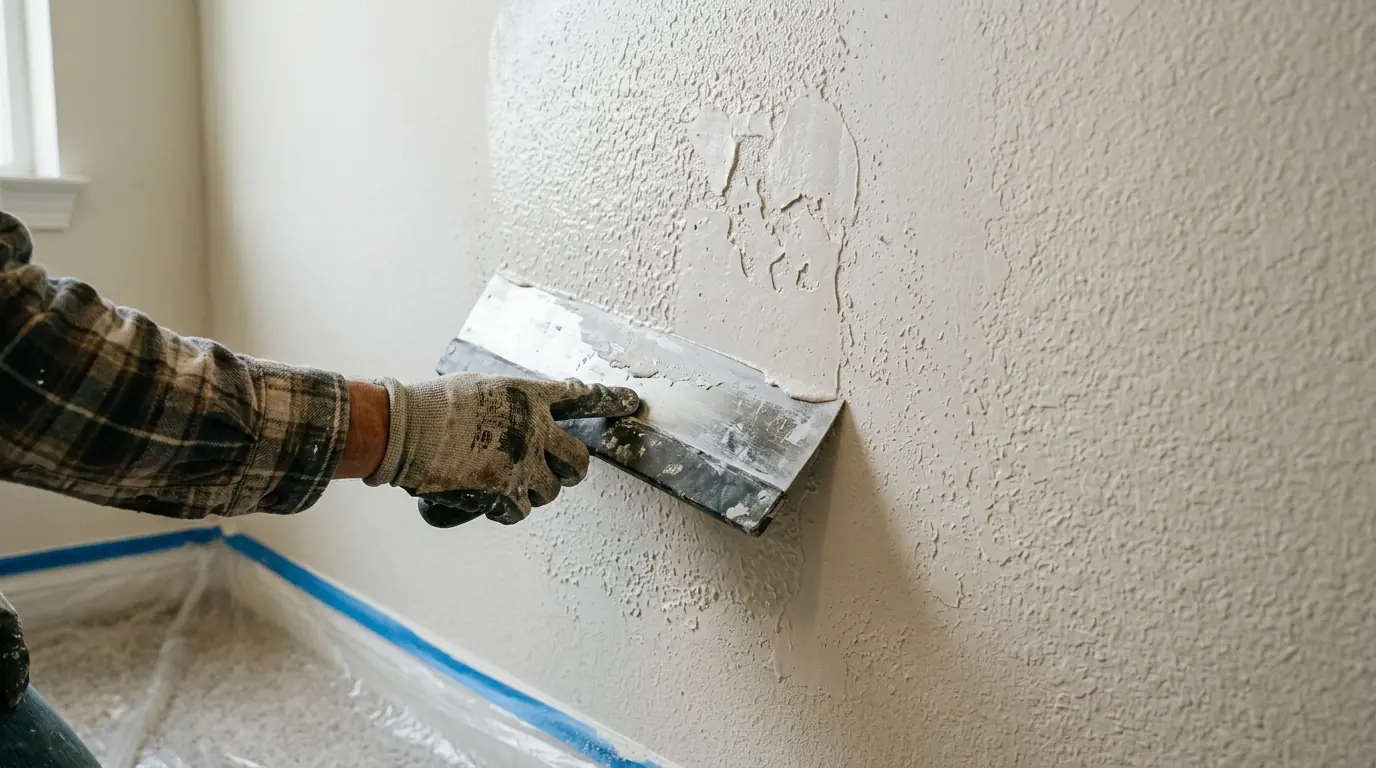
Most Houston-area walls carry an orange peel or knockdown texture, and a smooth patch in the middle of one is obvious from across the room. Texture is sprayed or hand-applied to match the pattern and size of the existing finish, then left to dry. Fresh mud and texture need primer, or the paint sinks in and looks dull over the patch. Paint is then rolled corner to corner across the whole wall, not just the repair, because even the same color reads differently next to paint that has aged.
Flooring after the dry-out
Floors are the last step and often the biggest decision. Laminate that cupped or swelled at the seams has to be replaced. Vinyl plank can sometimes be lifted, dried and relaid if the planks stayed flat. Dried carpet goes back down over new pad, while tile usually survives and needs only grout attention and cleaning. When the old flooring is no longer made, the new floor has to stop at a doorway or run through connected rooms, a choice worth settling before anything is ordered.
What the repair scope covers
- Final readings confirming the structure is dry
- Drywall hung, taped and finished
- Texture matched to the surrounding walls
- Primer and paint across each repaired wall
- Baseboard, casing and door trim replaced or reset
- Flooring replaced or reinstalled
- A room-by-room walkthrough at the end
How the rebuild is scheduled
Confirm dry
Final readings show the framing and slab are ready to close.
Write the scope
Each room's drywall, trim, paint and flooring goes on one list for you and your adjuster.
Close and finish walls
Drywall, tape, mud and texture go up in sequence.
Prime, paint and trim
Walls are painted, then baseboard and casing go back on.
Floors and walkthrough
Flooring goes in last, and we walk each room with you.
What sets the length of a repair job
The calendar is set less by labor than by waiting. Joint compound dries between coats, more slowly in humid weather unless the room is cooled and dehumidified, and wood or laminate flooring needs time in the house to adjust before it goes down.
Ordering is the other variable. Stock trim and common carpet arrive quickly, while a discontinued floor can take longer than the work itself, and insurance approval of the scope can set the start date.
Older homes in League City and Dickinson need closer matching
Roughly 14 percent of League City homes were built before 1980, mostly in the 1970s, and Dickinson's median home dates to 1986, with 26 percent from the 1970s. Houses that age need more care. Trim and texture styles have changed, and joint compound or textured ceilings from that era can contain asbestos, so a sample should be tested before anyone sands or cuts. About 7 percent of Dickinson housing is mobile homes, often with vinyl-faced wall panels and particleboard floor decking that swell when wet.
Repair questions once the fans are gone
Yes. We handle the drying and the repairs, which keeps the scope, readings and photos in one file for your adjuster.
Not if the texture is matched and the whole wall is painted. Patches show when only the repaired area gets paint or the texture pattern is off.
Once every wall and floor area reads dry on the moisture map, and the scope is approved if insurance is involved.
A covered water loss usually includes putting damaged materials back, subject to your deductible and limits. Help with the claim keeps the repair scope tied to the readings.
You can, once the drywall is finished and primed. Tell us early so the scope and the adjuster's estimate reflect it.
