Updated October 2026
Quick answer
Mattress cleaning in League City covers the top fabric and the layers just under it, not the foam core. HEPA vacuuming, targeted stain treatment and a low-moisture clean do the work. Urine that soaked into the core can be reduced but not always removed, so we check depth before treating and tell you what to expect.
What can and cannot be cleaned in a mattress
The ticking, the quilted top fabric, holds sweat, skin flakes, dust and spills. Under it sit comfort layers of foam or fiber, then springs or a foam core. Cleaning reaches the ticking and the comfort layer just below it. Anything deeper is a matter of odor treatment and drying, not extraction.
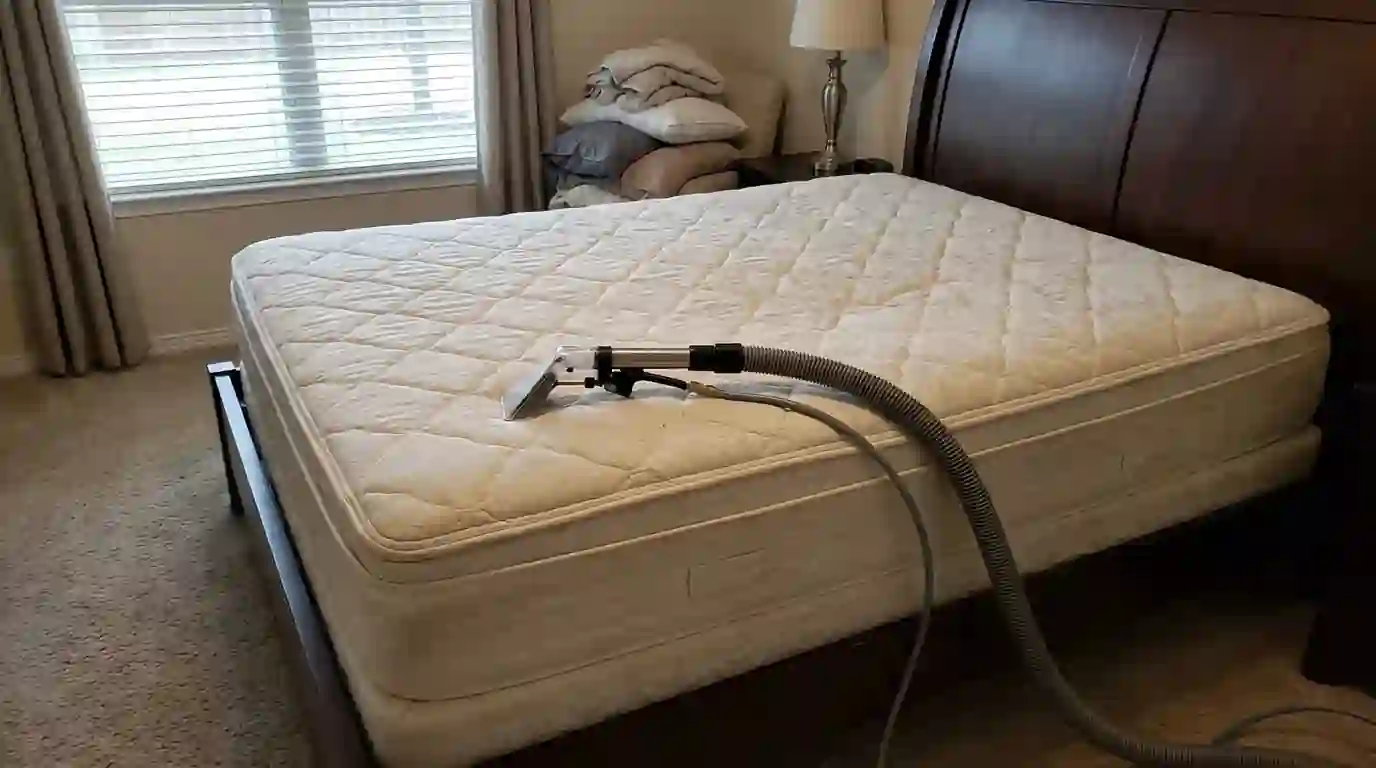
We vacuum both sides with a HEPA-filtered vacuum, pre-treat stains with a spotter matched to the soil, and clean with a low-moisture method that keeps water out of the foam. An air mover then runs across the surface. An upholstered headboard can be done on the same visit as part of our upholstery cleaning.
Mattress makers generally warn against soaking foam, and a mattress that stays wet in a humid bedroom can grow mildew inside. That is the whole reason for the low-moisture approach.
Size, stains and the price of a mattress cleaning
Size sets the starting point, and stain and urine work add to it.
- Size
- A king takes longer than a twin, and the price follows.
- Both faces
- A flippable mattress can be cleaned on both sides.
- Stains
- Each set stain gets its own spotter and dwell time.
- Urine
- Enzyme or oxidizer treatment and extraction add a step.
Published national planning ranges
- Mattress cleaning: $60 to $150 (homeguide.com, 2023)
These are national figures from published cost guides, shown for planning only. They are not a quote and not our price list; your job is priced after we see it.
What you can do for a mattress at home
Fine to do yourself
- Vacuum the top and seams when you change the sheets
- Blot fresh urine and spills with towels, pressing hard
- Sprinkle baking soda on a dry surface, then vacuum it up
- Use a waterproof protector under the fitted sheet
Time to call us
- Yellow or brown stains show through the sheet
- Urine smell returns at night
- A guest bed smells musty
- Scrubbing at home spread the stain
Stain and urine treatment on a mattress
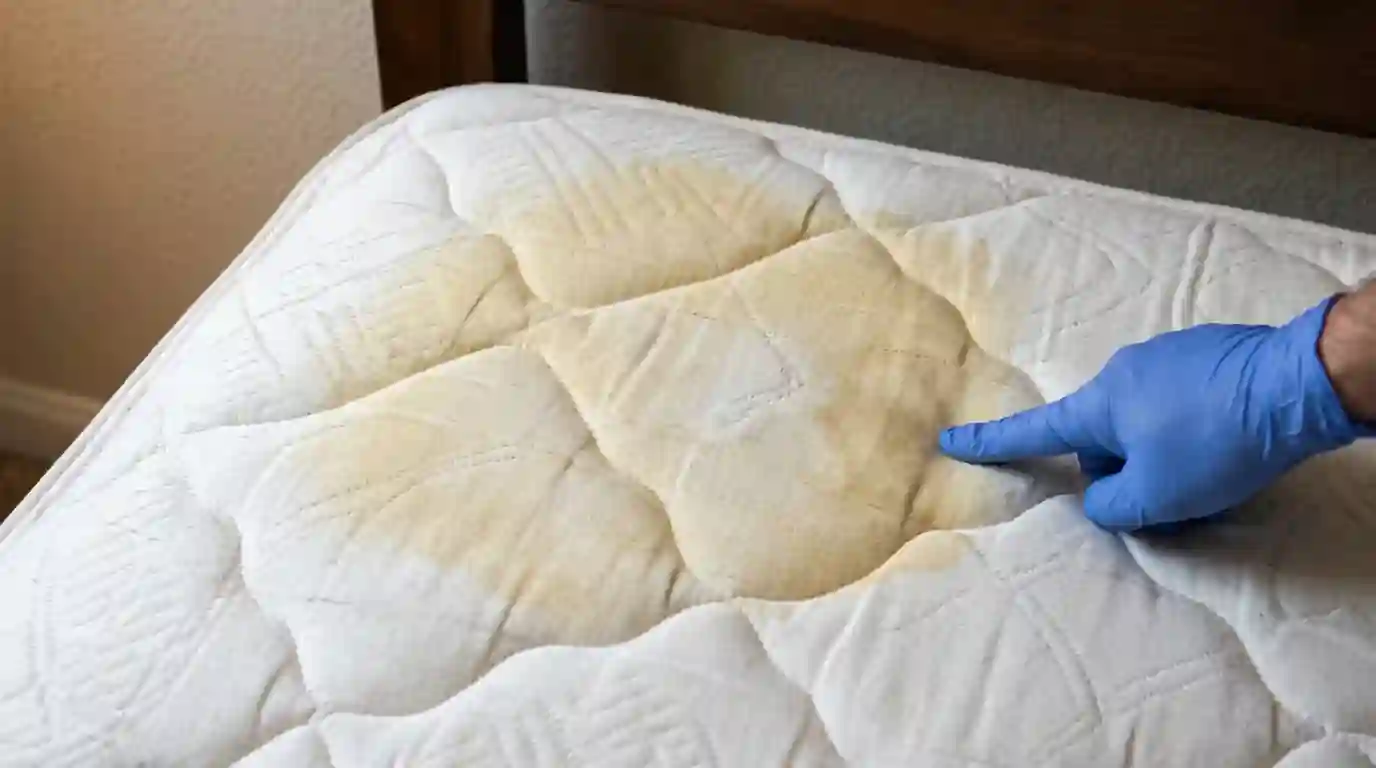
Urine, sweat, blood and spilled drinks leave yellow or brown marks that show through a fitted sheet. Fresh blood responds to cold water and an enzyme spotter, while sweat stains need a protein spotter and patience. Urine from a child or a pet is treated with an enzyme or oxidizer worked into the ticking and comfort layer, then extracted with a small hand tool that recovers what it puts down. Surface stains usually fade a long way. Urine that reached the core may still leave some odor, and then the honest answer is a new mattress.
Dust and allergen removal from the sleeping surface
A mattress collects skin flakes, which dust mites feed on, along with pet dander, pollen and lint. You notice it as gray dust in the seams and along the piping. We vacuum every side slowly with a HEPA-filtered unit and a crevice tool, so the fine particles stay in the filter instead of drifting back into the room. That lowers what sits on the surface. It does not kill mites inside the core or treat an allergy, and a zippered encasement over the clean mattress keeps new dust off it.
How a mattress gets cleaned on the visit
Strip and inspect
Sheets come off, and we check the stains, the seams and the care label.
HEPA vacuum
Every side and seam is vacuumed slowly with a filtered unit.
Treat stains
Spotters matched to blood, sweat or urine go on and are given time.
Low-moisture clean
A hand tool cleans and recovers from the surface, keeping water out of the core.
Dry with airflow
An air mover runs across the mattress, and we tell you when to make the bed.
How long the cleaning and the drying take
The visit depends on how many mattresses there are, their size and how many stains need treatment. A single bed with light soil is quick. A king with old urine spots takes longer, because the treatment needs dwell time and a second extraction pass.
Drying is set by how much moisture went in, the humidity and the airflow. Low-moisture cleaning keeps it short. Running the AC and a ceiling fan with the bedroom door open shortens it further, while a shut room on a muggy day stretches it out.
Sweat, humidity and musty guest beds in League City
The air in League City stays humid for much of the year, and a mattress takes in sweat every night on top of that. Moisture held in the ticking and top foam is why mattresses here can turn sour or musty, especially in guest rooms that sit closed with the AC set high. It is also why the cleaning itself keeps water to a minimum. Adding a lot of moisture to a mattress in a damp climate is exactly how mildew starts inside the foam.
What people ask before a mattress cleaning
Once the surface and seams feel dry to the touch. That depends on how much stain work was done, the room humidity and airflow, so a morning visit is easiest.
Fresh, occasional accidents usually come out well. Repeated accidents over months often reach the core, and then cleaning lowers the smell but may not end it.
No. Bed bugs need a pest control treatment. Cleaning can follow that treatment to remove stains and debris, but it does not deal with bed bugs on its own.
Yes, with extra care. Memory foam soaks up water and dries very slowly, so it gets the lowest-moisture method and only careful, small spot work.
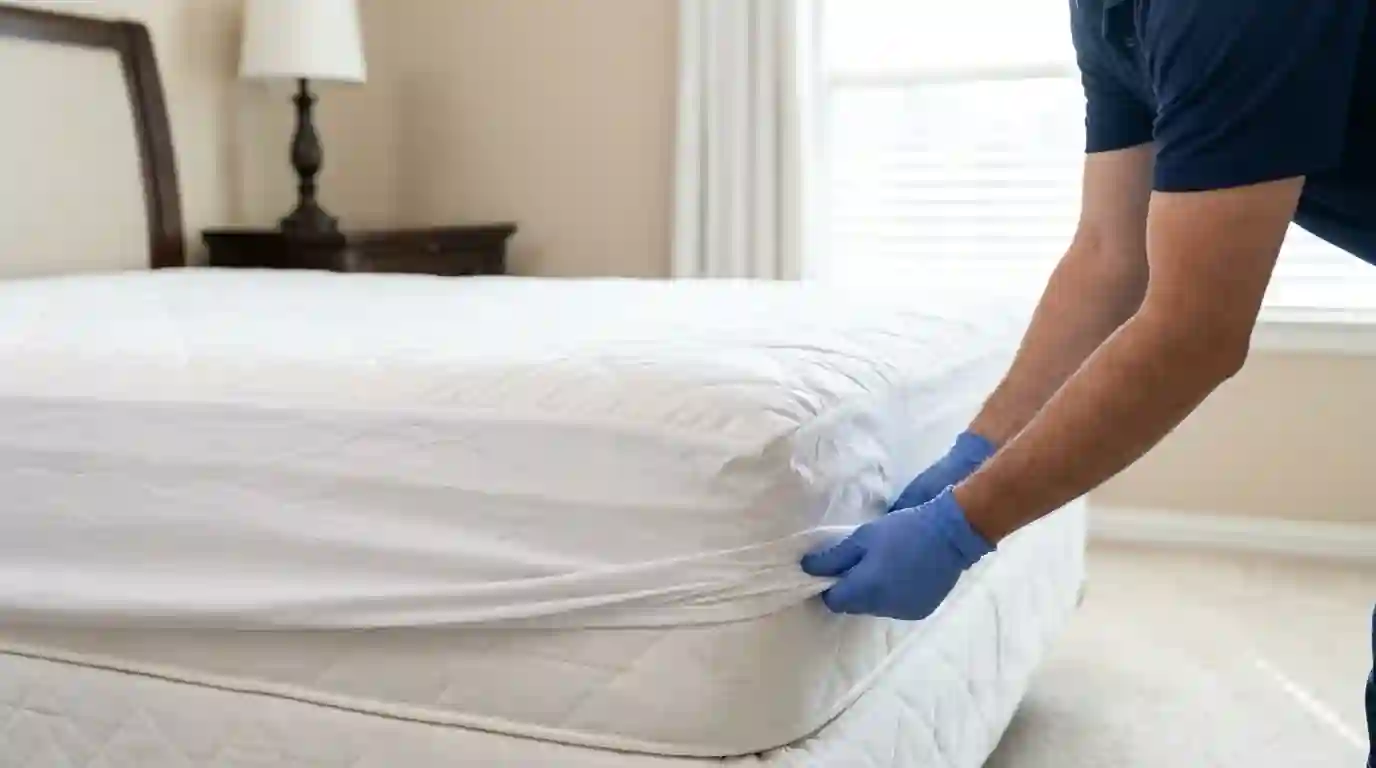
Yes. A waterproof, breathable protector keeps sweat and spills out of the ticking, and it is far easier to wash than a mattress is to clean.
