Updated October 2026
Quick answer
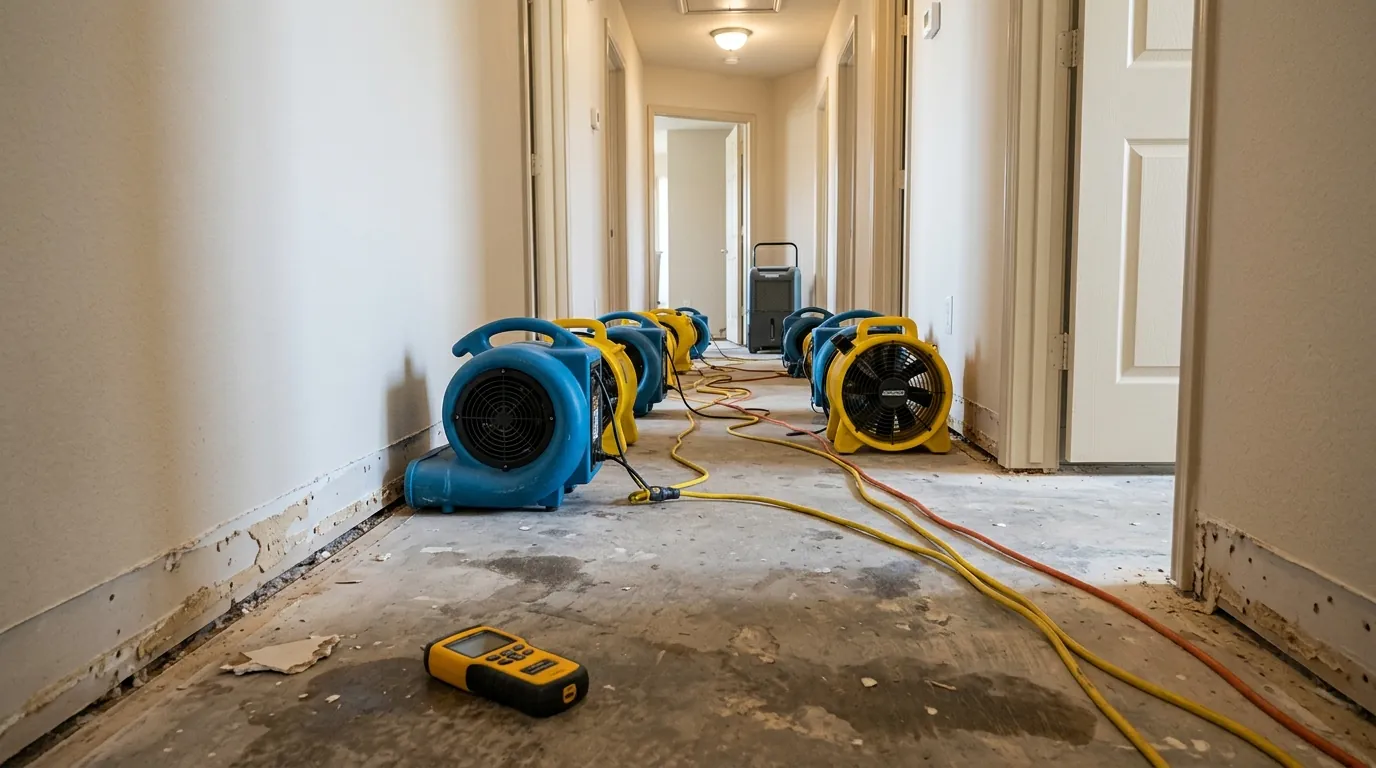
In League City houses, shower leak damage usually starts at the pan, the grout and caulk lines, or the valve behind the tile wall, and it soaks framing and drywall slowly. We locate the wet area with pin meters and thermal imaging first, then open the smallest section that lets the cavity dry.
Why a bathroom leak spreads where you cannot see it
Bathroom leaks are slow and repeated. Each shower pushes a little water past a cracked grout line, a failed pan liner or a loose valve trim, and the framing never dries between uses. By the time paint bubbles in the next room, the wet area inside the wall is often wider than the stain.
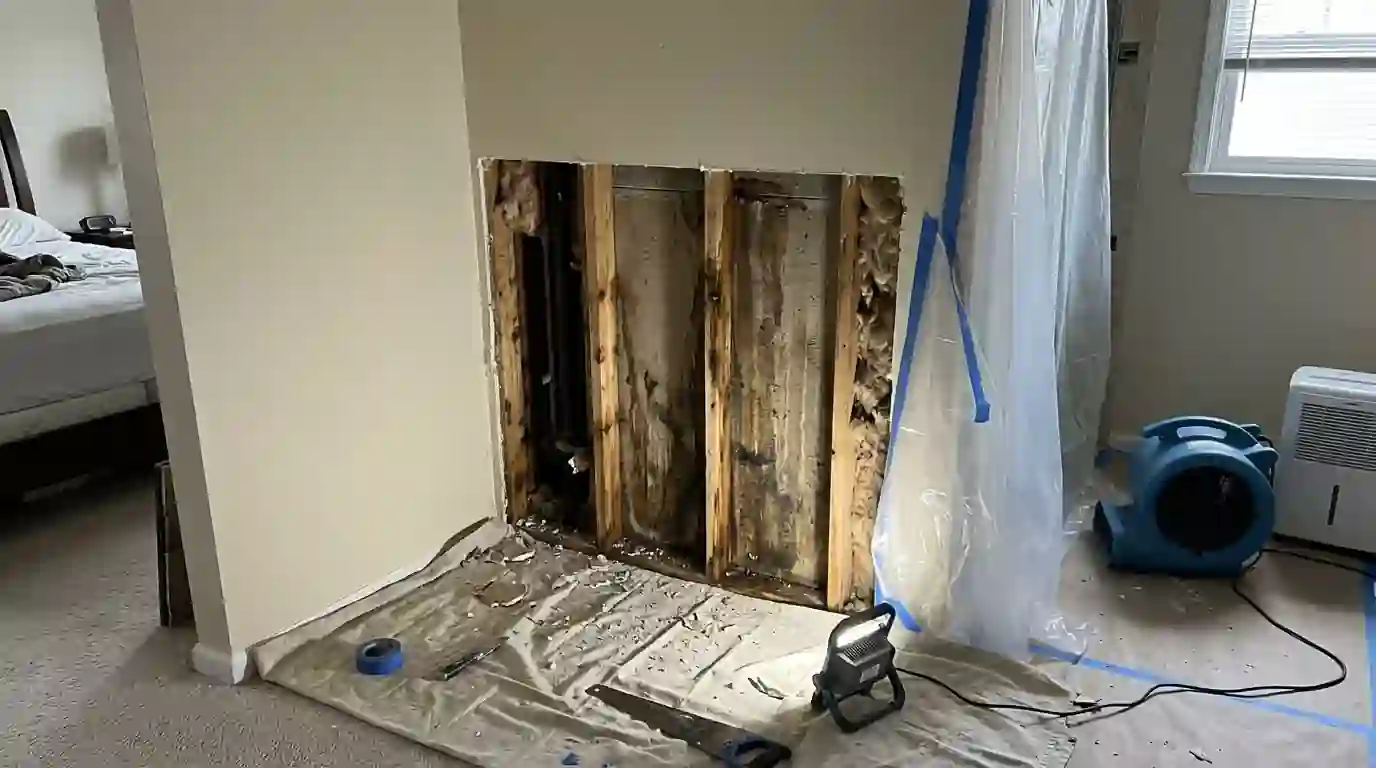
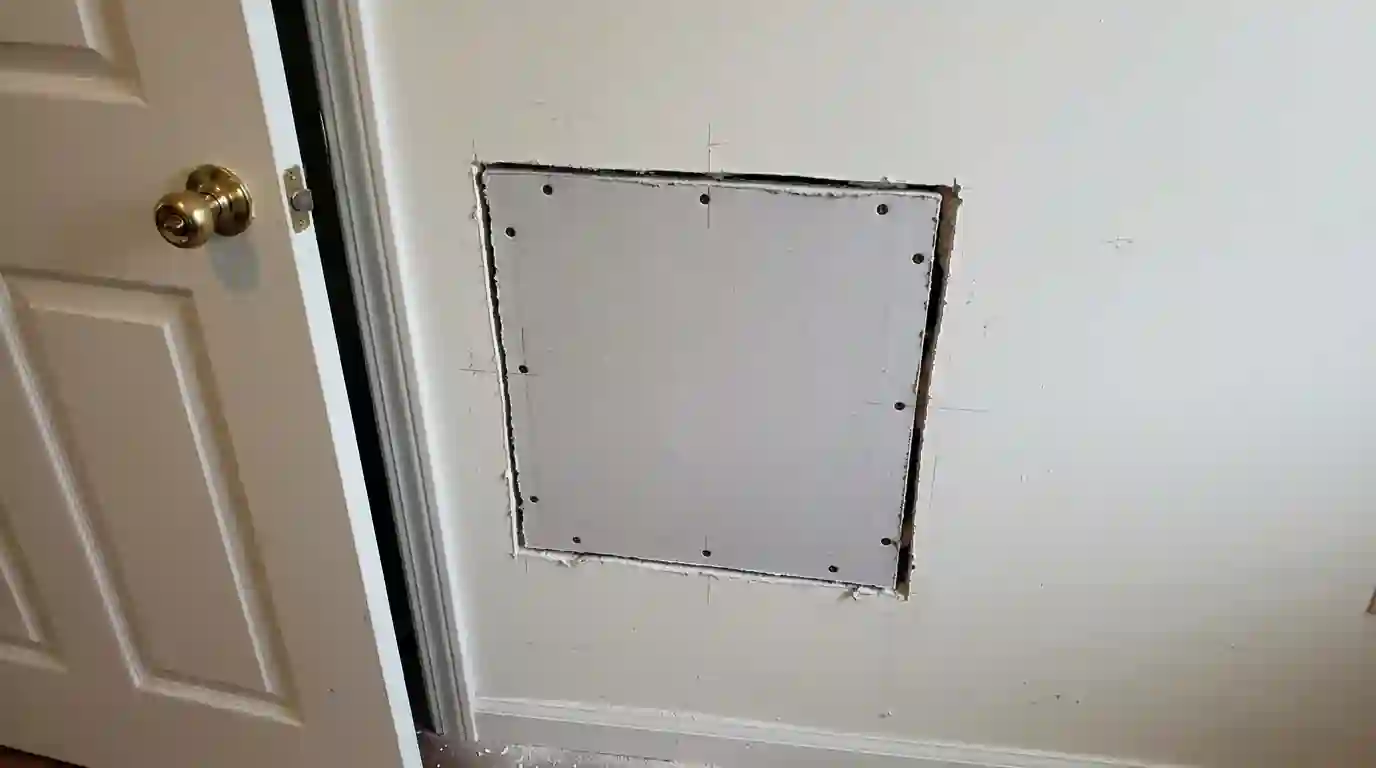
We map moisture from the outside in, metering the drywall around the shower, the baseboards, the closet behind it and the floor past the curb. Then we open the back side of the wall where we can, which keeps the tile intact. If growth has already started inside, the job turns to removing that mold correctly before drying.
What sets the cost of a shower leak dry-out
Shower leak damage runs from one baseboard to a full bathroom tear-out, so no single published figure fits it. We price the job once the moisture map is done.
- How long it leaked
- Months of seepage reach farther into framing than one overflow.
- Which side we open
- Opening the back of the wall costs less than resetting tile.
- Floor type
- Slab, subfloor and a ceiling below each dry differently.
- Growth in the cavity
- Mold on studs adds containment and cleaning.
- Rebuild scope
- Drywall, paint, trim and tile work after drying are separate items.
Checks you can make yourself, and when to stop
Safe to handle yourself
- Look for cracked grout and open caulk joints at the tub or pan.
- Press tiles near the floor and listen for a hollow sound.
- Check the far side of the wall for soft drywall.
- Use another bathroom until the leak is found.
Time to call us
- A floor or baseboard outside the bathroom is stained or soft.
- A ceiling under an upstairs bathroom shows a ring.
- Fresh caulk did not stop new stains.
Failed shower pans
A failed pan usually shows itself outside the shower: a swollen baseboard beside the curb, a soft spot in the hallway carpet, or a closet next door that smells damp. In a site-built shower, a liner under the mortar bed carries water to the drain. Once it cracks, water soaks the floor framing or the slab edge instead. We read the floor and walls around the curb, remove wet baseboard and drywall, and dry what we can reach. The pan itself has to be rebuilt before the area is closed.
Leaks behind tile walls
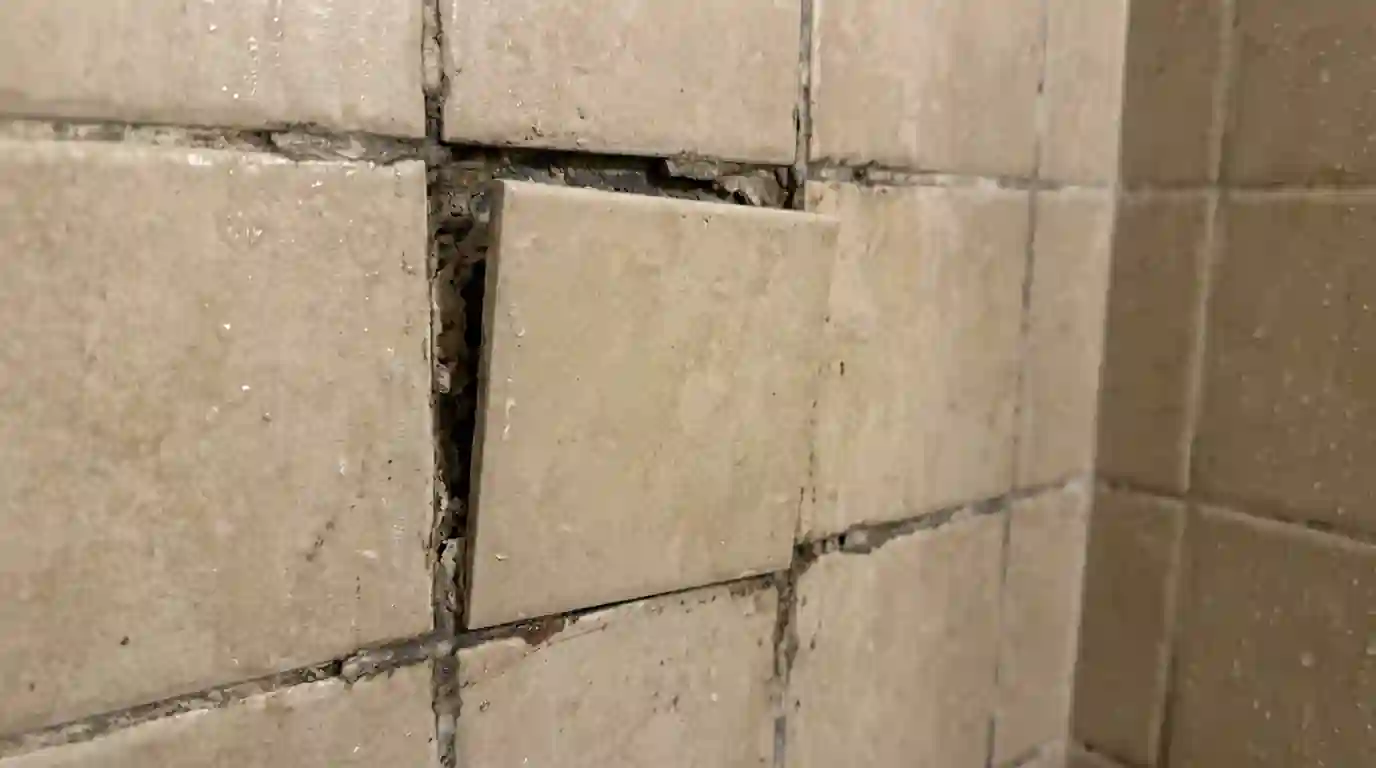
Cracked grout, a gap in the caulk where the tub meets the tile, or a weeping valve body behind the handle all send water into the wall. Inside the bathroom, grout stays dark between showers or tiles sound hollow when tapped. On the far side, paint blisters or the drywall softens near the floor. We open that back side so the tile survives. Wet insulation and drywall come out, the framing is dried and treated, and the tile wall stays if its backer reads dry.
Tub and toilet seal leaks
A toilet that rocks, flooring that darkens around its base, or a ring on the ceiling below an upstairs bathroom all point to a failed wax ring. Tub drains leak at the shoe and overflow gaskets, often only when the tub is filled high, so the damage comes and goes. On a slab, the water creeps under vinyl or into nearby carpet. Upstairs, it shows on the ceiling below. We pull the toilet or open an access panel, dry the subfloor or ceiling, and replace only what will not dry.
How a bathroom leak job runs from the first reading
Map the moisture
We read walls, floors and the rooms next door until we find where the water stops.
Narrow down the source
Testing the valve, the drain and the pan one at a time shows which part is failing.
Open the smallest section
Drywall comes out from the back side or below, sparing the tile.
Dry and treat the cavity
Air goes into the opened cavity, and framing is cleaned and treated where needed.
Hand back the readings
You get photos and dry readings for the shower repair and any claim.
Older bathrooms in Friendswood and the leaks they develop
Bathroom age matters on these jobs. Nearby Friendswood's median house dates to 1991, with about 23 percent of homes from the 1970s and about 18 percent from the 1980s. A bathroom from those decades that has never been redone may still have its original pan, grout, caulk joints and wax rings, all of which wear with daily use. Those showers are the likeliest to have been leaking slowly into a wall before anyone sees a stain.
Clues that a shower has been leaking into the house
Hollow or loose tiles
Tiles that click or shift have lost their grip on a wet backer.
Grout that stays dark
Lines that never lighten between showers are holding water.
Swollen baseboard by the curb
Puffed or split trim beside the shower is wicking water.
Blistered paint on the far wall
Bubbling paint behind the shower points to a wet cavity.
A musty linen closet
A lingering smell beside the tub often comes from damp framing.
Shower leak questions we hear most
Often not. Many homeowners policies exclude continuous or repeated seepage, though some cover the resulting damage. Your policy wording decides, so we document what we find.
Not always. When a closet or bedroom backs onto the shower wall, opening that side lets the cavity dry while the tile stays put.
Pan leaks show at the floor and curb, often right after a shower. Wall leaks show higher up or on the far side of the wall.
If the leak is active, use another bathroom until the source is found, because every shower adds water to a cavity that is already wet.
It is common when a leak has run for weeks. We look inside once the cavity is open and tell you what we see before going further.
