Updated October 2026
Quick answer
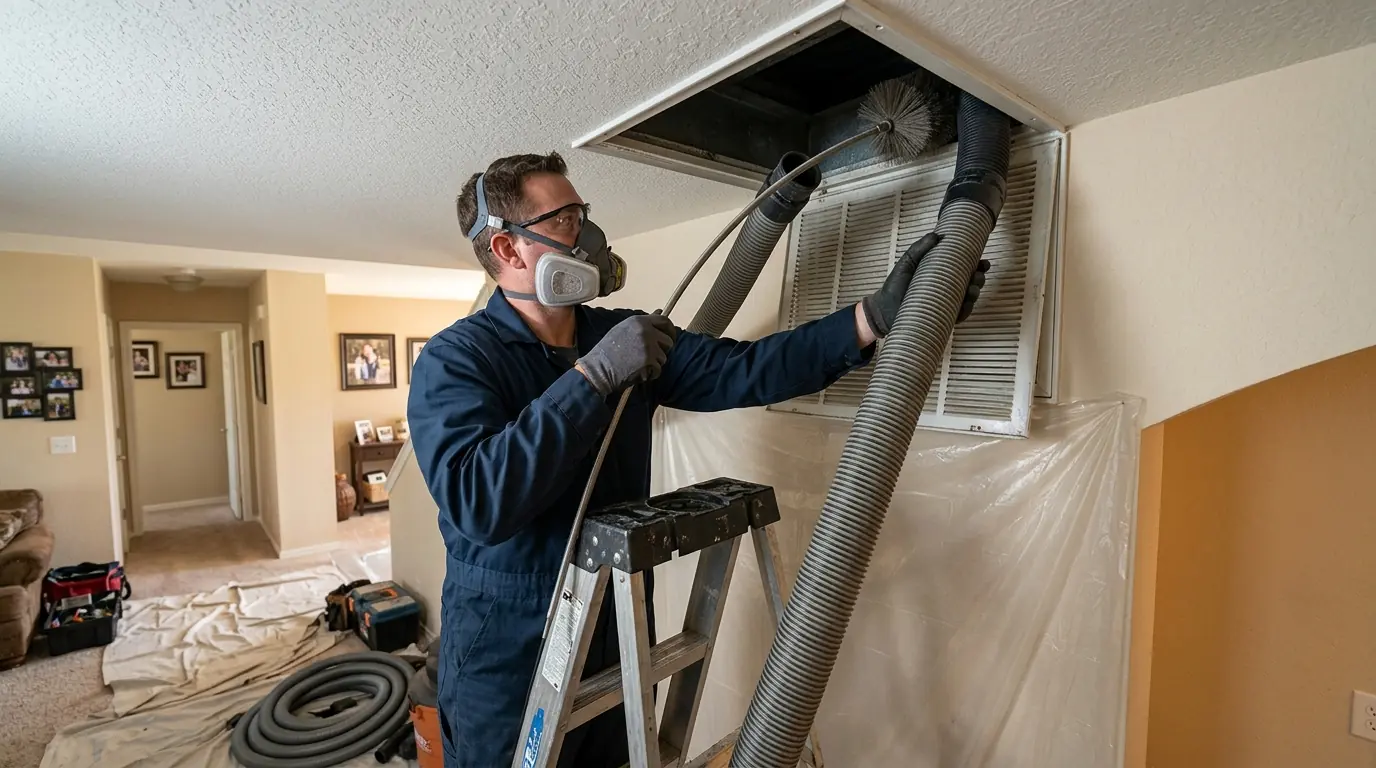
Air duct cleaning in a League City house means holding the duct system under negative pressure with a vacuum unit while each supply and return run is agitated. Flexible attic duct needs gentler tools than metal trunk line, so we check what you have before anything goes inside.
How dirt gets into ducts and how it comes out
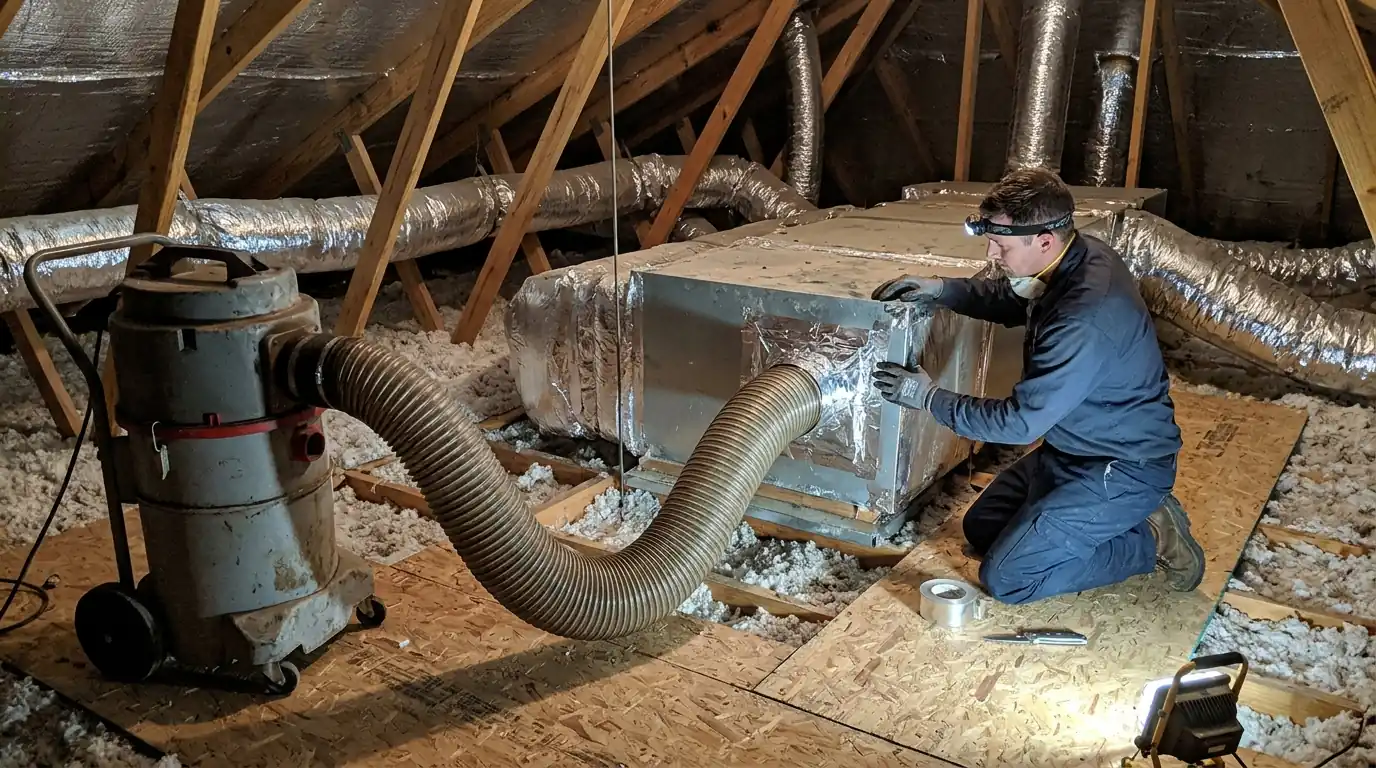
The return side pulls room air toward the air handler, and whatever the filter misses settles in the return duct, the plenum and the blower. Supply ducts collect less unless the filter has been loose or missing. In many Houston-area houses the air handler and most of the duct sit in the attic, so most of the work happens up there.
A vacuum unit on the trunk holds the system under negative pressure while brushes and air whips work each run toward it, and registers come off to be washed. Cleaning helps when there is real debris, construction dust or contamination. A stale smell that is not coming from the ducts calls for odor removal instead.
From inspection to sealed access ports
- Returns, plenum and supply runs inspected with a light
- Before photos of the dirtiest runs
- System shut off and floors covered under registers
- Vacuum unit connected to hold negative pressure
- Every supply and return run agitated toward the vacuum
- Blower compartment vacuumed and registers washed
- Access openings sealed and after photos shared
Signs the ducts need more than a filter change
Dust puffs at startup
A visible cloud leaves the registers when the AC kicks on.
Gray return grille
It coats over again soon after wiping.
Musty air each cycle
The smell starts with the blower and fades when it stops.
Debris in the registers
Drywall dust, pet hair or insulation behind the louvers.
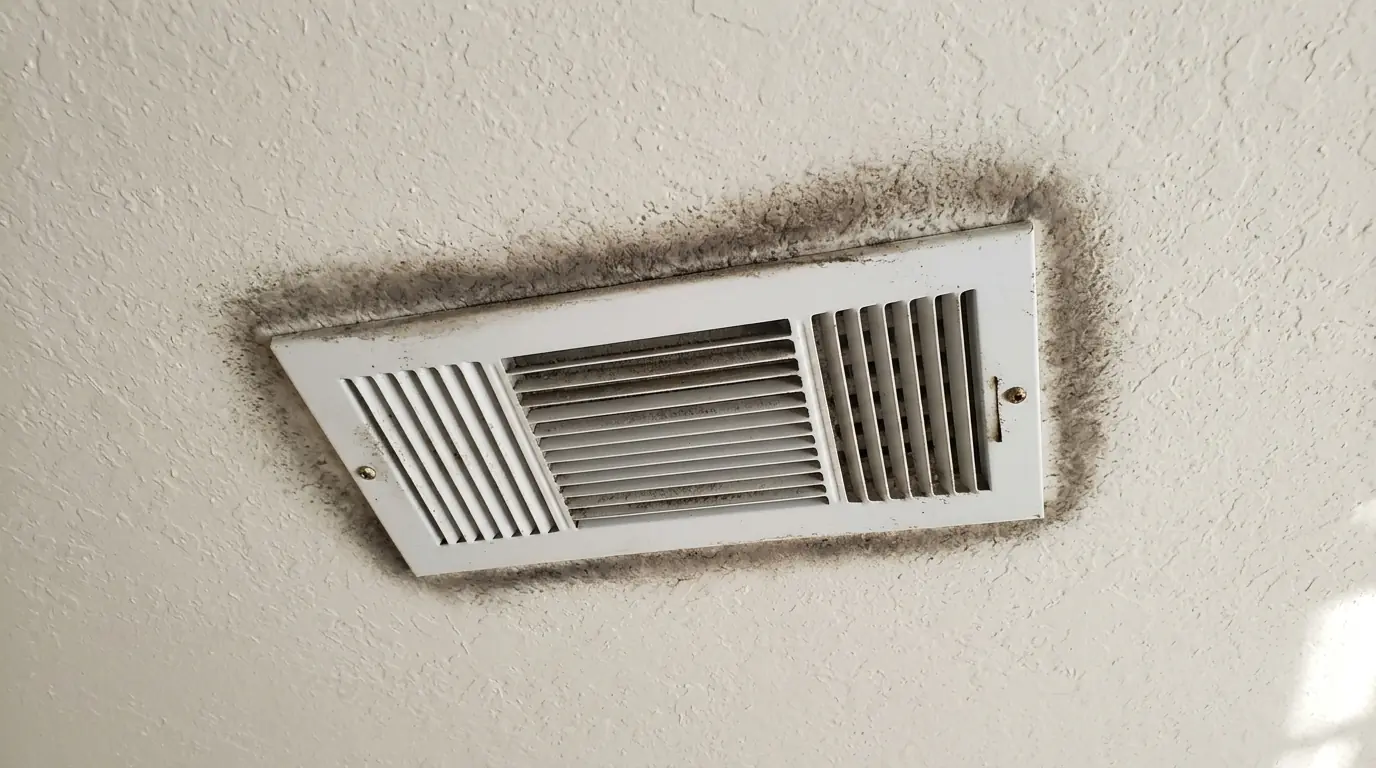
Dark marks at supply registers
Spots on the register or the ceiling around it.
Supply and return ducts, run by run
Many houses here have round flexible duct running from a central plenum to each ceiling register, with one or two large returns in a hallway or closet. Dark rings around supply registers and gray film on the return grille are the usual clues. We clean each supply run back toward the plenum and each return from the grille in. Flexible duct has a thin inner liner, so it gets soft brushes and air whips, not stiff rotary heads. Crushed or torn runs are photographed and noted for replacement.
Return plenums and filter grilles that collect the most
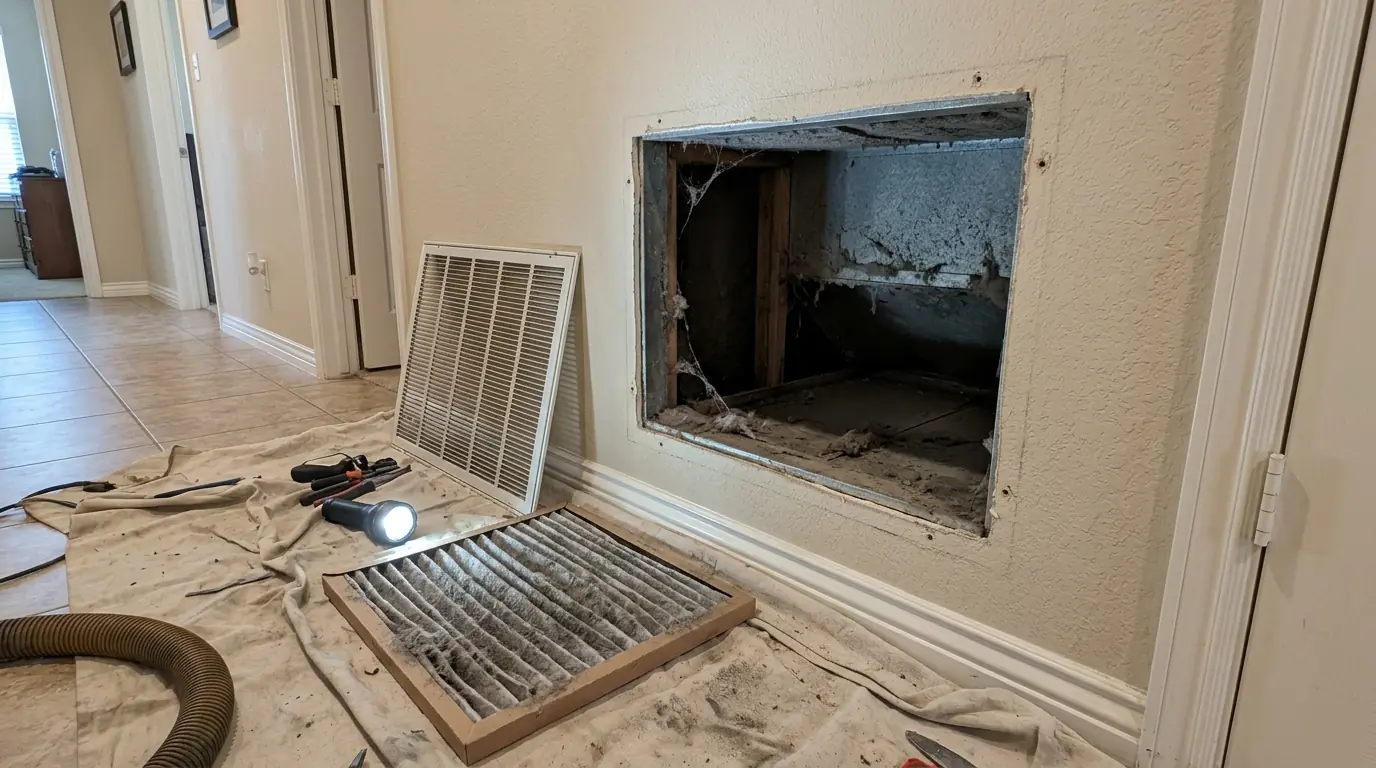
The return is where the house exhales into the system, so it gathers pet hair, lint and dust before the filter catches anything. A grille caked in gray, or a plenum furred with dust, means the filter has been bypassed or overdue. We remove the grille, vacuum and wipe the plenum, and open the air handler cabinet to vacuum the blower compartment. Returns framed from wood or duct board inside a closet are cleaned where sound and flagged where the board crumbles.
Ducts after a remodel or new drywall
Sanding drywall, cutting tile or refinishing floors fills the air with fine dust, and a running AC pulls it straight into the returns. Afterward the house stays dusty however often it is wiped, and filters clog quickly. Drywall dust slips past a basic filter and settles on the blower and inside the supply runs. We clean the whole path: returns, then the air handler, then every supply. On the next project, cover the returns with plastic and run the system as little as possible.
Ducts after a leak, a flood or mold growth
Water reaches ducts two ways. Flood water can fill duct that runs low in walls or through a slab, and a clogged condensate drain can soak an attic plenum. Musty air at startup, or dark growth on a register, says moisture has been there. Sheet metal duct can be cleaned once the source is fixed. Flexible duct and duct board that held dirty water or grew mold inside are replaced, not cleaned, because their liners cannot be cleaned reliably. Growth beyond the ducts becomes a mold remediation job.
Older duct systems in Friendswood houses
About 23 percent of Friendswood's housing went up in the 1970s and 18 percent in the 1980s, for a median build year of 1991. About 83 percent are detached houses, each with its own system. A house that age may still run duct from its first AC install, or a patchwork left by later replacements. That is where taped joints let go, flex duct sags between rafters and return boxes go unopened for years.
What happens on a duct cleaning visit
Inspect
We look into the returns, plenum and supply runs and photograph them.
Protect the rooms
The system is shut off and floors under registers are covered.
Set negative pressure
A vacuum unit on the trunk pulls dust away from the rooms.
Agitate every run
Brushes and air whips work each run toward the vacuum.
Close up and show
Access holes are sealed, registers go back and you see the after photos.
What decides the price of a duct cleaning
Duct cleaning is priced by the system, mostly by vent count and access.
- Number of vents
- Each register and return grille adds a run.
- Number of systems
- A second air handler brings its own plenum and ducts.
- Duct type
- Flex and duct board take gentler, slower tools than metal.
- Attic access
- Low clearance or a small hatch slows the plenum work.
- Contamination
- Construction dust, water or mold adds time and sometimes removal.
Published national planning ranges
- Air duct cleaning: $450 to $1,000 (inchcalculator.com, 2023)
- Air duct cleaning, per vent: $25 to $50 per vent (inchcalculator.com, 2023)
These are national figures from published cost guides, shown for planning only. They are not a quote and not our price list; your job is priced after we see it.
Air duct cleaning, answered
Look for debris you can see: dust at startup, a coated return, construction dust or musty air. If the ducts look clean on inspection, we say so.
It removes dust stored in the ducts. House dust also comes from people, fabric and outdoor air. See when duct cleaning is worth it.
Not as a substitute for cleaning, since sprays leave debris in place. On metal duct after water or mold, a registered disinfectant may follow the physical cleaning.
Vent count, the number of systems and attic access set the time, and we estimate the hours for your house after the inspection.
Usually, yes. Negative pressure pulls loosened dust toward the vacuum, not into the rooms. Keep pets away from open registers and the attic hatch.
