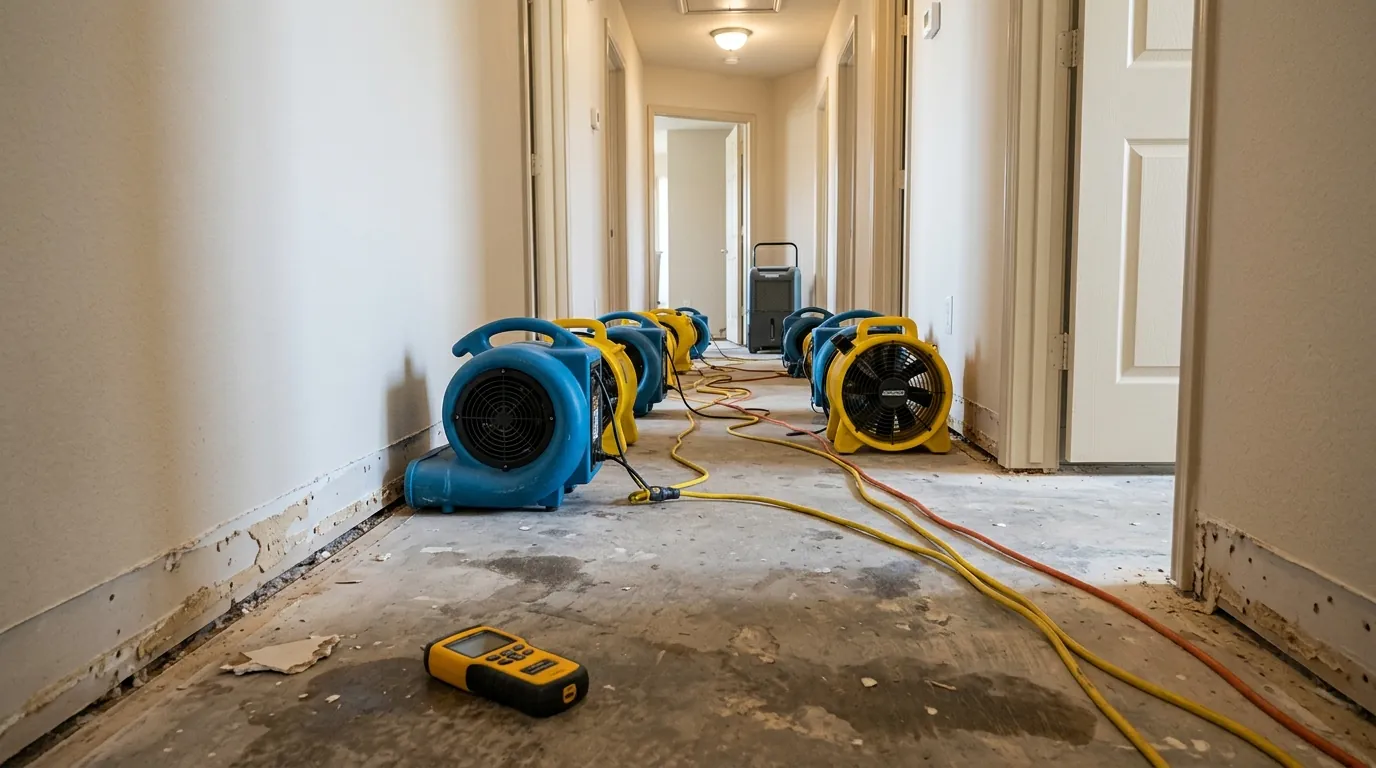
Updated October 2026
Quick answer
Water extraction in a League City home has to finish before any dehumidifier or air mover is set. Water left in the pad keeps feeding the walls and subfloor. So we find where it went, choose a truck-mounted, portable or weighted tool, and extract until the pad stops giving up water.
Why extraction comes before every fan and dehumidifier
Liquid water leaves a carpet far faster through a vacuum hose than it ever will by evaporation. That makes extraction the first real step on any water job. We find the edge of the wet area with meters first, because water travels under carpet and along the tack strip well past the spot you can see.
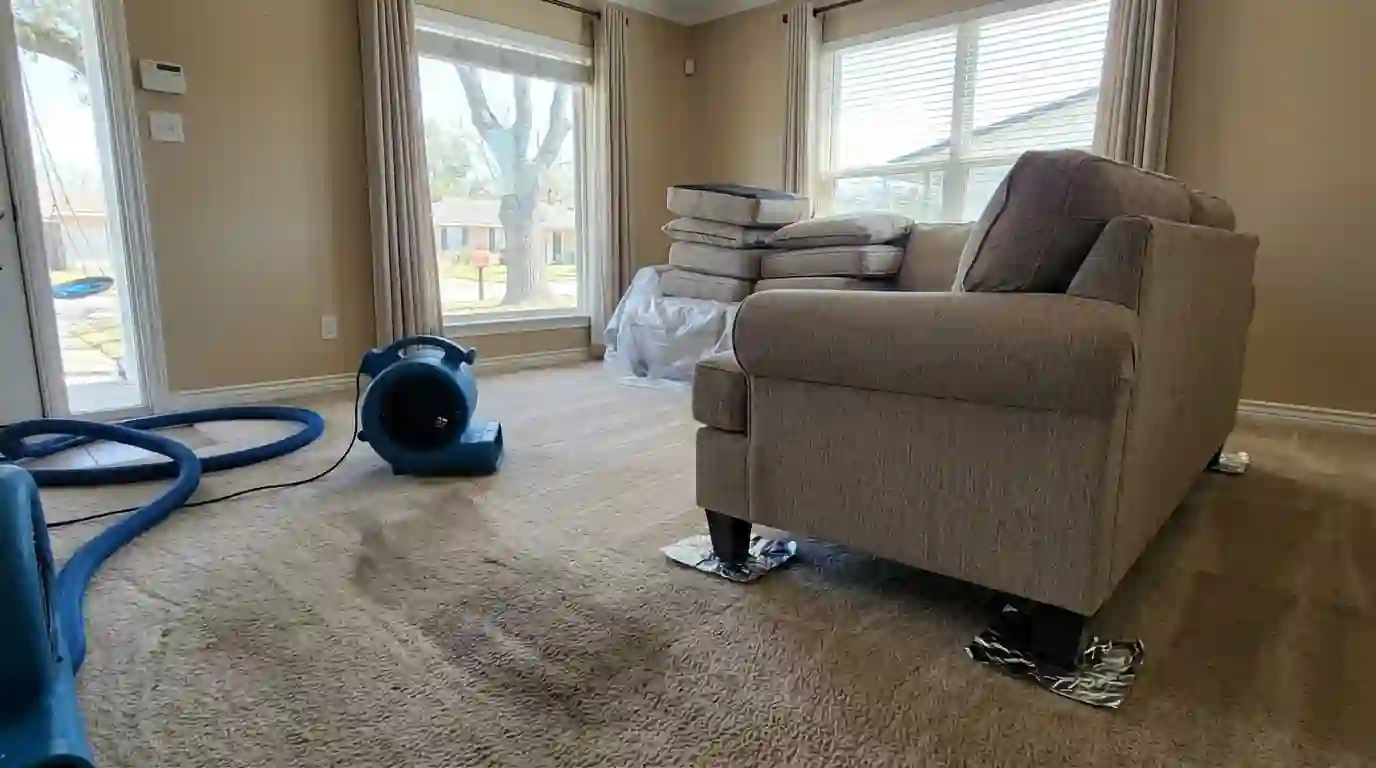
On tile, vinyl plank and sealed concrete, a squeegee wand pulls water off the surface and out of the grout lines. Furniture on wet carpet is raised onto foam blocks or foil squares, which keeps wood stain and rust out of the fibers. Once the floor stops giving up water, structural drying takes over for what soaked into walls, cabinets and subfloor.
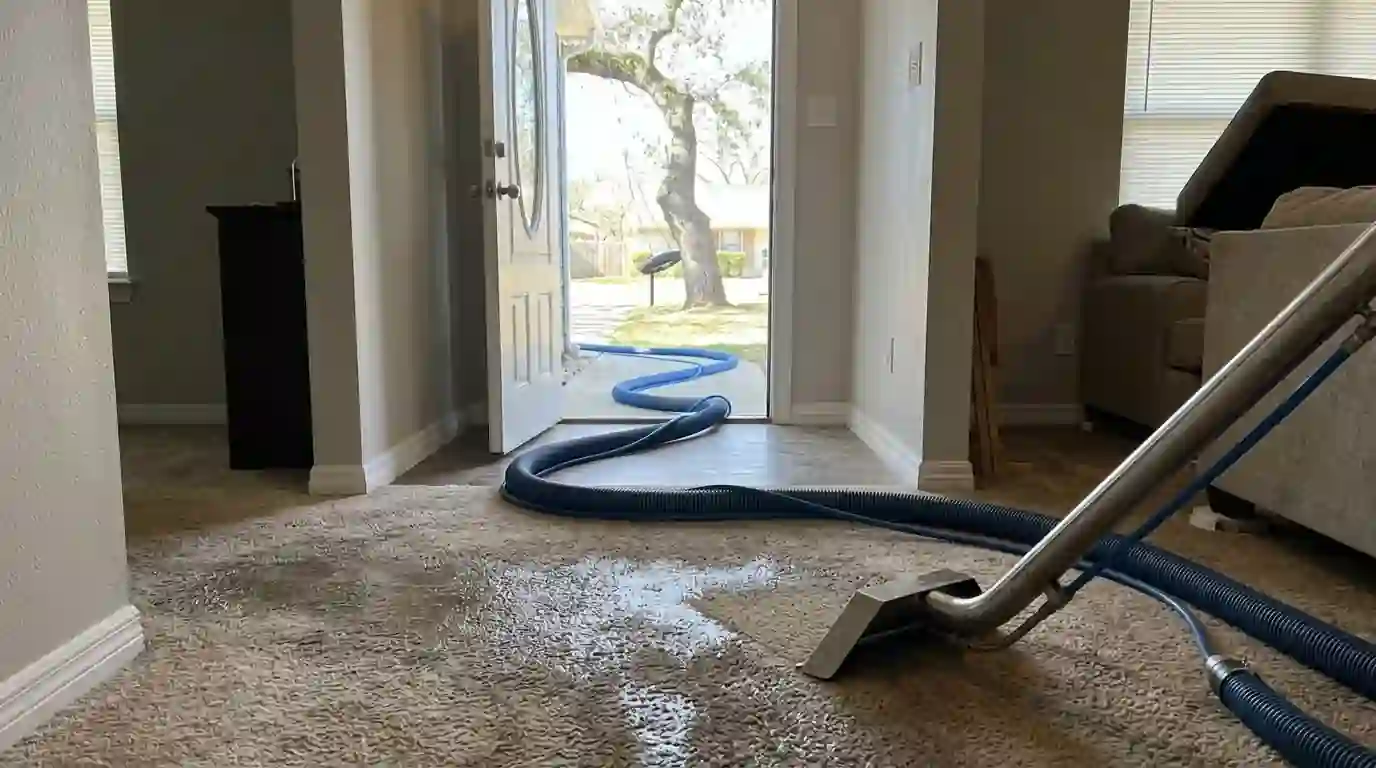
Truck-mounted extraction
A truck-mounted unit parks in the driveway and runs on its own engine. It pulls far more vacuum and airflow than anything plugged into a wall outlet. Units of the kind HydraMaster and Sapphire Scientific build suit jobs where several ground-floor rooms of carpet are soaked. More suction means more water out per pass, and after clean water that often lets the carpet stay down and dry in place. The tradeoff is hose length, since a long walk from the curb or an upper-floor unit can rule the truck out.
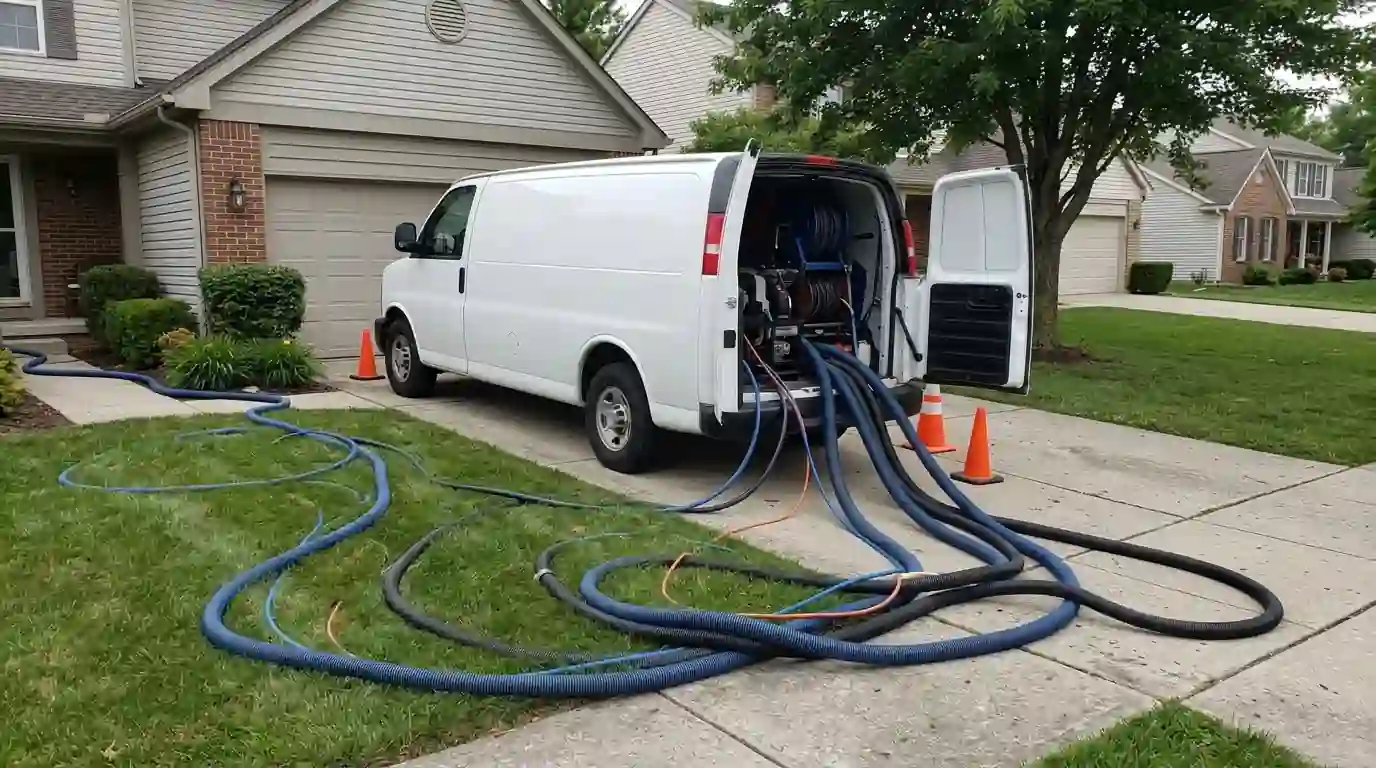
Portable extraction for upstairs rooms
Water from a second-floor bath or washer soaks the carpet there and then starts into the ceiling below. Driveway hoses rarely reach a second floor cleanly. Instead we carry up an electric portable extractor, the kind Prochem makes, and empty its recovery tank into a tub as we go. It takes more passes than a truck unit. Upstairs carpet over plywood usually dries in place after clean water, and a ceiling that is spotting below gets its own drying plan.
Weighted extraction for carpet pad
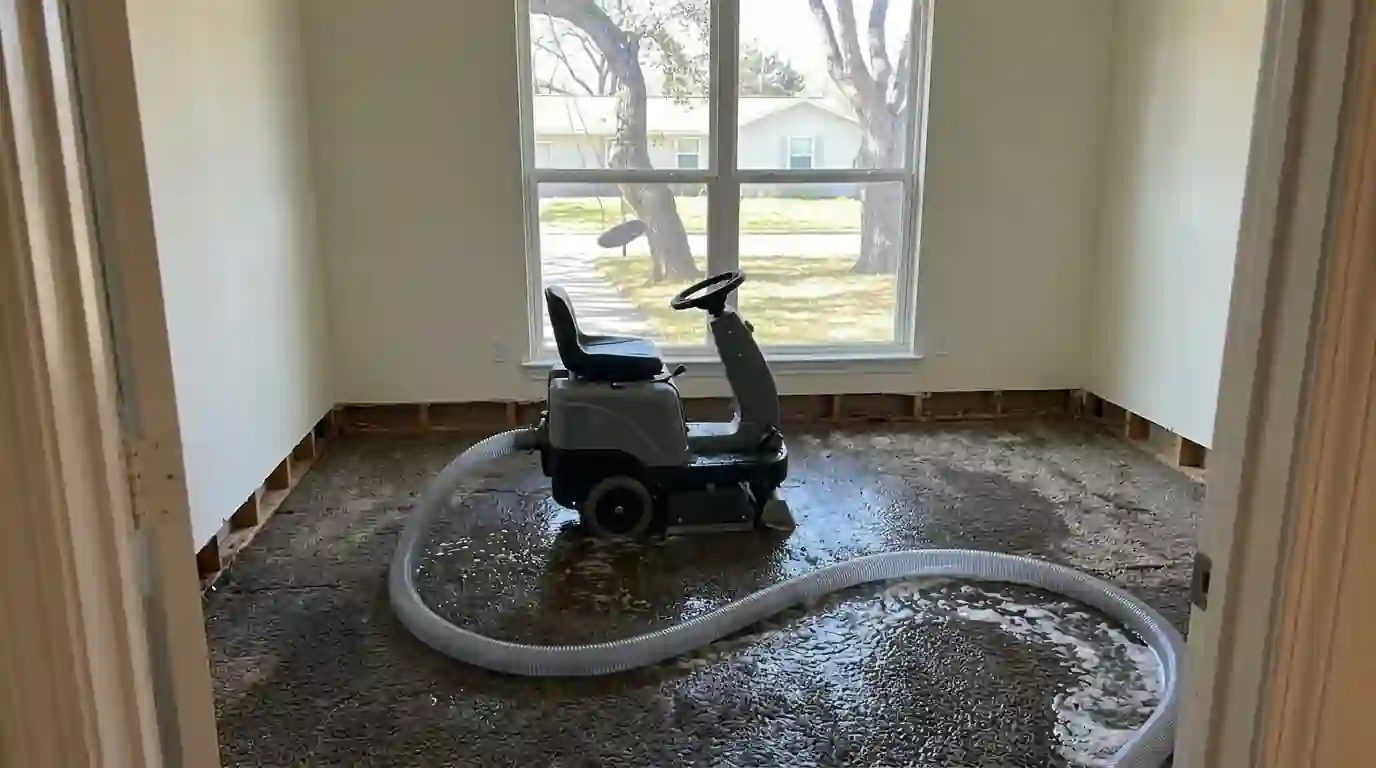
A carpet wand only reaches the top of the carpet. The pad underneath works like a sponge, and on a slab it holds water right against the concrete. Weighted extraction tools of the kind Dri-Eaz makes put body weight on the carpet so the pad is squeezed while the vacuum pulls. After clean water, a thorough weighted pass can leave pad dry enough to finish drying in place. Pad that took gray water or sewage is cut out and replaced, however well it extracts.
From your call to a floor that stops giving up water
Stop the source
We help you find the shutoff valve before anything else happens.
Map the wet edge
Meters show how far the water ran under carpet and baseboards.
Clear the floor
Furniture and rugs come off the wet carpet or go up on blocks.
Extract
The right tool goes over every wet section until the hose stops pulling water.
Hand off to drying
Dehumidifiers and air movers go in for what extraction cannot reach.
How long extraction takes, and what comes after
The extraction visit is the short part. Its length depends on how many rooms are wet and how deep the water got into the pad. Furniture to move and a portable working in more passes both add time.
Drying is the long part. Low-grain units from makers such as Dri-Eaz and Phoenix run until walls, subfloor and any pad left in place read dry, and a thorough extraction shortens that stretch.
Slab floors and wet pad in League City houses
League City homes are generally built on concrete slabs, so water that gets under carpet has nowhere to drain. It spreads through the pad and runs along the tack strip. Then it stays against the concrete until something pulls it out. In a Gulf Coast summer, wet pad soon starts to smell sour, and the baseboards along that wall begin to wick. That is why we treat extraction as urgent work here, even on a small clean water leak from a single fixture.
What you can do before we get there
These steps help, as long as nobody walks through water near live outlets.
Safe to handle yourself
- Shut the stop under the fixture, or the house main
- Switch off breakers where water touches outlets or cords
- Lift rugs, shoes and boxes off the wet carpet
- Slip foil or plastic lids under furniture legs
Time to call us
- Carpet squishes underfoot across a whole room
- Water came from a washer, dishwasher or toilet bowl
- A ceiling under the wet room is spotting
- Baseboards or cabinet bottoms are wet
Equipment makers in professional drying, moisture detection and carpet extraction
What sets the price of water extraction
Extraction is priced on the wet area and the water category, both confirmed on site.
- Square footage
- Each wet room adds hose time, passes and later drying.
- Water category
- Gray water from a washer or dishwasher means more removal than clean supply water.
- Pad decisions
- Pad dried in place costs less than pad that is cut out and hauled.
- Floor and access
- Upstairs rooms and long hose runs call for slower portable work.
- Furniture
- Heavy pieces on wet carpet have to be moved or blocked before extraction.
Published national planning ranges
- Category 1 clean water, per square foot: $3.30 to $4.10 per sq ft (lawnstarter.com, 2026)
- Category 2 gray water, per square foot: $4.10 to $7 per sq ft (lawnstarter.com, 2026)
These are national figures from published cost guides, shown for planning only. They are not a quote and not our price list; your job is priced after we see it.
Water extraction questions we hear most
As soon as you can arrange it. Water in pad keeps wicking into baseboards and drywall, and clean water turns gray the longer it sits.
On tile or a small spot, a shop vac helps. It cannot pull water out of pad, so carpet that still squishes needs a heavier tool.
Not always. Carpet hit by clean water and extracted early can often be dried and kept. Pad touched by gray water or sewage is replaced.
We move what can be moved, and heavy pieces get blocks under their legs to keep stain off the wet carpet.
When the water came suddenly from inside the house, extraction is often part of the covered cleanup. Your policy decides, so we photograph and log the job for the adjuster.
