Updated October 2026
Quick answer
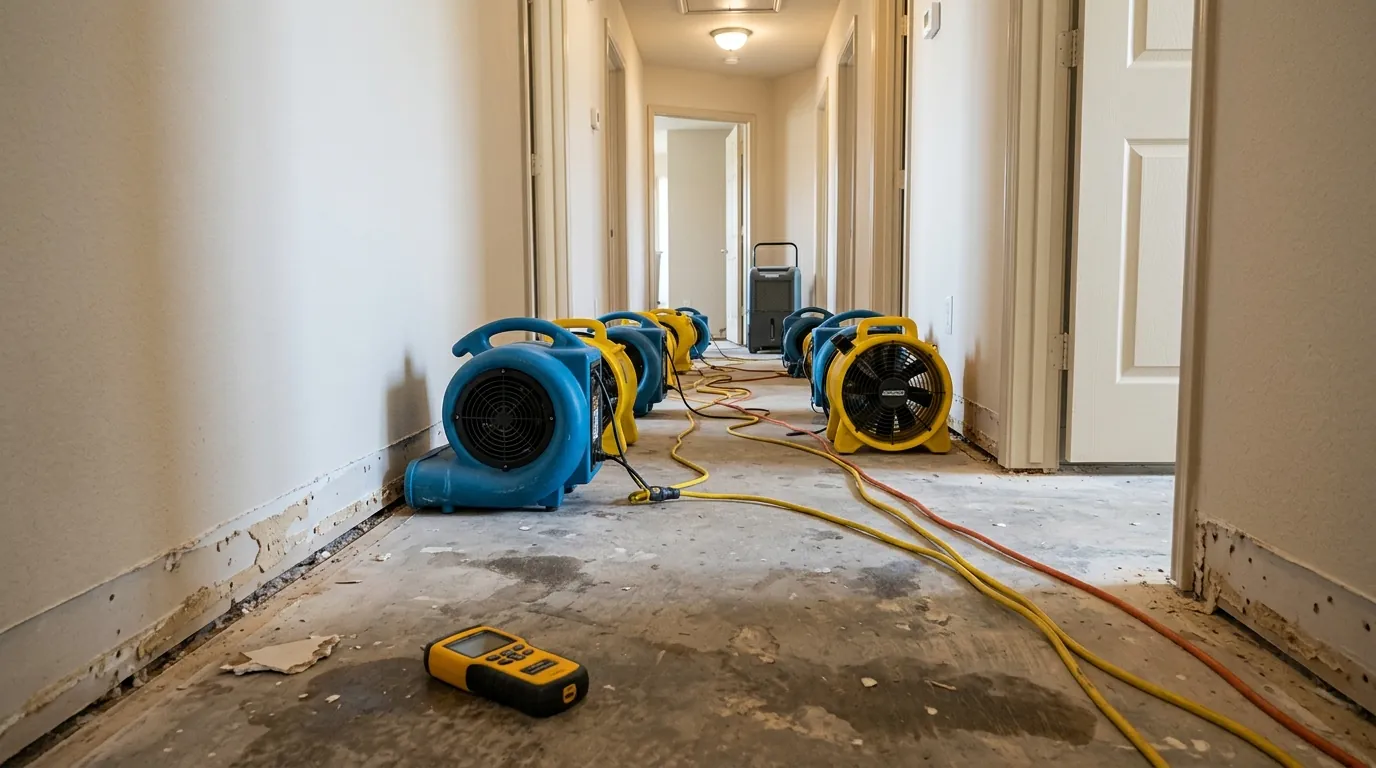
For a League City home, slab leak cleanup begins once the plumber has repaired or rerouted the leaking line. Drying cannot finish while water keeps coming up. We then read the slab, flooring and lower walls, remove what will not recover and dry the concrete to the level new flooring needs.
What a slab leak leaves behind once the pipe is fixed
A slab leak is a water line leaking under or inside the concrete foundation. The water pushes up through cracks and through the concrete itself, soaking flooring, pad and the base of walls from below. Because it is slow and hidden, the damage usually spreads wider than a sudden leak and has had more time for mold to start.
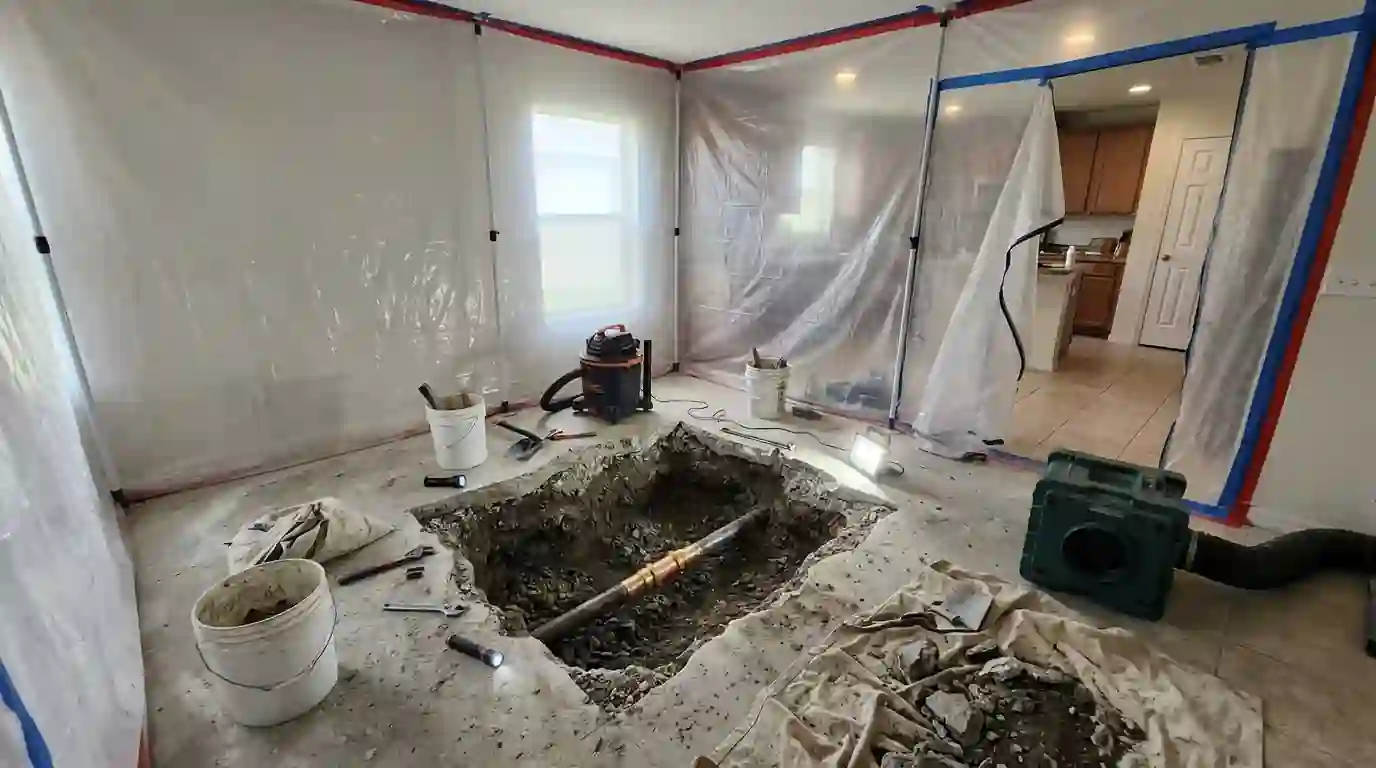
Finding and repairing the pipe is a plumber's work, done by tunneling, breaking out a section of slab or rerouting the line through walls and attic. Our work comes before and after. It covers readings that show how far the water reached, controlled removal of flooring and trim, dust control if the slab is opened, and drying the structure until the concrete and walls test dry.
What shapes the cost of slab leak cleanup
Slab leak cleanup is priced on how much flooring and wall the water reached, and that depends on how long it seeped before anyone noticed.
- How long it seeped
- Weeks of slow seepage reach farther than a leak found early.
- Floor covering
- Tile can often stay, while pad, laminate and glued wood often cannot.
- Wall and trim removal
- Swollen baseboards and wicked drywall add removal and later repair.
- Slab opening
- A broken-out section adds dust control and drying around the patch.
- Moisture testing
- Concrete readings before new flooring goes down are part of the scope.
Wet flooring over a slab leak
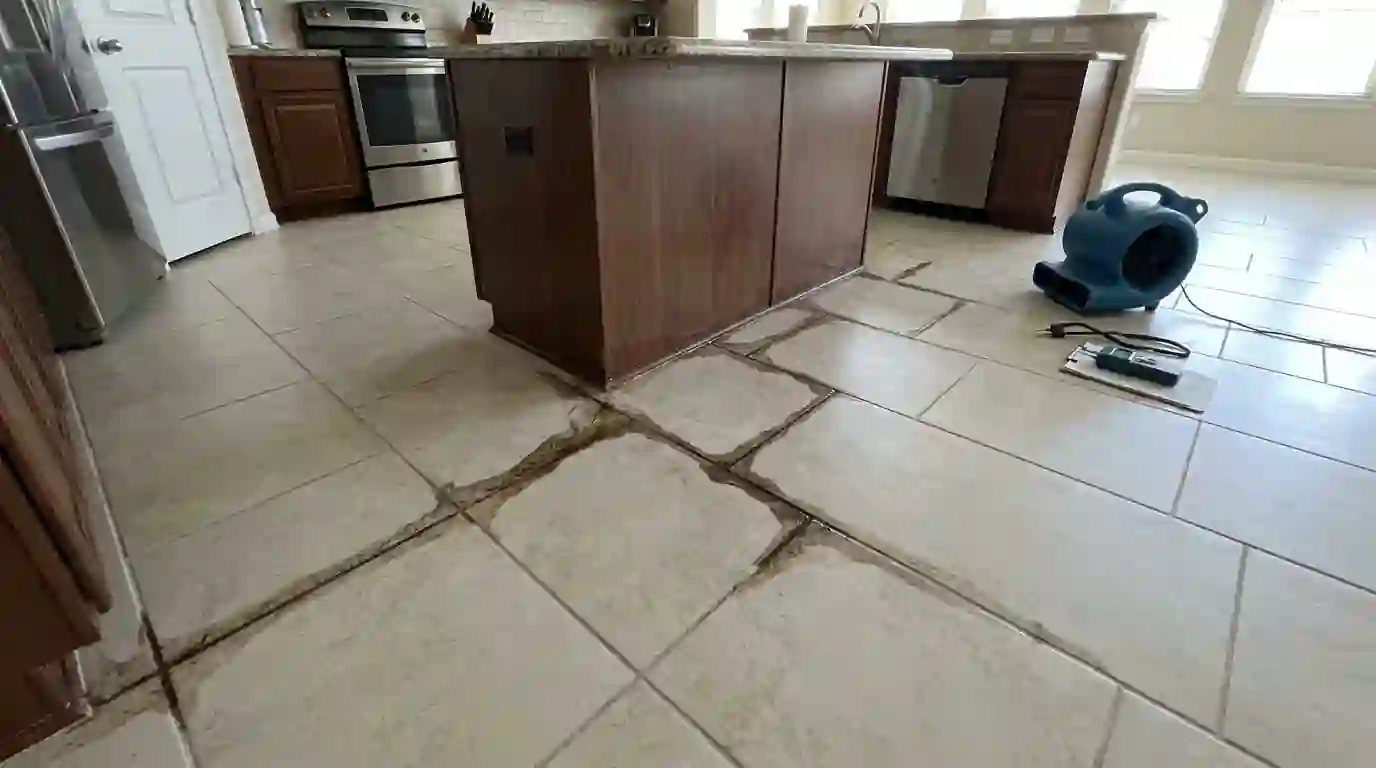
Each floor covering reacts differently. Carpet gets damp from the pad up, usually in one area, and the pad has often been wet long enough that it is replaced even when the carpet can be cleaned and kept. Tile looks fine on top while its grout lines darken. Floating laminate and vinyl plank trap water on the concrete underneath, so they come up for the drying. Glued-down wood is the hardest case, and we read it board by board before deciding what stays.
Baseboards and lower drywall
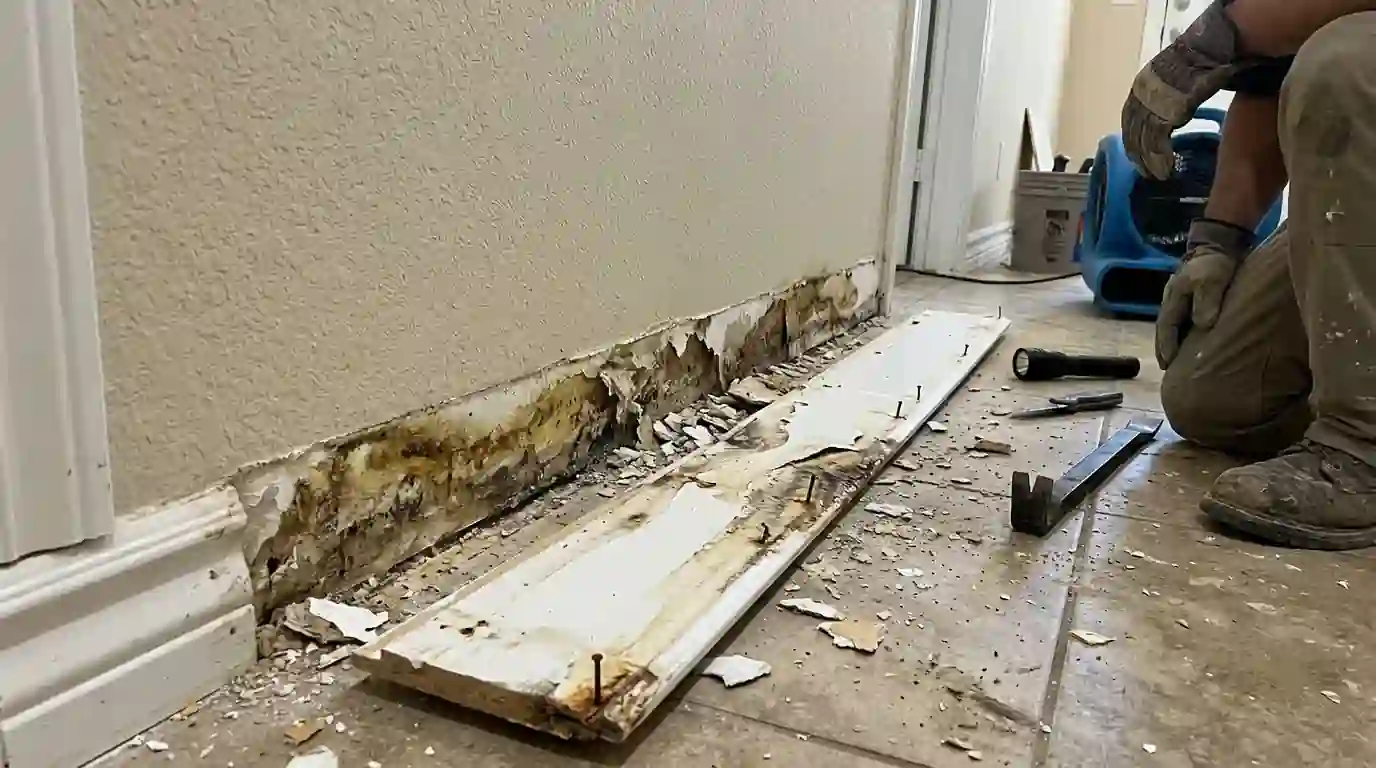
Water rising through the slab wicks up the bottom of the drywall and into the baseboard. MDF baseboard swells and stays swollen, so it usually comes off and is replaced, while solid wood trim may be saved. We read the drywall from the floor up to find the wet line. If it stops low, the wall is dried in place through holes the new baseboard will hide. If it climbed higher or the cavity side shows mold, the bottom of the wall is cut out.
Drying after the plumbing repair
Concrete gives up water slowly, so a slab can feel dry on top while it is still wet a short way down. After the repair, we set dehumidifiers and air movers over the open slab and keep the flooring off until readings drop. Where the plumber broke out a section of slab, we contain the dust and dry the patch area too. Before new flooring goes down, the slab is tested again, because wood, laminate and vinyl makers all set moisture limits for the concrete beneath their products.
What our slab leak cleanup includes
- Moisture readings across the slab, flooring and lower walls
- A sketch of the wet area for the plumber and your adjuster
- Lifting carpet, pad and floating floors where readings call for it
- Removing swollen baseboards and wet lower drywall
- Dust control where the slab is broken open
- Dehumidifiers and air movers on the concrete until it reads dry
- A final slab reading before new flooring is installed
How we handle a slab leak, start to finish
Map the wet area
Readings across the floor and lower walls show how far the water went.
Coordinate with the plumber
We plan removal around where the line will be repaired or rerouted.
Remove what will not recover
Pad, swollen trim and wet lower drywall come out, photographed first.
Dry the slab and walls
Equipment stays on the concrete and wall bases until readings drop.
Clear for new flooring
A final slab reading tells you when flooring can go back down.
Slab leaks are not only an old-house problem around League City
Slab leaks are often blamed on old houses, but the housing around here is mostly young. League City homes have a 2003 median build year, with about 58 percent built in 2000 or later. Pearland shares that 2003 median, with about 60 percent of its homes built between 2000 and 2019. Most of these houses sit on concrete slabs over clay soil that shrinks in dry spells and swells after rain, and that movement can stress water lines in or under the concrete.
Floor-level clues of a leak under the slab
Warm patch on the floor
A hot water line leak heats the concrete above it.
Higher water bill
Usage jumps without any change in your routine.
Damp carpet away from fixtures
A wet spot appears along a wall with no plumbing.
Darkening grout lines
Grout stays dark long after mopping.
Musty smell at floor level
Carpet or baseboards smell damp around one area.
What homeowners ask after a slab leak is found
A warm spot on the floor or damp flooring away from any fixture points there. A plumber confirms it with leak detection equipment.
Usually not, unless the plumber breaks it out to reach the pipe. Cracked or loose tiles are the other exception, and the slab under them still gets dried.
Yes. Drying while the line still leaks just moves water around. We can map and remove wet materials first, then set equipment once the repair holds.
Many policies cover the water damage and the cost to reach the pipe, but not the pipe repair itself. Coverage varies, so your adjuster decides.
When the slab reads dry for the flooring you choose. Concrete releases water slowly, so this step is measured rather than guessed from a calendar.
