Updated October 2026
Quick answer
In League City houses, ceiling water damage often starts in the attic, at an air handler drain pan, a water heater or a roof leak. The fix is to stop the source, pull wet insulation, dry the drywall from above and below, and open the ceiling only where it sagged.
What a ceiling shows before it fails
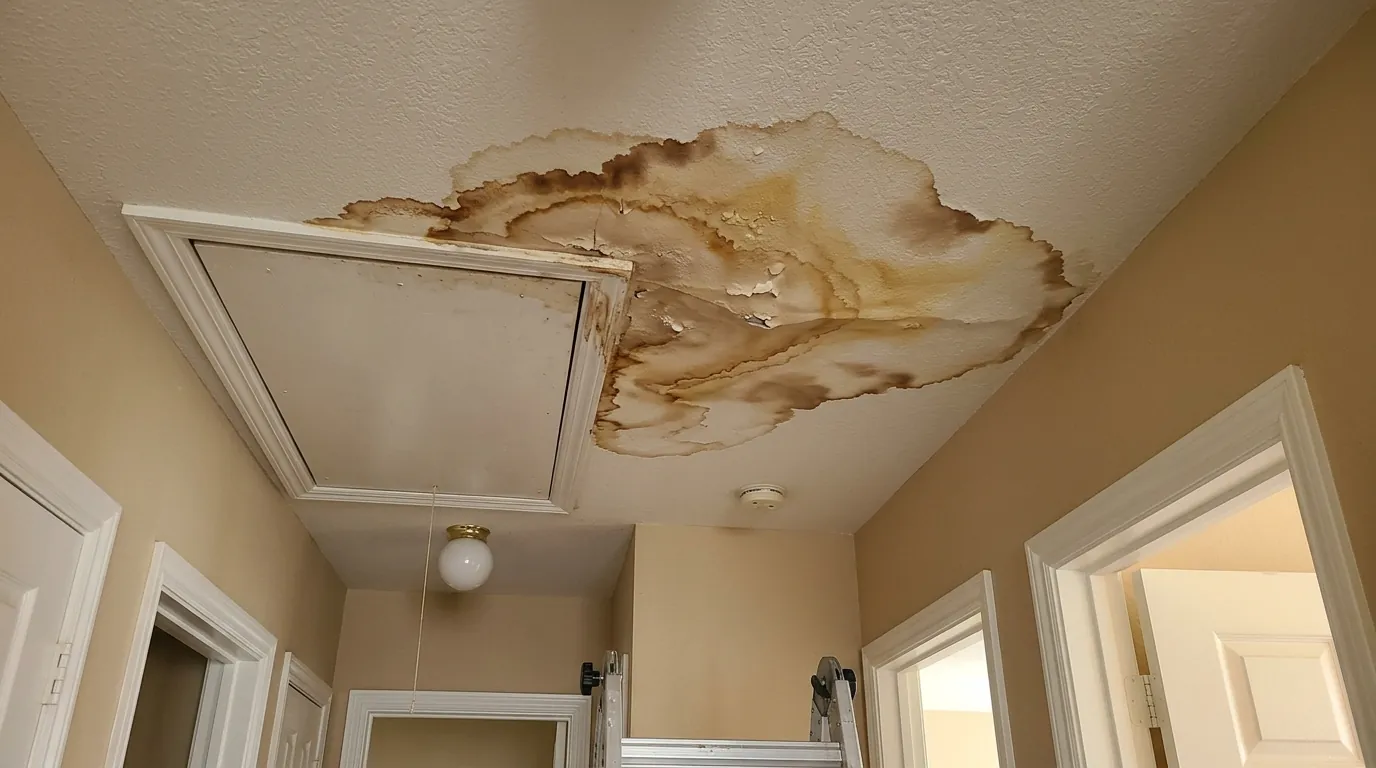
A ring that keeps growing
The stain spreads after rain or long AC runs.
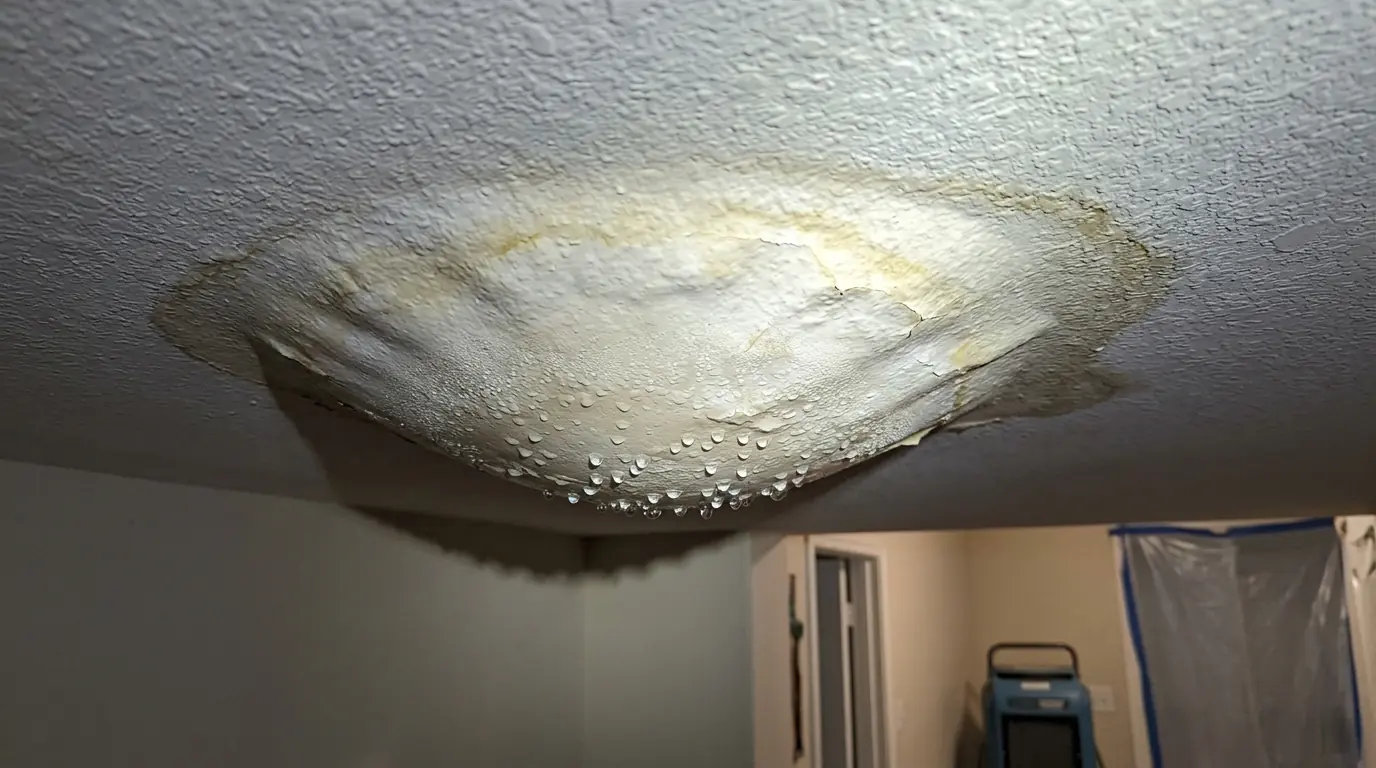
Bulge in the drywall
A belly forms where water pools above.
Drip at a light or vent
Water finds the fixture holes first.
Lifting tape seams
Drywall joints crack or show lines.
Musty hallway air
The space under the air handler smells damp.
How water gets from the attic to your ceiling
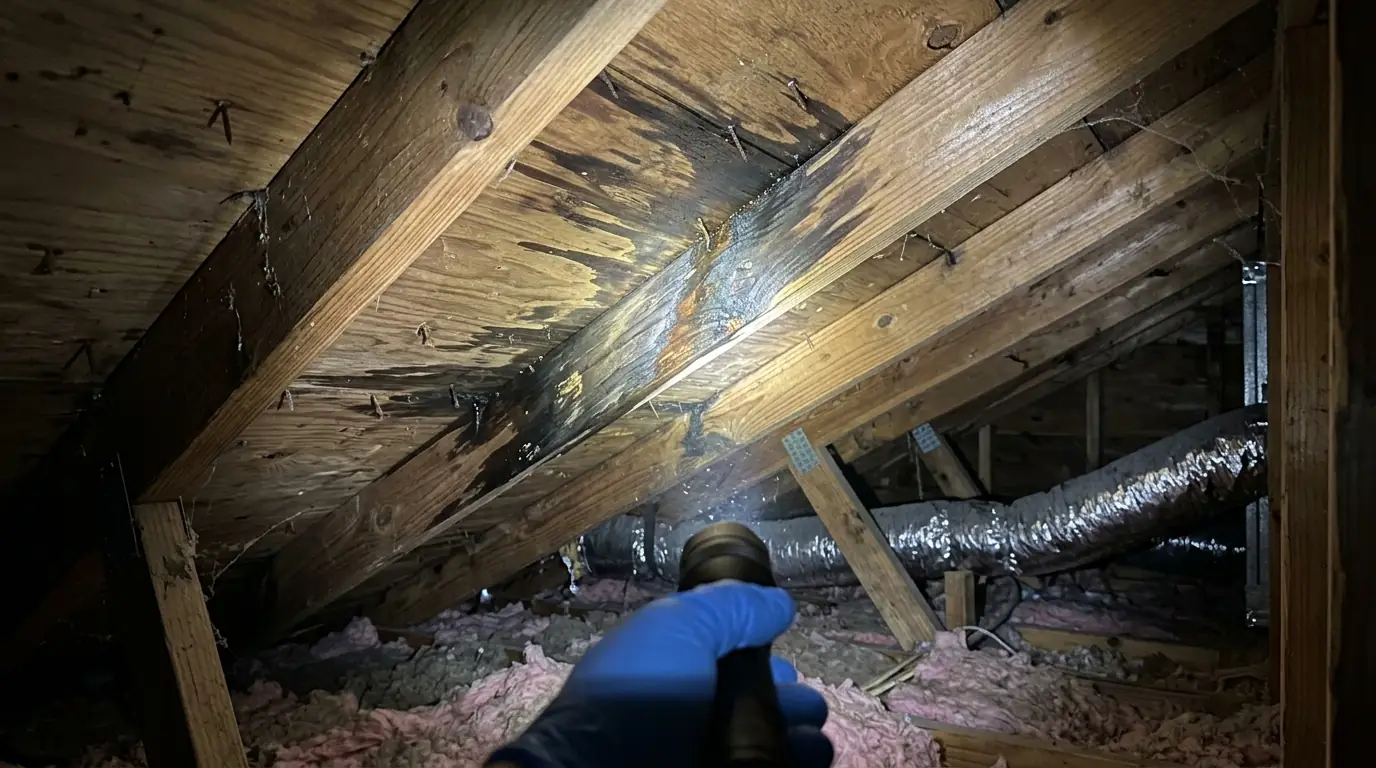
Water in an attic rarely drops straight down. It runs along decking, rafters and joists, soaks the insulation, and comes through the drywall at a low point, a seam or a fixture opening, often well away from where it started. So we go into the attic first to find and stop the source.
Wet blown-in insulation sits like a soggy blanket on the drywall and keeps it from drying, so it comes out, as covered under wet insulation removal. Stained but sound board can usually stay up and be primed once it reads dry. A panel that sagged or went soft comes down, back to dry framing.
AC drain pan and condensate line overflow
An attic air handler pulls water out of the air every time it cools, and that water leaves through a small drain line. Algae and slime clog the line, the primary pan fills, and water spills into the secondary pan or straight onto the ceiling. A small pipe dripping above a window is often the backup drain telling you the main line is blocked. Clearing the line is HVAC work. We dry the drywall under the unit, pull soaked insulation and extract any water standing in the pan.
Attic water heater leaks
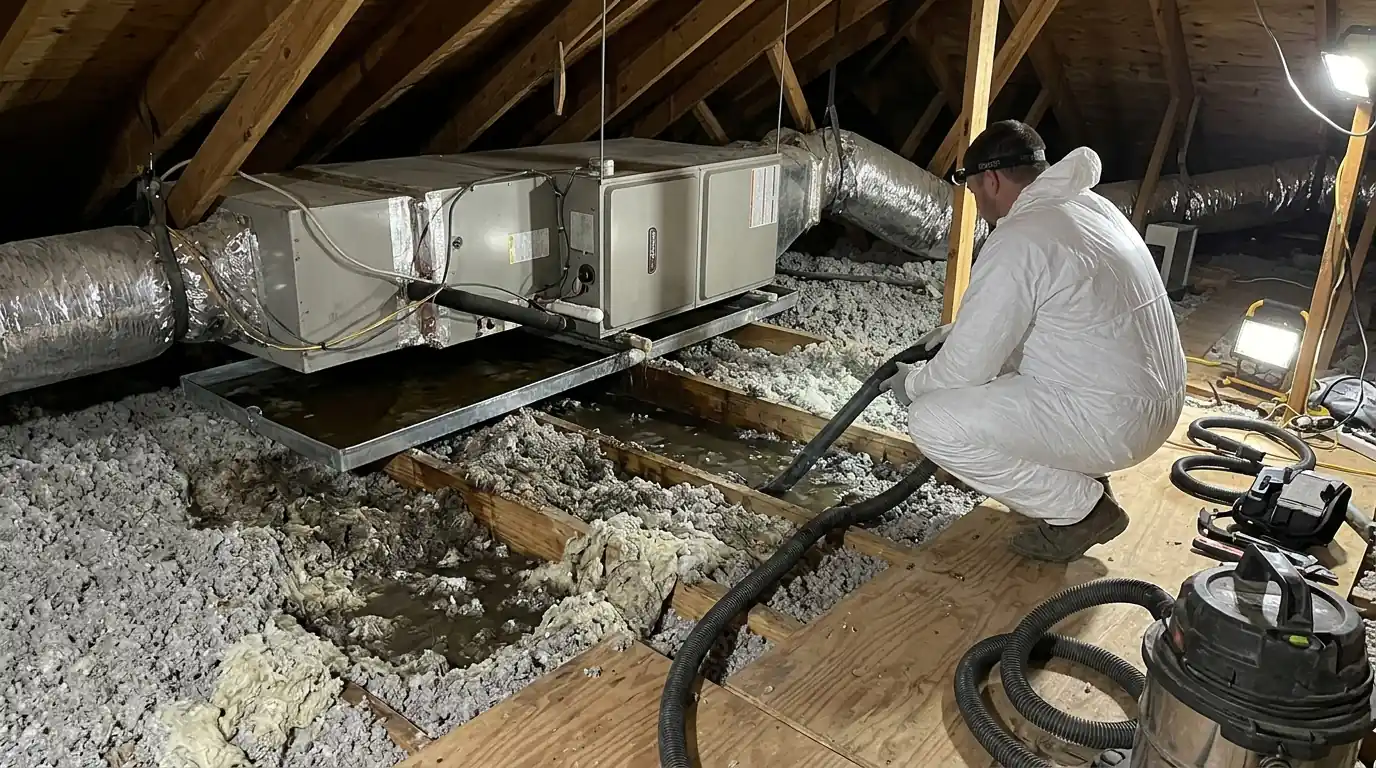
Some builders set the water heater up in the attic on a drain pan. If the tank rusts through and the pan drain is clogged or too small, water overruns the pan onto the ceiling, sometimes over several rooms. It keeps running until the cold inlet is closed, so this is one of the larger ceiling jobs. We extract the pan and insulation, open saturated drywall and dry the framing. Ceiling board that held water for hours usually comes down, while walls below often dry in place.
Roof leaks into the ceiling
A roof leak usually shows up during or right after rain, often as a stain near an exterior wall, a vent pipe or a chimney. Flashing, lifted shingles and wind-driven rain are the usual entry points. Water runs down the decking and rafters, so the attic side often shows more damage than the room does. Repairing the roof is a roofer's job, but emergency tarping stops more water while that is arranged. Inside, we dry the decking, pull wet insulation and save the ceiling where it stayed firm.
Upstairs bathroom leaks
A ring that darkens on the ceiling under an upstairs bathroom after showers usually traces back to a shower pan, a tub drain gasket or a toilet wax ring that has failed. The floor cavity between levels holds that water against the drywall below. If the toilet is the source, the water is not clean, and the ceiling board and insulation it touched are removed rather than dried. We open a small inspection section, dry the cavity from below, and handle the bathroom side through shower leak cleanup.
From the first drip to a sound, dry ceiling
Protect the room
Furniture is moved and a bucket catches the drip.
Find the source in the attic
We trace the water back to the pan, tank, pipe or roof.
Pull wet insulation
Soaked insulation comes out so the drywall below can dry.
Dry both sides
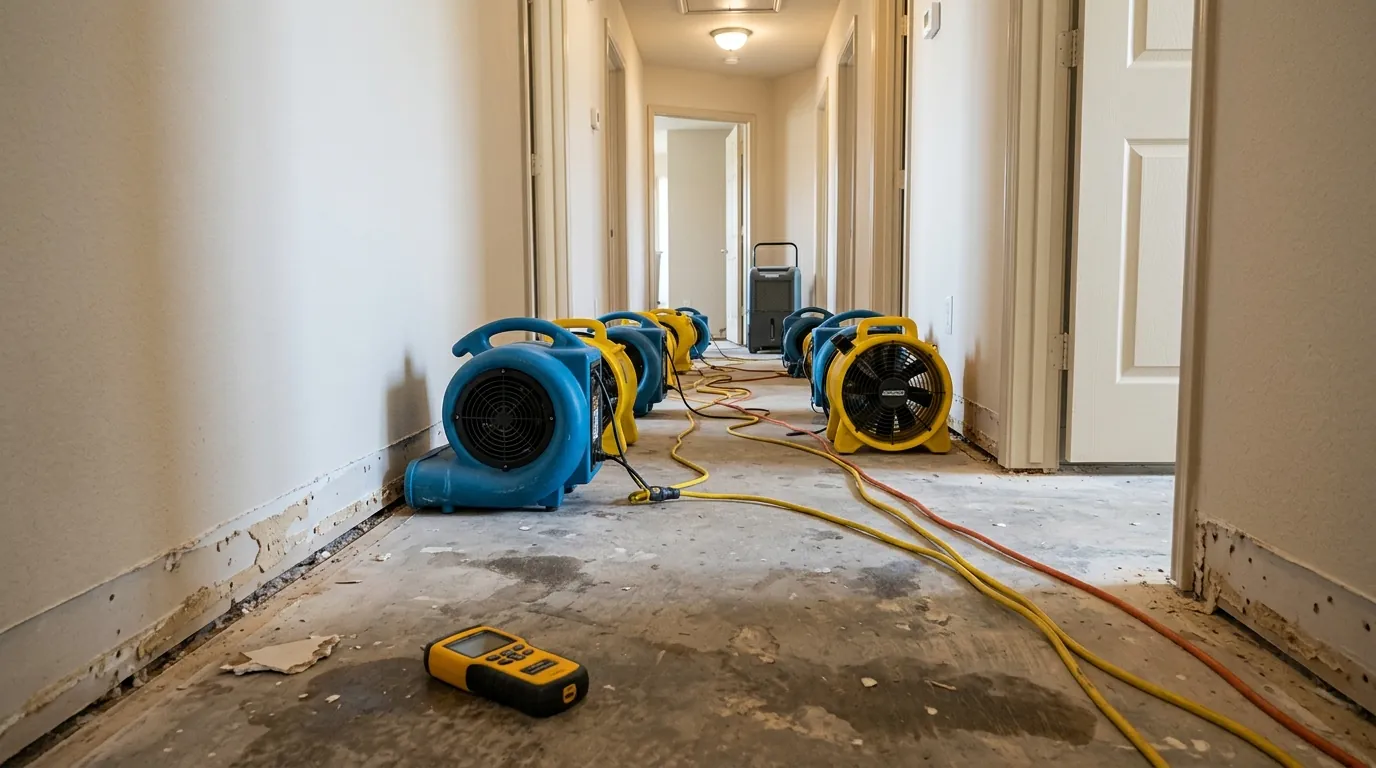
Equipment works the attic side and the room side together.
Open or keep
Sagged board comes down, and sound board stays once it reads dry.
How long a wet ceiling takes to dry
An opened ceiling with its wet insulation pulled dries much faster than a closed one, because air reaches both faces of the board. Thick drywall, layers of paint and a hot, humid attic overhead all slow it down.
Framing and decking are read along with the drywall, and repairs, texture and paint follow once all of them match unaffected areas.
League City summers put the attic air handler to work
WeatherSpark marks about four months of hot season in League City, between late May and late September, with August averaging a 91 degree high. Through those months an attic air handler runs for long stretches and sends a steady stream of condensate down its drain line. That is when a partly clogged line is most likely to overflow. A soaked ceiling under a hot attic also stays humid, so we treat a summer ceiling leak as urgent even when the stain looks small.
What drives the cost of a ceiling and attic water job
We price ceiling work after seeing both sides of the drywall, since the attic often tells a different story.
- Source and water type
- A toilet leak means more removal than a condensate or supply leak.
- Wet insulation
- The area of soaked insulation to pull drives much of the cost.
- Ceiling opening
- An inspection cut costs far less than a sagged panel.
- Attic access
- A low roof and no decking slow attic work.
- Ceiling texture
- Matching knockdown or popcorn adds work, and older popcorn may need testing first.
Ceiling leak questions, answered plainly
It can be. Wet drywall is heavy and can drop without warning, so keep people and pets out from under it.
Not until the drywall and insulation above it read dry. Paint over damp board traps the water, and the stain bleeds back through.
An HVAC technician clears or repairs the line. We handle the water it left in the attic, insulation and ceiling.
Only the sections that sagged, crumbled or will not dry. Board that meets its dry reading stays up and gets finished in place.
Sudden overflow damage is often covered, but a slow leak or a neglected drain line may be treated as maintenance. Your policy and adjuster decide.
