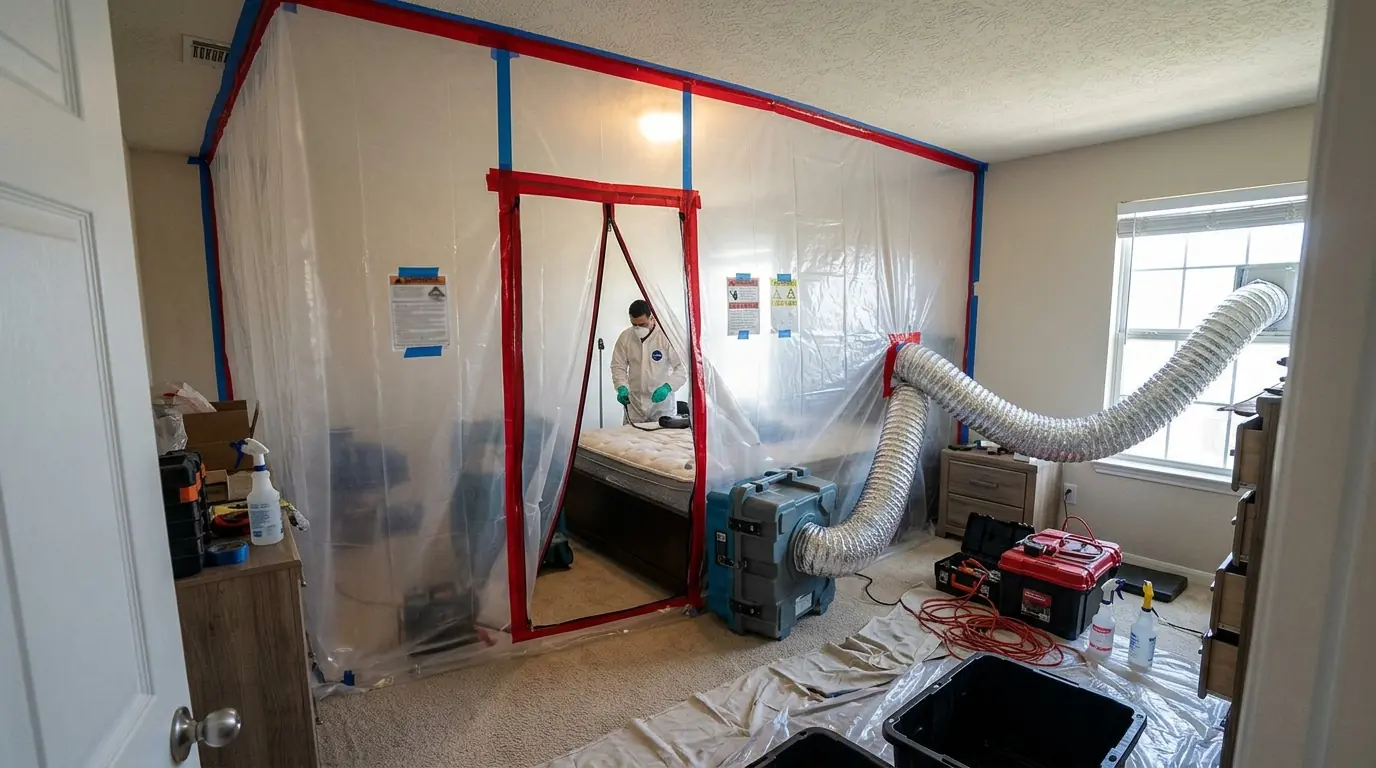
Updated October 2026
Quick answer
For League City water losses, moisture mapping means a floor plan marked with dated meter readings that show which materials are wet, how far the water spread and when each area reached its dry standard. Thermal images guide where to take readings, but only a meter confirms moisture.
Thermal camera first, meters second, map last
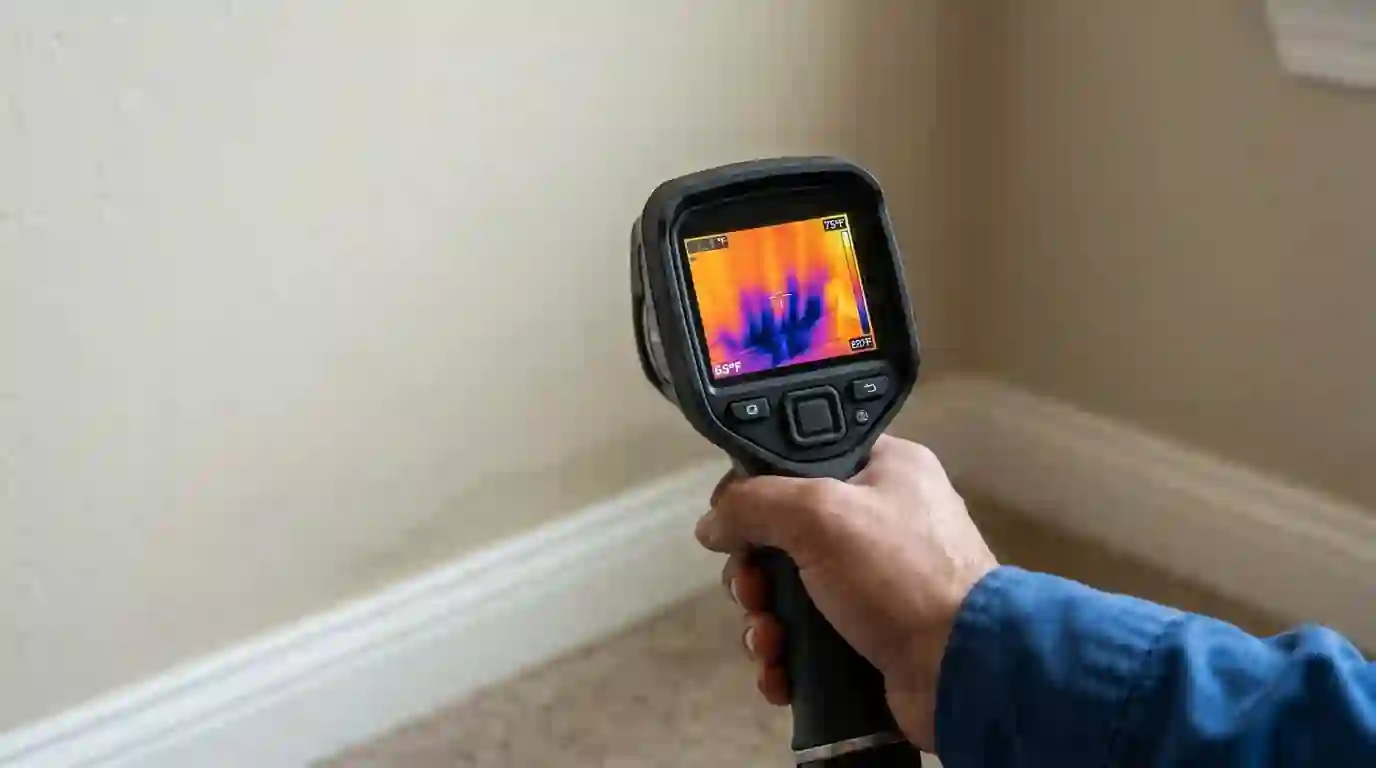
A thermal camera sees temperature, not water. Wet drywall and carpet usually read cooler than the dry material around them because evaporation cools the surface, so the camera shows a pattern worth checking. Cold air from a supply vent, missing insulation or a pipe in the wall can paint the same pattern, so every suspect area gets a meter reading before it goes on the map.
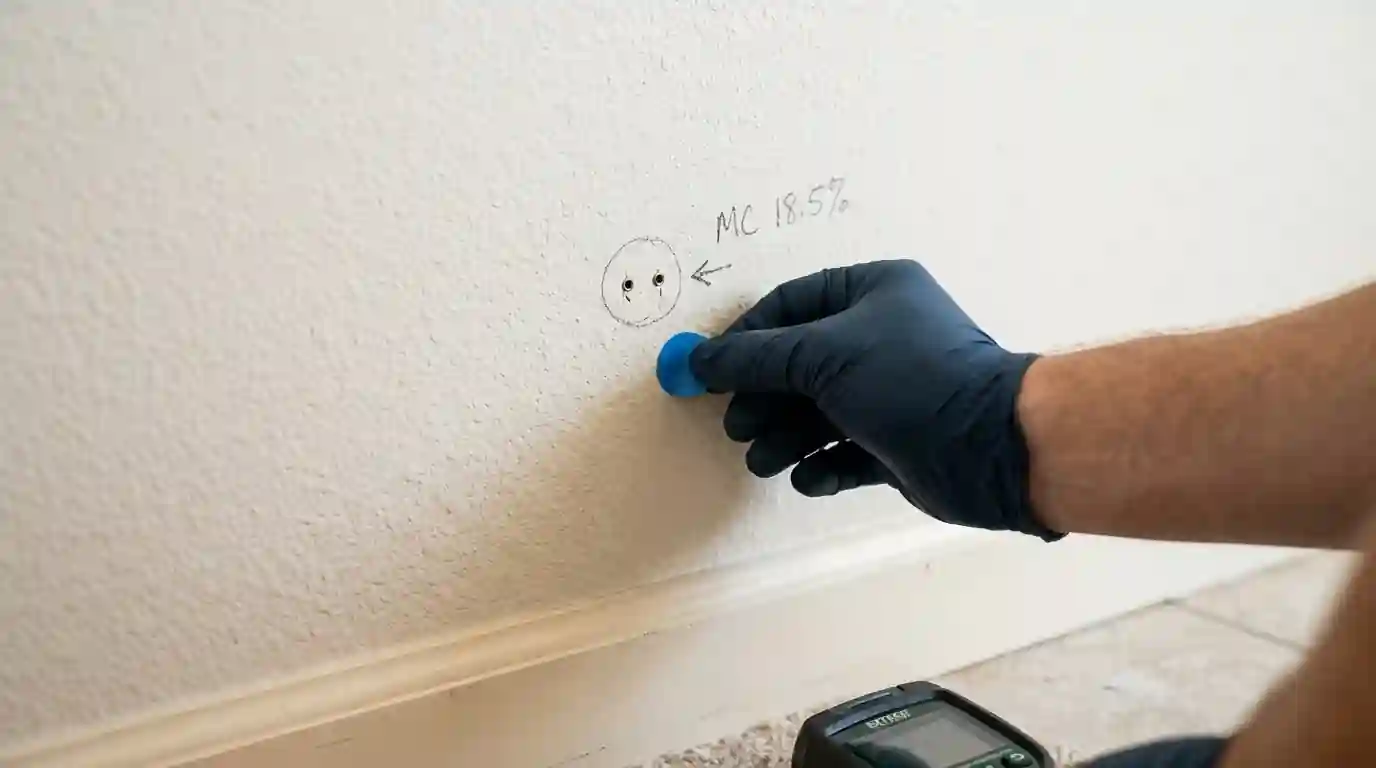
Readings are compared with a dry standard, taken from the same kind of material in an unaffected part of the house. Each reading point is marked on a room sketch with its date, material and number, and the same points are read again on every visit. That map decides where equipment goes during structural drying and when it can leave.
What a moisture inspection covers
- Thermal scan of walls, ceilings and floors around the source
- Pinless meter sweep to find the wet edges
- Pin readings on framing, trim and wood flooring
- Dry standard readings from unaffected rooms
- Room humidity and temperature readings
- A sketch of each room with every reading point marked
- Photos of the camera screen and meter readings
Pin and pinless meter readings
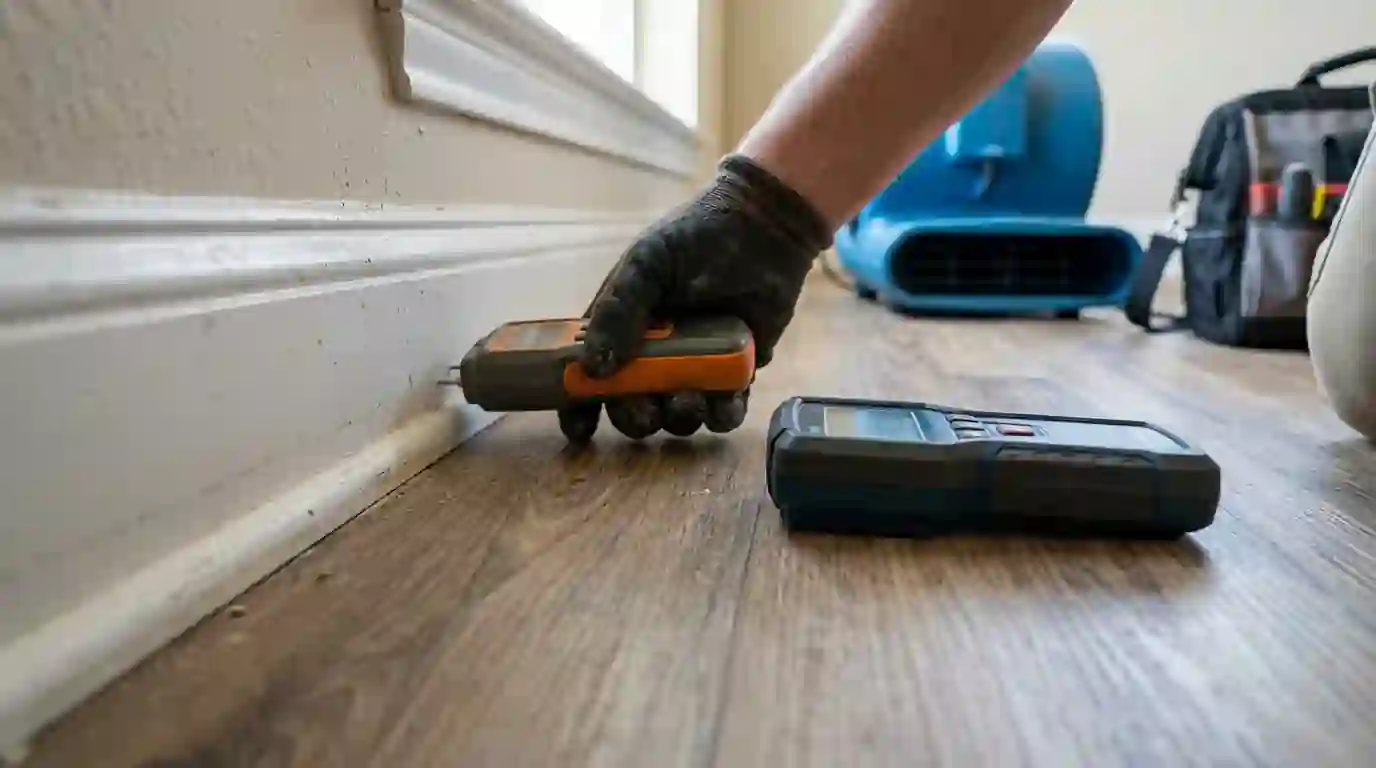
Two kinds of meters do the confirming. A pinless meter, like the Tramex and Protimeter models common in restoration, reads below the surface through an electrical field, so it scans drywall, tile and flooring without leaving a mark. A pin meter, such as a Delmhorst, pushes two small pins into wood or drywall and reads the moisture between them, which gives a firm number for framing, baseboard and hardwood. Pinless meters cover ground quickly, and pin readings settle the question at a known depth. A thermo-hygrometer adds the humidity and temperature of the air in each room.
Moisture maps for your insurance file
An adjuster wants to see that the water was real, where it went, and that equipment ran only as long as the readings said it should. The moisture map covers all three. It shows each room on a sketch, every reading point with its material and date, the dry standard used for comparison, and photos of the meter on the material. When a point reaches its dry standard, it is marked dry and the equipment in that area comes down. You get a copy, and it backs up the claim paperwork for the job.
Reading moisture in slab-built League City houses
Most League City houses sit on a concrete slab, and a slab changes how water hides. It spreads under carpet pad, vinyl plank and the bottom plates of walls instead of dripping into a crawl space, and it lingers because concrete gives up water slowly. Gulf Coast humidity adds a second problem: room air that is already damp keeps materials from reaching their dry standard. So for League City houses, the map tracks the slab edges, the bottom of each wall and the room humidity together.
How a moisture mapping visit runs
Start at the source
We look first at the leak point or the waterline.
Scan with the camera
Thermal images show where readings are needed.
Confirm with meters
Pinless sweeps find the edges and pin readings settle the numbers.
Draw the map
Each point goes on a room sketch with its date and dry standard.
Repeat until dry
The same points are read again until each one matches its dry standard.
Thermal camera, pinless meter or pin meter: what each one tells you
| Tool | What it measures | Strength | Limit |
|---|---|---|---|
| Thermal camera | Surface temperature | Scans whole walls and ceilings quickly | Cannot confirm water; drafts and voids fool it |
| Pinless meter | Moisture below the surface | No holes, and it reads through tile and vinyl | Reads a shallow depth; metal behind it skews results |
| Pin meter | Moisture between two pins | A precise number in wood and drywall | Leaves small holes and reads only where the pins go |
| Thermo-hygrometer | Air temperature and humidity | Shows whether room air can take on more water | Says nothing about the materials themselves |
Equipment makers in professional drying, moisture detection and carpet extraction
What changes the cost of a moisture inspection
Cost depends on how much of the house needs reading and why.
- Area to scan
- One bathroom wall is quick, while a whole floor after a flood is not.
- Purpose
- A one-time check of a stain is lighter than a map kept up for a claim.
- Repeat visits
- Monitoring during drying means the same points are read on each visit.
- Hidden spaces
- Reading inside cabinets, behind trim or above ceilings takes more time.
Moisture mapping questions, answered plainly
Not directly. It sees surface temperature, and wet drywall usually reads cooler. A meter reading is what confirms the camera pointed at real moisture.
Pinless meters leave no mark at all. Pin meters leave two tiny holes, usually placed at baseboard edges or in areas that will be repaired anyway.
It is a reading from the same material in a room the water never reached. Wet areas are dried until they match it, since the right number differs by material and by house.
Often, yes. Mapping shows where moisture is highest, which usually points to the source. The plumbing repair itself may still need a plumber.
Adjusters routinely ask for moisture logs, and a dated map with photos is how they are usually shown. It does not decide coverage, but it supports what was wet.
