Updated October 2026
Quick answer
Carpet soaked in a League City home can often dry where it lies when a supply line was the source and someone caught it early, while the pad under it is often replaced. Water category and time decide most of the outcome, so we meter carpet, pad and slab before cutting anything.
What happens under carpet after it gets soaked
Carpet is a layered floor: face fibers tufted into a primary backing, glued to a secondary backing, laid on foam pad over tack strip nailed into the slab. Water spreads sideways through the pad faster than across the face, so the wet area underneath is usually larger than the stain.
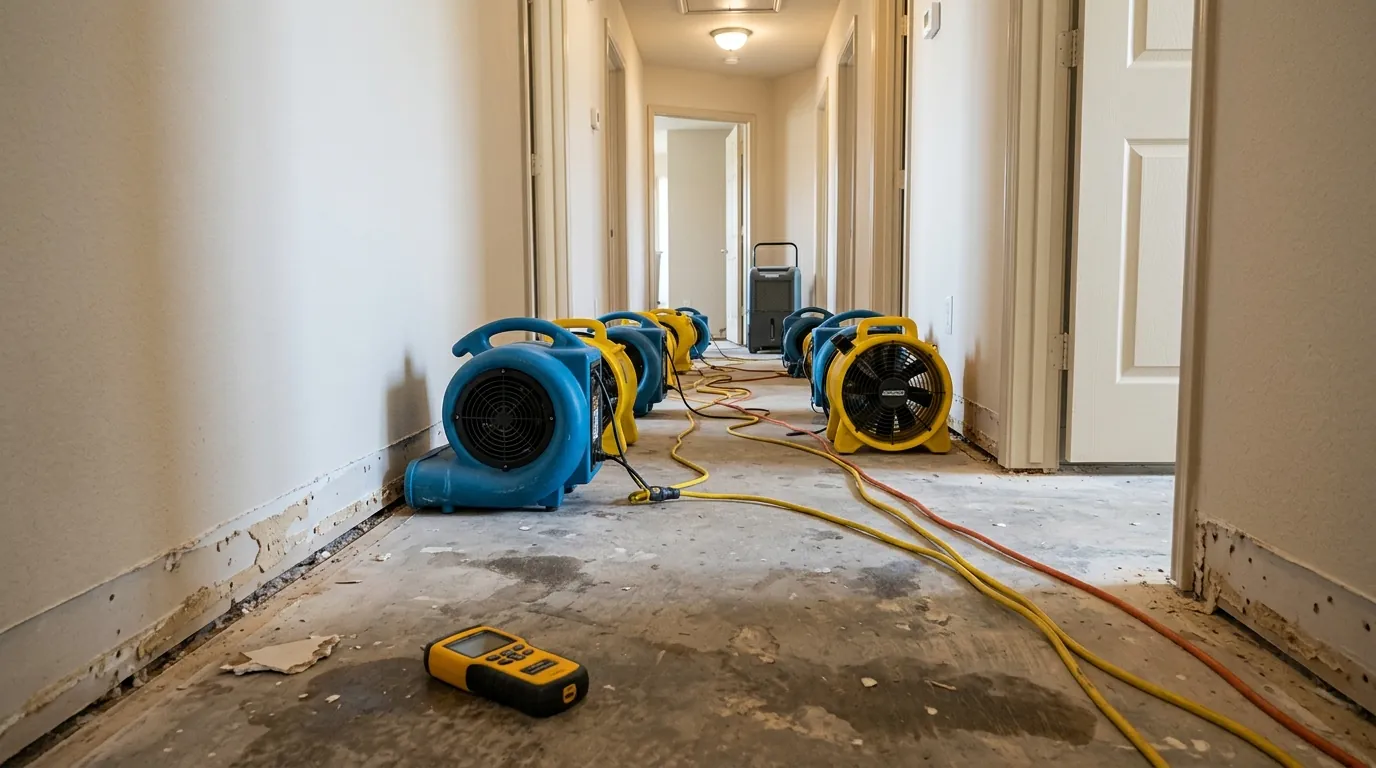
Weighted extraction comes first, squeezing water out of carpet and pad together. Then we float the carpet on air from movers like the ones Dri-Eaz and B-Air build, or cut the pad out and dry carpet and concrete separately. Low-grain dehumidifiers such as Phoenix units pull moisture from the room, and Protimeter or Delmhorst pin meters tell us when the backing is truly dry. Water rising through the floor is a different job, covered under slab leak cleanup.
Drying carpet in place
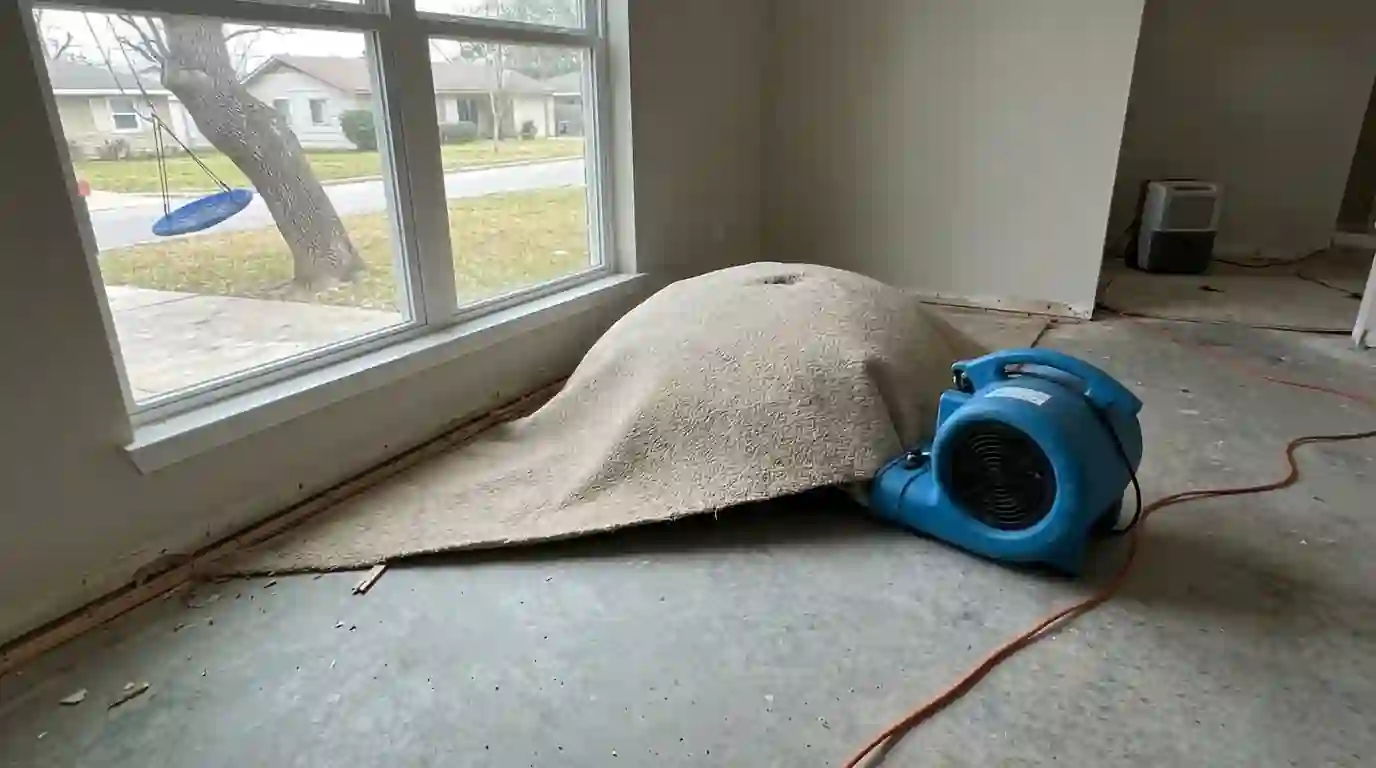
When a supply line or a sink overflow wets a room and someone catches it early, the carpet feels damp but lies flat and smells like nothing. We extract hard, release one corner from the tack strip and float the carpet on moving air, so it dries from the top and the bottom at once. Pad can sometimes stay if its readings fall quickly. Carpet, tack strip and baseboards are normally kept, and the loose corner is restretched once the slab reads dry.
Pad replacement
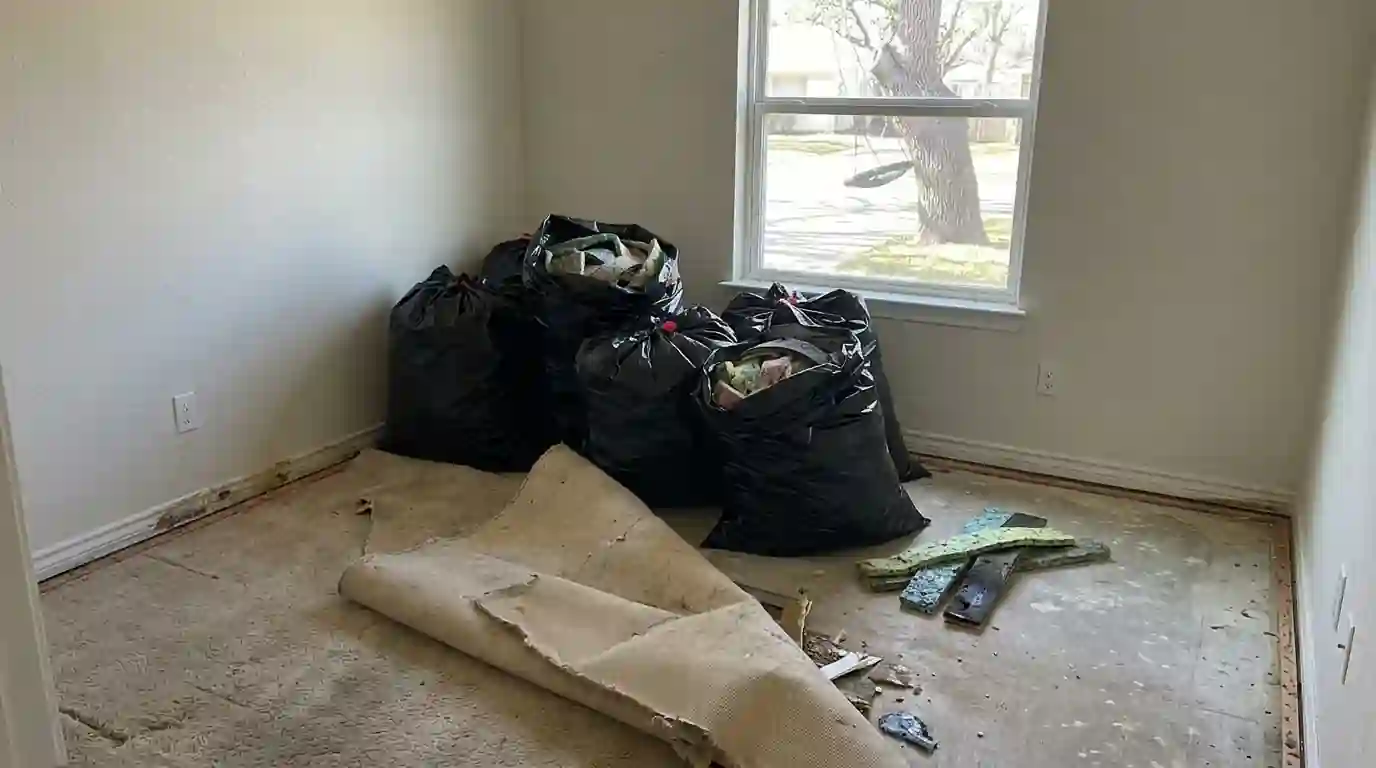
Pad is open foam, and it holds water the way a kitchen sponge does. It also lies directly on concrete, the last surface drying air reaches. Often the faster route is to cut the wet pad out in strips, bag it, dry the carpet and slab with it gone, and lay new pad of matching thickness before the carpet goes back. Pad that touched gray water is always replaced, while the carpet above it is often cleaned and reused if its backing held.
Delaminated carpet
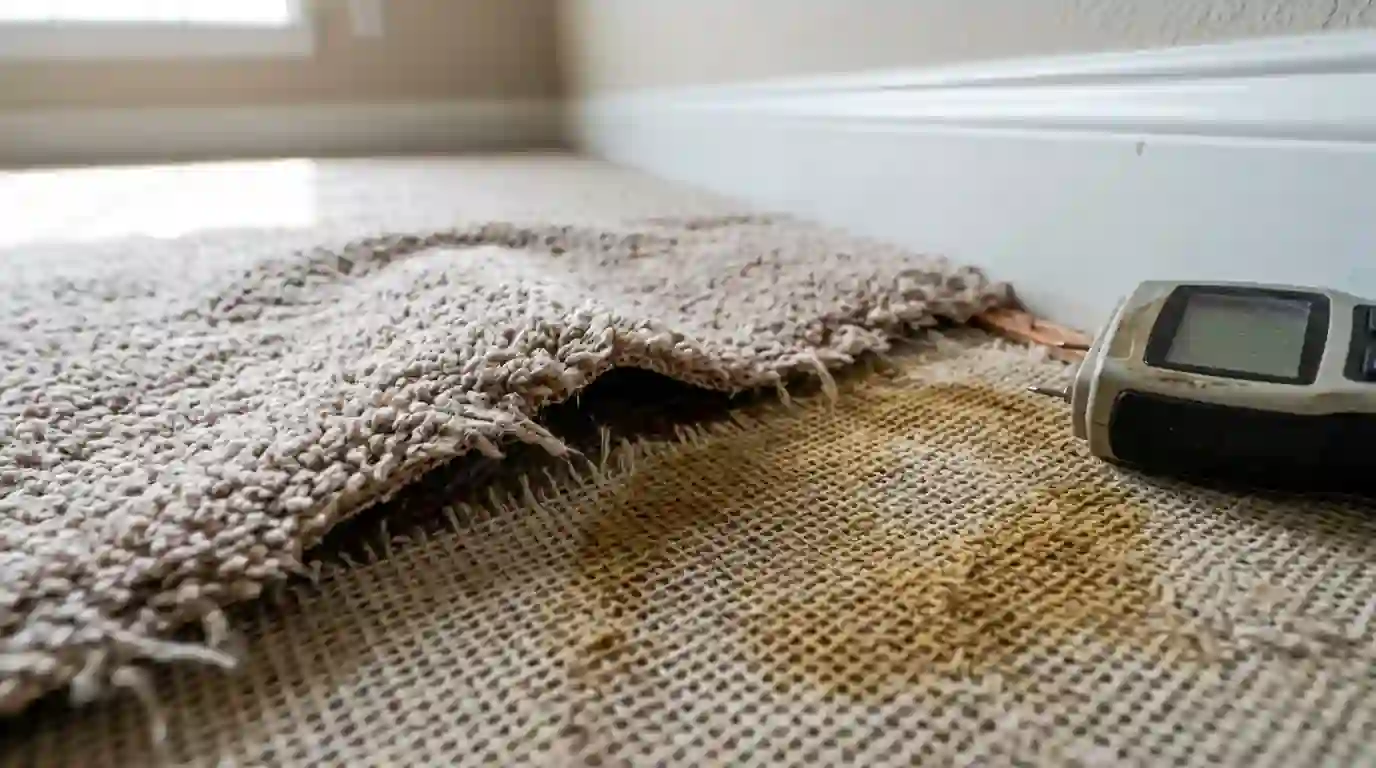
Delamination shows up as ripples, bubbles or a soft patch where the carpet face seems to float above its backing. Water and heat break down the latex that joins the two backings, and once it lets go, restretching will not hold. We test it by pinching the face at the wet edge and pulling gently. A small area by a doorway can sometimes be patched with a matching piece from a closet. A room where the backing has separated across the floor is documented for replacement, since it will keep wrinkling and splitting.
Five steps from soaked carpet to a floor you can walk on
Find the edge of the water
We meter outward until carpet, pad and baseboard read normal.
Extract both layers
Weighted extraction presses water from carpet and pad before any air moves.
Float, fold or cut
Readings decide whether the carpet floats or the pad comes out.
Dry the slab
Air movers and a dehumidifier run in a closed room, and the concrete is read each visit.
Reset and clean
New pad goes down if needed, and the carpet is restretched and cleaned.
Why carpet over a League City slab dries slowly
Houses around League City are typically built on a concrete slab, and carpet over a slab behaves differently from carpet over a wood subfloor. The concrete stays cool under the air conditioning and gives up water slowly, so pad left in place keeps it damp after the carpet face feels dry. Humid Gulf Coast air works against open windows, too. So we keep the room closed, run dehumidification and read the slab itself before anything is reinstalled.
Safe steps while the carpet is still wet
Safe to handle yourself
- Shut the water off at the fixture or the main.
- Move furniture off the carpet, or set foil under legs that must stay.
- Shop vac standing water from a clean water leak.
- Keep the air conditioning on and the windows shut.
Time to call us
- The water came from a toilet, a drain or outside.
- The pad squishes well past the visible wet spot.
- The carpet ripples or a sour smell has started.
Dry it in place or replace it?
The readings should make this call, not the look of the carpet.
| What we check | Dry in place | Replace carpet and pad |
|---|---|---|
| Water source | Supply line, sink or window leak | Toilet, sewage or floodwater |
| Backing | Attached and flat after extraction | Rippled or separating |
| Pad | Dried or swapped alone | Removed with the carpet |
| Smell | None, or faint and fading | Musty or sour |
| Disruption | Room stays mostly furnished | Room emptied for a new install |
Equipment makers in professional drying, moisture detection and carpet extraction
What decides the price of drying wet carpet
One wet room can be a simple dry-out or a full carpet and pad replacement, which is why the range below is wide. We price after reading the floor.
- Water category
- Clean water lets carpet stay, while gray water usually costs the pad.
- Square footage
- Extraction and drying are priced largely by the wet area.
- Pad in or out
- New pad adds material but often shortens drying.
- Delamination
- Carpet with a separated backing is replaced, not dried.
- Stairs and furniture
- Stairs and full rooms take more hands and more blocking.
Published national planning ranges
- Drying or replacing wet carpet, per square foot: $1 to $11 per sq ft (lawnstarter.com, 2026)
These are national figures from published cost guides, shown for planning only. They are not a quote and not our price list; your job is priced after we see it.
Wet carpet questions before you rip anything up
Often, when the water was clean, it was caught early and the backing held. Our guide on saving or replacing wet carpet walks through the call.
Moving furniture and blotting are fine. Yanking carpet off the tack strip can stretch or tear it, which turns a dry-out into a replacement.
A wet vac lifts surface water but cannot squeeze the pad, and a fan only dries the face. The pad and slab stay wet and start to smell.
Weighted extraction tools, then air movers and dehumidifiers from makers like Dri-Eaz and Phoenix. Concrete meters from makers such as Tramex confirm the slab is dry.
Usually the pad or slab under it never fully dried, or the water was gray from the start. A sour or musty smell means the pad should come out.
