Updated October 2026
Quick answer
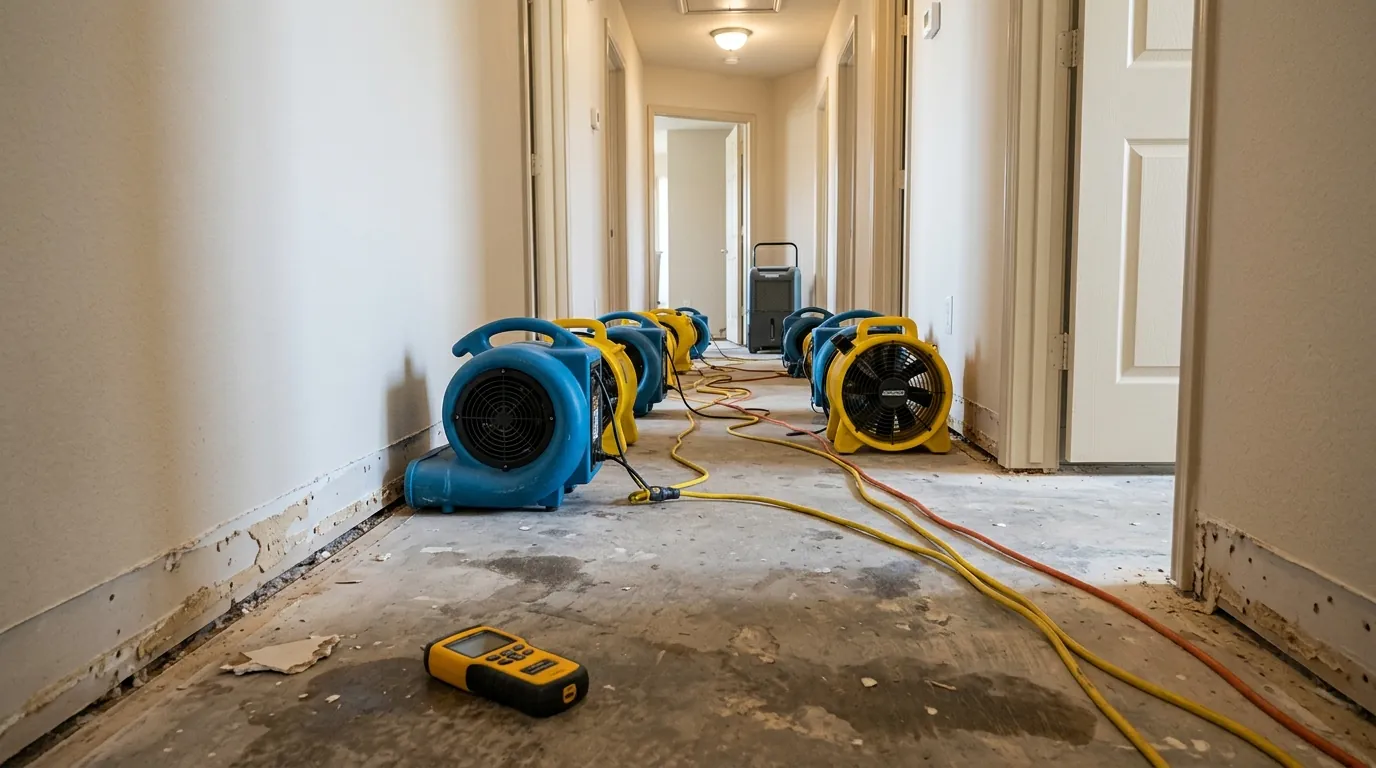
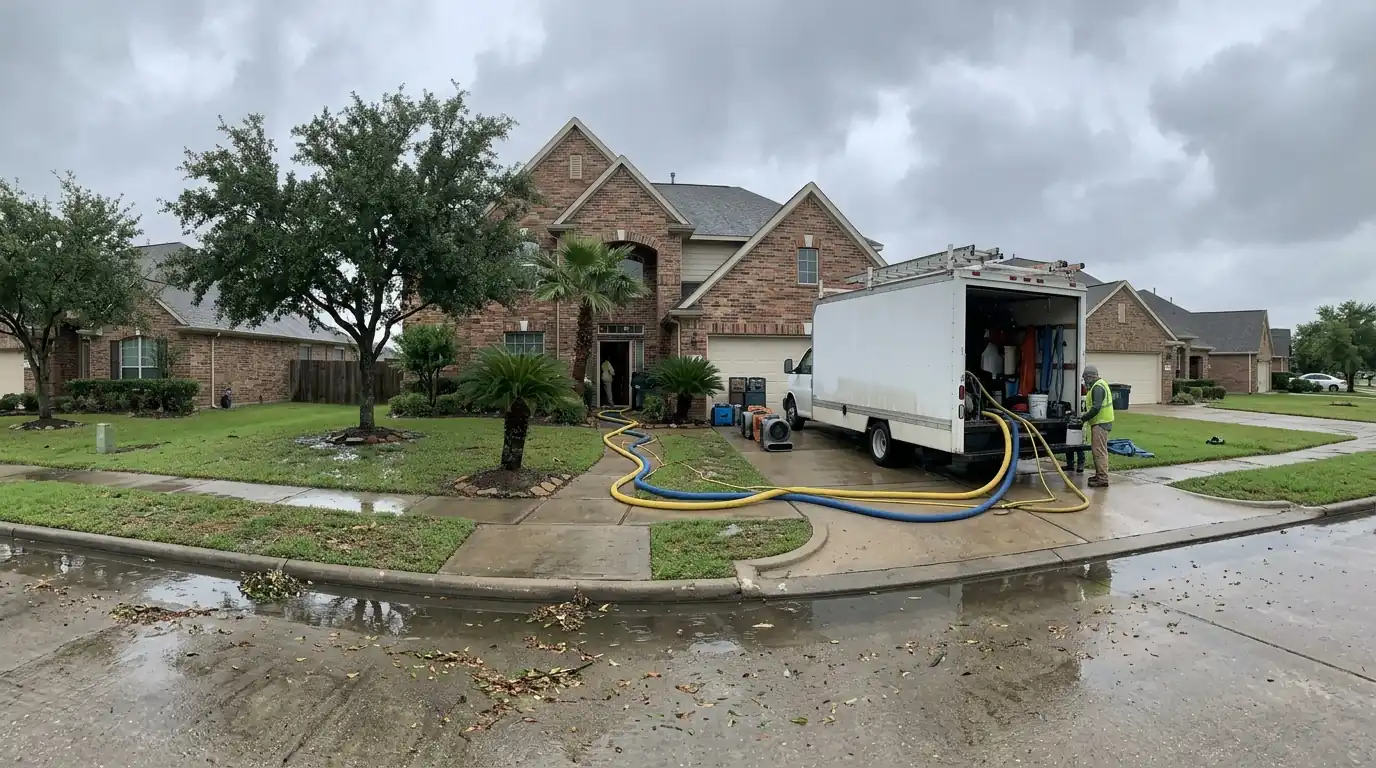
After a pipe or hose bursts in a League City home, cleanup starts once the water is off at the fixture stop or the main. Supply water is clean when it leaves the pipe, so most carpet, drywall and trim can be dried in place if extraction and drying begin before the water degrades.
Clues a pipe is leaking where you cannot see it
Meter moving with taps off
The water meter dial turns while nothing runs.
Hissing in a wall
A steady hiss with every fixture closed.
Bubbling paint
Paint blisters near a bathroom or kitchen.
Damp baseboard
Trim swells or darkens along one wall.
Pressure drop
Faucets suddenly run weaker across the house.
From shutoff to dry walls after a supply line fails
A supply line runs at full house pressure, so a failure keeps pouring until someone closes a valve. The water runs under cabinets, through wall plates into the next room and along the tack strip under carpet. We trace it with meters before anything gets pulled up, so the work stays as small as the readings allow.
Fixing the pipe is plumbing work, handled separately. Our side is extraction, drying and removing what cannot recover. A leak that sat unseen behind a wall for weeks may also need mold remediation.
Braided supply hose failures
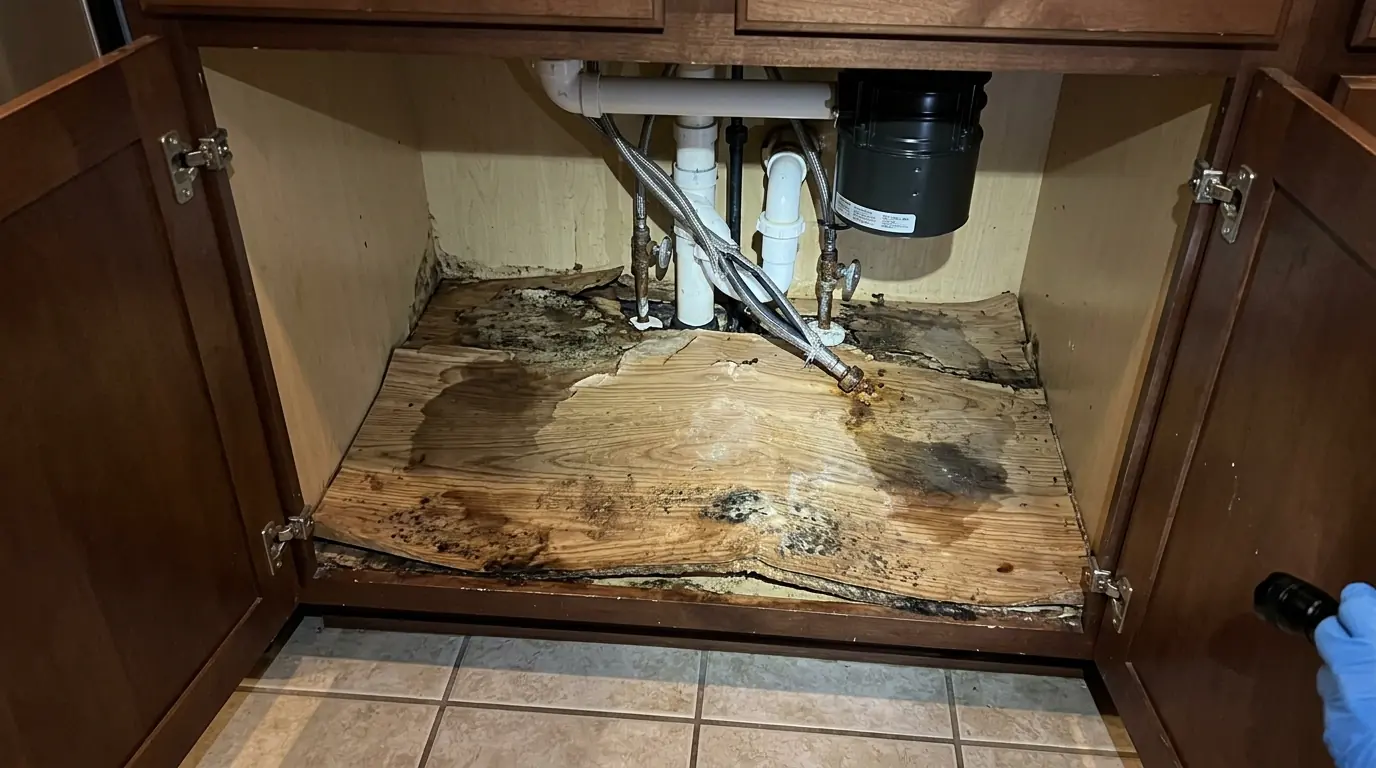
The braided hoses feeding faucets, toilets and ice makers are a plastic or rubber tube inside a steel mesh jacket. Fumes from bleach stored under a sink can corrode that jacket, and a kink or bulge is an early warning. When the tube splits, water sprays into the cabinet and spreads out from under it. We extract the cabinet and floor, open the void beneath the cabinet and dry the wall behind. A swollen particleboard cabinet floor gets replaced, while the cabinet box itself is often kept.
Toilet and sink supply leaks
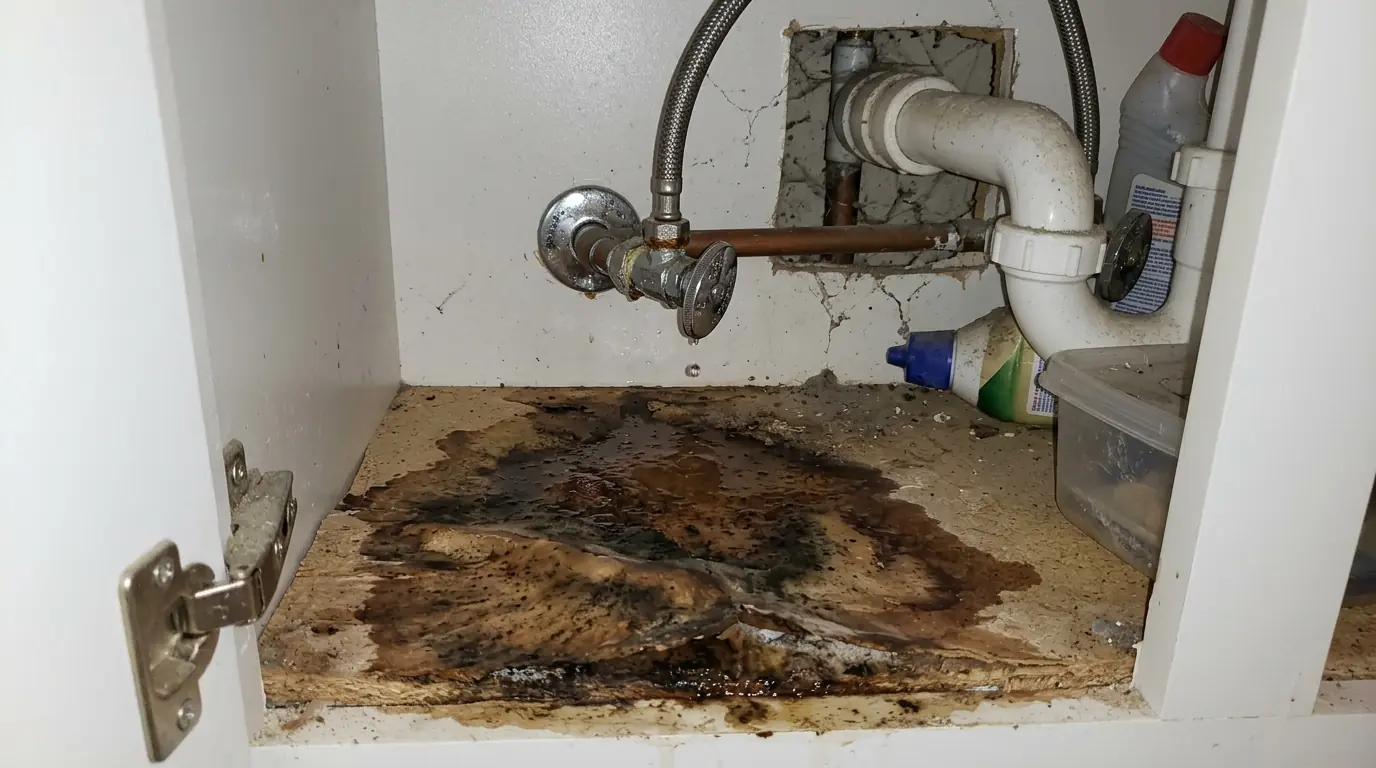
Under a vanity or behind a toilet, the shutoff valve and its compression nut are common leak points, and plastic coupling nuts on fill valves can crack after being tightened too hard. These leaks tend to be slow, rotting the vanity floor or soaking the subfloor around the toilet before anyone notices. Supply-side water is clean. Water that spilled over the rim of the bowl is not, and that changes what we can keep. We read the subfloor and the wall behind, then dry or remove by those readings.
PEX and copper fitting leaks
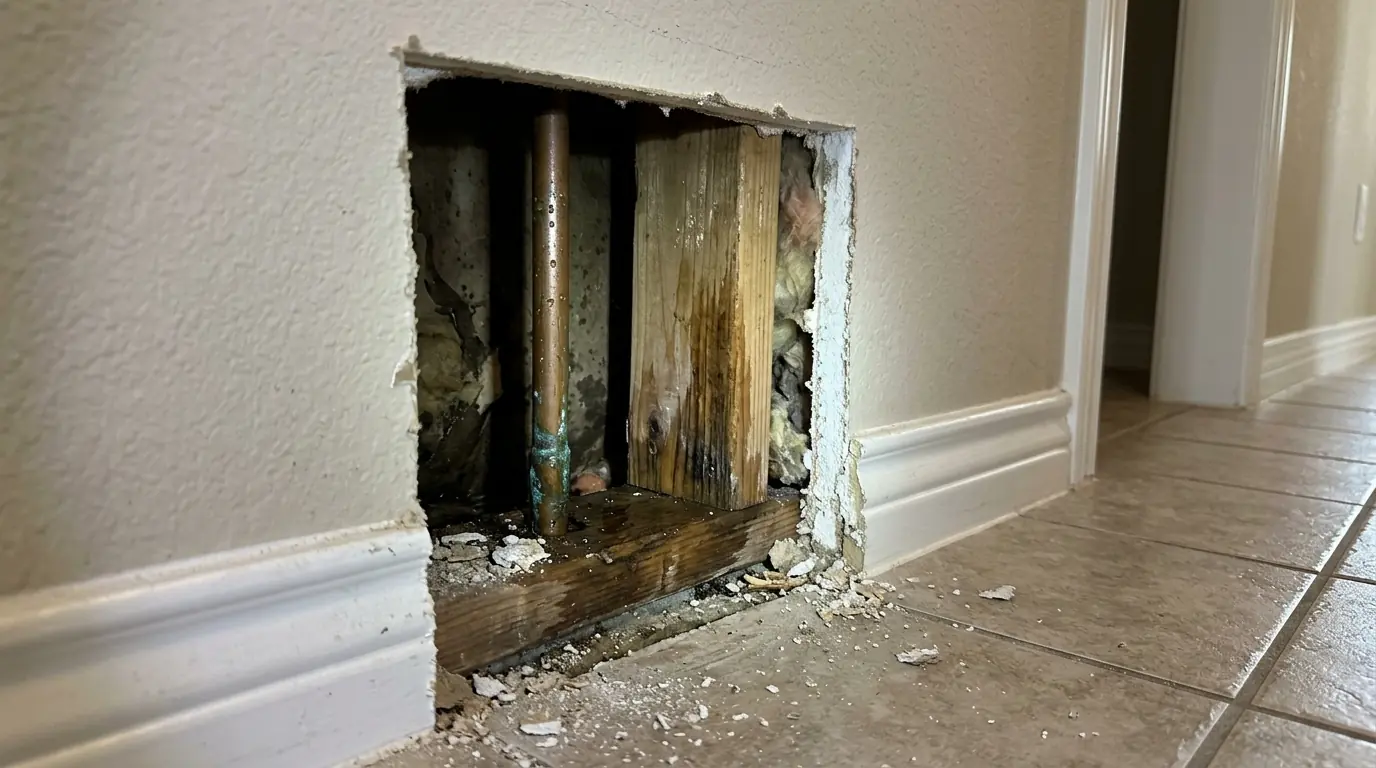
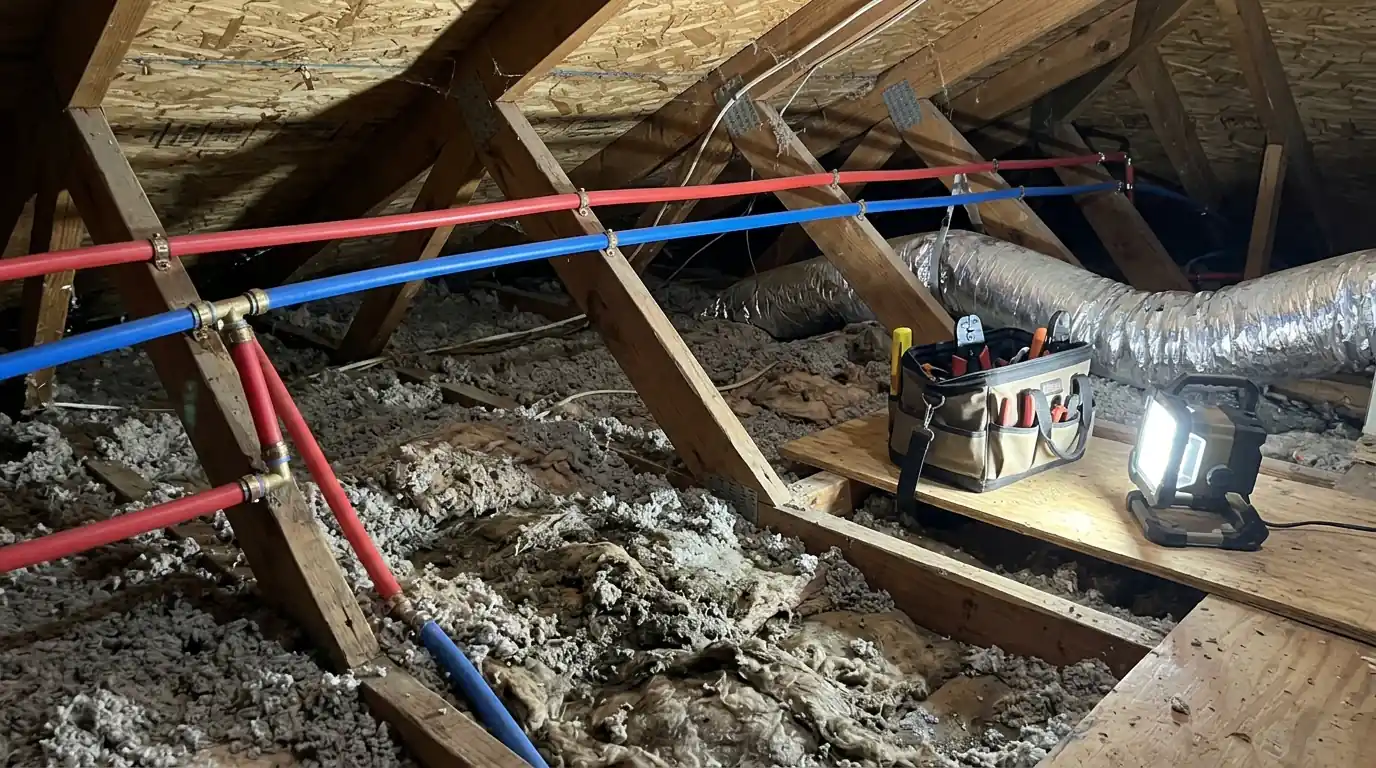
In many slab houses, at least some water lines run overhead through the attic, often in PEX tubing. Leaks in PEX systems tend to start at crimp rings and brass fittings rather than in the tubing, while copper leaks at pinholes and poorly soldered joints. An overhead leak shows up as a ceiling stain, a drip from a light fixture or soaked insulation. Then we pull the wet insulation, dry the ceiling from both sides and follow the water down, as with ceiling and attic leaks.
Water still coming? Close the main, then call us any hour.
Call (832) 737-0315What happens after the water is off
Confirm the shutoff
We make sure the line is closed and the leak has stopped.
Trace the water
Meters and a thermal camera follow it under floors and into walls.
Extract
Water comes off floors and out of cabinet voids and carpet.
Dry and open selectively
Equipment goes in, and drywall comes out only where it will not dry.
Document
Photos, readings and the failed part go into your claim file.
Newer League City plumbing, older Texas City lines
Housing here skews young, with League City's median home built in 2003 and roughly 58 percent of homes dating from 2000 or later. In houses that age, hoses, plastic nuts and fittings usually fail before the pipe does. Texas City's median home dates to 1984, and close to 39 percent of homes there went up between 1950 and 1979. There, aging supply pipe adds leak points, and a stiff shutoff valve can turn a small leak into a long one.
Your first moves while the water is still running
Safe to handle yourself
- Close the valve under the fixture or the main shutoff
- Open a low faucet to drain the lines
- Switch off breakers where water reaches outlets
- Photograph the leak and save the failed part
Time to call us
- Water reached carpet, walls or cabinet bottoms
- A ceiling below the leak is stained or dripping
- You found damp drywall but no visible leak
- The leak ran for hours unnoticed
Why two burst pipe jobs rarely cost the same
The pipe that failed matters less than where its water went and how long it ran.
- Run time
- A hose that sprayed overnight soaks far more than one caught right away.
- Floors and levels
- Water that crossed rooms or dropped a floor widens the scope.
- Wall openings
- A hidden leak may mean opening drywall, which adds later repair.
- Cabinets
- Swollen cabinet floors add parts and labor.
- Water category
- Toilet bowl overflow costs more to clean than a supply leak.
Published national planning ranges
- Category 1 clean water, per square foot: $3.30 to $4.10 per sq ft (lawnstarter.com, 2026)
These are national figures from published cost guides, shown for planning only. They are not a quote and not our price list; your job is priced after we see it.
What people ask right after a pipe bursts
Yes. Bag it and set it aside. Adjusters often want to see the failed part, and it helps show how the leak happened.
Stop the water, then call both. The plumber repairs the line while we extract and set drying, and neither job should wait.
Often, yes. Clean water caught early lets drywall dry in place. Board that sagged, crumbled or stayed wet for days is replaced.
Sudden leaks from a broken pipe or hose are commonly covered, while slow leaks over weeks often are not. Your adjuster decides under your policy.
Hard freezes are rare here, and when one comes, lines in the attic and outside walls are the most exposed. Shut the main, open a faucet to drain the lines, then call.
