Updated October 2026
Quick answer
Antimicrobial treatment during League City water cleanup is a registered product applied to cleaned studs, subfloor and slab to slow microbial growth while they dry. It follows extraction and cleaning, goes on at its label rate, and after a clean water leak caught early it is often unnecessary.
Where an antimicrobial fits in a water job
An antimicrobial is a cleaning aid with a narrow job. Water that sat, or water that was dirty from the start, leaves bacteria and soil on framing, slab and subfloor. Those surfaces are cleaned first, because a product sprayed over dirt or standing water gets diluted and blocked. Applied to the cleaned surface, it slows new growth while the structure dries.
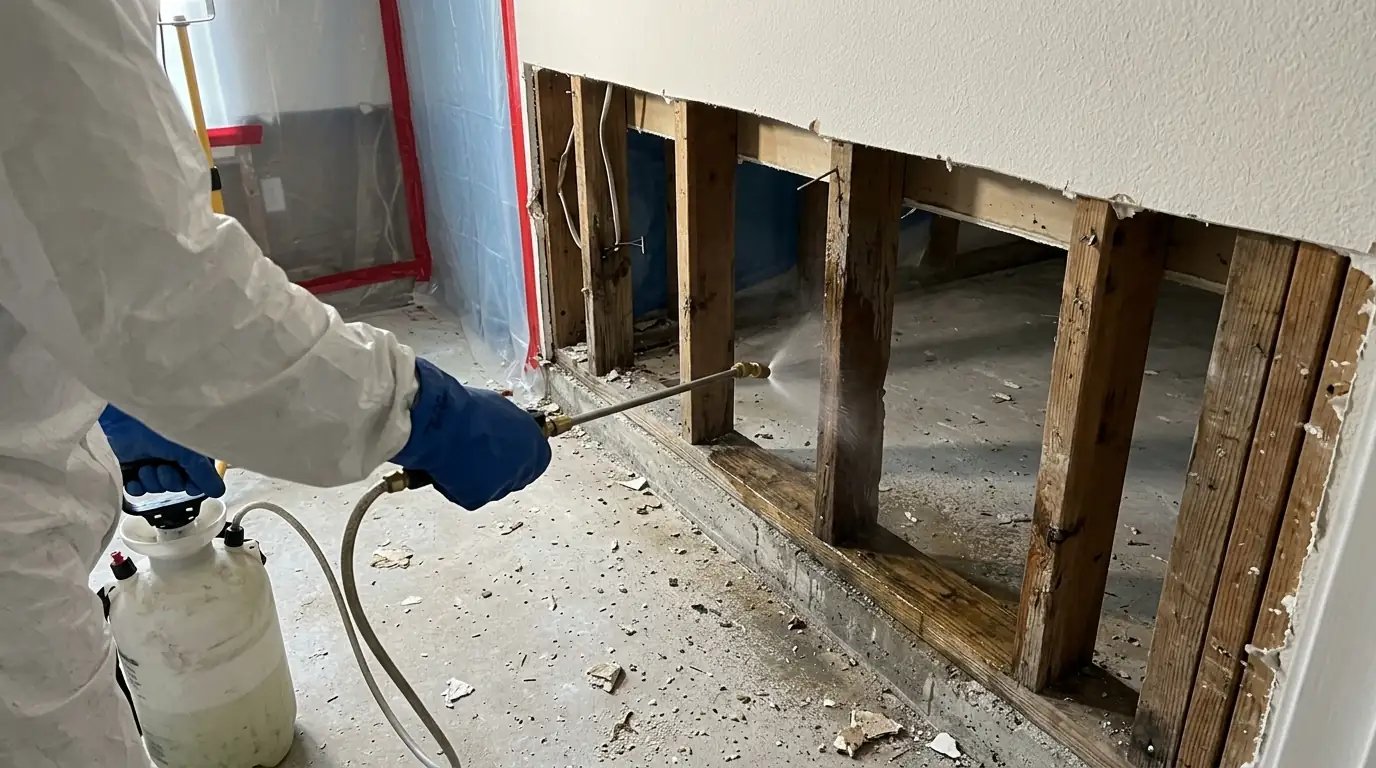
The product is an EPA-registered disinfectant or fungicide whose label sets the dilution, the contact time and the allowed uses. We tell you the product name and let you read the label first. None of it replaces drying the structure; wet wood grows mold, treated or not.
What happens on a treatment visit
- Confirm the water category and how long it sat
- Extract water and remove pad or materials that cannot be cleaned
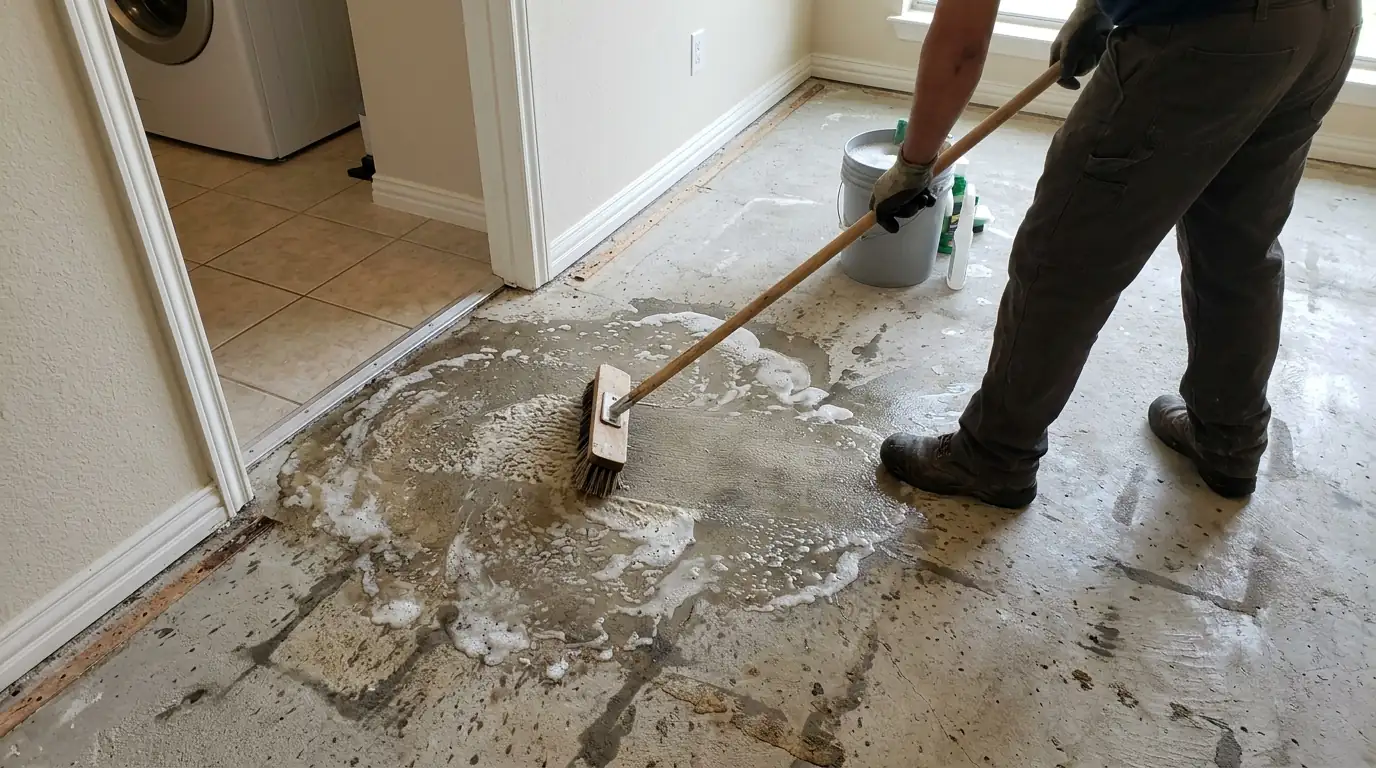
- Wash slab, subfloor and framing before any product
- Show you the product name and label before application
- Apply at the label dilution with a low-pressure sprayer or wipe
- Leave the product on for its listed contact time
- Note treated areas on the moisture map and in photos
Treatment after a clean water loss
A supply line or water heater leak starts as Category 1, clean water. When it is extracted and drying begins promptly, restoration guidance treats an antimicrobial as usually unnecessary, and we will tell you so. That changes as the water sits. The longer clean water stays in carpet or a wall cavity, the more soil and bacteria it picks up, which pushes it toward Category 2. Then the exposed framing and slab are treated after cleaning, and untouched rooms are left alone. The water categories explained shows how that shift happens.
Treatment after gray water from appliances and drains
Washer overflows, dishwasher leaks and AC drain spills count as Category 2 the moment they escape, carrying soap, food soil and bacteria into whatever they reach. Pad soaked by gray water comes out, and the slab or subfloor under it is washed before any product goes down. The antimicrobial then goes on that clean surface, on the lower framing inside wet walls, and along the perimeter if carpet will be relaid. Carpet that stays is cleaned and treated before it goes back. Sewage is a different job that calls for full sewage cleanup.
Treatment before walls are closed up
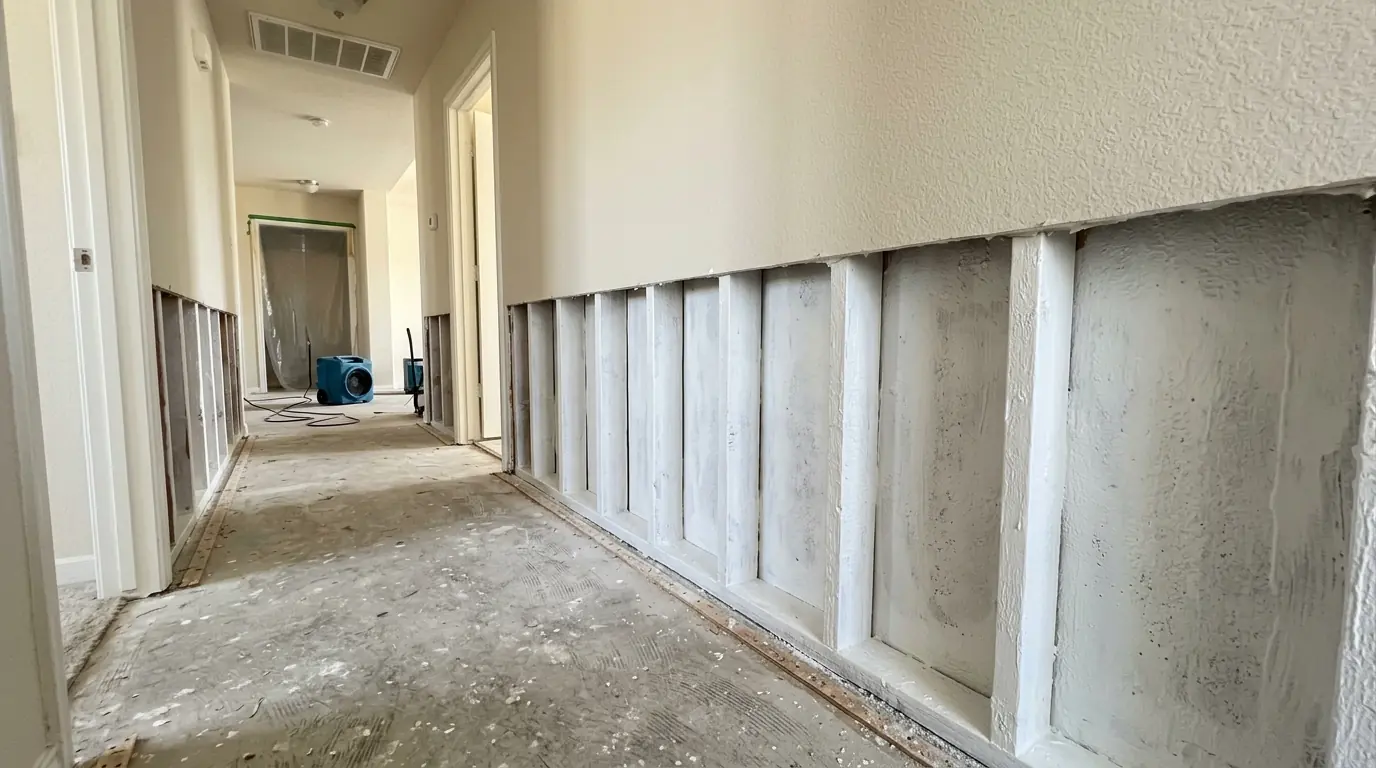
Once drying is finished, there is a short window when studs, plates and the back of the remaining drywall are exposed. That is the moment to treat them: after the framing reads dry and has been HEPA vacuumed, and before insulation and new board go back. Where mold was removed, some owners also choose a white or clear coating over the cleaned framing. It does not replace removal, but it seals in stains and protects the cleaned wood. Closing a wall over damp or dirty framing is the mistake this step prevents.
Closed-up, air conditioned houses and slow drying
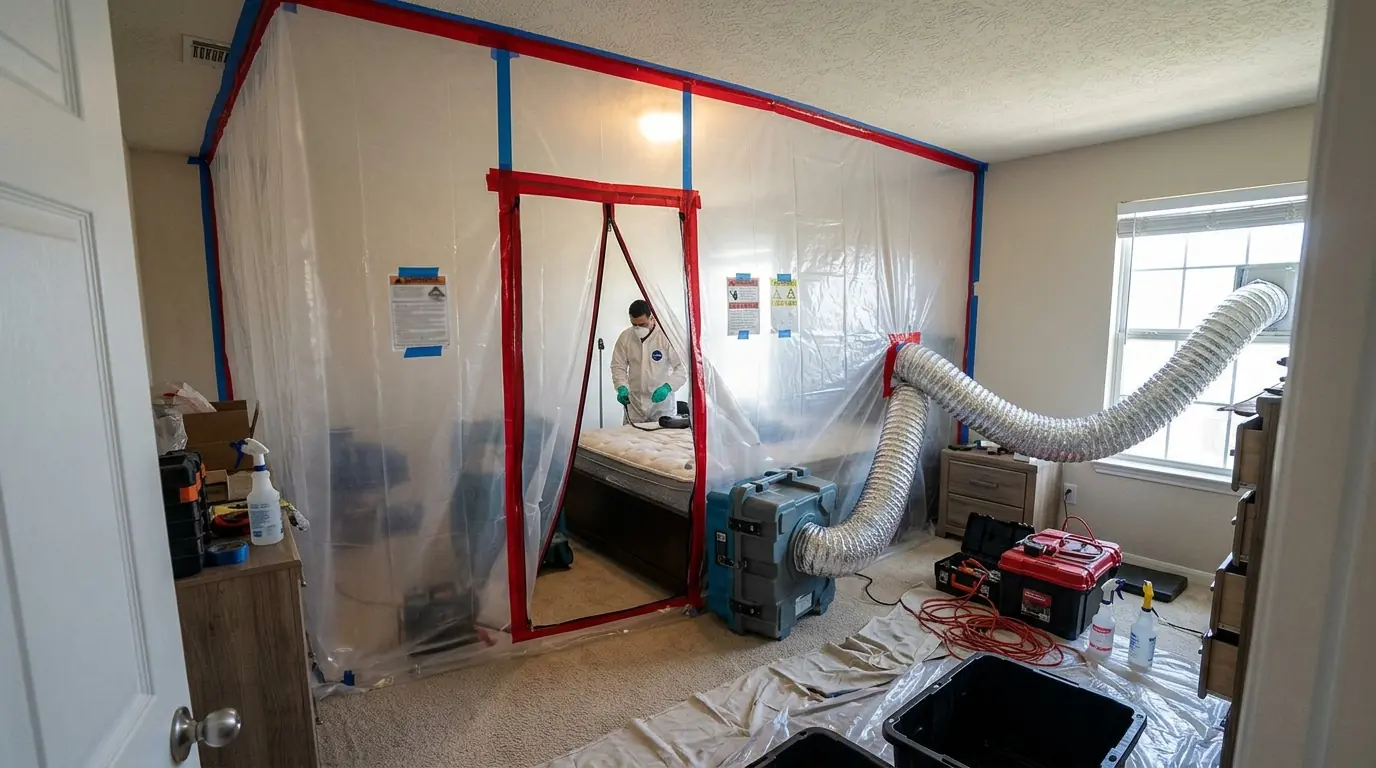
League City houses stay shut and air conditioned much of the year, because Gulf Coast humidity makes open windows a poor drying tool. A wet wall then dries only as fast as the dehumidifiers pull water out of it, and the framing stays damp throughout. On gray water losses, and wherever water sat before anyone found it, those are the days an antimicrobial earns its place. After a quick clean water leak, cleaning and fast drying usually handle it alone.
From wet floor to treated, dry framing
Sort the water
We identify the source and the category before deciding on any product.
Extract and remove
Standing water comes out, along with pad or materials that cannot be cleaned.
Clean the surfaces
Slab, subfloor and framing are washed and HEPA vacuumed.
Apply by the label
The product goes on at its listed dilution and stays for its contact time.
Dry and clear for repair
Framing dries to target readings before any wall is closed.
Clean only, antimicrobial, or a sealing coat?
| Choice | What it does | When it makes sense |
|---|---|---|
| Cleaning and drying alone | Removes the soil and water that growth needs | Clean water caught early, on fast-drying materials |
| Antimicrobial after cleaning | Slows bacteria and mold on cleaned surfaces | Gray water, water that sat, or slow-drying framing |
| Sealing coat on framing | Locks in stains on the cleaned wood | After mold removal, before the walls close |
| Spraying without cleaning | Leaves soil and dead growth in place | No situation; the product cannot work through dirt |
Whatever is chosen, the framing still has to read dry before the wall is closed.
What affects the cost of an antimicrobial application
Treatment is usually a line item inside a larger water or mold job, priced by the area covered.
- Square footage treated
- Framing, slab and subfloor are measured and priced by area.
- Cleaning needed first
- Gray water surfaces take more washing before any product goes on.
- Product type
- Disinfectants, fungicides and sealing coats differ in material cost.
- Access
- Open framing is quick, while attics and tight cavities take longer.
Antimicrobial questions to ask before you say yes
Each label lists its precautions, and we follow them. Kids and pets stay out of the treated area until it dries, and you can read the label first.
It can kill surface growth, but dead mold still has to be removed. Active growth is handled through mold remediation, not a spray.
Most products smell mildly while wet, and the odor fades as the surface dries. Some botanical ones smell of thyme. Ask for the product name if odors bother anyone.
When it is part of a covered water loss, it is usually listed with the rest of the mitigation work. We note where and why it was applied for the adjuster.
No. Spraying furniture, carpet in dry rooms or untouched walls adds chemicals without any benefit. It goes only on cleaned surfaces that were wet.
