Updated October 2026
Quick answer
Commercial carpet cleaning in League City uses two methods: encapsulation for regular upkeep and hot water extraction for deep restoration. Encapsulation keeps the floor in use with short drying, while extraction removes more soil but needs the area clear for longer. Most commercial programs mix both on a schedule set by foot traffic.
How commercial carpet is cleaned without closing the floor
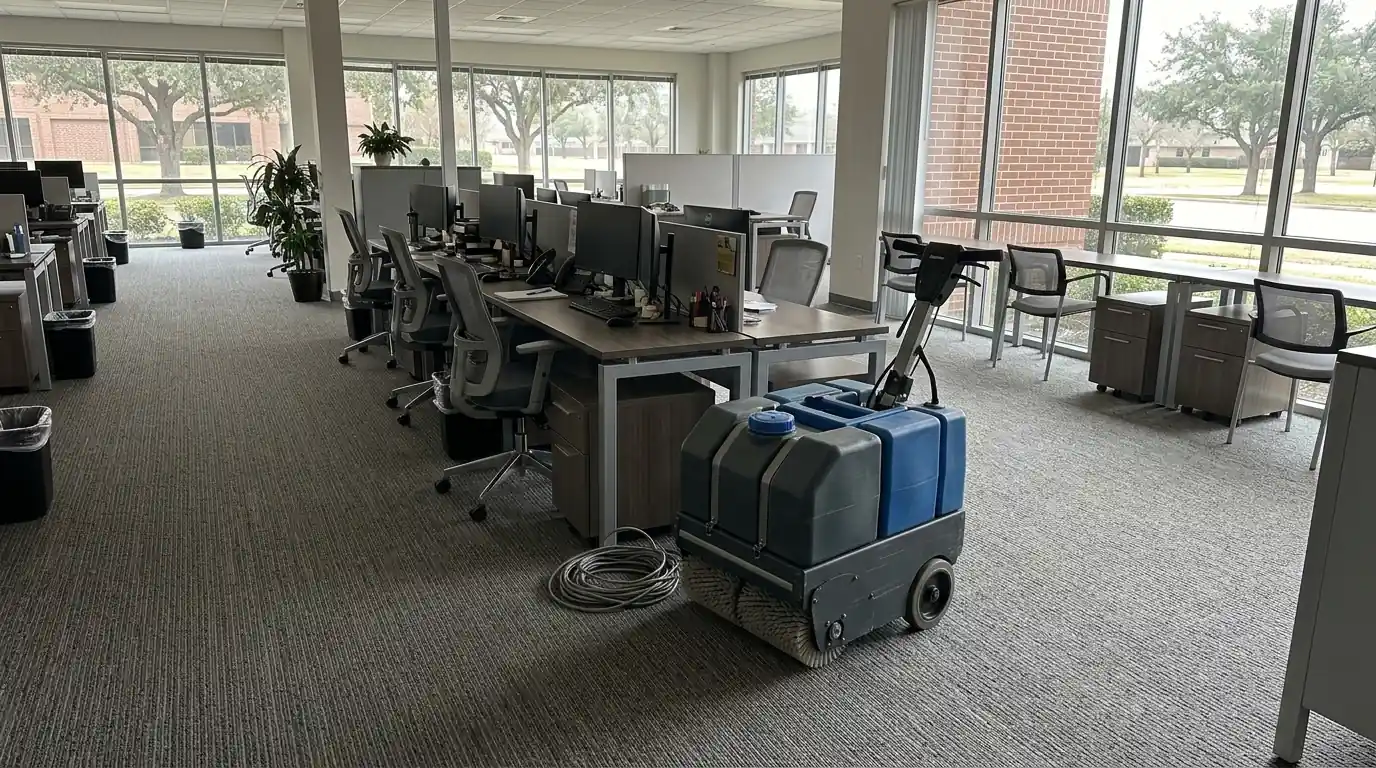
Commercial carpet is usually low loop or tight cut pile, glued down or laid as carpet tiles, and it soils in predictable places: entrances, the path to the break room, under desk chairs and in front of the counter. A good program targets those zones more often than the rest of the floor.
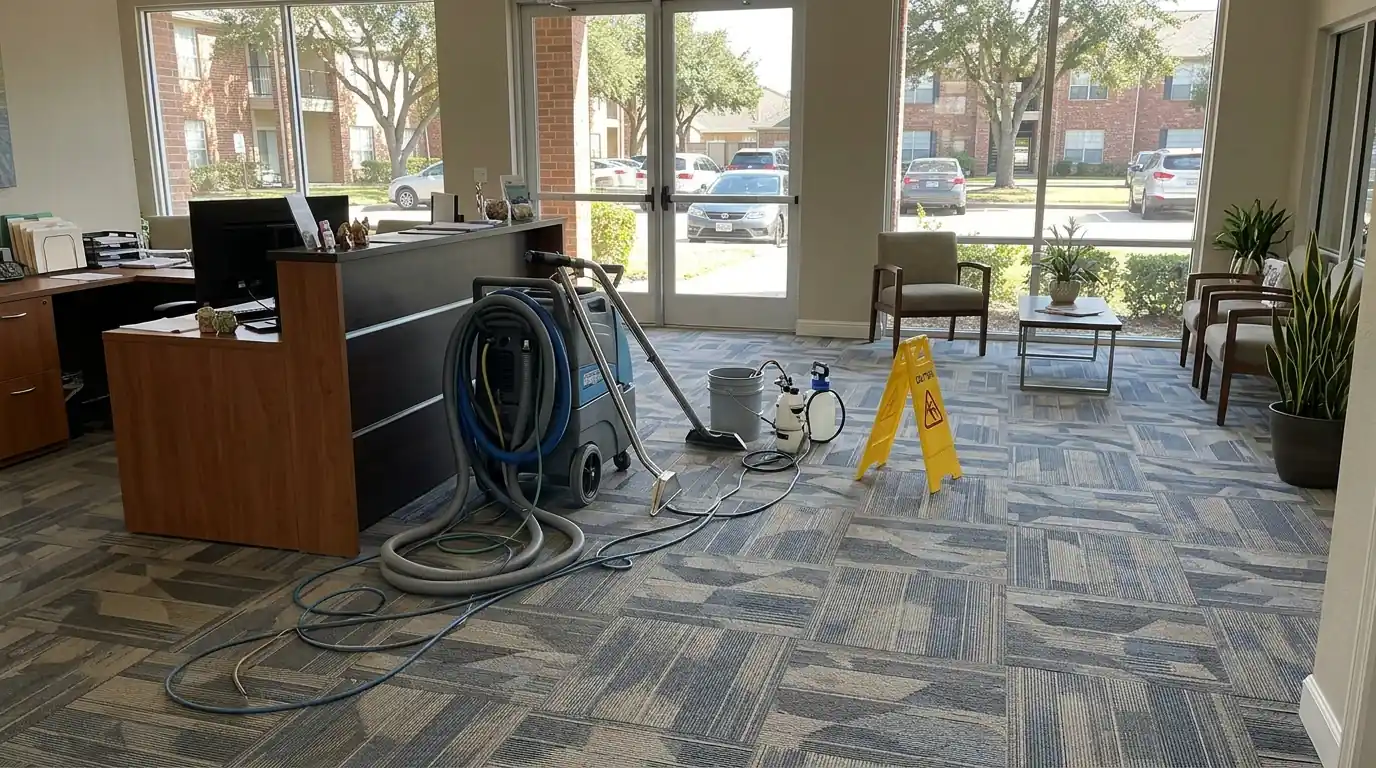
For upkeep, an encapsulating detergent is brushed in with a cylindrical or rotary machine and dries to brittle crystals that the regular vacuum picks up. For deep cleaning, extraction rinses the pile using truck-mounted units like those HydraMaster and Sapphire Scientific build, or portable extractors of the kind Prochem makes for suites beyond hose reach. Air movers of the type Dri-Eaz sells shorten the drying. Water from a leak is a separate job, handled as commercial water damage.
What a commercial cleaning visit includes
- Walk-through of traffic zones
- Chairs and light furniture moved
- Commercial vacuum on every area
- Pre-spray on entrances and lanes
- Encapsulation or extraction by zone
- Gum, coffee and ink spot work
- Air movers set and floor reset
Office carpet in suites, halls and conference rooms
Office carpet shows wear as gray traffic lanes, dark circles under desk chairs and coffee drips near the break room. Glue-down carpet tiles can look patchy because a few tiles take most of the foot traffic. We work around desks and cables, clean the lanes and chair zones harder than the edges, and leave chair mats and furniture back in place. Most office carpet responds well. Tiles that are frayed or worn bald can be swapped one at a time, which keeps a floor going without full replacement.
Restaurant and retail floors with grease and sand
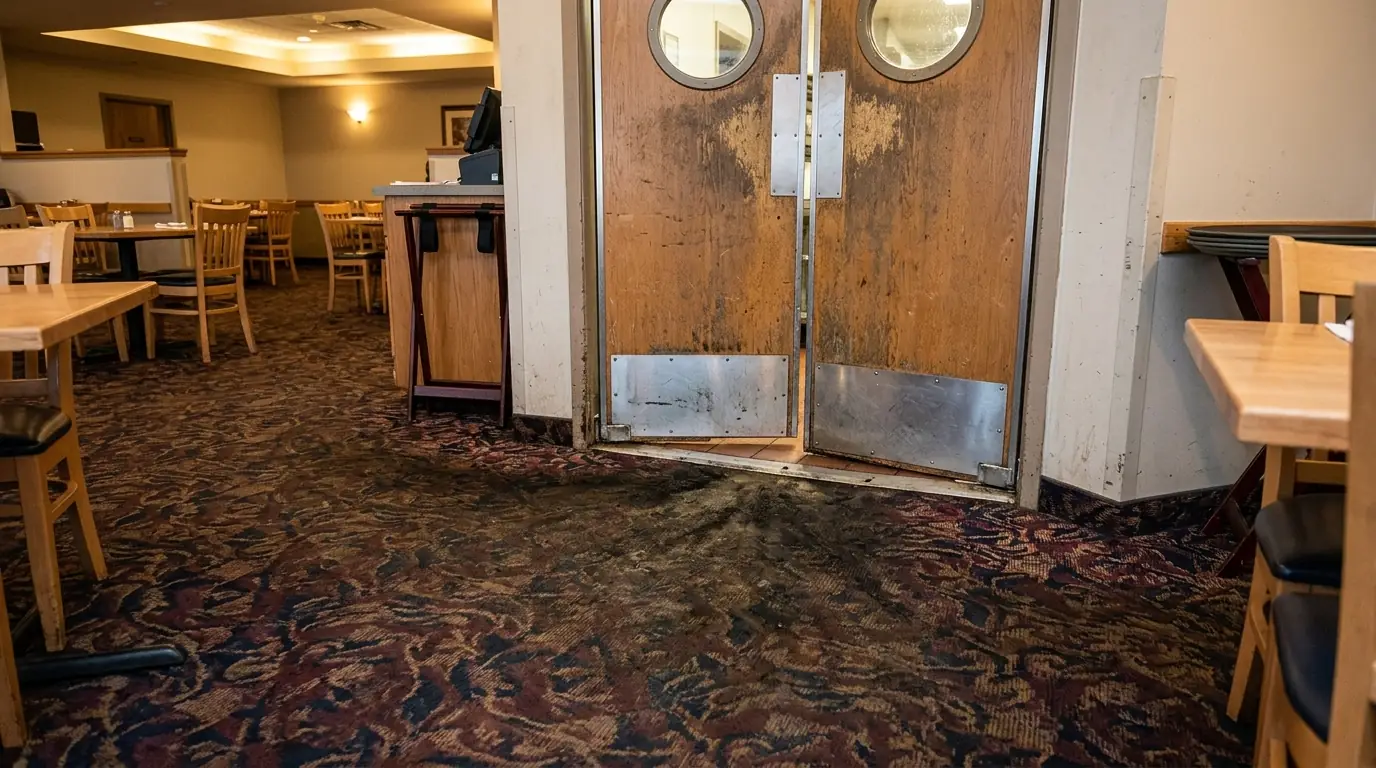
Restaurant dining rooms collect grease that rides out of the kitchen on shoes, plus dropped food and drinks around the tables. Retail floors take sand at the entrance and heavy wear at checkout. Grease needs a degreasing pre-spray and agitation before extraction, or it simply smears. Entrances need dry soil removed first. The work goes most smoothly when the floor is empty, before opening or after close. Stains near a kitchen door may lighten rather than vanish, and walk-off mats at the door keep the most sand off the carpet.
Scheduled maintenance cleaning on a set calendar
Scheduled maintenance means the heavy zones are cleaned before they turn gray, not after. We walk the floor with you, mark the entrances, lanes and break areas, and set how often each zone gets encapsulation and when the whole floor gets a deep extraction. Between visits, daily vacuuming by your janitorial staff does most of the work. The result is a floor that looks even from one end to the other, and carpet that lasts longer, because the soil that grinds down fibers is removed before it does its damage.
Apartment and office carpet in Webster and League City
Webster is mostly renters, about 78 percent, and about 22 percent of its homes sit in buildings of 50 or more units. That much apartment living means leasing offices, clubhouses, hallways and model units, all carpeted spaces that property managers in Webster and League City want clean before every tour. Unit turnovers add more work, since each vacant apartment needs its carpet cleaned and spot-treated before the next tenant moves in. A maintenance schedule for the common areas and a move-out routine for the units keep that work predictable.
How a commercial cleaning visit is run
Walk the floor
We map traffic zones, carpet types and problem spots with you.
Set the plan
Method, zones and timing are agreed so the space stays usable.
Prepare the space
Chairs and light furniture move, and the floor is vacuumed.
Clean by zone
Lanes, entrances and spots get pre-spray, then encapsulation or extraction.
Dry and reset
Air movers run, furniture goes back, and worn areas are noted for you.
Encapsulation or hot water extraction for your floor
| Question | Encapsulation | Hot water extraction |
|---|---|---|
| What it does | Traps soil in crystals that vacuum away | Rinses soil out with heated water |
| Drying | Short; the floor stays in use | Longer; the area stays closed until dry |
| Soil it handles | Light to moderate, frequent upkeep | Heavy soil, grease and spills |
| Where it fits | Scheduled maintenance between deep cleans | Periodic restoration and move-outs |
| Trade-off | Deep soil builds up over time | More water and more downtime |
Equipment makers in professional drying, moisture detection and carpet extraction
Square footage, method and the cost of a commercial program
Commercial work is priced by the square foot after a walk-through, and the method and schedule move it from there.
- Floor area
- Measured square footage is the starting point for every quote.
- Method
- Encapsulation takes less time per visit than a full extraction.
- Soil and grease
- Kitchen-side grease and heavy lanes need extra pre-spray and passes.
- Furniture
- Moving chairs, tables and displays adds labor; cubicles are worked around.
- Access
- Upper floors out of hose reach need portable equipment.
Published national planning ranges
- Carpet cleaning, per square foot: $0.20 to $0.40 per sq ft (inchcalculator.com, 2023)
These are national figures from published cost guides, shown for planning only. They are not a quote and not our price list; your job is priced after we see it.
Questions property and office managers ask
Encapsulation can often be done zone by zone with the space in use, because it dries quickly. Hot water extraction needs the area closed until it is dry enough to walk on.
Foot traffic sets the schedule. Entrances and break-room paths need cleaning far more often than private offices, so a zone schedule puts the effort where the wear is.
Yes. Carpet tiles are cleaned in place like broadloom, with care at the seams so excess water does not loosen the adhesive under each tile.
Yes. Vacant units are cleaned as move-out jobs with pet spots and traffic lanes treated, and leasing offices and clubhouses can join the same maintenance schedule.
A degreasing pre-spray and agitation come before extraction. Long-standing grease near a kitchen door often lightens a great deal but may not disappear completely.
