Updated October 2026
Quick answer
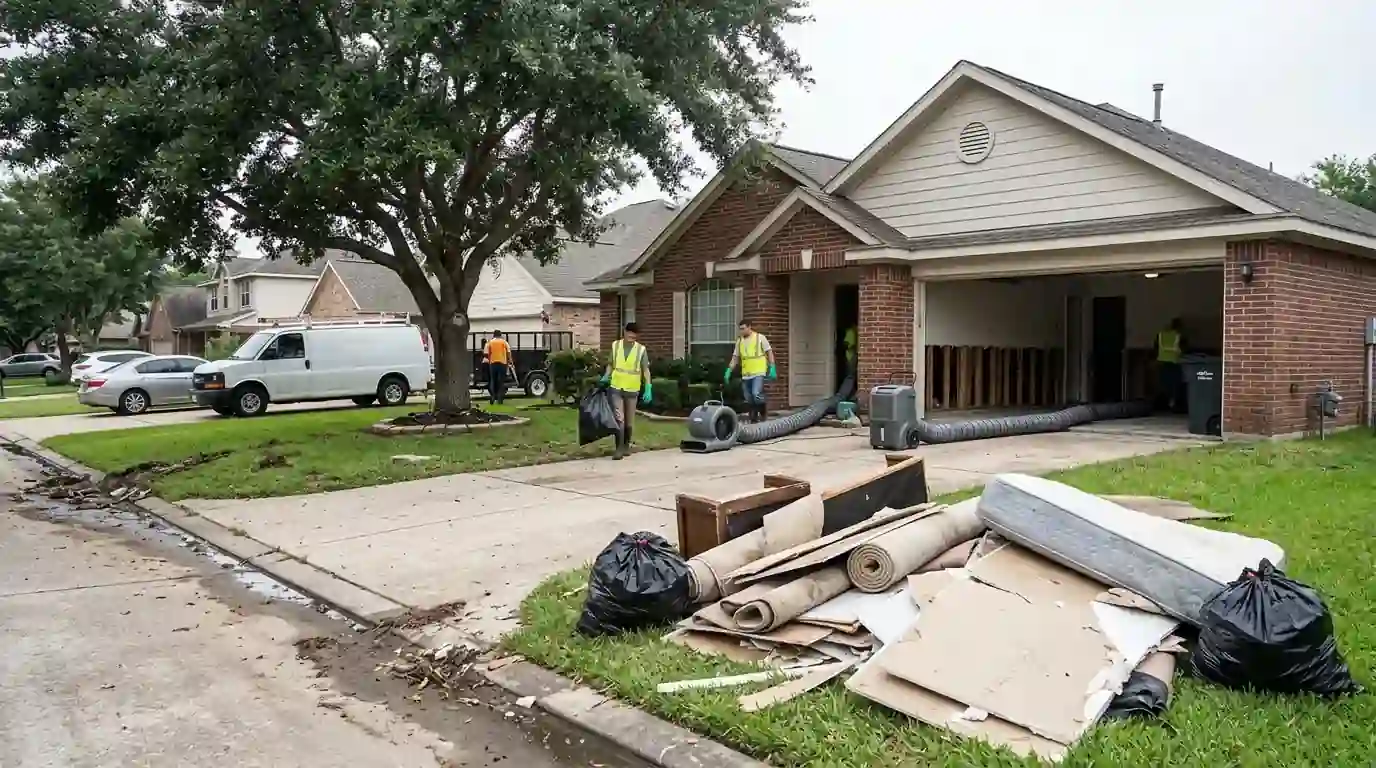
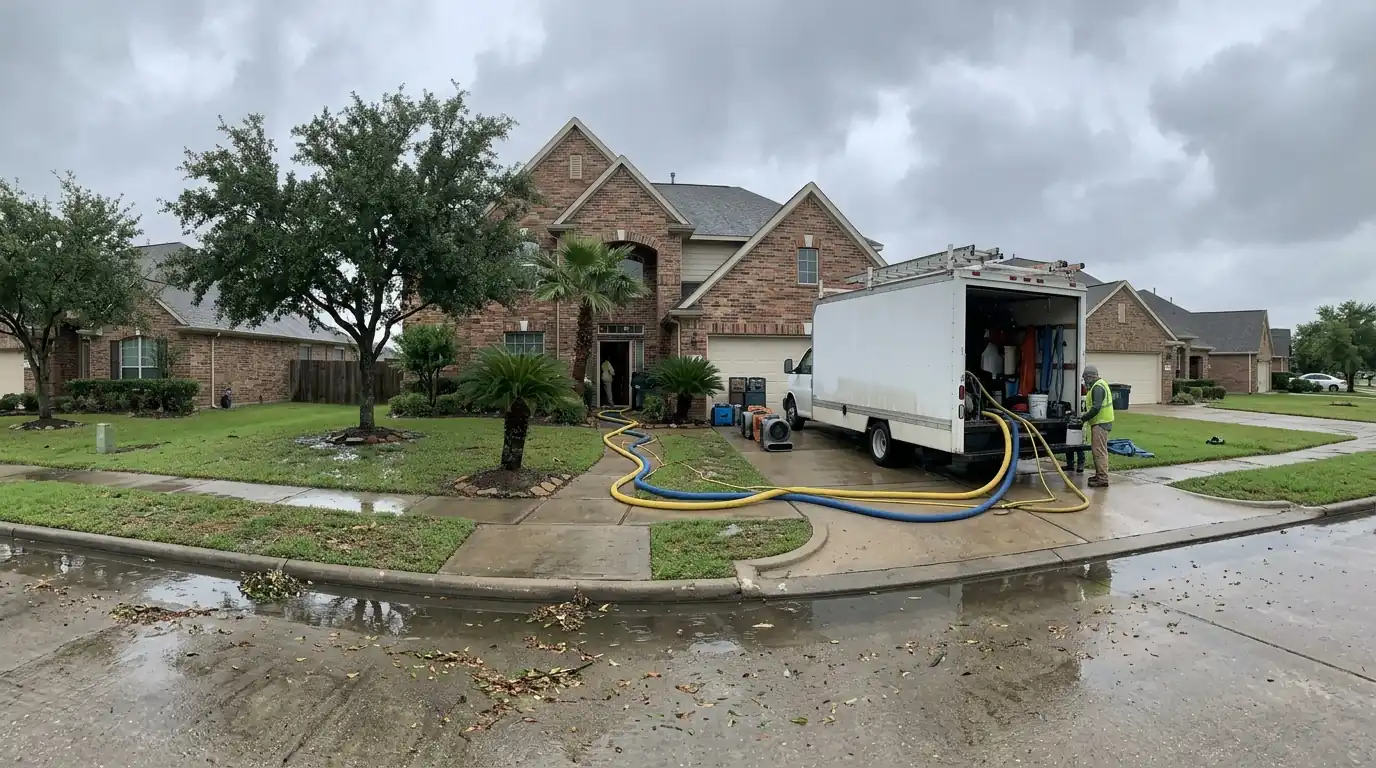
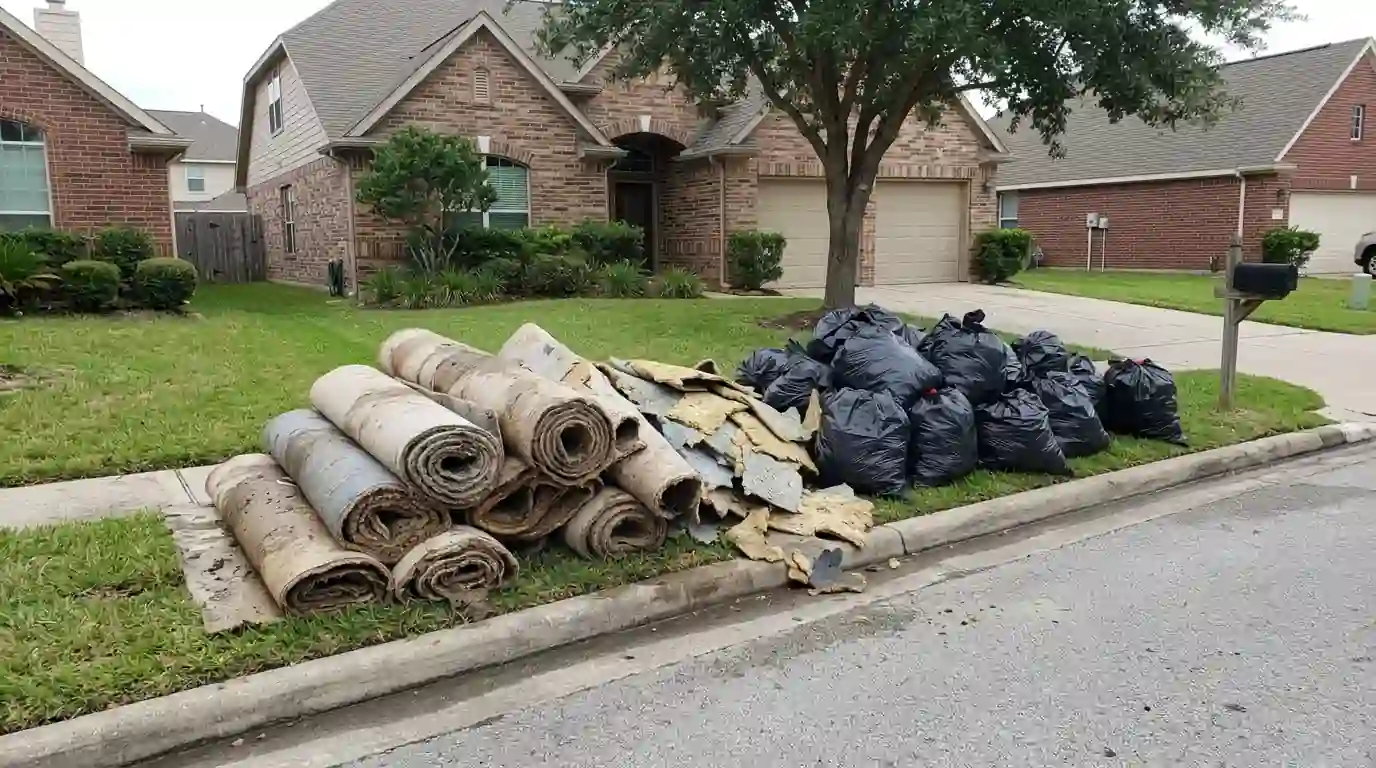
Floodwater inside a League City house is Category 3 water, so carpet, pad, insulation and the lower drywall it touched are cut out and discarded, not dried. The slab, studs and many hard surfaces can be cleaned, treated and kept. We photograph and measure the water line in every room before anything goes to the curb.
How a flood cleanup moves from muck-out to dry studs
Rising water is treated as contaminated however clear it looks, because it crossed lawns, streets and storm drains on its way in. Porous materials it soaked, like carpet, pad, fiberglass batts and the lower part of each wall, are cut out and bagged. Framing, concrete, tile and solid wood trim are washed, treated and dried.
Recording the water line comes first, since a flood claim turns on it. The tear-out follows a measured line, usually at two or four feet, which our page on flood cuts explains. Once the cavities are open, the studs and slab dry under dehumidifiers and air movers, and nothing is closed up until each wall reaches its dry target.
Street flooding that enters the house
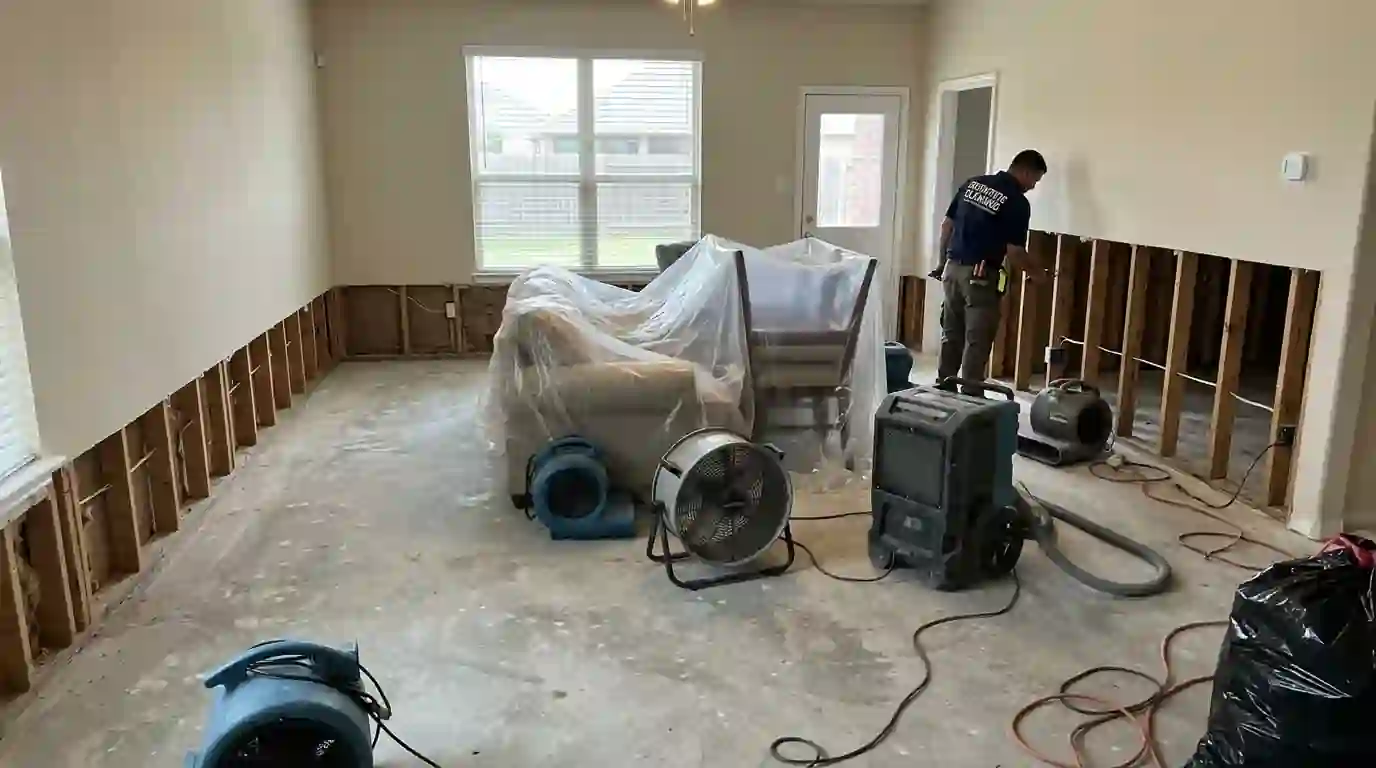
Street flooding tends to arrive fast and leave a layer of silt when it drops. You find a tide line on the walls, wet carpet in every low room and mud packed along the baseboards, worst in the rooms nearest the door. We shovel and squeegee out the silt, pull the carpet and pad, and cut drywall above the highest wet reading. Tile, cabinets above the water line and solid wood doors are often kept after cleaning, while particleboard furniture and upholstered pieces that sat in the water are listed for disposal.
Garage and slab-level flooding
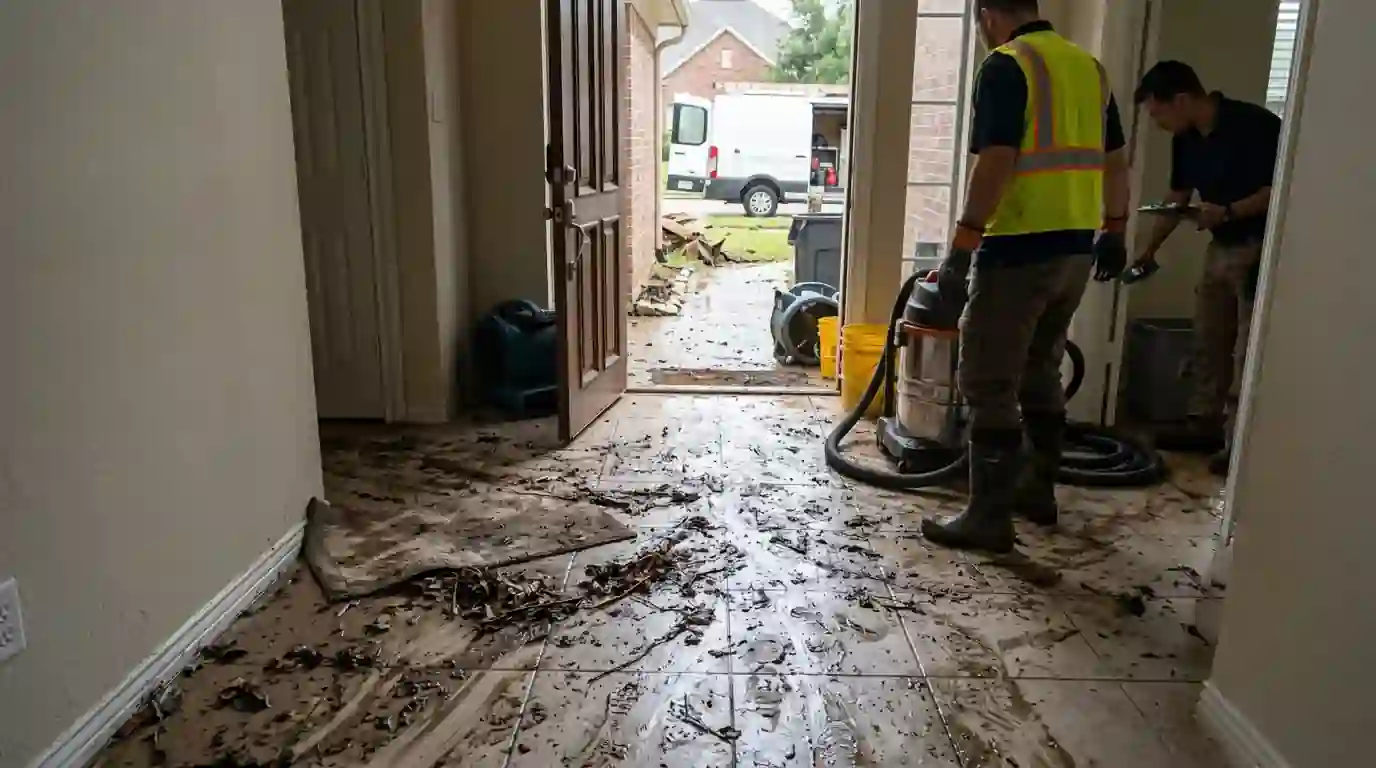
Attached garages and converted rooms often sit a step below the rest of the house, so they flood first and hold water longest. Look for a wet line on the garage drywall, boxes soaked from the bottom up, and water creeping under the door into the laundry room. We clear and photograph stored items, cut garage drywall and insulation where they wicked, and wash and disinfect the slab. Water heaters, freezers, washers and dryers that stood in floodwater are flagged so a qualified tech checks them before anyone uses them.
Floodwater in carpet and drywall
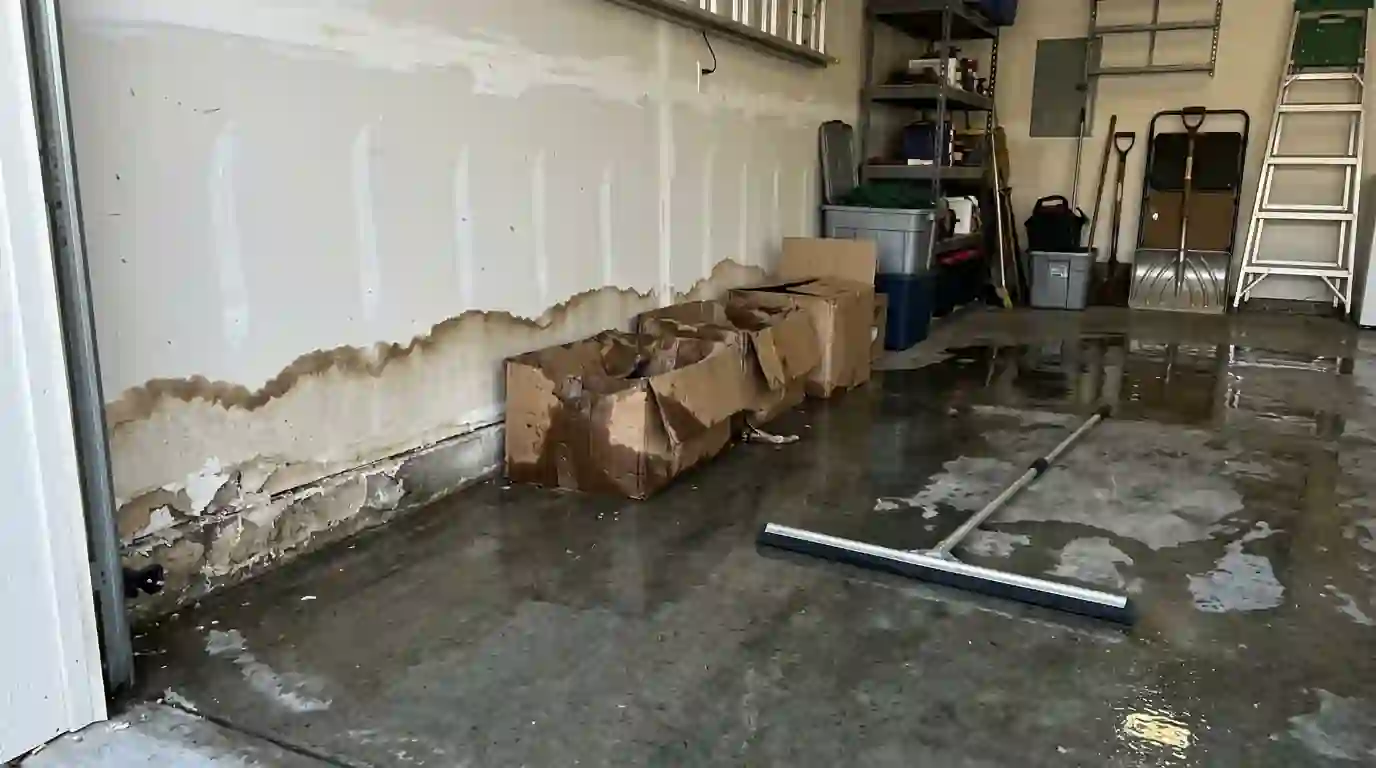
Floodwater climbs drywall well above its line on the floor, because the paper facing and gypsum core draw it upward. Carpet and pad trap whatever the water carried deep in their fibers and foam, and the restoration standard for Category 3 water treats both as removal items. We cut the wall a set distance above the highest wet reading, pull the wet insulation behind it, and bag the carpet and pad. Studs, plates and slab are then cleaned, treated with an antimicrobial and dried before rebuilding.
Water still in the house? Call now and we will walk you through safe entry.
Call (832) 737-0315From the water line to dry walls, in five steps
Make entry safe
We confirm the water has receded and the power to wet areas is off before anyone walks in.
Record the water line
Every room is photographed and measured for the flood claim.
Muck out and tear out
Silt is shoveled out, and carpet, pad, wet drywall and insulation are bagged.
Clean and treat
Studs, plates and slab are washed and treated with an antimicrobial.
Dry and verify
Equipment runs until every stud and the slab read dry, and you get the log.
What decides how long a flood dry-out takes
Once the wet drywall and insulation are gone, open stud bays and a bare slab dry far faster than closed walls. What slows a flood job is what cannot be opened: thick concrete, cabinets left in place, framing that sat in water longest, and humid Gulf Coast air. When a whole street floods, waiting on debris pickup and rebuilding crews can stretch the timeline even after drying is done.
Clear Creek, stream gauges and flood season in League City
Clear Creek rising is a recurring flood story in League City, and the city put in stream gauges that let residents watch for flash flooding. Local reporting put the city's wish list of flood-control projects at about 9.6 billion dollars, a measure of how much drainage work is still wanted. For a homeowner, the lesson is practical. Check the gauges before deciding whether to move valuables up, and treat creek or street water as Category 3 once it is inside.
What a flood cleanup visit covers
- Photos and measurements of the water line in every room
- Power to wet areas confirmed off before work starts
- Silt and debris shoveled out and floors squeegeed
- Carpet, pad and wet insulation removed and bagged
- Drywall cut at a measured line above the wicking
- Studs, slab and hard surfaces washed and treated
- Drying equipment set, with readings logged each visit
What drives the price of a flood cleanup
Flood work is priced as Category 3, and the range shown climbs when contents and finishes need replacing. We price the job after measuring the water line.
- Water line height
- A four-foot cut removes far more drywall than a two-foot cut.
- Rooms reached
- Each flooded room adds tear-out, cleaning and equipment.
- Silt and debris
- Mud has to be shoveled and washed out before drying.
- Contents
- Furniture and boxes that sat in the water add handling and disposal.
- Cabinets
- Base cabinets that wicked water may come out to reach the wall.
Published national planning ranges
- Category 3 black water, per square foot: $7 to $7.50 per sq ft, more when items must be replaced (lawnstarter.com, 2026)
These are national figures from published cost guides, shown for planning only. They are not a quote and not our price list; your job is priced after we see it.
Flood cleanup questions from League City neighborhoods
Standard homeowners policies exclude flood. Rising water falls under a separate flood policy, such as one through the National Flood Insurance Program, if you carry one.
No. Floodwater contamination settles into backing and foam where cleaning cannot reach, so carpet and pad are removal items. Tile, framing and the slab can usually be cleaned.
Not until the water is out and power to the wet areas is off. Wear boots and gloves, and keep children and pets out of flooded rooms.
Above the highest wet reading, rounded to match the drywall sheets, most often two or four feet. You see the readings before any cutting.
Carrying out wet rugs is fine once everything is photographed. Leave the drywall until the water line is documented, because the adjuster will ask for it.
