Updated October 2026
Quick answer
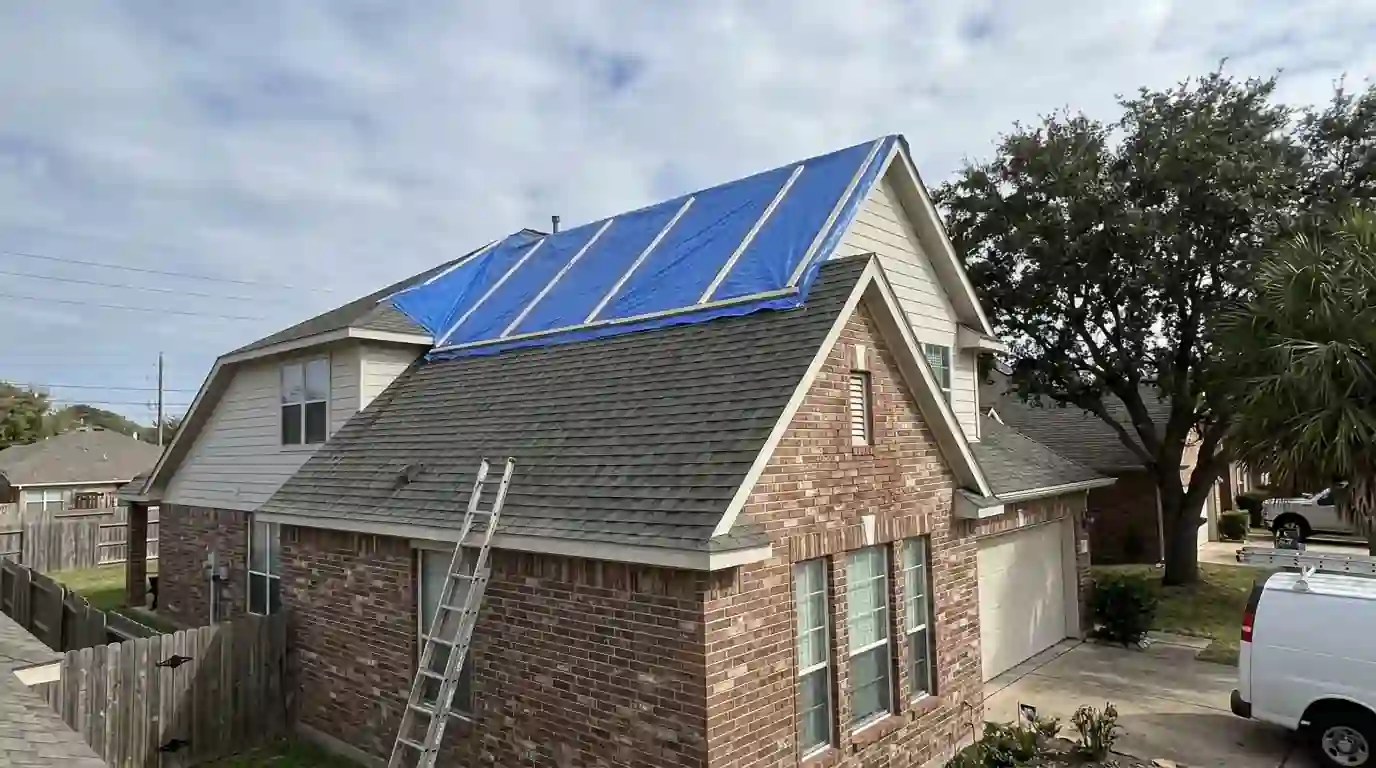
Emergency tarping in League City covers the opening in a roof with a tarp run over the ridge and fastened through wood battens, so rain sheds off instead of running under it. Board-up does the same for broken windows and doors with plywood. Both are temporary covers meant to hold until the permanent repair.
What makes a temporary cover actually keep water out
A tarp only works if water cannot get under its top edge. That is why a proper roof tarp runs up and over the ridge and down the far slope, with its edges rolled around lumber battens that are screwed into the roof deck. Tarps laid flat over a hole and held with bricks or a few nails tend to lift in the first gust and funnel water inside.
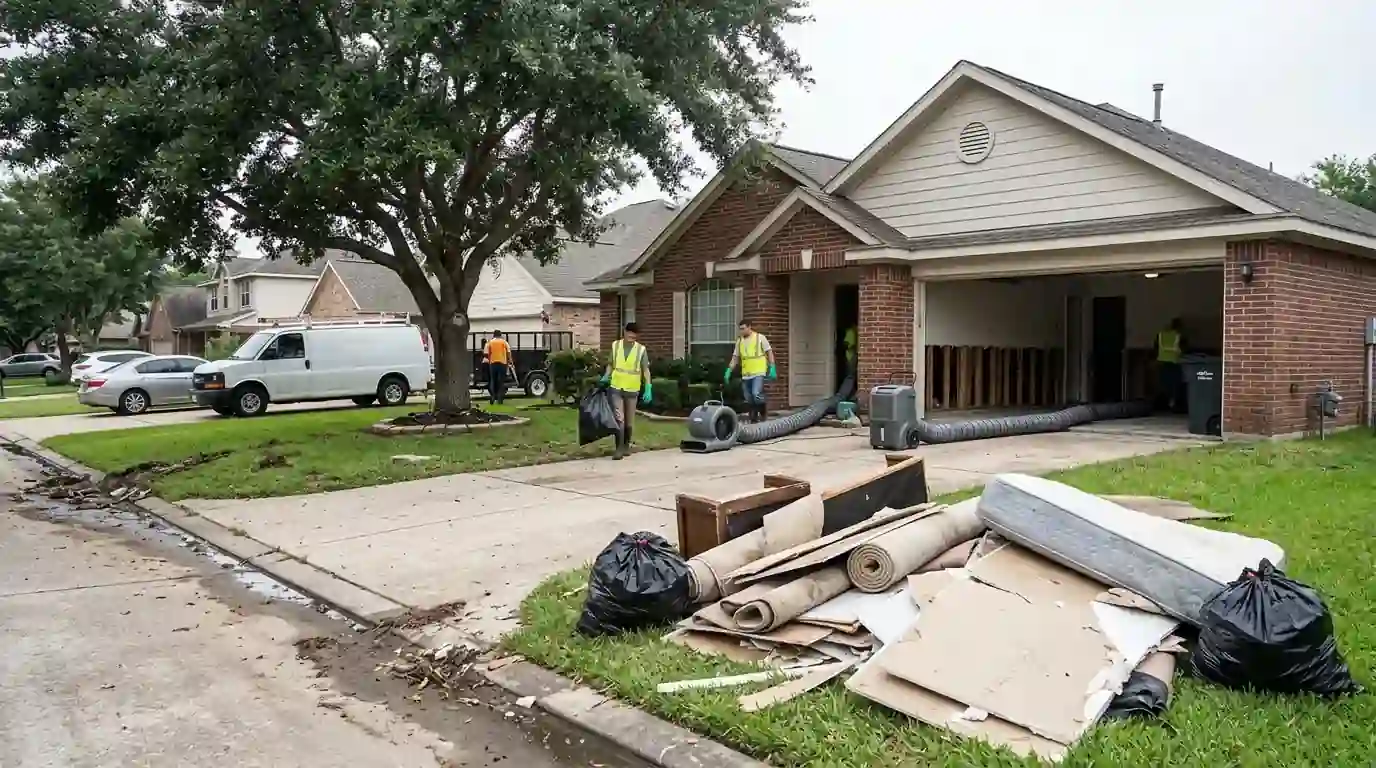
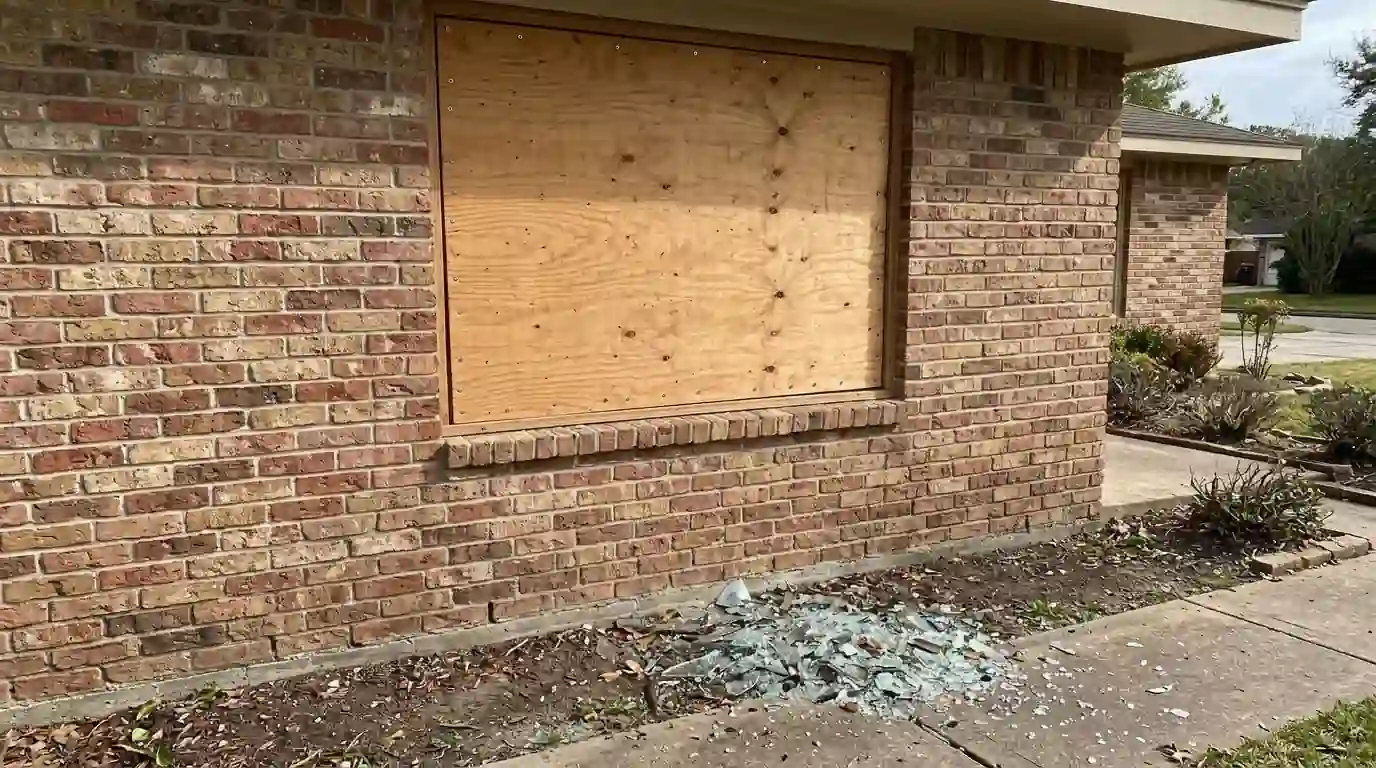
Board-up follows the same idea. Plywood is cut to cover the whole opening and fastened into the framing around it, not the trim, so it holds against wind and keeps people and animals out. Once the house is closed, we can read and dry whatever got wet inside, which the storm water damage page covers in detail.
Roof tarping
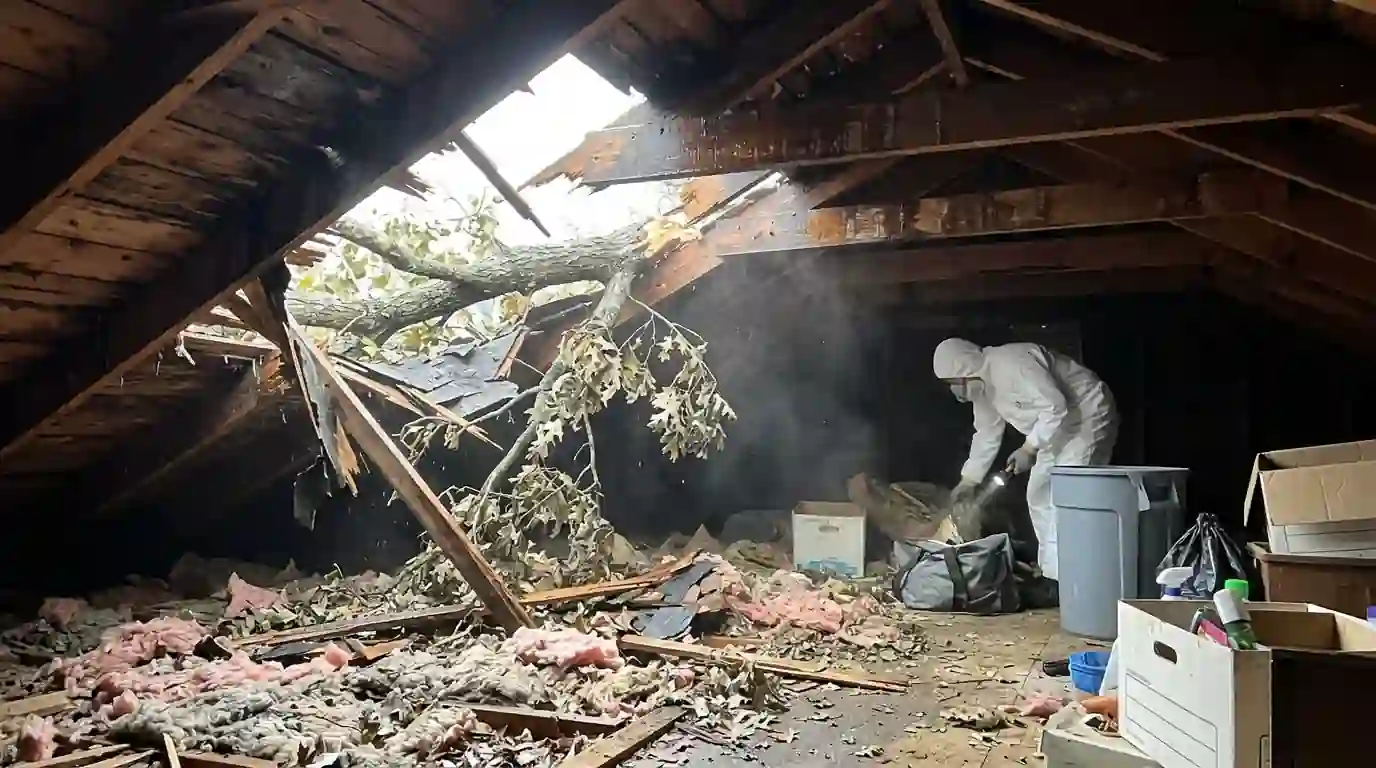
You may see missing shingles from the yard, daylight through the attic decking, or a fresh drip after a limb comes down. We start in the attic when it is safe, to see where the opening sits and how far water has traveled. On the roof, the tarp is sized past the damage and over the ridge, with battens along its edges. A large tree resting on the roof has to be removed by a tree crew first. Shingles under the tarp are replaced later, but the decking and ceilings below are protected.
Window and door board-up
A window blown in by wind or broken by debris lets rain, heat and anyone passing straight into the house. Glass on the floor and a wet sill are the obvious signs; a frame pushed out of square is the less obvious one. We clear loose glass, cut plywood to cover the opening fully, and screw it into the framing rather than the trim. On a door, we secure the opening and confirm you still have another way in and out. The wall below is metered so nothing wet gets sealed in.
From your call to a covered house
Talk it through
We ask what opened up and whether anyone is at risk from glass, wires or a hanging limb.
Check safety first
Downed lines, unstable trees and lightning keep us off the roof until they are cleared.
Inspect from inside
The attic or the wall behind the opening shows how far water has reached.
Cover the opening
Tarp over the ridge with battens, or plywood fastened into the framing.
Photograph and plan drying
You get photos for the claim, and wet areas inside are mapped for drying.
How long a tarp or board-up will hold
A cover bridges the gap to a permanent repair; it does not replace it. How long it lasts depends on the tarp material, how well it is fastened over the ridge, how much sun it takes and how many storms pass over it. Plywood over a window generally outlasts a tarp on a roof.
Check the cover after every heavy rain or wind, from the ground or the attic, and call if an edge lifts or a batten pulls loose. Booking the permanent repair early keeps the cover from facing a second storm.
What Ike and the September rains mean for an open roof
On September 13, 2008, Hurricane Ike struck Galveston, and its surge ran 12 to 15 feet across Harris County. There, surge flooded 2,550 homes, and rain flooded another 1,300. Storm water does not stop when the wind drops. In League City, June and September bring the most rain, about 4.6 inches each on average, so a roof opened in a late summer storm will likely see more rain before the permanent repair. A cover that sheds water keeps it outside.
Covering the opening now versus waiting for the repair
Roofers and glass companies are often booked out after a big storm. This is the tradeoff while you wait for them.
| What changes | Tarp or board-up now | Leave it open until the repair |
|---|---|---|
| Rain getting in | Shed outside the house | Enters with every shower |
| Interior damage | Limited to what was already wet | Spreads into insulation, ceilings and floors |
| Insurance | Shows you acted to limit the damage | Later damage may be questioned |
| Security | Opening closed to people and animals | House open to anyone passing |
| Mold risk | Rooms inside can be dried | Wet materials stay wet in humid air |
What changes the price of tarping or board-up
A single window and a torn roof slope are very different jobs, so we quote emergency covers once we see the opening rather than from a published range.
- Size of the opening
- Larger roof sections need bigger tarps and more battens.
- Roof pitch and height
- Steep or two-story roofs take more safety setup.
- Debris on the roof
- Limbs cut away first add time, and large trees need a tree crew.
- Number of openings
- Several broken windows add plywood and labor.
- Water already inside
- Drying wet rooms is a separate scope from the cover.
Tarping and board-up questions before the next rain
Often, yes. Homeowners policies generally expect reasonable steps to prevent further damage, and temporary covers usually count. Keep the invoice and the photos.
Some homeowners do when the roof is low, dry and the damage is small. Wet shingles, steep pitch and second stories make it dangerous, especially in wind.
Usually, yes. The attic or the wall behind the damage shows where water already went and whether drying is needed after the cover goes on.
Only with heavy gloves and closed shoes. Otherwise shut that room, keep pets and children out, and leave the glass for us.
We fasten into the framing around the opening, which leaves small screw holes that are filled or covered when the new window or door goes in.
