Updated October 2026
Quick answer
Upholstery cleaning in League City starts with the cleaning code on the furniture tag: W, S, W/S or X. That letter and a test on a hidden seam decide between water-based extraction and solvent or low-moisture methods. Overwetting is the main risk, since natural fibers brown and cushions dry slowly in humid air.
How furniture gets cleaned without shrinking or browning
Furniture is not carpet. The fabric is thinner, the foam underneath holds water, and cotton, linen and rayon turn brown at the edges when overwetted. We vacuum the piece, check the tag code and test a hidden seam for dye bleed and shrinkage first.
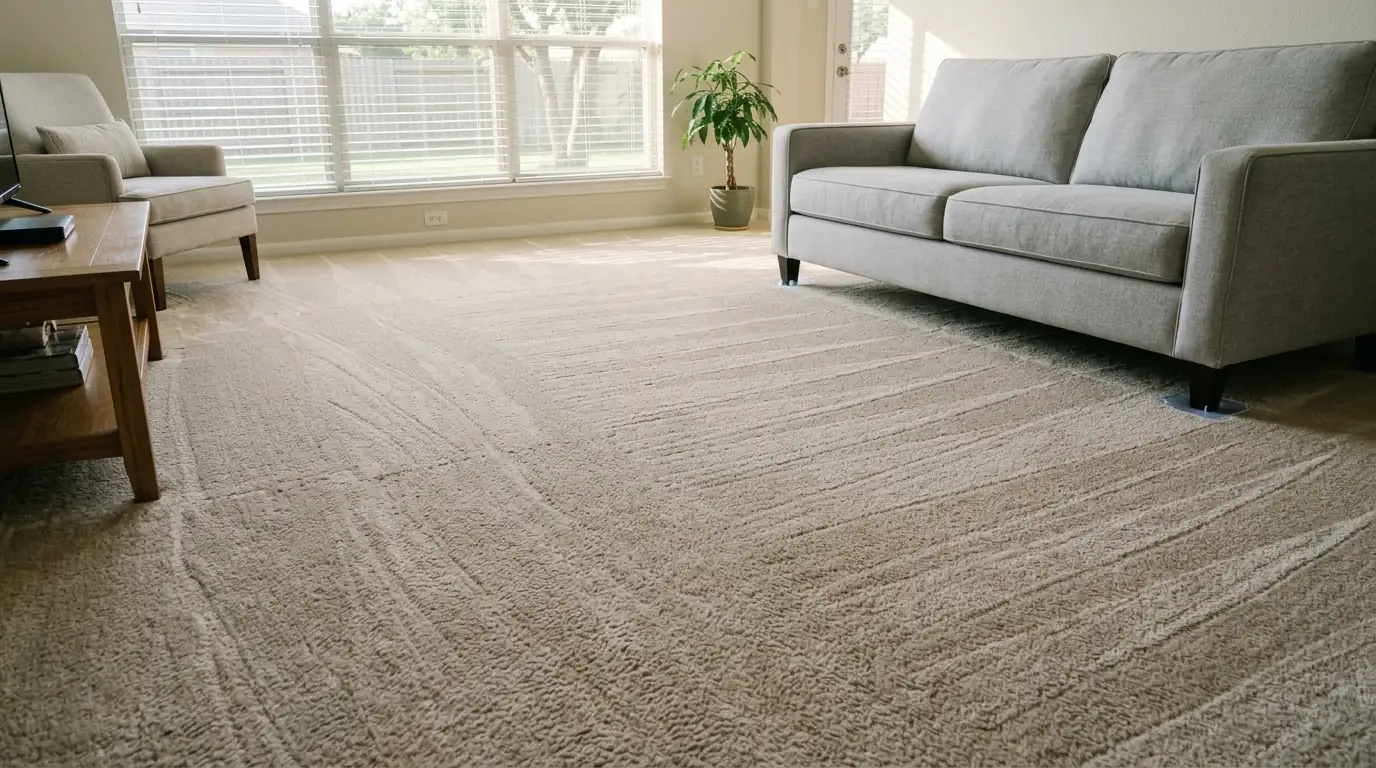
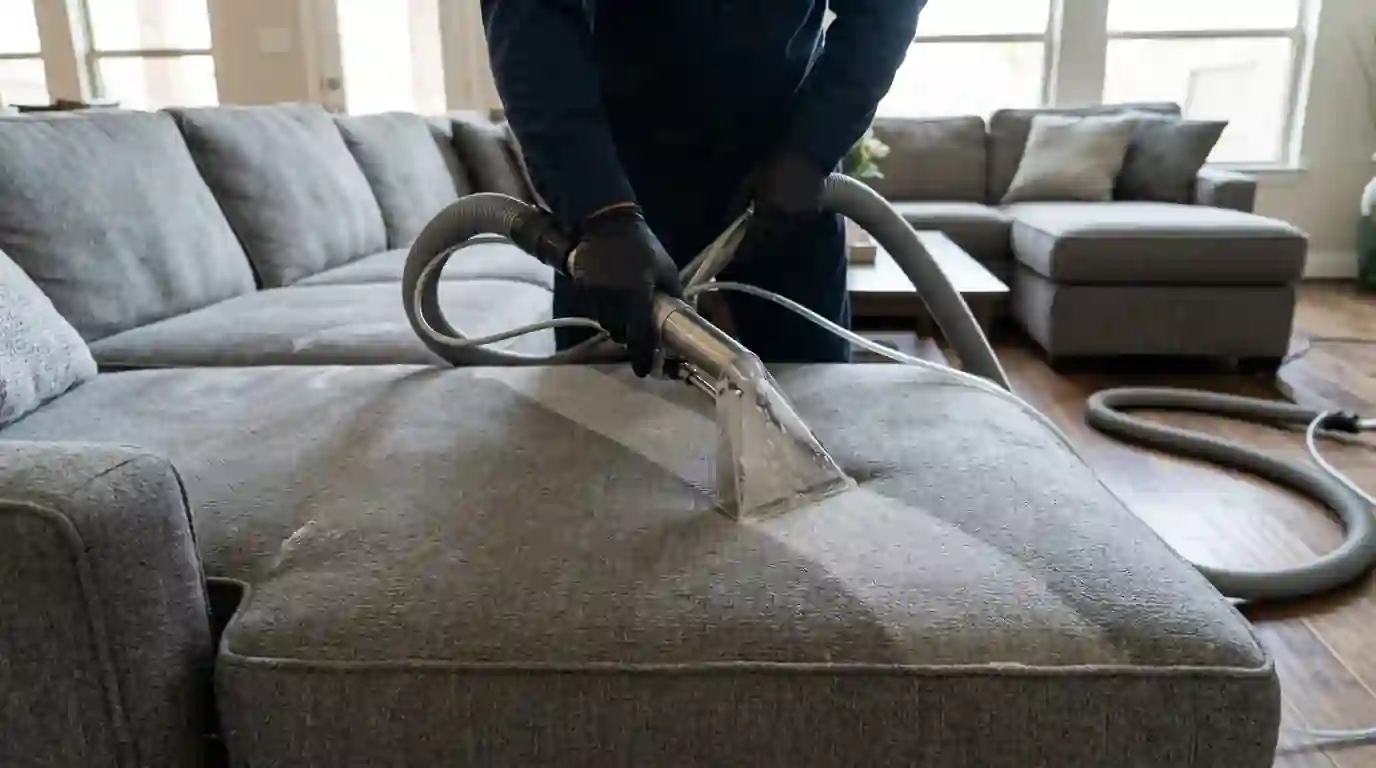
Soil is loosened with a mild pre-spray and a soft brush, then rinsed with an upholstery tool that sprays and recovers in one pass. Arms and headrests get extra dwell time for body oil. Cushions are cleaned on the frame with zippered covers left on, since a washed cover can shrink. The carpet under the sofa can be cleaned on the same visit.
What drives the price of upholstery cleaning
Pieces are priced one by one, by size, fabric and how much work the arms and spots need.
- Size and sections
- A loveseat, a sofa and a large sectional are priced differently.
- Fabric type
- Natural fibers and S-coded fabrics need slower, lower-moisture methods.
- Leather
- Conditioning after cleaning adds a second step to each piece.
- Spots and body oil
- Heavy oil and set stains need extra dwell time and treatment.
- Chairs and ottomans
- Smaller pieces are counted individually and added to the visit.
Published national planning ranges
- Upholstery, sofa: $100 to $400 per sofa (homeguide.com, 2023)
- Upholstery, sectional: $120 to $500 (homeguide.com, 2023)
- Upholstery, dining chair: $20 to $40 per chair (homeguide.com, 2023)
- Upholstery, leather: $150 to $500 (homeguide.com, 2023)
These are national figures from published cost guides, shown for planning only. They are not a quote and not our price list; your job is priced after we see it.
Clean it, reupholster it or replace the foam?
| Problem | Cleaning | Reupholstery or new foam |
|---|---|---|
| Dark arms and seats | Yes, body oil rinses out | Not needed |
| Water rings | Usually, with a full-panel rinse | Rarely |
| Sun fading | No, the dye is gone | Yes, if it bothers you |
| Torn fabric | No | Yes |
| Flat, sagging cushions | No | New foam or batting |
| Urine in the foam | Odor reduced, rarely gone | New foam inside the cover |
Looking after upholstery between cleanings
Safe to handle yourself
- Vacuum cushions and seams with a brush attachment
- Blot spills with a white cloth instead of rubbing
- Flip and rotate loose cushions to spread the wear
- Keep a washable throw where the dog lies
Time to call us
- Arms and headrests have turned dark
- A home spray left a water ring
- The tag says S or X
- Leather feels tacky or looks dry
Fabric sofas and sectionals
A sectional collects soil where people sit most, so one seat looks darker than its neighbor and the arms carry a shine of skin oil. We clean every section to the same level so the pieces still match side by side. Loose cushions are cleaned on all faces and stood on edge to dry. Most fabric sofas clean well. Water rings from an earlier home cleaning can often be corrected with a rinse across the full panel, while sun fading on back cushions is permanent.
Microfiber couches with water marks and matted seats
Microfiber is tightly woven polyester, and many pieces carry an S code because water can leave rings on the face. The usual complaint is a seat gone flat and dark where someone sits every evening. Depending on the tag and the test, we clean it with a solvent or a very low-moisture method, then brush the nap upright while it is still damp. Matting and body oil lift well. Rings from water bottles or baby wipes usually go when the whole cushion is treated, not just the mark.
Leather cleaning and conditioning
Leather turns tacky and dark on the arms and headrest as skin oil and hair products soak in. First we find out whether it is protected leather with a pigment coat, or aniline leather that absorbs a drop of water. Protected leather is cleaned with a leather cleaner and a soft brush, then conditioned so it stays supple in air-conditioned rooms. Aniline needs gentler products and may keep some darkening. Cracks, peeling and worn color are repair and redye work, not cleaning.
Dining chairs with food spills and stained seats
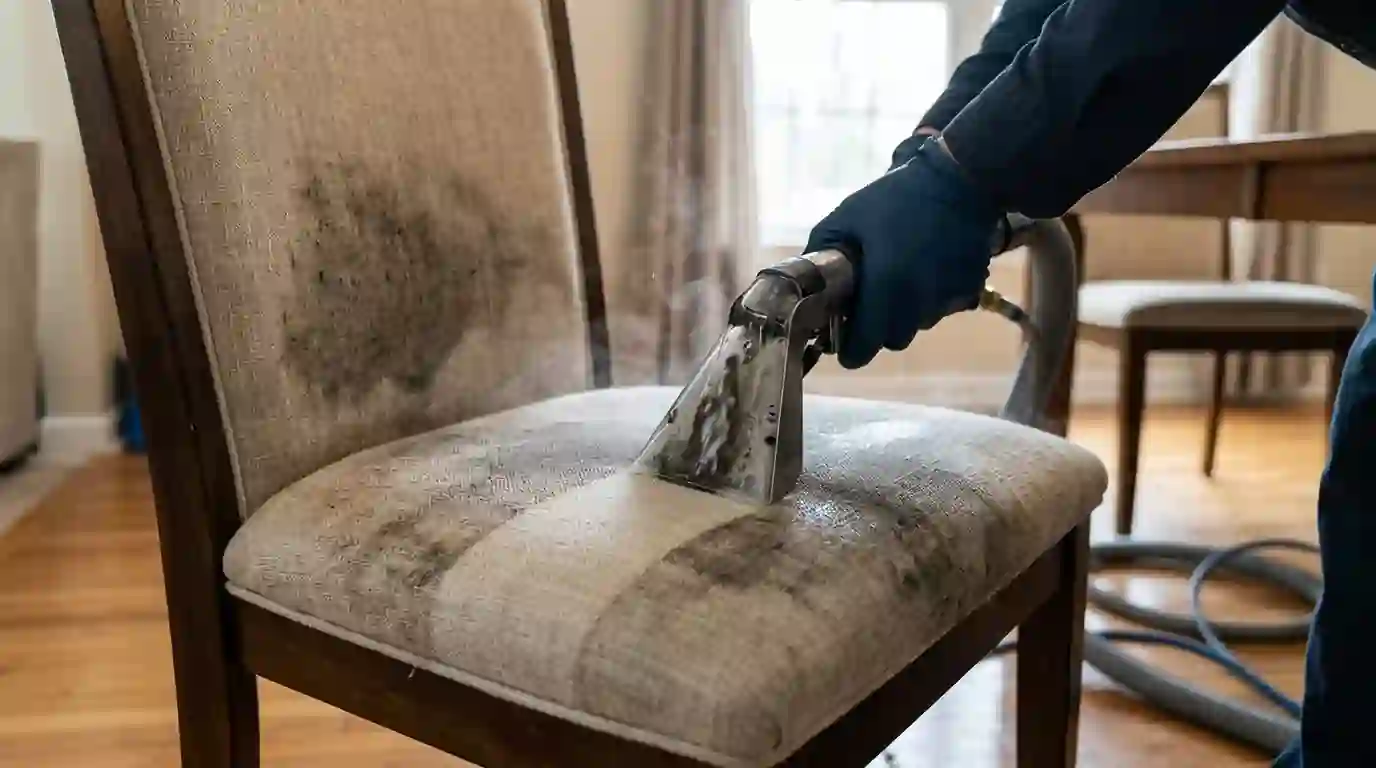
Dining seats catch spills at almost every meal, mostly grease, sauce and juice along the front edge where plates and laps meet. Wood frames are taped or covered so cleaner does not mark the finish, and seats that unscrew can be cleaned off the frame. Each seat gets its spots treated and a light rinse. Old grease lifts, and most food stains fade a long way, but a dining set only matches afterward if every seat is cleaned, not just the stained one.
What happens to your sofa during the visit
Read the tag and test
The cleaning code and a hidden-seam test pick the method.
Vacuum the piece
Crumbs, hair and dust come out of seams and from under cushions.
Pre-spray and brush
A mild solution and a soft brush loosen soil and body oil.
Rinse or wipe clean
Fabric is rinsed; leather is cleaned and then conditioned.
Brush and stand to dry
The nap is brushed upright and cushions stand on edge.
Furniture that stays put in League City living rooms
With 74.7 percent of League City homes owner-occupied, about three in four, most households here own the room the sofa sits in, and a good sofa is worth cleaning rather than replacing. Drying matters in this climate. A cushion cleaned on a muggy afternoon with the windows open dries far slower than one cleaned with the AC running, and foam that stays damp too long smells sour. Keep the AC on and the fans turning after we leave.
Upholstery questions from League City households
W allows water-based cleaners, S means solvent only, W/S allows either, and X means vacuum only. The tag usually sits under a seat cushion.
It depends on the fabric, the method and the room. Low-moisture cleaning dries faster than a full rinse, and AC plus a fan shortens it.
Yes. Hair and dander come out in the vacuum step and pet oils rinse out. Urine inside the cushion foam is a different problem and may mean new foam.
Check the tag and test a hidden spot first. Water rings on S-coded fabric often start as a home spray the fabric could not tolerate.
Sometimes. Old food and drink stains often fade a long way, while ink, dye transfer from jeans and bleach marks may barely change.
