Updated October 2026
Quick answer
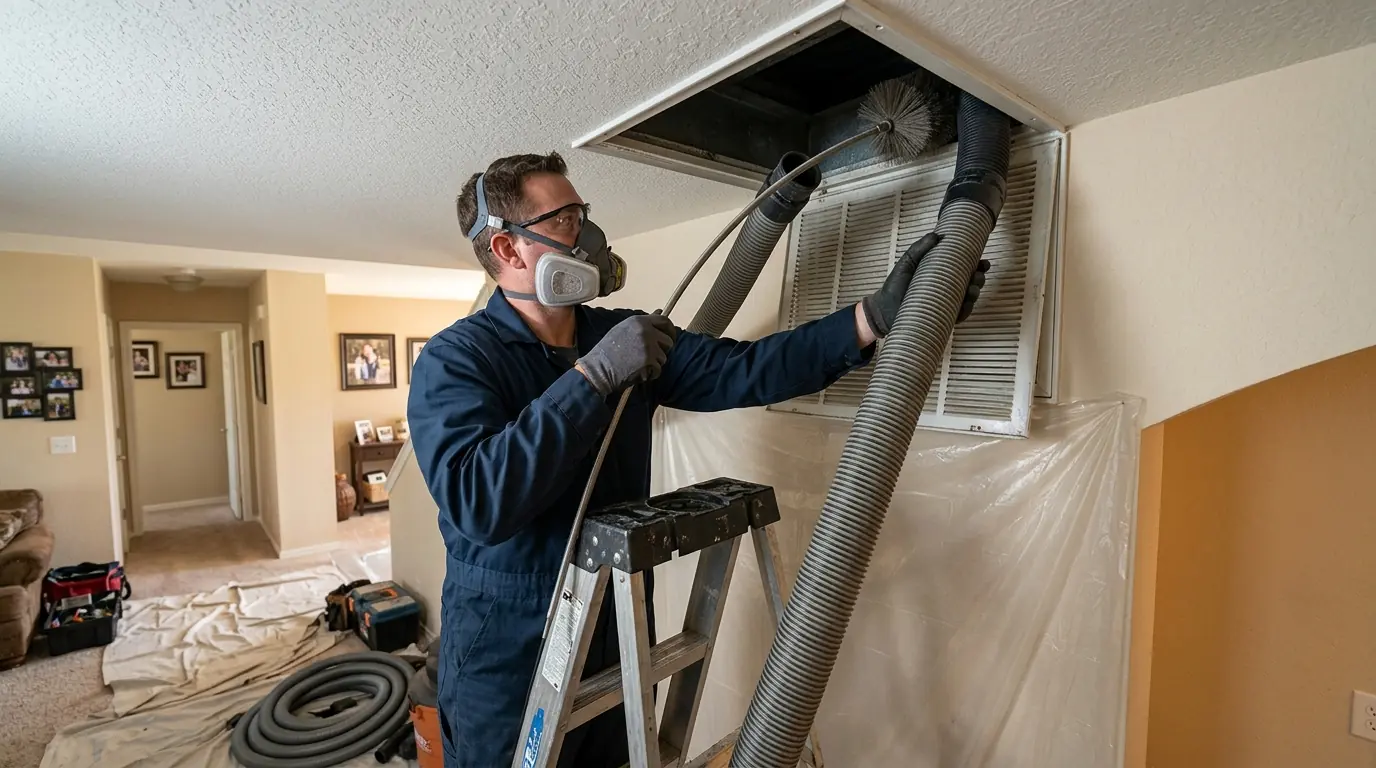
Odor removal in a League City home starts at the source, because a smell is gas or particles coming off a material, and treating the air alone only covers them for a while. We find what holds the odor, clean, seal or remove it, then treat the air.
Why odors return after you cover them
Smells come from something physical: damp drywall and pad growing microbes, smoke film on walls, urine salts in carpet backing, or grease on cabinets. Sprays add a stronger scent, and when it fades the original odor is still there. Humid air makes most odors stronger, which is why a smell barely noticed in January can fill the house in July.
We trace the source by smell, moisture meter and UV light. That material is cleaned, sealed with an odor-blocking primer or removed, and air treatment comes last. Urine in pad and subfloor has its own page on pet urine odor treatment.
How source and spread shape an odor job's price
Odor jobs are priced by the source and how far it has spread.
- Source
- One wet cabinet base is smaller than whole-house smoke.
- Spread
- Odor in walls, ducts and fabrics takes more work than one room.
- Material removal
- Pad, drywall or insulation that cannot be saved adds tear-out.
- Sealing
- Odor-blocking primer on walls or subfloor adds a step.
- Treatment method
- Ozone and fogging need an empty house, which affects scheduling.
Ozone, hydroxyl or fogging: which odor treatment fits
Each tool comes after source work, and each has a tradeoff.
| Method | How it works | Can people stay home? | Tradeoff |
|---|---|---|---|
| Hydroxyl generator | Hydroxyl radicals break down odor molecules | Yes | Slower, so it runs longer |
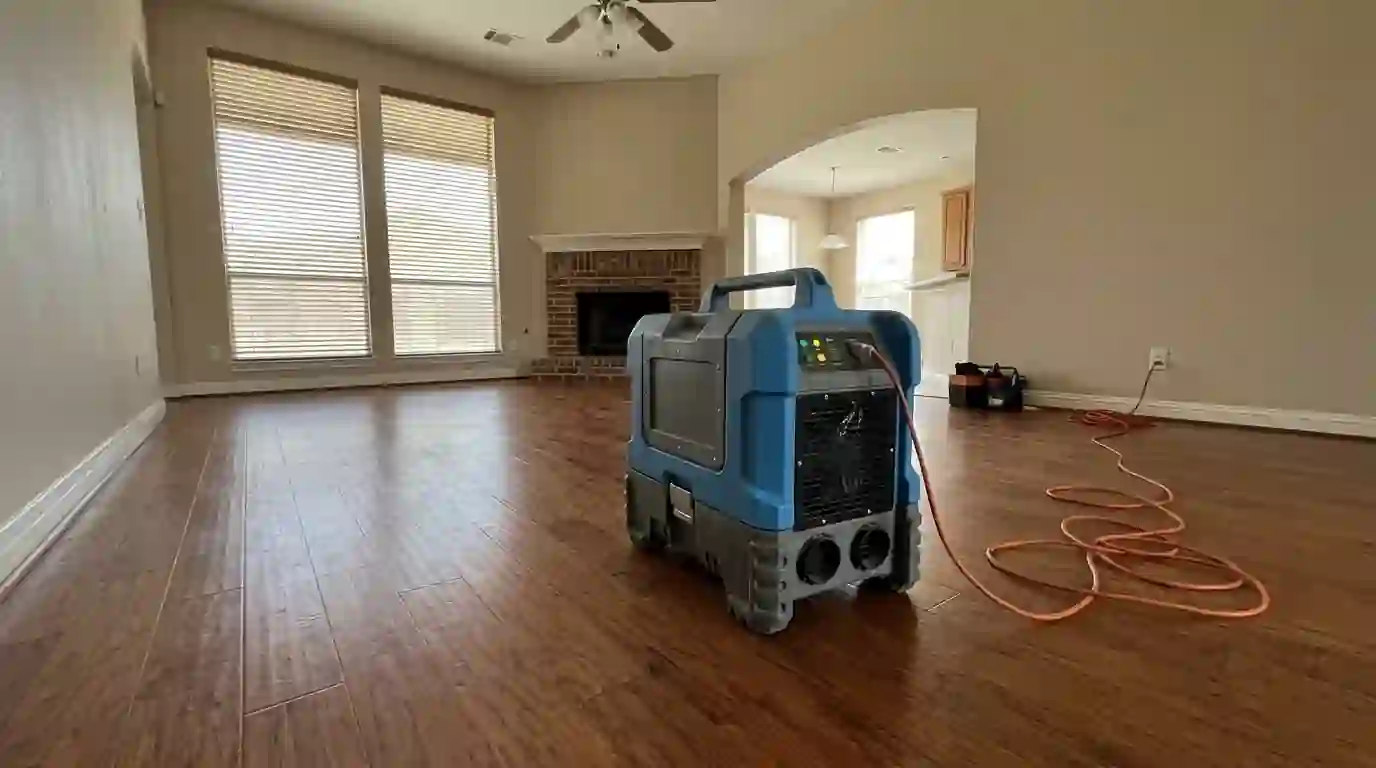
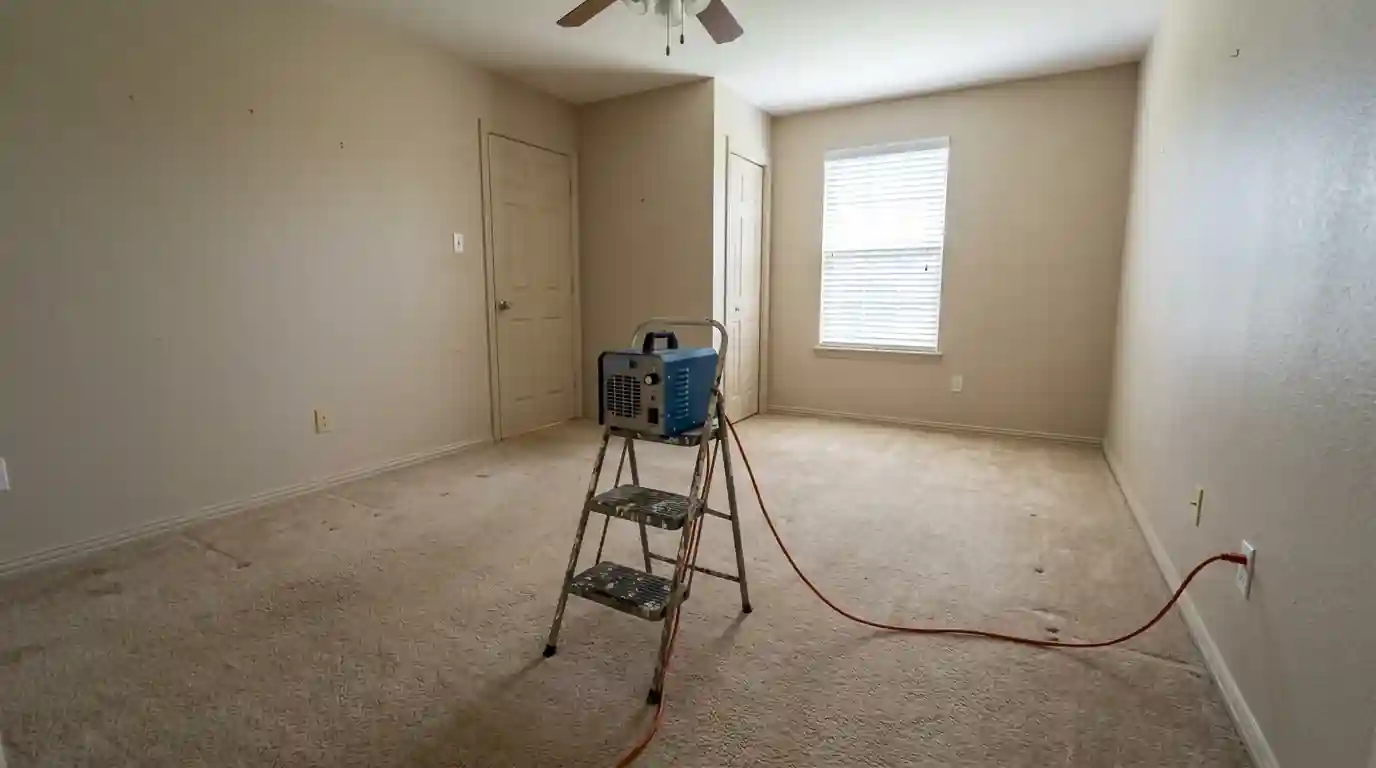
| Ozone generator | Ozone reacts with odor in the air and on surfaces | No, people, pets and plants leave | Can age rubber and some fabrics |
| Thermal fogging | Heated deodorant fog follows the path smoke took | No, until it settles and airs out | Leaves its own scent briefly |
| Odor-blocking primer | Seals residue into walls and wood | Yes, with ventilation | Only after cleaning |
Musty odor after a leak or flood
An earthy, damp smell after a leak means something is still wet, or stayed wet long enough to grow microbes, usually under pad, behind baseboards or inside cabinet bases. No deodorizer fixes it while the material stays damp. We take moisture readings first, and if they are high the job becomes drying the structure before any odor work. Once readings are dry, soaked pad and stained drywall come out, framing is cleaned and treated, and the room is deodorized. Clean, dry framing stays.
Smoke odor from a kitchen fire or a nearby blaze
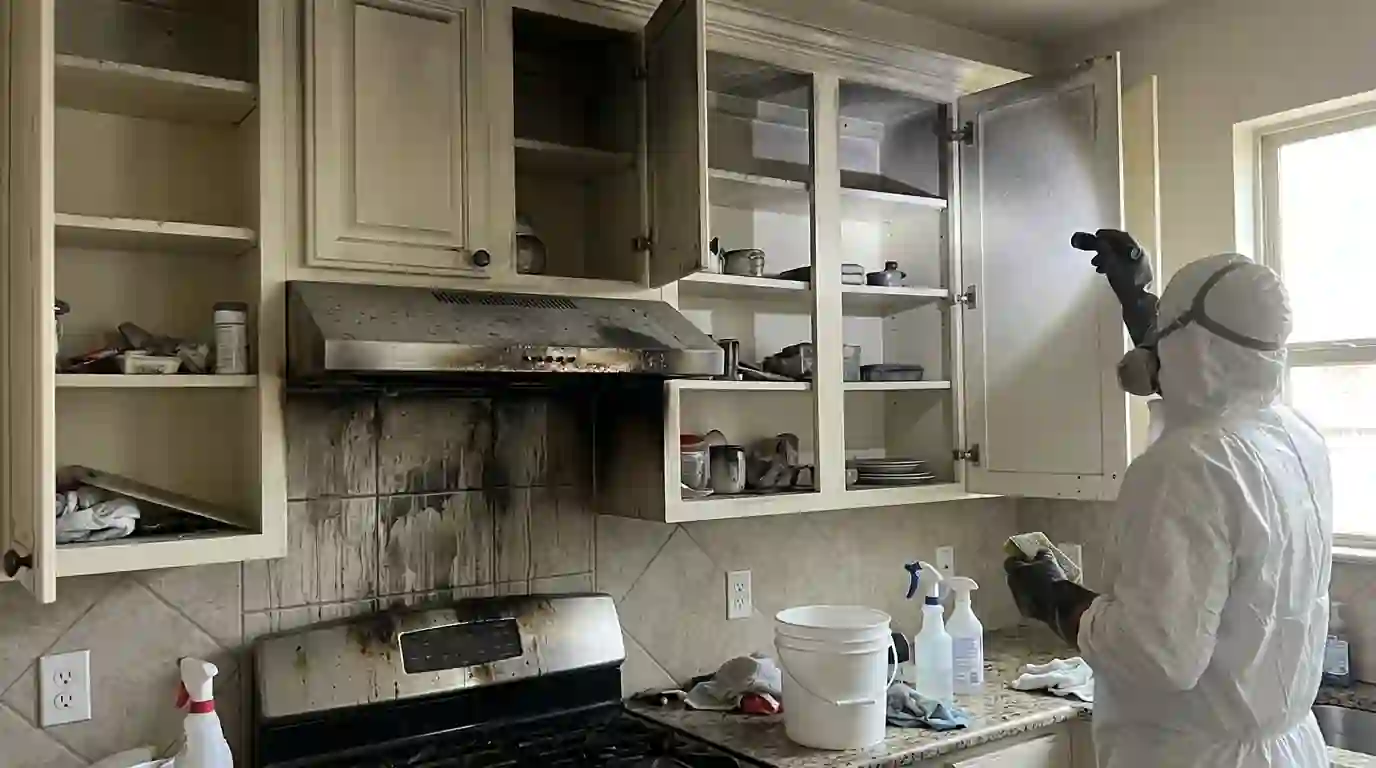
Smoke leaves a film on every surface it touches and settles into fabric, insulation and the HVAC system. After a stovetop fire the smell lingers longest in closets and cabinets, where air barely moves. We wash walls, ceilings and cabinet interiors with cleaners matched to the residue, change the HVAC filter and clean the returns. Soft goods are cleaned or set aside. Anything still smoky after washing is sealed before repainting, and fogging or ozone runs while the house is empty.
Pet odor that has spread through the house
When a pet smell greets you at the front door, it is rarely one spot. Urine in several carpet areas, marking along walls and door frames, and dander in upholstery and ducts all add up. A UV light shows where urine dried. We treat the spots in carpet and pad, wash marked baseboards and clean the furniture the pets favor. Where urine reached the subfloor or slab, the pad is replaced and the surface is sealed. The carpet can often be kept if its backing is sound.
Cooking grease and tobacco smoke in walls and cabinets
Years of frying or indoor smoking leave a sticky, yellow-brown film on walls, ceilings, cabinet faces and fixtures. The odor lives in that film and in fabrics, so it returns on hot, humid days, and paint over it lets the stain bleed through. We degrease or wash every surface, clean window coverings and carpet, and clean the return grilles. Walls that still smell get an odor-blocking primer before your painter starts. Hard surfaces are almost always kept, while old, saturated carpet and pad sometimes are not.
What we check and treat on an odor visit
- Walkthrough to find where the smell is strongest
- Moisture readings wherever water may be involved
- UV light check for urine and organic stains
- Source cleaned, sealed or removed
- Walls, cabinets and fabrics washed as needed
- HVAC filter changed and return grilles cleaned
- Air treatment matched to the odor, then a recheck
From the first sniff to fresh air
Trace
We walk the house and find where the smell is strongest.
Measure
Meters and a UV light confirm moisture or organic stains.
Deal with the source
The material holding the odor is washed, sealed or taken out.
Treat the air
Equipment matched to the odor runs in the affected rooms.
Recheck
The rooms are smelled again after treatment.
Closed-up houses and older homes around Galveston
Galveston's housing has a median build year of 1973, with about 20 percent built before 1940, and about 30 percent of its units sit unoccupied, many of them second homes. A house closed up for weeks in humid Gulf Coast air, with the AC off, comes back stale and damp. An older house has also had decades to soak smoke, cooking and pet odors into its wood and walls. Running a second home's AC between visits keeps the air drier.
Common questions about lingering smells
Because the source is still there, often in pad, subfloor, drywall or fabric. Sprays reach the top layer while the odor keeps rising from below.
Not for people, pets or plants while it runs. It is used only in an empty house, and the rooms are aired out before anyone comes back inside.
Often, if the fabric can be wet cleaned and the smoke was light. Heavily smoked foam may keep its odor, and we say which pieces are worth trying.
Not by itself. Ordinary paint lets odor and stains bleed through. Walls need cleaning first, then an odor-blocking primer, and only then a finish coat.
Sometimes, when the odor comes from a covered event such as a sudden leak or a fire. Long-term smoking, pets or neglect are usually excluded.
