Updated October 2026
Quick answer
A contents pack-out after water damage in a League City home moves furniture and belongings out of the wet rooms so walls and floors can be dried, with each item photographed and listed by room. Items that can be cleaned are cleaned and stored, and items that cannot are documented before disposal.
Why belongings move before the drying starts
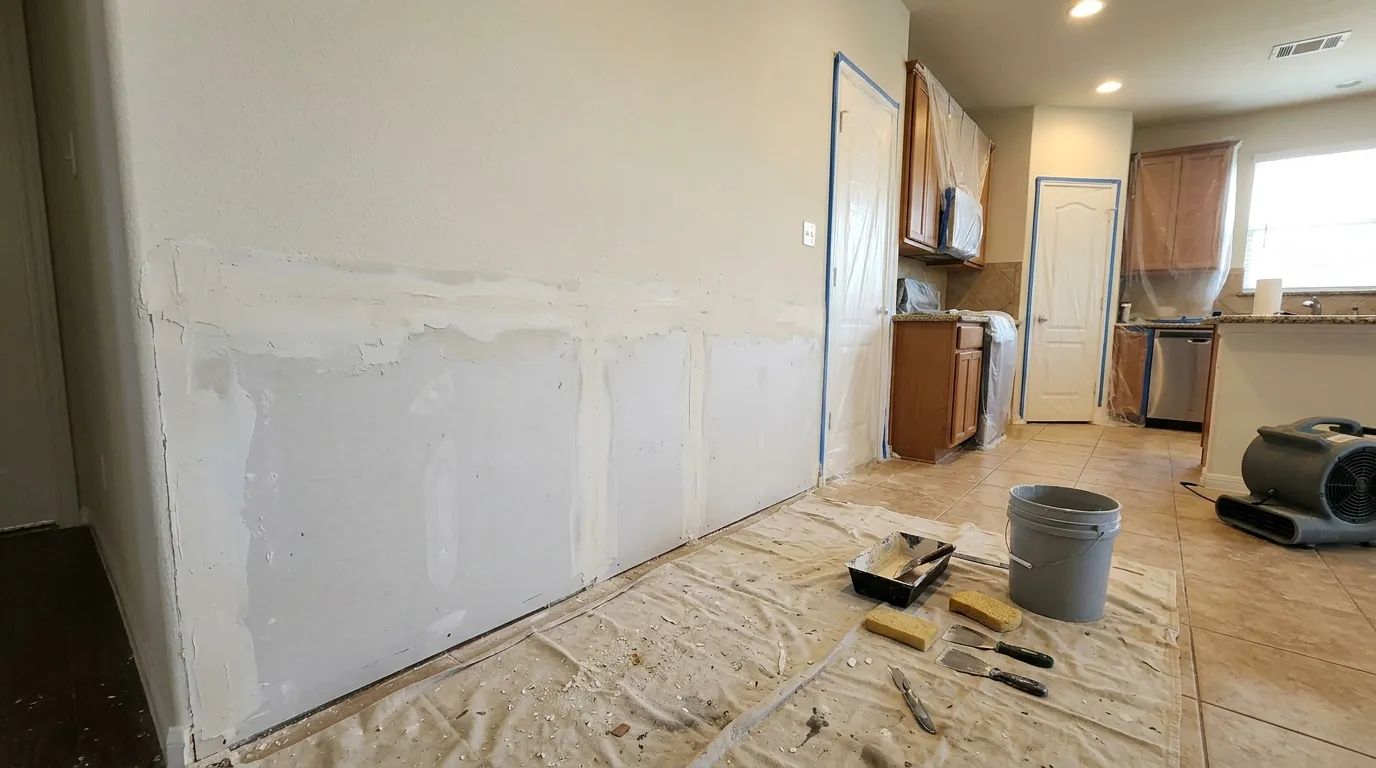
Furniture on wet carpet blocks extraction, wicks water into its legs and hides the wall behind it, and boxes on a wet floor soak through from the bottom. Clearing the affected rooms is often the first real step of a water job, and a record of what went where makes the contents claim easier to settle.
A pack-out is not a moving job. Items are sorted into what is dry, what is wet but cleanable, and what is a loss. Dry items are wrapped and boxed. Wet salvageable items are cleaned and dried before they are stored. Losses are photographed and listed for the adjuster before anything leaves the house. The emptied rooms then go to water extraction and drying.
What drives the cost of moving and cleaning contents
Pack-out is priced by the volume of belongings and the handling they need, not by the size of the leak.
- Volume of contents
- A full kitchen and garage take far more boxes and hours than one bedroom.
- Cleaning needed
- Items washed or dried after gray water add labor per piece.
- Storage time
- Contents held through a long rebuild add storage charges.
- Specialty items
- Artwork, electronics and documents may need outside specialists.
Moving contents out of the work area
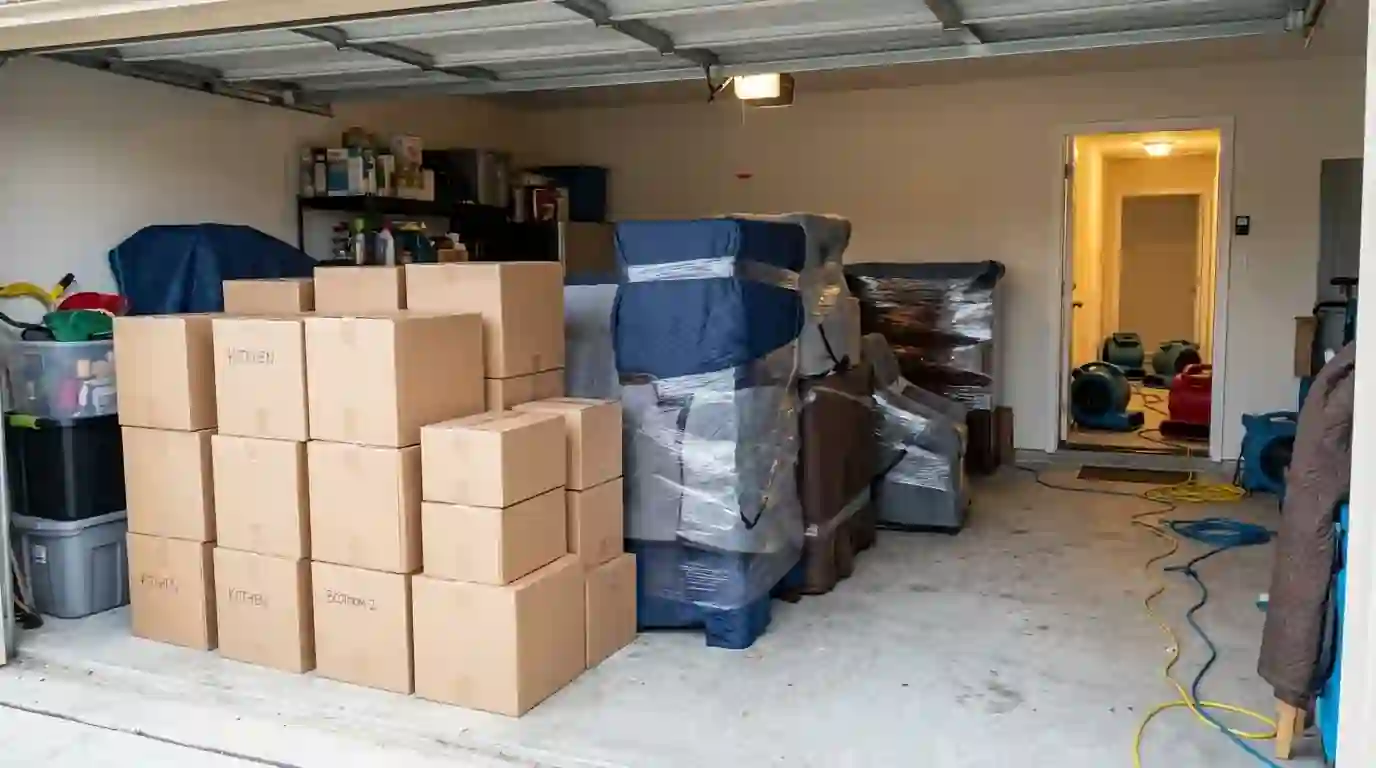
Some jobs only need furniture shifted to the dry side of the house and set on blocks or foil tabs, so the legs stay off damp carpet. Larger losses, or rooms where walls are opened and floors removed, mean packing everything and moving it out of the house to storage. Either way, each box is marked with its room and contents, and large furniture is blanket-wrapped. Fragile pieces, artwork and electronics are packed separately. Where things go depends on the size of the job and what your adjuster approves, and we settle that with you before packing starts.
Photo inventory, room by room
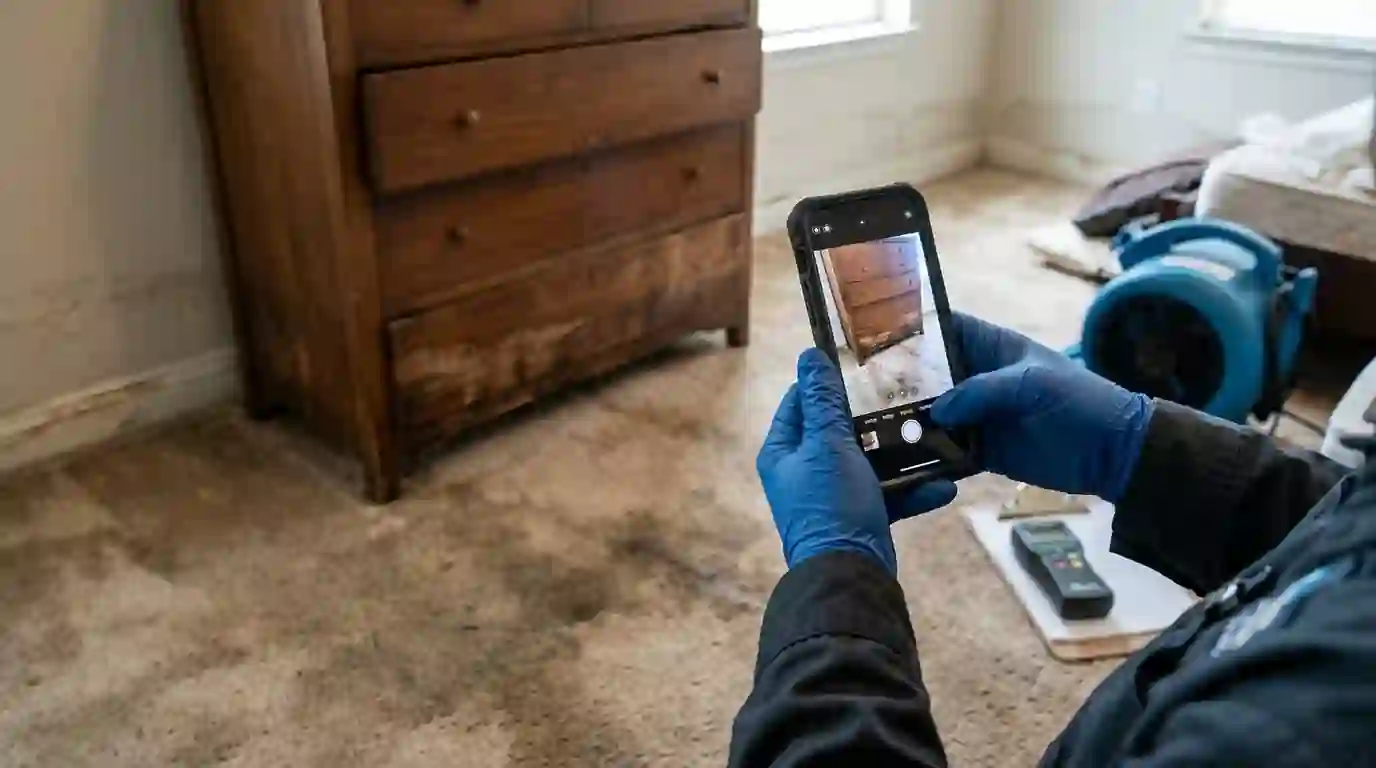
The inventory is the part that protects you. Every room is photographed as found, then each item or box is photographed and listed with the room it came from. Damaged items get close photos showing the damage, and anything thrown out is recorded first, because an adjuster cannot price what nobody can show. Brand names, model numbers and rough age help with valuation, so we note them where they are visible. You get the list, the photos and a record of where every box is, which becomes the backbone of the contents claim.
Cleaning salvageable items
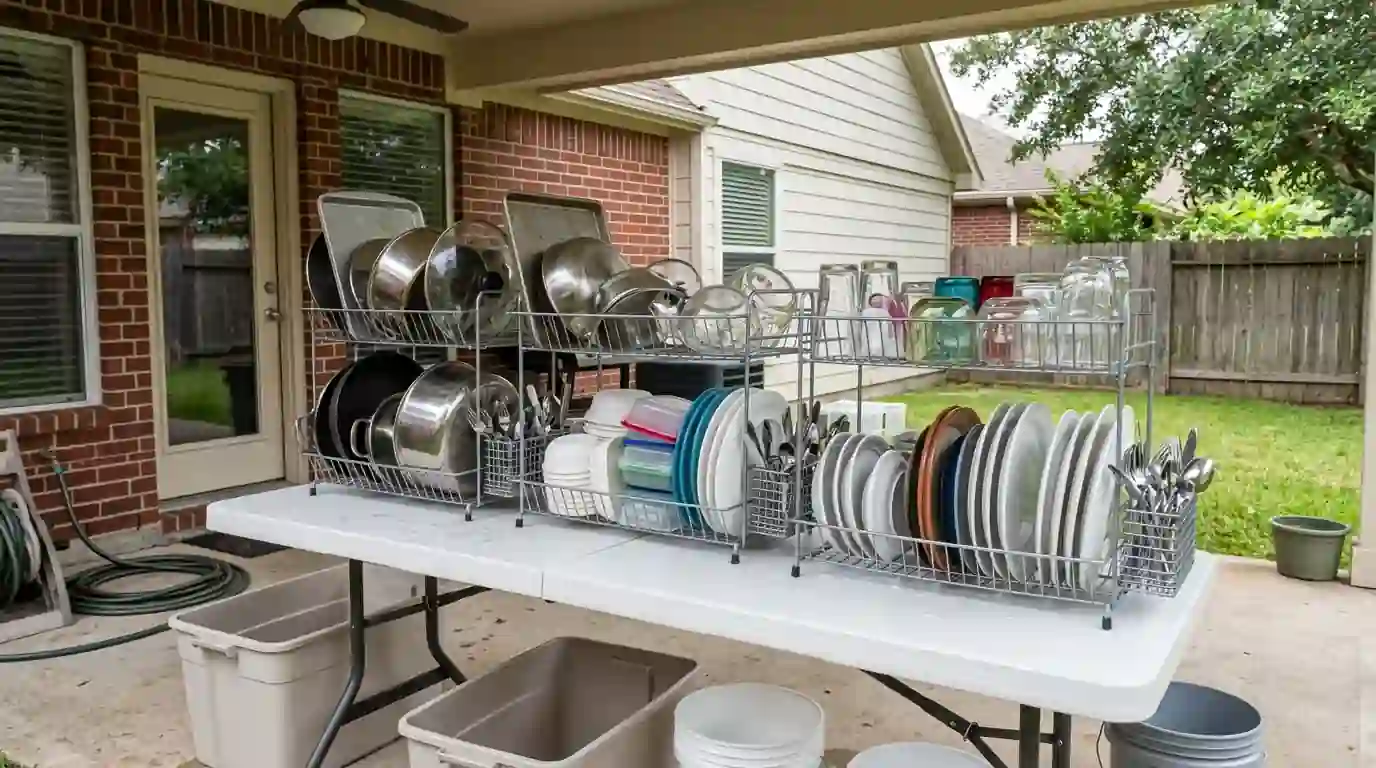
What can be saved depends on the material and the water. Dishes, metal, glass and finished wood usually wash up fine after clean or gray water. Washable fabrics that sat only in clean water usually come back with an ordinary wash, while anything soaked by flood or sewage gets a much stricter sort. Upholstered furniture, mattresses and particleboard pieces that sat in dirty water are usually a loss. Wet paper records and photographs can be frozen to hold them until a document specialist freeze-dries them. Electronics should stay unplugged until a technician has checked them.
What a pack-out includes
- Room-by-room photos before anything is moved
- Sorting into dry, cleanable and non-salvageable items
- An itemized list with room, description and condition
- Wrapping and boxing in cartons marked by room
- Moving contents to a dry area or to storage
- Cleaning and drying of salvageable items
- Pack-back and placement once repairs are finished
How a pack-out runs from first photo to pack-back
Walk and photograph
We photograph each room as found and agree with you on what moves.
Sort
Items are separated into dry, cleanable and loss.
Pack and move
Boxes are marked by room and contents and moved out of the work area.
Clean and store
Salvageable items are cleaned, dried and held until the rooms are ready.
Bring it back
Contents return and are placed in the finished rooms with you.
How long your belongings stay out
Contents stay out as long as the rooms are being dried and repaired, so the drying and rebuild set the timeline, not the packing. Furniture that only shifted can go back once the floor is dry, while a loss needing new walls, flooring and paint keeps boxes in storage through all of it.
Items that need washing, drying or an outside specialist add their own time, and the adjuster's sign-off on the contents list can decide when replacements get bought.
What a flood the size of Harvey says about belongings
In Friendswood, an estimated 3,000 homes took on water during Harvey, and about 1,000 residents there were rescued by boat. After a flood on that scale, contents are often the most painful part of the loss. Anything flood water touched is sorted strictly, and the photo record carries the contents claim because so much has to be thrown out. A pack-out after a burst supply line in a League City kitchen is far smaller, yet it follows the same order: photograph first, then move or discard.
Belongings questions families ask first
It helps for the first walk-through, so you can point out valuables and items you want handled personally. After that, the inventory shows where everything went.
Yes. Damaged items are photographed and listed before disposal, and some adjusters ask to see larger pieces in person, so those can be held until you hear back.
Seal them in freezer bags and freeze them if you can. Freezing slows mold and ink bleeding until a document specialist can freeze-dry them.
Under a covered water loss, moving and cleaning contents is usually part of the claim. The photo inventory is what lets the adjuster approve it line by line.
Either in a dry part of the house or off site in storage, depending on the job and what your policy allows. You get the box list either way.
