Updated October 2026
Quick answer
Area rug cleaning in League City depends first on the fiber, because wool, synthetic, cotton, jute and viscose each take water differently. A dye test on every color decides how wet the rug can get. Grit comes out before any water, or the sand turns to mud at the base of the knots.
Why a rug gets more care than wall-to-wall carpet
An area rug has a face, a back, a foundation and a fringe, and each one is cleaned. Dry soil works down to the base of the pile, especially on rugs by a patio door, so we dust the back and vacuum both sides before the rug gets wet.
Washing is done flat, off the floor the rug protects, with a solution matched to the fiber: mild acid side for wool, stronger chemistry for synthetics. Pet accidents get urine treatment first. The rug is rinsed, then dried with airflow until the foundation reads dry, not only the face.
How rug size, fiber and condition set the price
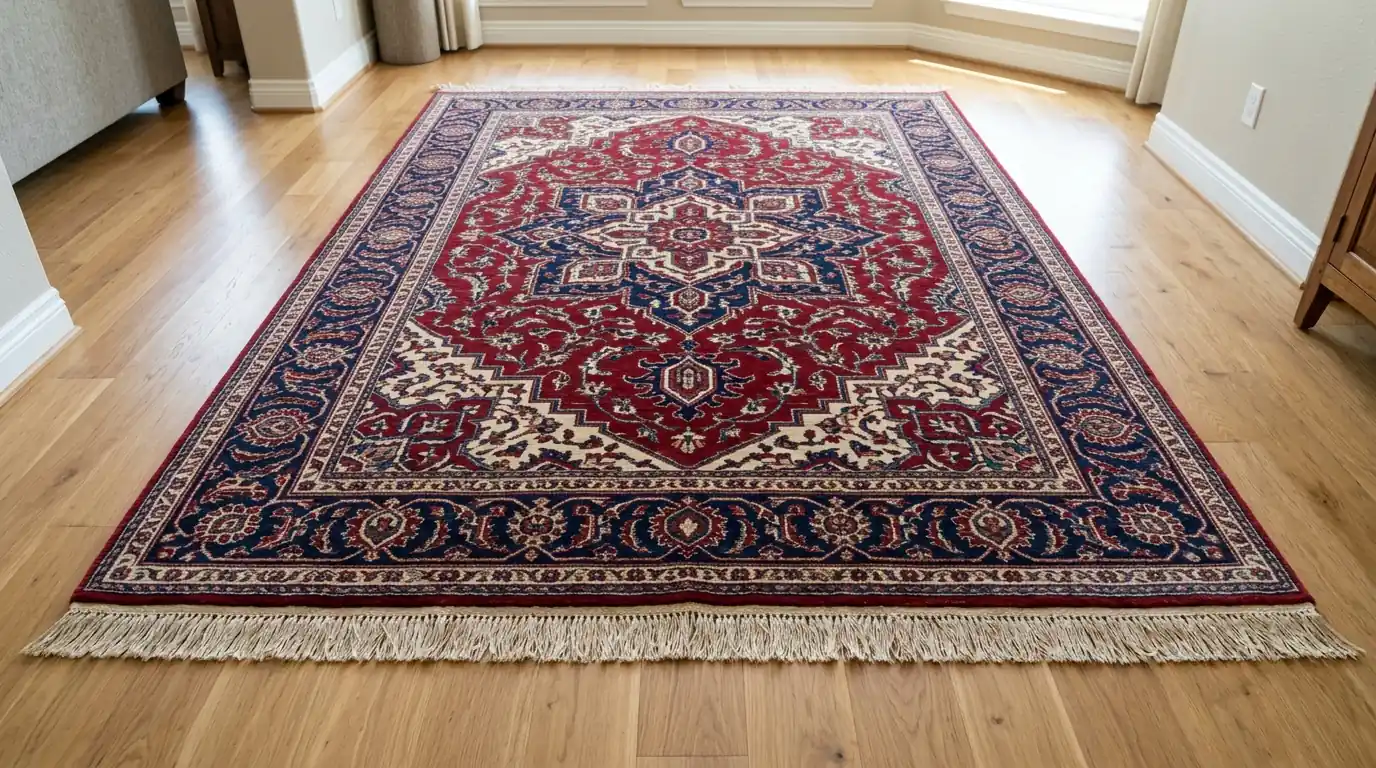
Rugs are priced by the square foot, and the fiber and condition move that rate more than anything else.
- Fiber
- Wool and viscose need slower, gentler work than polypropylene.
- Construction
- Hand-knotted rugs take more care than machine-made or tufted ones.
- Size
- Every rug is measured, so a runner and a room-size rug price differently.
- Pet urine
- Urine treatment and extra rinsing add a step to the wash.
- Contamination
- Rugs from a flood or backup need decontamination before cleaning.
Published national planning ranges
- Area rug, synthetic, per square foot: $1 to $5 per sq ft (homeguide.com, 2024)
- Area rug, machine-made wool, per square foot: $3 to $7 per sq ft (homeguide.com, 2024)
- Area rug, handmade wool, per square foot: $5 to $8 per sq ft (homeguide.com, 2024)
These are national figures from published cost guides, shown for planning only. They are not a quote and not our price list; your job is priced after we see it.
Which rugs are safe to wash at home?
| Rug | Home washing | What a professional wash adds |
|---|---|---|
| Polypropylene or nylon | Often fine if the backing is synthetic | Grit removal and a full rinse |
| Machine-made wool | Risky; reds can bleed | Dye testing and wool-safe cleaner |
| Hand-knotted wool | Not advised | Dye setting and controlled drying |
| Viscose or art silk | No; water browns it | Very low-moisture cleaning |
| Jute or sisal | No; it browns and shrinks | Dry cleaning methods |
Wool rugs, machine-made and hand-knotted
Wool hides soil well, so a wool rug can look only slightly dull while its base is packed with sand. Wool also reacts badly to high heat and strong alkaline cleaners, which can shrink it or let reds run into the field. We dust it thoroughly, test each dye, and wash with a wool-safe cleaner at moderate temperature. Drying is fast and even so colors stay where they belong. Hand-knotted rugs with fugitive dyes may need a dye-setting step first. Moth damage and worn pile are a matter for reweaving.
Synthetic rugs made of polypropylene and nylon
Many store-bought rugs are polypropylene or nylon, and they look worn sooner because oily soil clings to them and traffic flattens the pile. Polypropylene does not absorb water-based stains, so food and drink usually rinse out, while grease holds on hard. We use a stronger pre-spray here than wool could take, brush the pile upright and extract thoroughly. Latex backings on lower-cost rugs can crumble with age, and a rug shedding grainy powder may not survive a wash. We check for that before washing.
Fringe cleaning and whitening
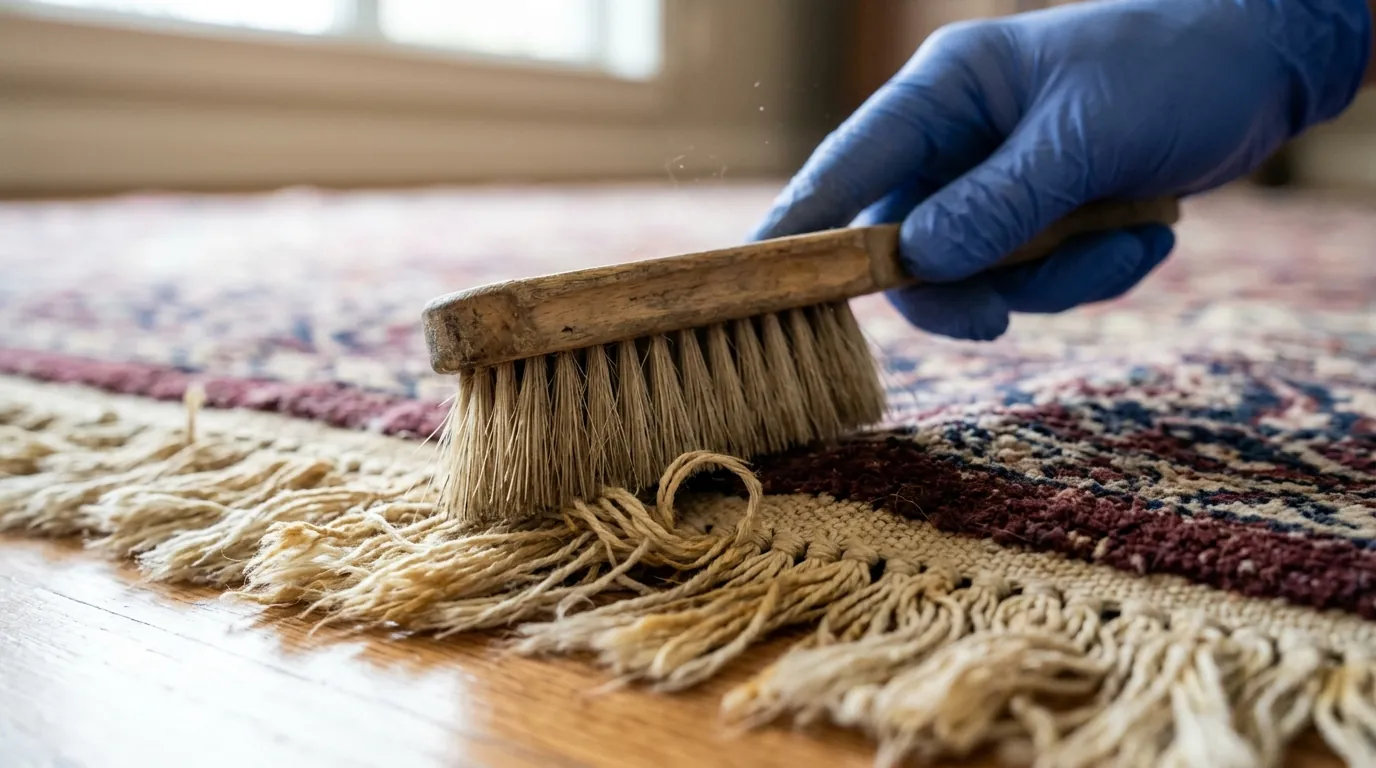
Fringe is the end of the warp threads, usually cotton, and it yellows and grays faster than the pile around it. Vacuums chew it, and spills soak it, because cotton absorbs everything. We clean fringe by hand with a brush and a solution kept off the wool body, then rinse it and dry it flat so it does not brown. Fringe that has turned tan from age or cellulose browning can often be lightened. Fringe that is missing or worn down to the knots needs a binding repair instead.
Rugs after water damage from a leak or flood
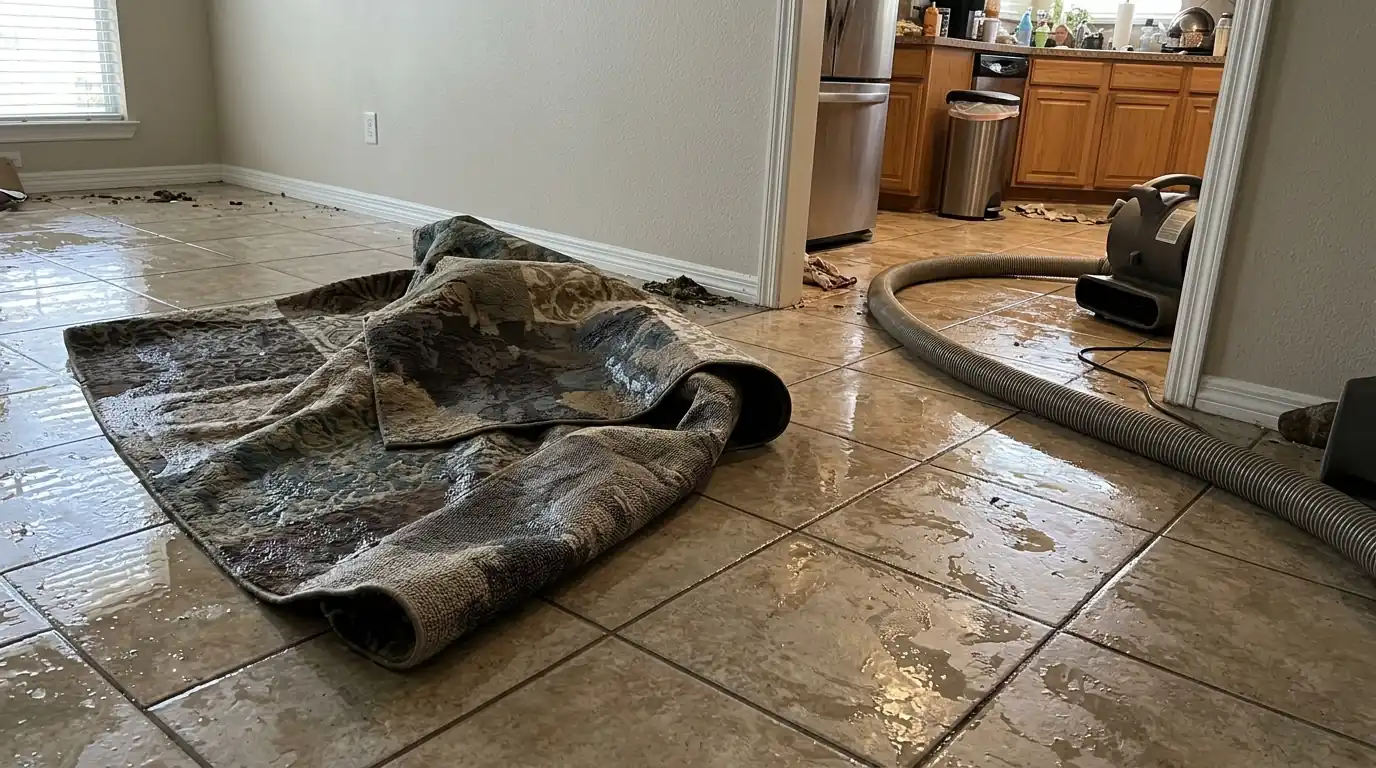
A rug soaked by a supply line leak is a cleaning job if it is pulled up and dried quickly. Left wet, the dyes bleed, jute backings brown and the foundation can rot. Rugs soaked by floodwater or a sewage backup carry Category 3 contamination, and we say plainly whether washing is worth it. Many flood-soaked synthetic rugs cost less to replace than to decontaminate, while a valuable wool rug may still be worth it. The floor underneath needs water extraction and drying too.
What is included when we clean an area rug
- Fiber, dye and damage inspection
- Measurement of the rug
- Dusting from the back and face
- Spot and pet urine pre-treatment
- Fiber-matched wash and rinse
- Fringe cleaned by hand
- Drying until the foundation reads dry
What a rug goes through from dusting to drying
Inspect and measure
Fiber, construction, dyes, stains and existing damage are noted with you.
Dust the rug
Grit is beaten and vacuumed out of the back and face before any water.
Test and pre-treat
Each dye color is tested, then spots and urine are treated.
Wash and rinse flat
A fiber-matched cleaner goes on, and the rinse continues until it runs clear.
Dry, groom and comb
Airflow dries the foundation, the pile is groomed and the fringe combed.
Rugs on tile and wood floors in humid Gulf Coast homes
Plenty of Gulf Coast homes have tile or wood-look plank downstairs, so area rugs soften the living rooms and entries. Grit rides in on shoes and paws and settles into the rug base, where it grinds at the pile. Humid air in League City adds a second risk. A rug laid back on a slab before its foundation is dry can turn musty, and a rubber-backed pad can hold moisture against wood. Dry all the way through is the rule before a rug goes down.
Questions about cleaning area rugs
Carefully, and with limits. Viscose loses strength when wet, browns easily and its pile can crush for good, so it gets very little water and you hear the risks first.
Not when each dye is tested before washing and the rug dries quickly. Rugs with unstable dyes get a dye-setting step or a lower-moisture method instead.
Traffic, pets and placement decide it. An entry rug by the patio door needs attention far more often than one under a dining table.
Often, if it has not sat for months. Urine can shift wool dyes, so an old spot may leave a color change even after the odor is gone.
Yes, a pad stops slipping and slows wear. On wood floors, choose felt or natural rubber, since some vinyl or plastic pads can mark or discolor the finish.
