Updated October 2026
Quick answer
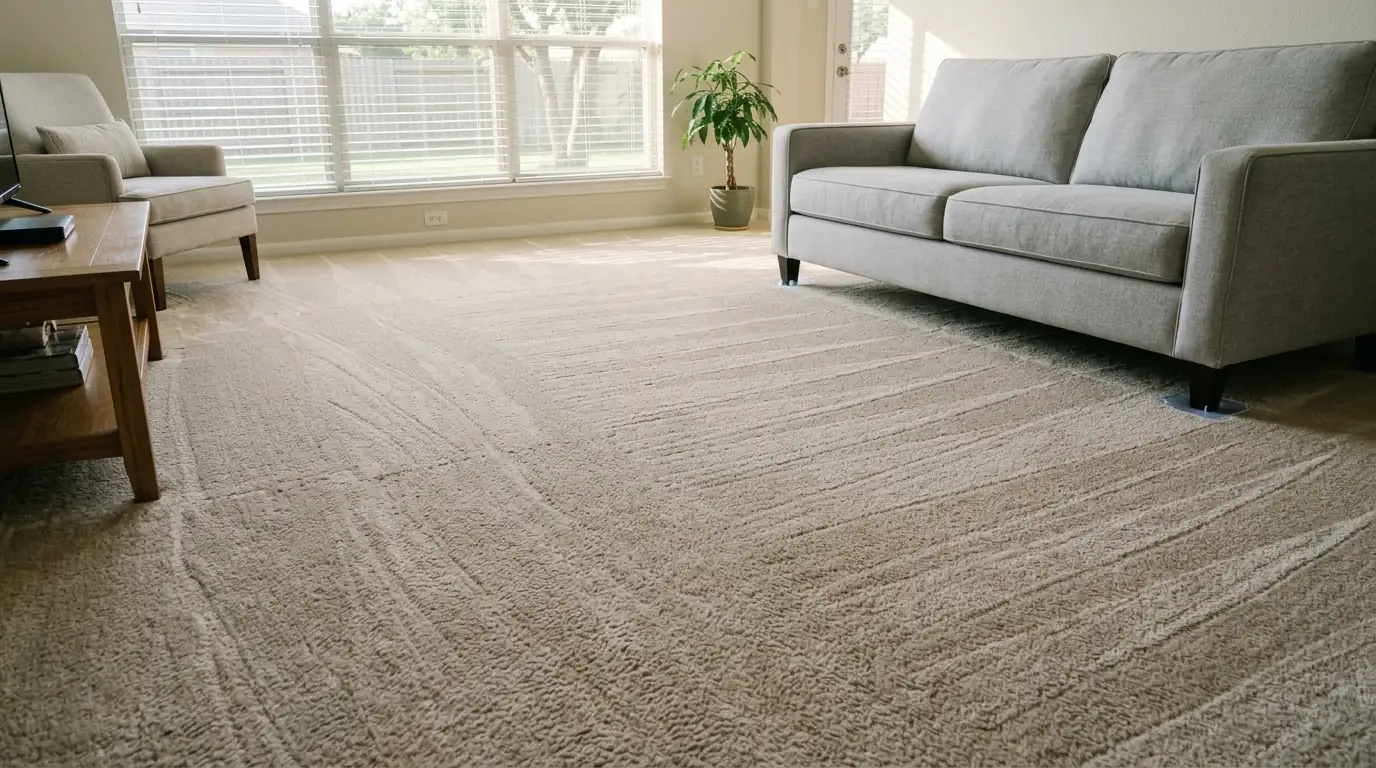
Carpet repair in League City covers three jobs: power-stretching loose carpet back onto the tack strip, rejoining split seams with new hot-melt tape, and patching damage with matched carpet. A power stretcher sets the tension that keeps carpet flat, while a knee kicker alone only shifts the slack. Delaminated backing cannot be fixed by stretching.
Why carpet comes loose, and what holds it tight again
Wall-to-wall carpet is held in tension. Wooden tack strips with angled pins grip the edges, and the carpet is stretched across the room so it lies flat. When it was installed with only a knee kicker, or heavy furniture has been dragged across it, that tension relaxes and ripples form.
We fix the cause along with the symptom. That means checking whether the tack strip still grips, whether seams sit in the right place, and whether the backing has separated. Carpet that rippled after a leak may have come apart from its backing, and then drying the wet carpet properly comes before any stretching decision.
What decides the cost of a carpet repair
Repairs are priced per job once we see the carpet, since one seam and a whole-room stretch are very different work.
- Rooms to stretch
- Each room is stretched wall to wall, so more rooms mean more time.
- Furniture
- Beds, dressers and bookcases have to be moved out of the way first.
- Tack strip and pad
- Rotted strip or crumbling pad is replaced before stretching.
- Seam length
- A short doorway seam takes less time than one running across a room.
- Donor carpet
- A patch is simplest when leftover carpet or a closet section is available.
Small carpet fixes you can make, and the ones to leave
A rented knee kicker tends to push slack into another part of the room rather than remove it.
Safe to handle yourself
- Clip a snagged loop flush with scissors instead of pulling it
- Keep leftover carpet rolls for future patches
- Move heavy furniture off a ripple so it does not crease
- Note whether ripples appeared after a leak or a cleaning
Time to call us
- Ripples run across a whole room
- A seam is splitting or peaking
- Burns, bleach spots or pet damage
- Carpet has pulled off the tack strip
Re-stretching ripples and buckles
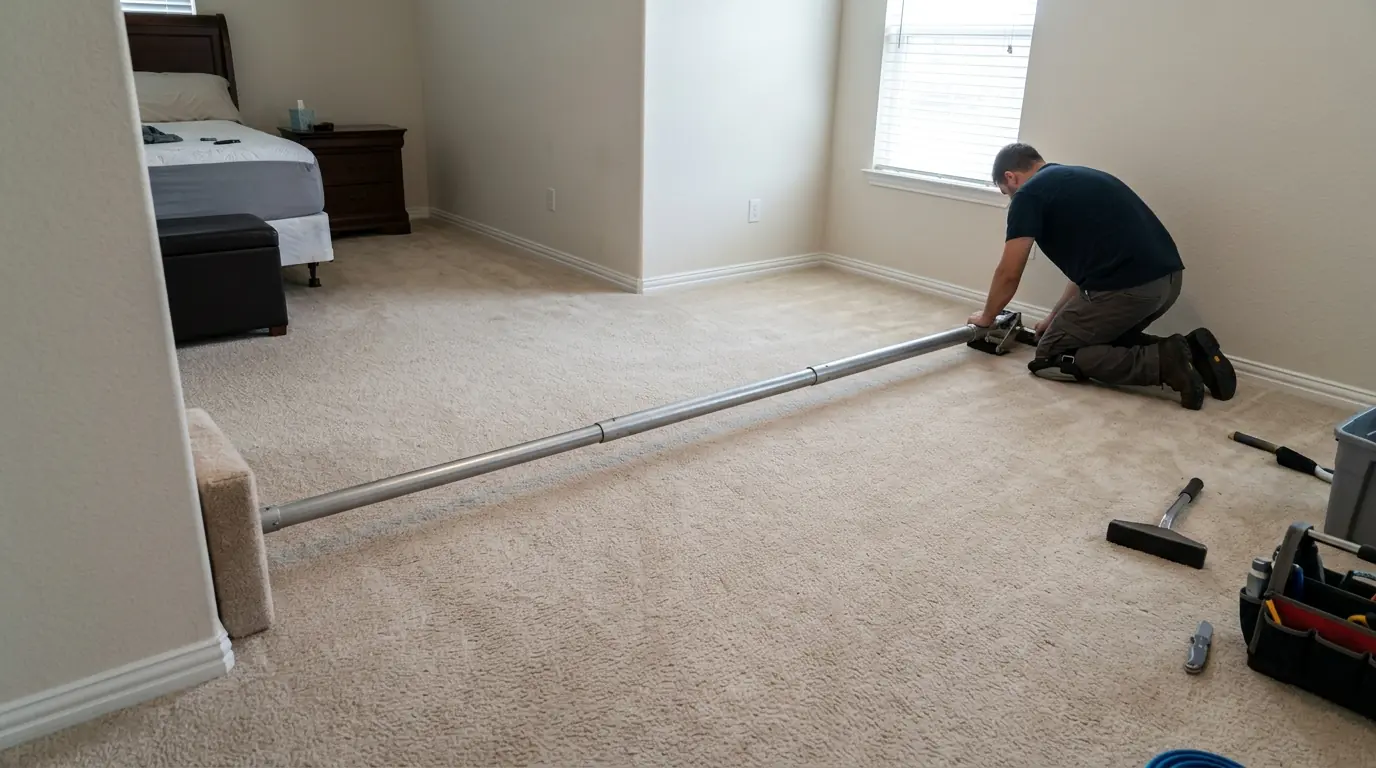
Ripples show up as waves you can see in low light and humps you can feel underfoot, often in bedrooms where the furniture sits along one side. They are a tripping hazard, and the crests wear faster than the rest. We move the furniture, release the carpet from the tack strip on one or two walls, and brace a power stretcher against the opposite wall to pull it tight. The excess is trimmed and tucked. Carpet and pad are kept. Tack strip that has rotted or lost its pins is replaced first.
Seam repair for split or peaked seams
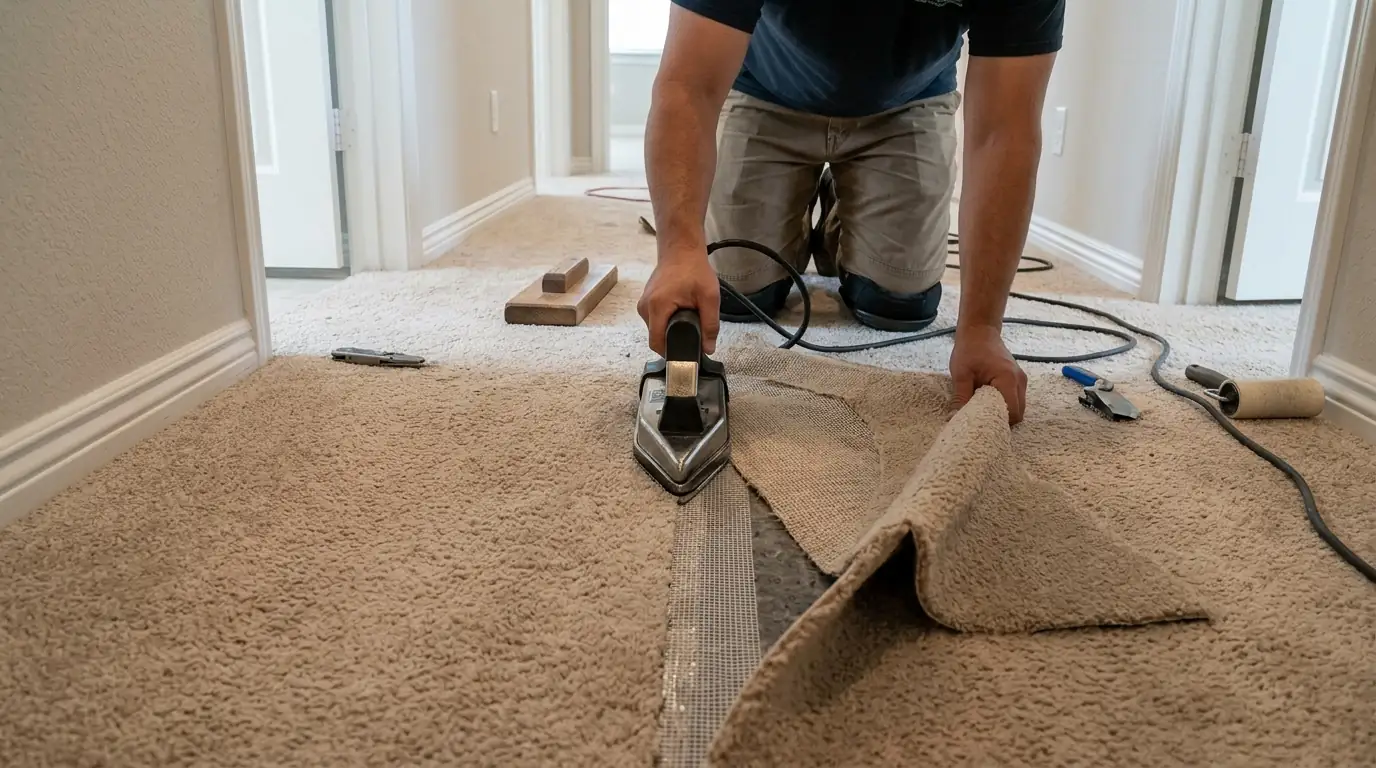
A seam is where two pieces of carpet meet, joined underneath with hot-melt tape. When the tape lets go, the seam opens into a visible line or gap, and on loop carpet the cut edge starts to unravel. A peaked seam rises into a ridge when the carpet on each side was stretched unevenly. We cut out the old tape, lay new tape, rejoin the edges with a seaming iron and seal them against fraying. A seam across a busy path will always show a little, but it can sit flat and tight.
Patching burns and pet damage
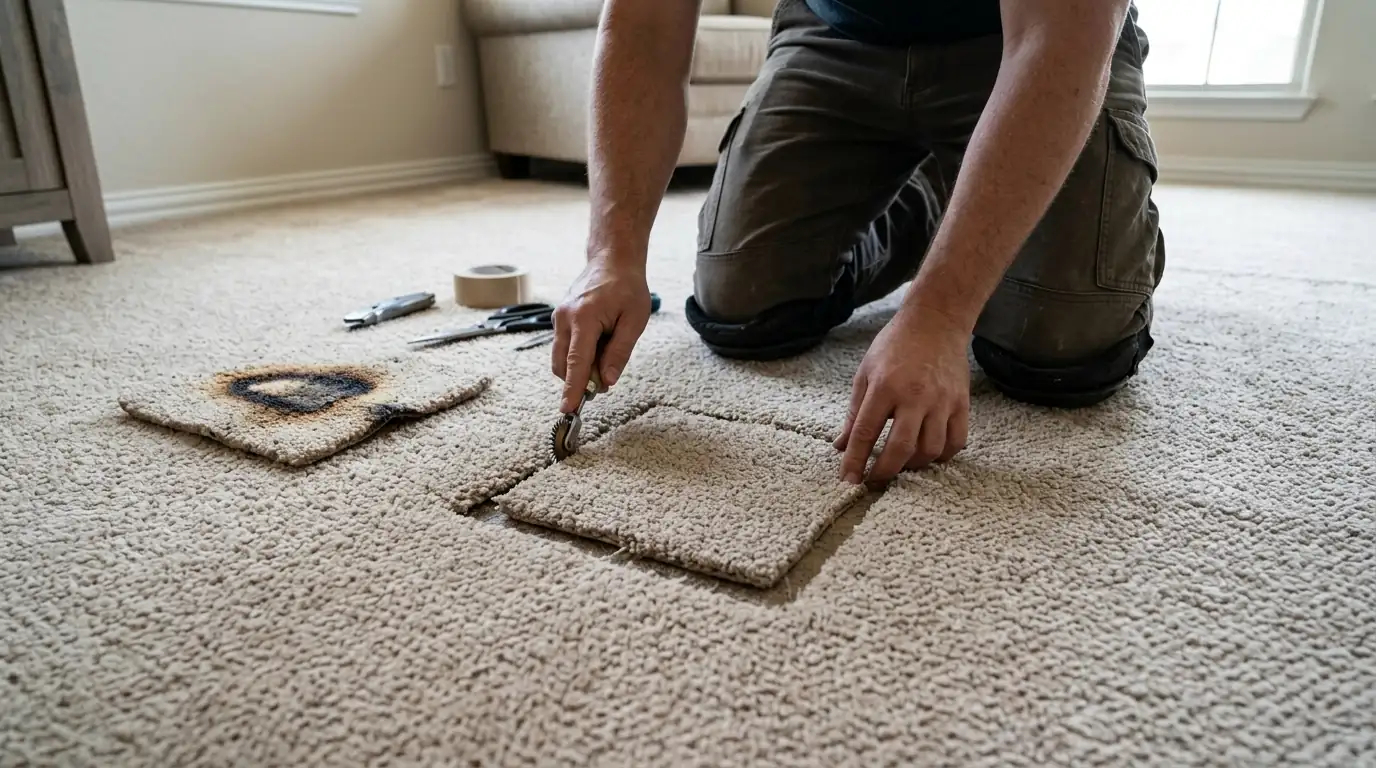
Iron burns, bleach spots and the frayed patch where a dog dug at a closed door are all small areas of ruined yarn. We cut out the damaged section and replace it with matching carpet from a closet or a leftover roll, lining up the pile direction and pattern. The patch is set on seam tape or adhesive and its edges are sealed. A patch usually blends, though a closet piece may look slightly brighter than carpet that has seen years of sun. If urine is under the damage, pet urine treatment comes first.
How a repair visit goes from loose to flat
Find the cause
We check tack strip, seams, backing and pad before choosing the fix.
Clear the area
Furniture is moved off the carpet that will be stretched or cut.
Release and cut
Carpet comes off the strip, and failed seams or damaged spots are cut out.
Stretch, seam or patch
A power stretcher, seaming iron and matched carpet do the repair.
Trim and reset
Edges are trimmed and tucked, transitions secured and furniture returned.
Muggy League City months and carpet that loosens
WeatherSpark counts about 7.2 muggy months a year in League City, from April 1 to November 8, with July the muggiest. Humidity is one of the things that lets carpet relax. A carpet stretched with a power stretcher has tension to spare, but one installed with a knee kicker alone does not, so its slack tends to show up as ripples during the damp part of the year. A house left with the AC off while the family is away can come back to waves in the bedrooms.
Signs your carpet needs stretching or repair
Waves visible in low light
Ripples show clearly when light comes across the floor.
A hump at the doorway
Carpet has pushed up where it meets the threshold.
A line down the room
The seam tape underneath has let go.
Carpet lifting at the wall
The edge has come off the tack strip.
Frayed edges at transitions
Loops are unraveling where carpet meets tile or wood.
Asked about rippled and damaged carpet
Usually, yes. Re-stretching with a power stretcher saves most rippled carpet. The exception is carpet whose backing has separated, since it will not hold tension again.
Heavy wetting from a rental machine or weak extraction can loosen carpet for a while. If it stays rippled once it is fully dry, it needs stretching.
It helps a lot. Without it, a piece can often come from inside a closet, and the closet gets a close match in its place.
From standing height it usually blends. Up close, a newer piece can look a little brighter, or its pile may lie differently until it has been walked on.
Only once it is fully dry and the backing is intact. Our article on whether wet carpet can be saved covers the checks.
