Updated October 2026
Quick answer
Water damage in a League City home needs the standing water out the same day and the structure dried to a measured target, not just until it looks dry. We sort the water into Category 1, 2 or 3 first, because that decides what can be dried in place.
Signs water has spread farther than you can see
Soft or swollen baseboards
Water has wicked into the drywall behind them.
A ceiling stain that keeps growing
A ring that grows over a day means an active leak above.
Carpet damp at the edges
Water runs along the tack strip past the visible wet spot.
A musty smell in one room
Trapped moisture smells before it shows.
Paint that bubbles
Blistering paint near a bathroom usually has wet drywall behind it.
How water damage restoration works in a League City house
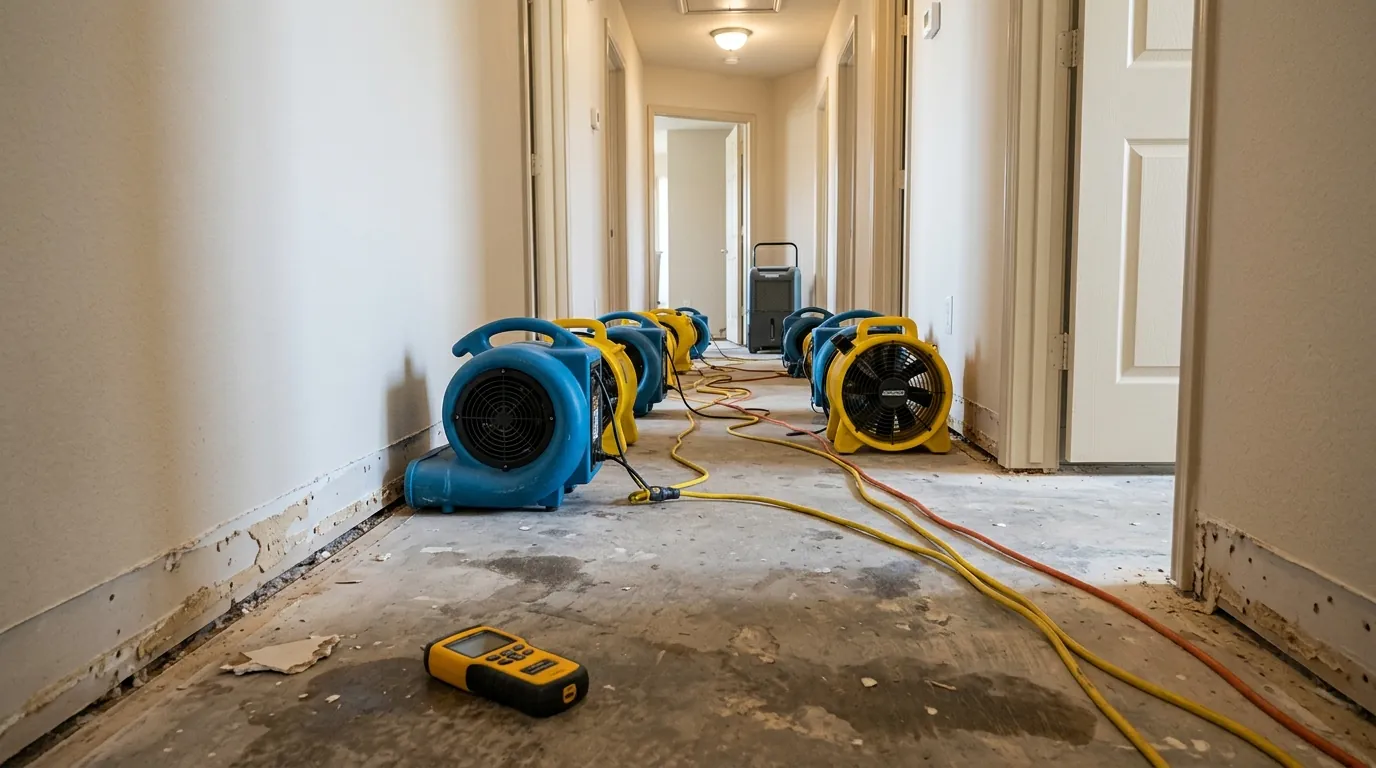
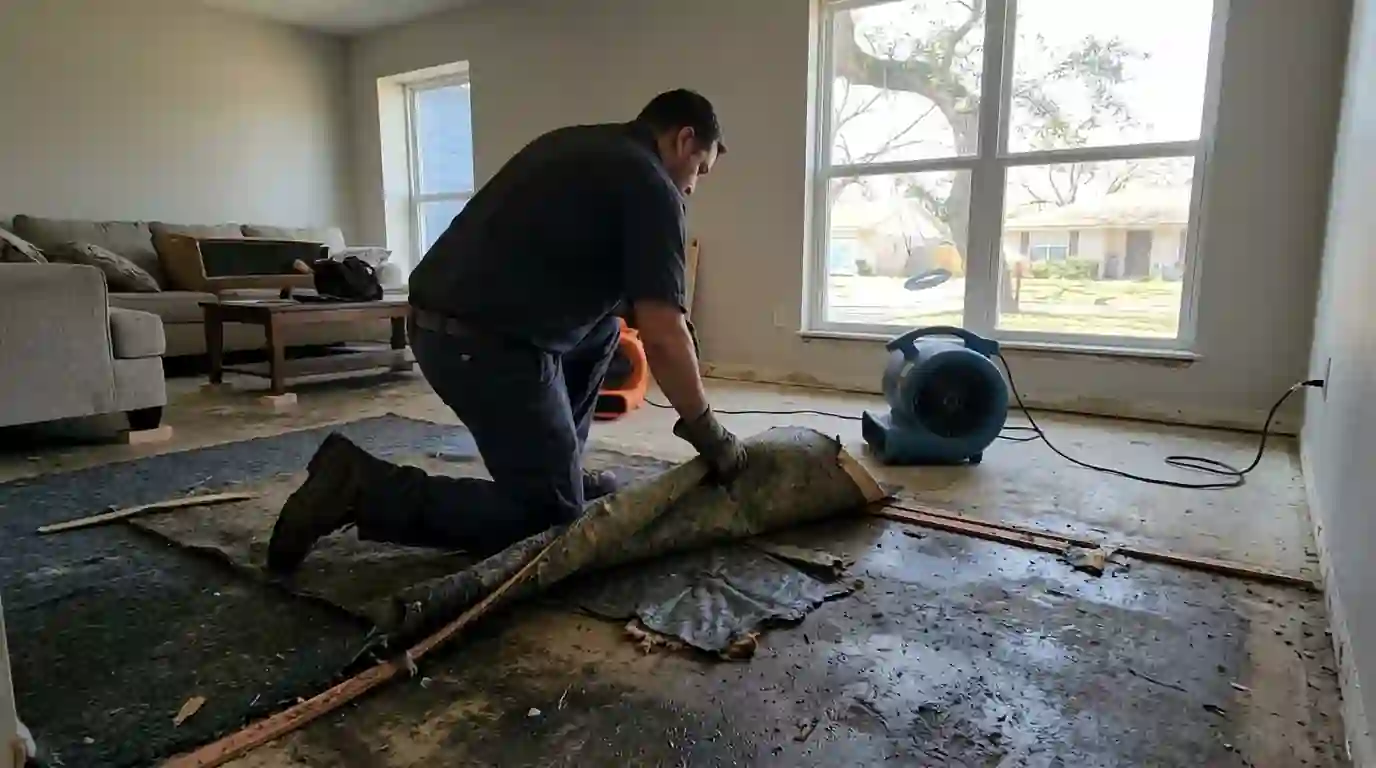
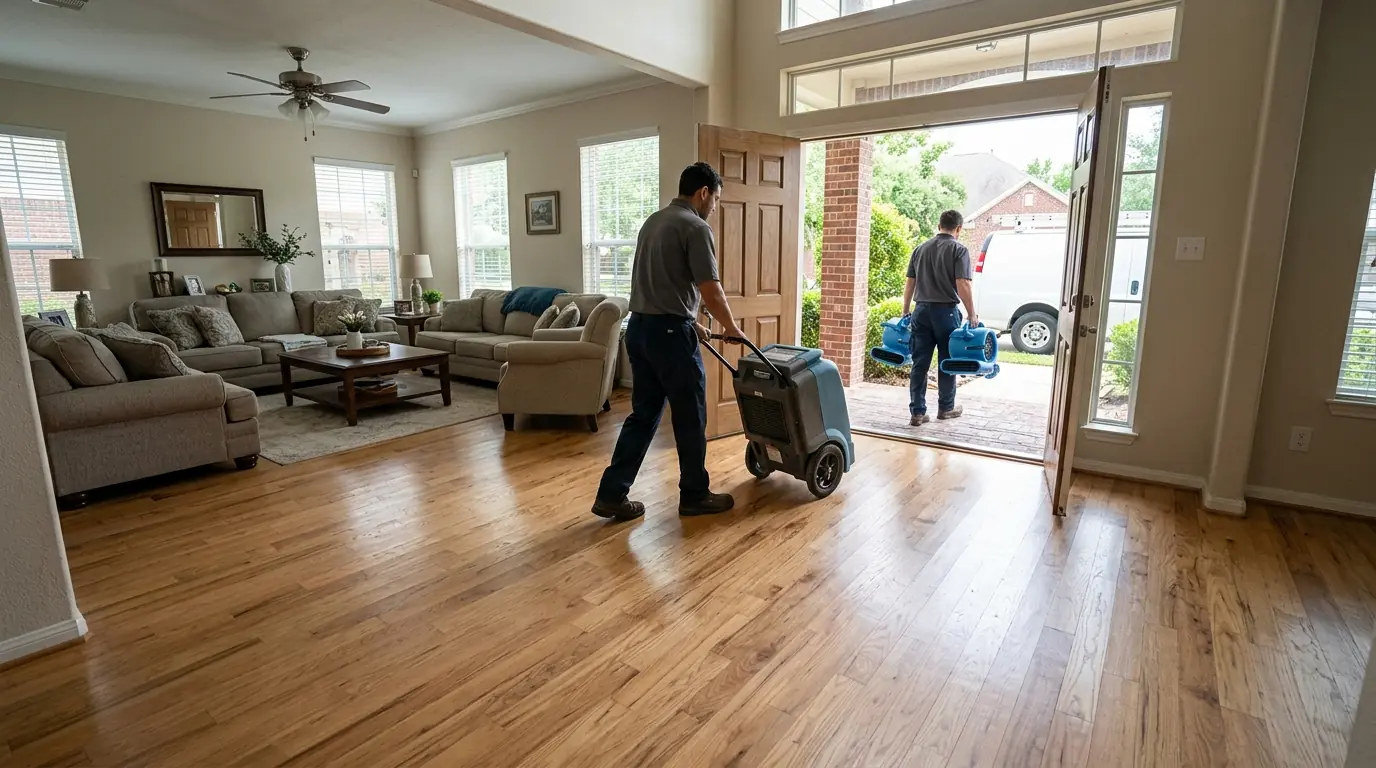
Restoration is three jobs in a fixed order. The water comes out of carpet, pad and hard floors. The structure is dried with dehumidifiers and air movers placed where the readings say the water went. Then anything that could not be saved is removed and the area is cleaned.
We read drywall, framing, flooring and subfloor on the first visit and every visit after it. Those readings decide when the equipment leaves, and they go into the file your adjuster will ask for.
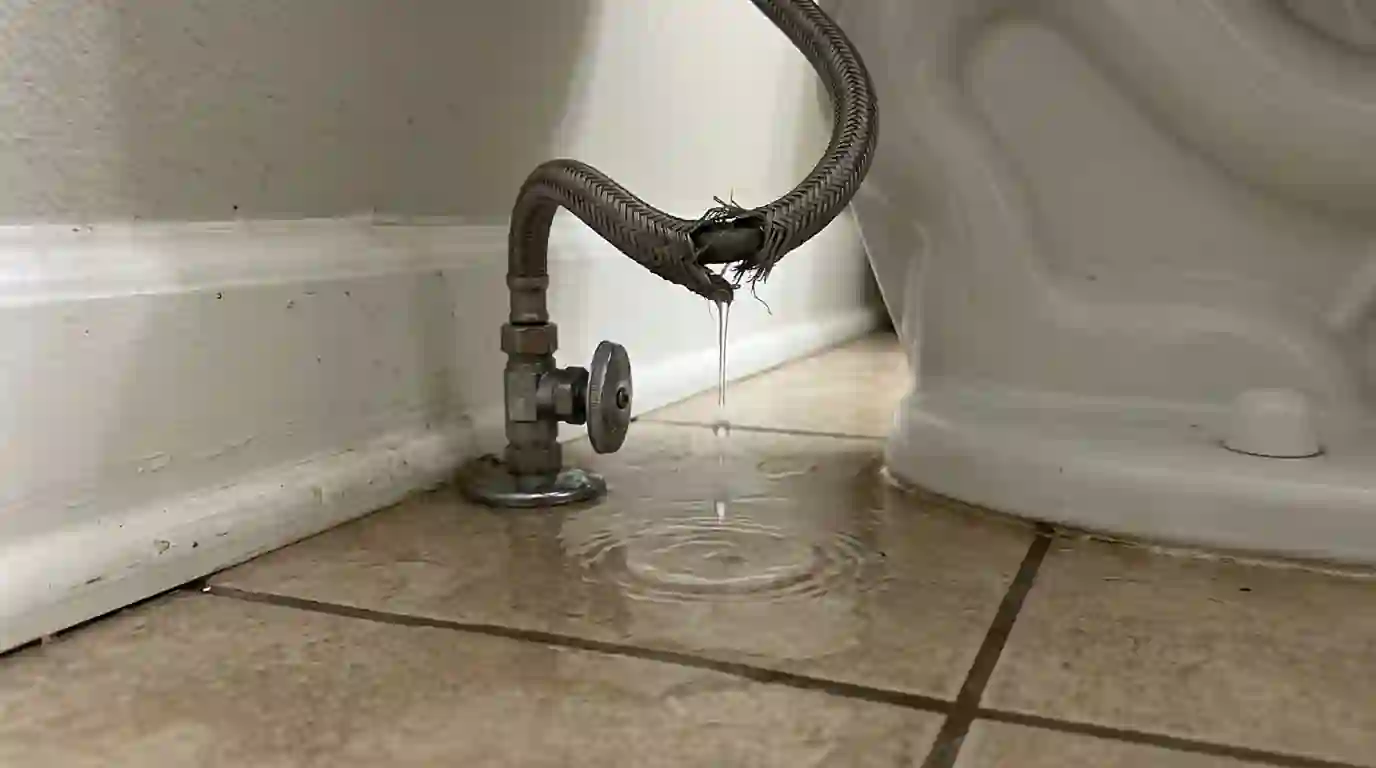
Clean water from a burst supply line
A braided hose behind a toilet or a fitting under the sink lets go and runs at full house pressure until someone finds it. That water is Category 1 when it starts, which gives the most room to dry materials in place. Carpet can often be dried where it lies, and drywall that reaches its dry target stays on the wall. Speed is the whole story here, because clean water that sits for a couple of days starts to break down. See burst pipe and supply line cleanup for the fixture-by-fixture detail.
Gray water from a washer, dishwasher or AC drain
Washer drain water carries detergent and lint, a dishwasher carries food soil, and an attic condensate line carries whatever has grown in the pan. All of it is gray water, Category 2, from the first minute. Carpet pad it reaches is normally replaced, while carpet, hard flooring and cabinets can often be cleaned and kept. The real difference from a clean water job is what goes to the curb, so you hear the category before anything at all is pulled up.
Water that reached a second floor ceiling
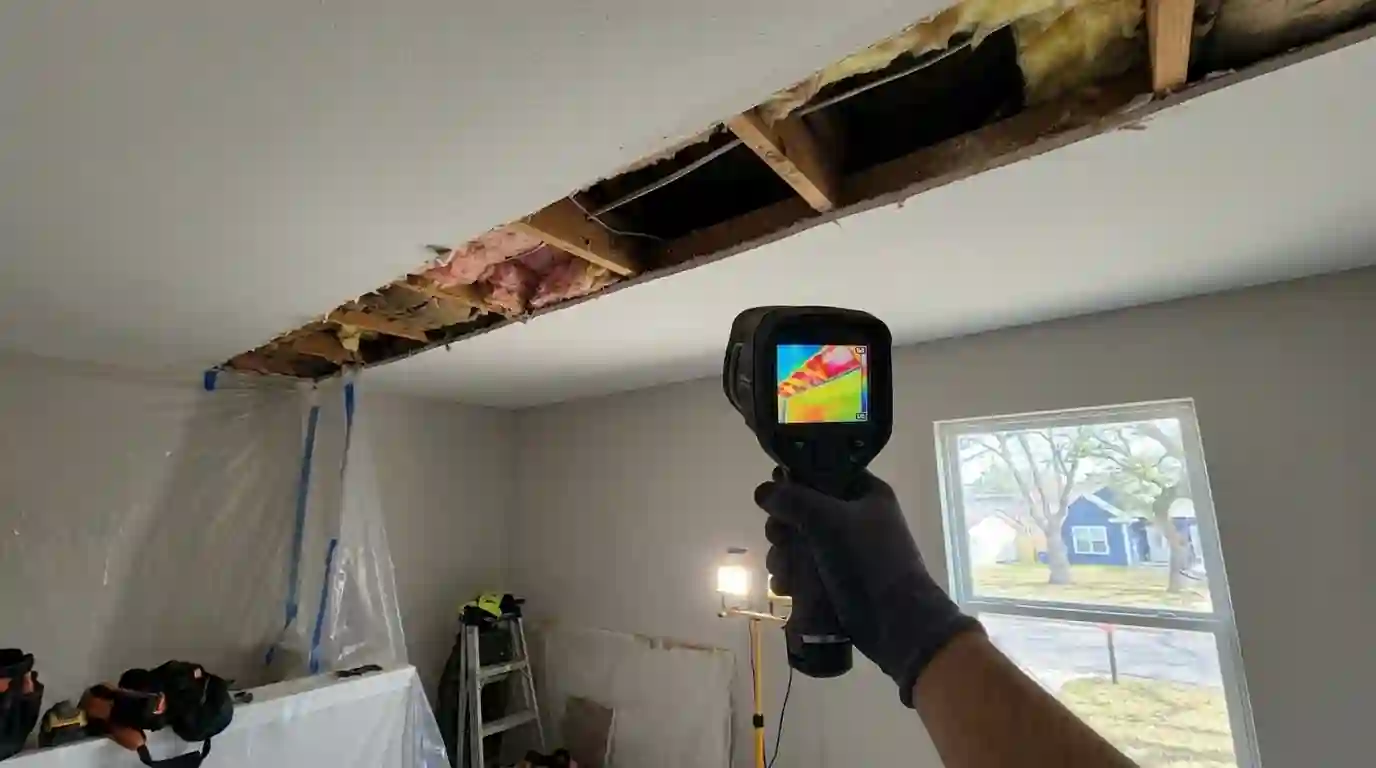
When an upstairs bathroom or laundry room leaks, the damage spreads across two floors. The wet patch on the ceiling below is rarely right under the source, because water runs along joists before it drops. We open the ceiling only in the spots where readings and a thermal camera show water, set drying on both levels, and track the cavity between floors separately. A ceiling that has sagged comes down. One that is only stained can often be dried, sealed and painted.
Water trapped under cabinets and built-ins
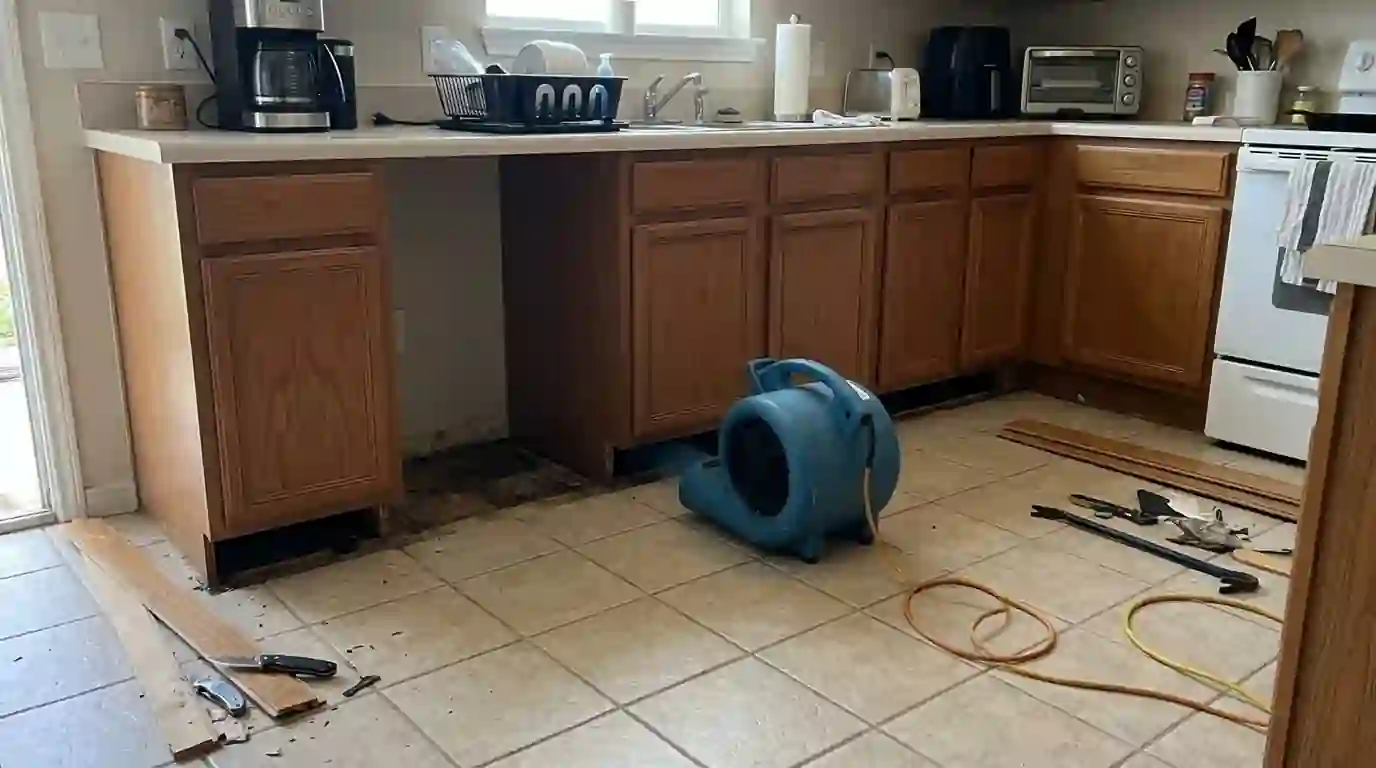
Kitchen and bathroom cabinets sit on a hollow toe kick at floor level, and water that runs under them stays long after the open floor is dry. Particleboard cabinet bottoms swell and never shrink back. We pull the toe kicks, check the base with a meter, and dry the cavity with directed air. A swollen cabinet box is documented for replacement instead of forced dry. Kitchen islands and built-in bookcases hide water the same way and get the same check.
Water still spreading? Call now and we will talk you through the shutoff.
Call (832) 737-0315What happens after you call about water damage
We answer and get the water stopped
We ask where it is coming from and walk you to the valve if it is still moving.
Inspect and categorize
Meters and a thermal camera map the water, and you hear its category.
Extract
Standing water comes out of carpet, pad and hard floors before drying starts.
Set and monitor drying
Equipment goes where the readings point, and every material is read on every visit.
Remove, clean and hand back
What will not dry is removed, the area is cleaned, and you get the photos and readings.
How long a League City drying job runs
Most clean water jobs dry in a few days, but the materials set the schedule. Carpet and open drywall dry first, while hardwood, cabinets and wall cavities take longer. Equipment leaves room by room as each material reads dry.
Why League City water jobs are mostly inside jobs
League City's median home was built in 2003, and more than half of the housing here went up after 2000. Young houses rarely fail at the pipes themselves. We see braided supply lines at the end of their life, aging water heaters and attic drain pans that were never cleaned. So the source is usually one fixture, the water is usually clean at first, and how fast it is caught decides most of what can be saved.
Equipment makers in professional drying, moisture detection and carpet extraction
What moves the cost of a water damage job
Every job is priced after we see it, because the same leak costs very different amounts depending on what it reached.
- Water category
- Clean water lets more be dried in place. Gray water and sewage mean more removal.
- Area reached
- Drying is priced largely by square footage, so three wet rooms cost more than one.
- Materials
- Carpet and open drywall dry fast. Hardwood, cabinets and wall cavities take longer.
- Time before extraction
- Water that sat overnight has wicked higher into walls than water caught early.
- Rebuild
- Drywall, trim, flooring and paint after the dry-out are a separate scope.
Published national planning ranges
- Water damage restoration, overall: $1,270 to $5,375 typical, national average $3,250 (lawnstarter.com, 2026)
- Water damage restoration, per square foot: $3.15 to $7.40 per sq ft (lawnstarter.com, 2026)
These are national figures from published cost guides, shown for planning only. They are not a quote and not our price list; your job is priced after we see it.
Water damage questions from League City homeowners
The same day if you can. Clean water left a day or two starts to break down, and pad holds water against the subfloor.
For a small spill on tile, often yes. Once water is under carpet or in walls, household equipment cannot pull enough out, and the cavity stays wet.
Only where readings show wet material that cannot be dried in place. Drywall that reaches its dry target stays up.
Sudden water from inside the house, like a failed supply line, is often covered. Water rising from outside is normally a flood policy matter.
Commercial low-grain dehumidifiers and high-velocity air movers of the kind Dri-Eaz, Phoenix and B-Air make. They pull far more water per day than a household unit.
