Quick answer
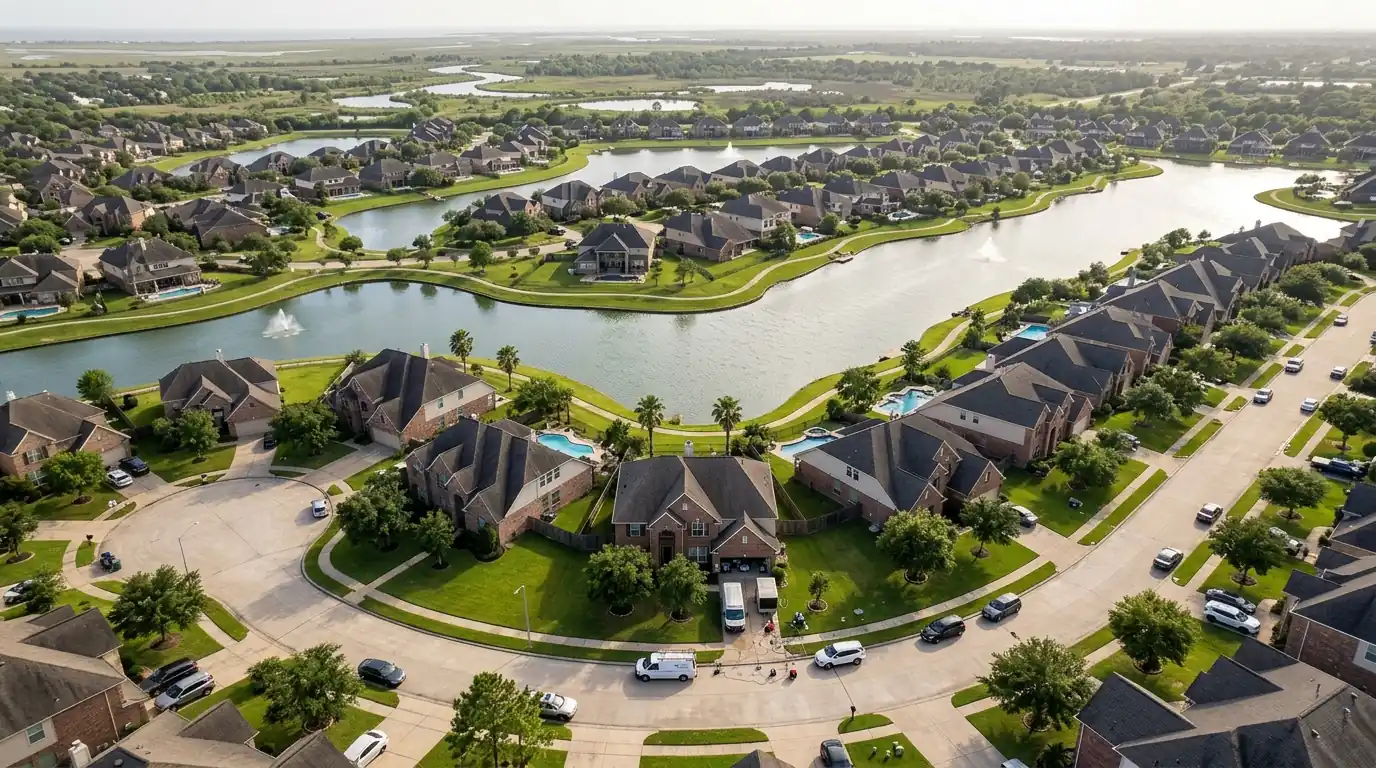
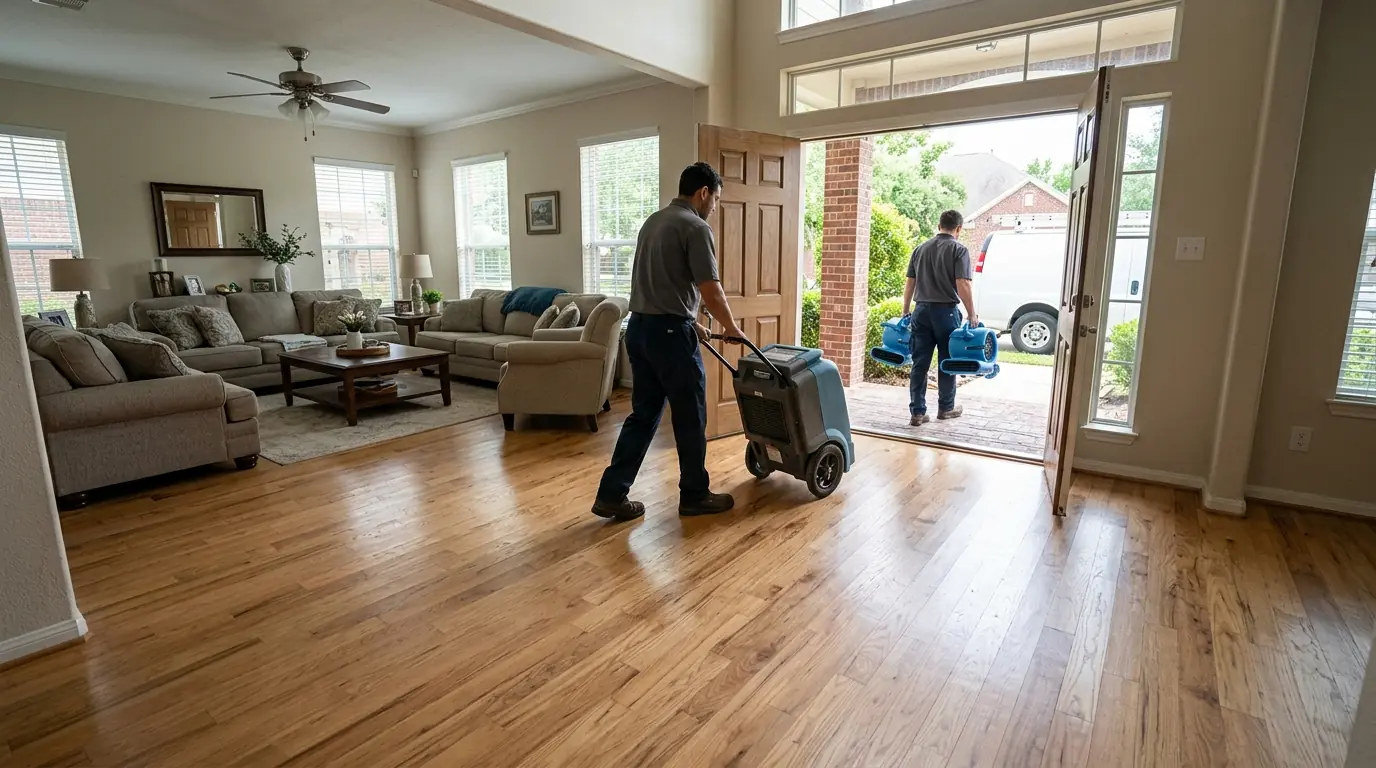
Kemah is a small city of about 2,200 residents, with a median home built in 1997. We handle water there in houses and commercial spaces alike, extracting it first, then setting drying and reading every wet material until it reaches a measured dry target.
Kemah's size, its housing age and the storms that reach it
Kemah is a small city, home to about 2,200 residents, and its median house was built in 1997. A house that age usually keeps its original slab plumbing, but the parts on top of it, such as supply hoses, the water heater and the attic drain pan, are well into their service life. Interior water in houses like these usually starts at one of those parts.
Kemah sits on Galveston Bay in Galveston County, where about 19,000 houses and structures took Harvey damage. Storm water is the other half of the local picture. Rain pushed by wind off the bay reaches doors, windows and roof edges first, and rising water is treated as contaminated from the start.
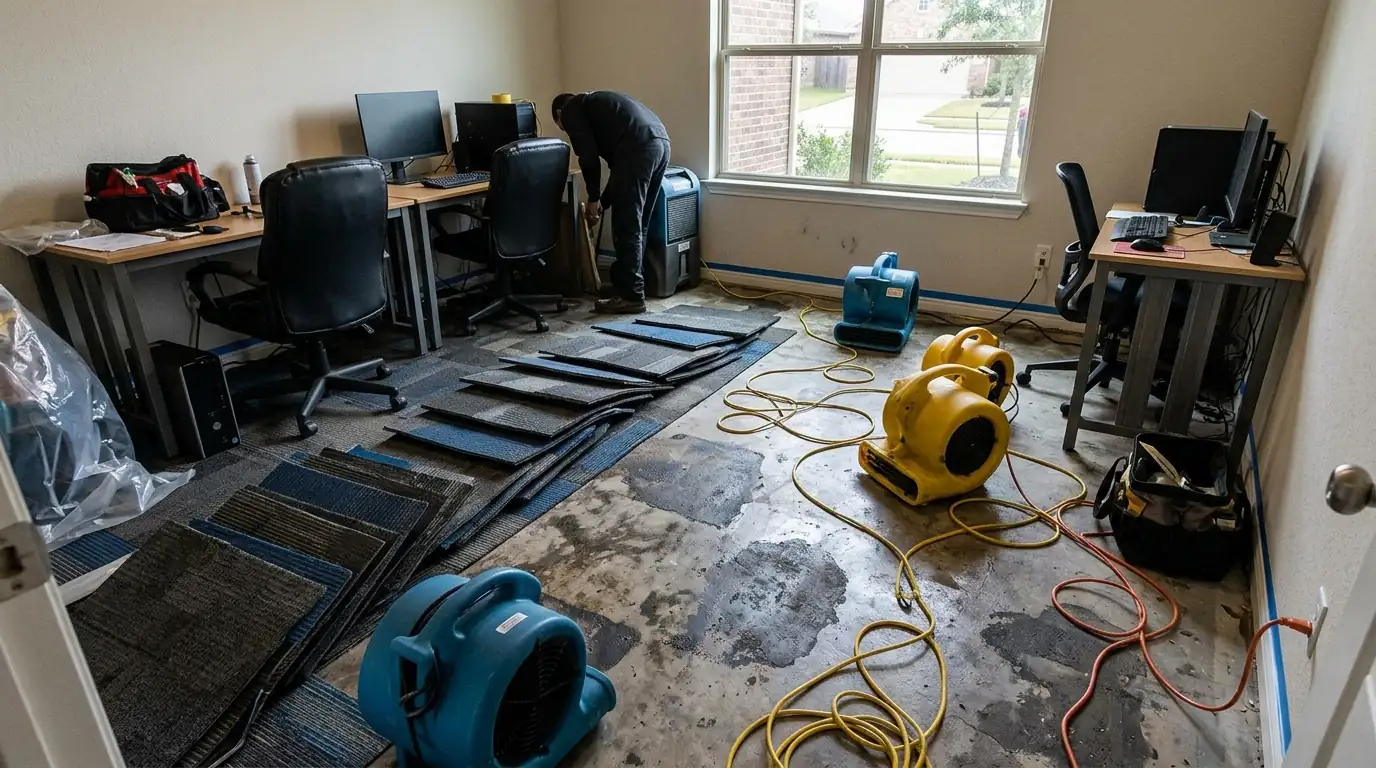
For a business, the question is how much of the space can stay open. We dry in sections when the layout allows it, closing off the wet area while the rest stays usable, and we keep the moisture logs and photos a commercial policy will ask for.
Water and cleaning work that fits Kemah
Practical steps for Kemah homes and storefronts
Find the shutoffs before you need them
Know where the main water valve and the breaker panel are, and make sure every key holder knows too. Every minute spent searching is a minute of water running.
Keep stock and files off the slab
Store stock, paper records and electronics on shelves rather than the floor. A thin sheet of clean water then becomes a drying job instead of an inventory loss.
Give the water heater a working pan
A tank in a closet or attic should sit in a drain pan with a line that leads somewhere. A pan with no drain only delays the damage.
Put mats at every entry
Walk-off mats inside and outside each door catch grit and water before they reach the carpet, which stretches the time between cleanings.
Water in a Kemah house or storefront? Someone answers the phone around the clock.
Call (832) 737-0315What Kemah owners ask before we start
We work in Kemah too, and a call at any hour reaches someone who can help. It speeds things up to know whether it is a house or a business, and roughly how much floor is wet.
Often part of it can. When the wet area can be closed off, we set drying there and keep walkways clear elsewhere. Air movers are loud and push a lot of air, so we walk the layout with you first.
Usually pictures of where the water started and what it reached, moisture readings from the first visit to the last, and a list of what was removed. We keep all three and hand them over when the job ends.
Yes. Rising storm water is Category 3, so soaked carpet, pad and drywall come out. A supply line leak usually starts clean, so more of the floor and walls can be dried where they are.
Yes. Carpet, upholstery, area rugs and tile in Kemah houses get the same attention as office floors, and pet stains and odors are treated with the care we bring to a water job.
