Updated October 2026
Quick answer
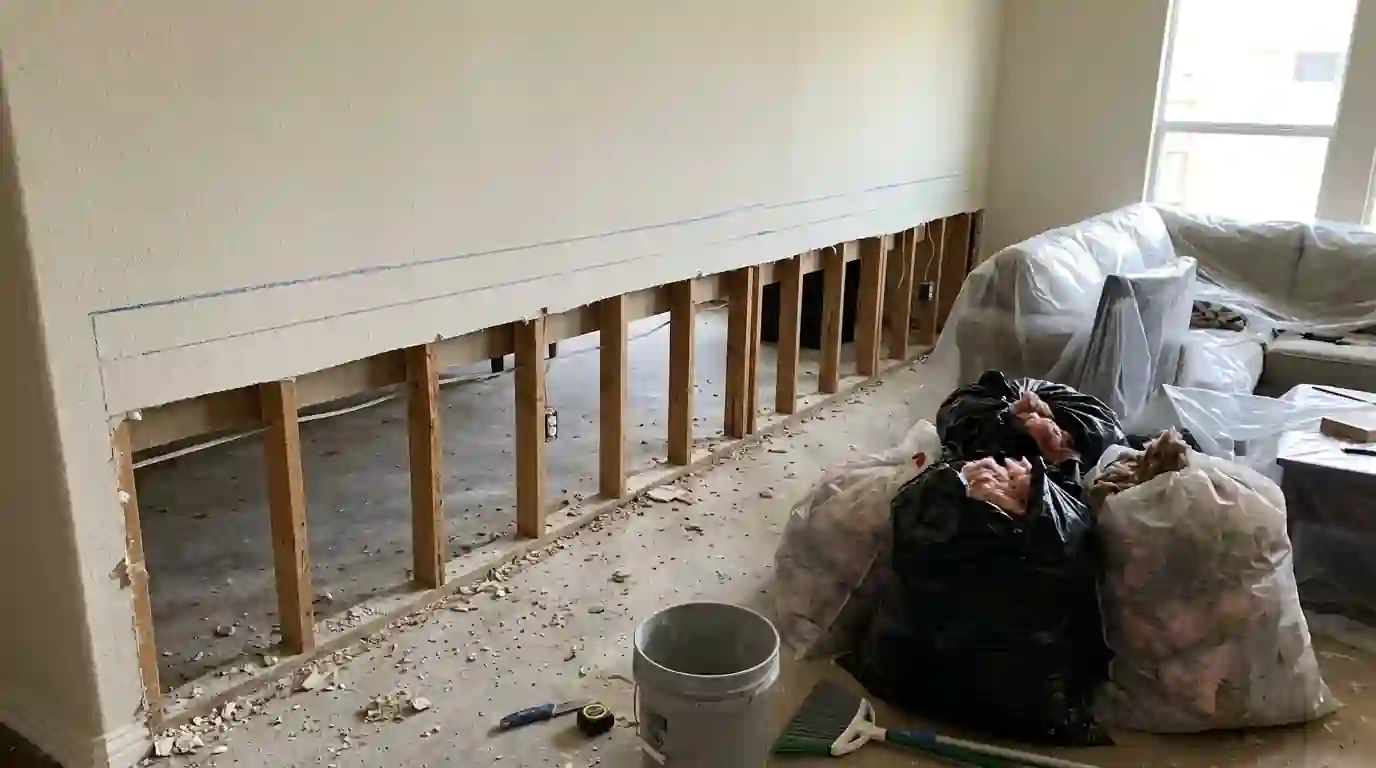
A flood cut in a League City house removes drywall from the floor to a line above the highest wet reading, commonly at two or four feet so new sheets fit cleanly. Insulation behind it comes out too. Clean water from a leak may need small cuts or none, while floodwater means cutting every wall it reached.
Where the cut line goes and why
Drywall wicks water upward, so the wet line inside a wall usually sits above the water line on the floor. We meter each wall, mark the highest wet reading and add a margin. In most houses the sheets run sideways and stand four feet tall, so a four-foot cut lands on the seam and a two-foot cut takes a clean half-width strip.
The blade is set to the drywall thickness to stay out of wiring and pipes. Behind the cut, wet batts come out, the studs and bottom plate are cleaned and treated, and the open cavity dries far faster than a closed one. Insulation that wicked higher is checked separately, as our page on pulling wet insulation explains.
What sets the cost of flood cuts and drywall removal
Drywall removal scales with the length of wall cut, the cut height and what comes out behind it, so we quote from the readings.
- Cut height
- A four-foot cut removes twice the drywall of a two-foot cut.
- Length of wall
- Every flooded room adds wall to cut, bag and haul.
- Insulation and trim
- Exterior walls hold batts, and trim may be saved or discarded.
- Water category
- Floodwater and sewage add treatment of every exposed stud.
- Ceilings
- Overhead removal takes more containment than wall cuts.
Drying the wall in place or cutting it open
Both are legitimate. The water and the readings pick one.
| What we look at | Dry in place | Flood cut |
|---|---|---|
| Water type | Clean water from a supply line | Floodwater, sewage or long-standing gray water |
| Drywall | Firm, with readings falling | Soft or still wet after drying |
| Insulation | Dry, or absent as on most interior walls | Wet batts in an exterior wall |
| Access | Air through holes behind the base | Open stud bays |
| Rebuild | Paint and trim | New drywall, tape, texture and paint |
Your part and ours on wet walls
Safe to handle yourself
- Photograph the water line on every wall before anything is removed.
- Switch off breakers for circuits in the wet rooms.
- Move furniture and wall hangings away from the damage.
- Pull wet area rugs and boxes off the floor.
Time to call us
- The water came from outside or from a drain.
- Drywall feels soft above the baseboard.
- An exterior wall with insulation got wet.
- A ceiling is sagging or holding water.
Flood cuts at two and four feet
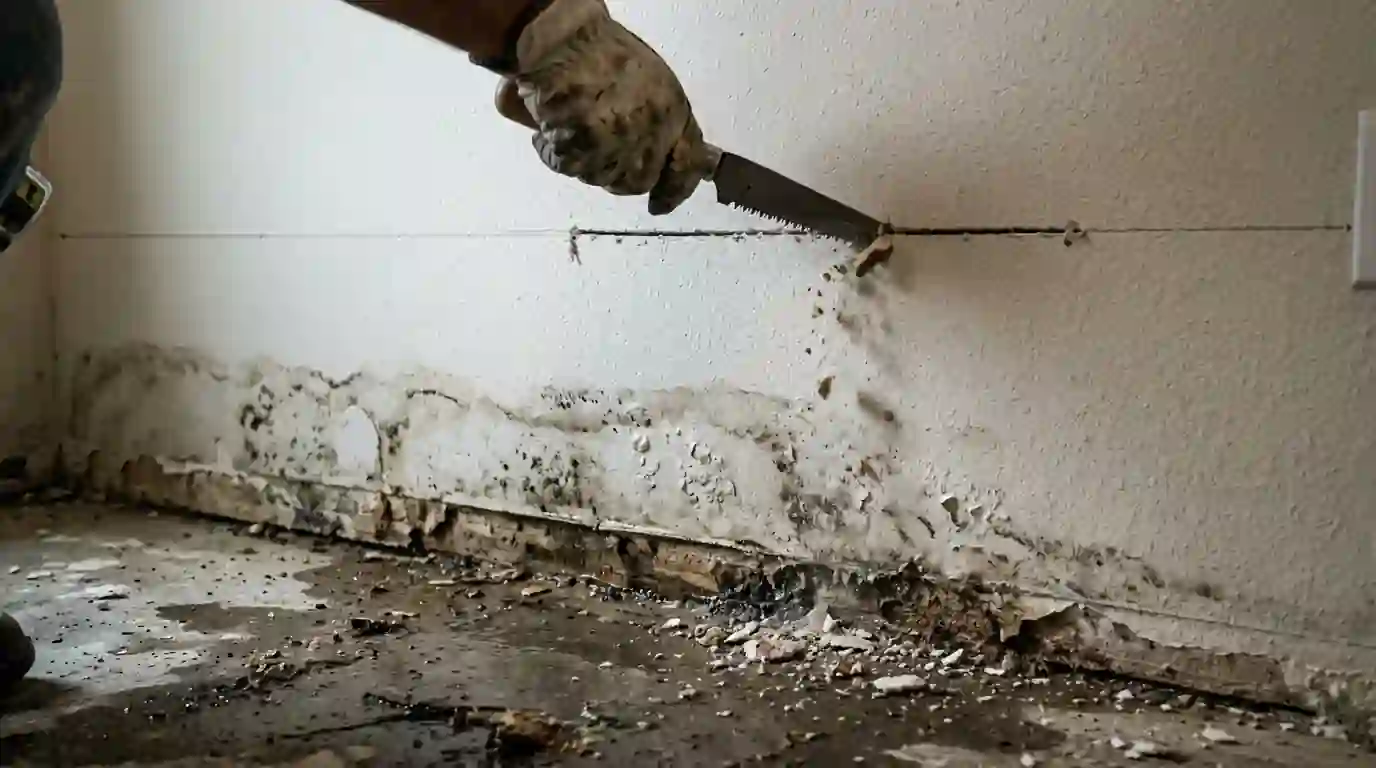
The height depends on readings, not habit. If water stood shallow and the drywall reads wet only near the floor, a two-foot cut usually clears it with margin to spare. If water stood higher, or the wall wicked well above the water line, a four-foot cut removes the whole bottom sheet. We snap the line with a level, score along it, and pull the lower drywall off in pieces. Drywall above the cut that reads dry stays on the wall, so the rebuild only replaces what came off.
Removing wet baseboards
Baseboards are the first trim water reaches, and they hide what is behind them. Look for swollen joints, paint cracking along the top edge, or a gap opening at the floor. MDF baseboards swell like particleboard and stay that way, so they are discarded. Solid wood trim is pried off carefully, kept in order by wall and dried for reuse. On a clean water job, small holes drilled behind the removed base can let air into the cavity and sometimes spare a full cut. After a flood, pulling the base simply starts the cut.
Removing wet ceiling drywall
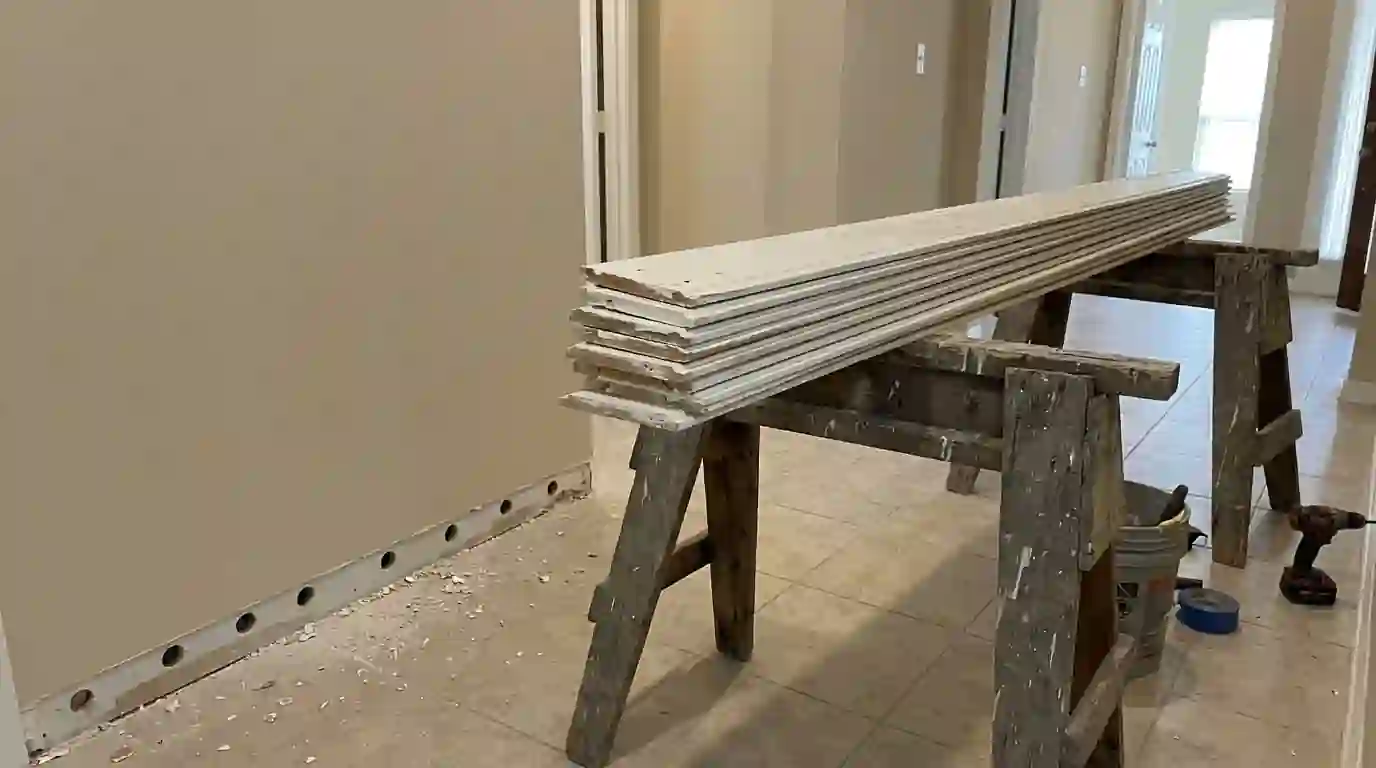
Ceiling drywall gets wet from above, from a roof leak, an upstairs bathroom or an attic AC drain pan. A small ring on board that stays firm is usually dried without cutting. Board that sags, feels soft or holds a pocket of water is removed, because it can drop without warning. We lay drop cloths, release trapped water into a bucket, and cut back to the nearest joists past the wet area so the patch has framing to fasten to. Wet insulation above is bagged, and the joists are dried first.
How a flood cut is done, from meter to bare studs
Read and mark
We find the highest wet reading on each wall and snap a level line above it.
Pull trim and base
Baseboards and casings come off first, and solid wood is set aside.
Score and cut
A shallow blade follows the line, clear of wiring and pipes.
Remove and bag
Wet drywall and insulation go out, and nails are pulled from the studs.
Clean, treat and dry
Studs and plates are treated and dried to target before the rebuild.
Harvey along Clear Creek and in Dickinson
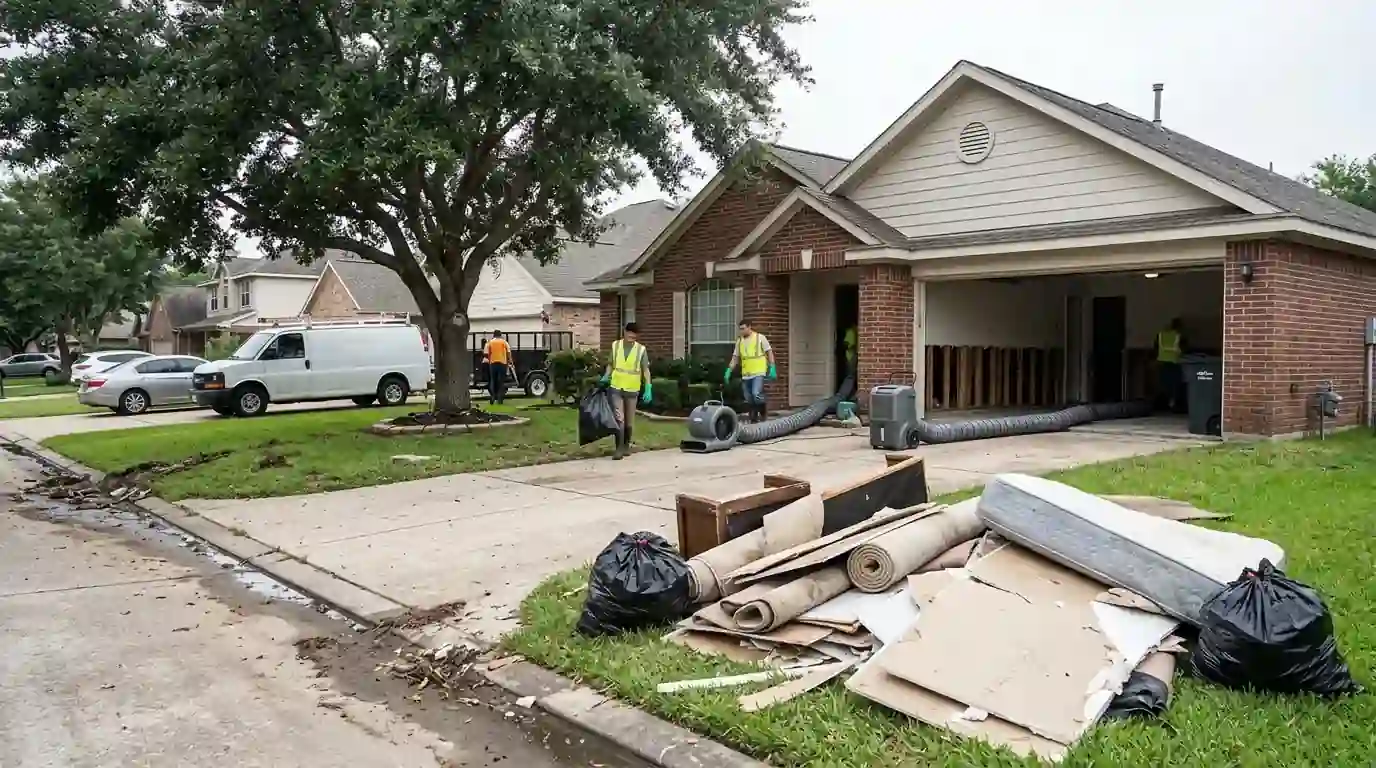
During Harvey, officials described 500-year flood events along Clear Creek from Highway 288 in Pearland, all through Friendswood and into League City. In Dickinson, about 80 percent of the city flooded and 7,000 structures were affected when rain totals reached roughly 55 inches, and some rebuilt homes there now sit with raised AC units. When rising water enters houses on that scale, a flood cut is where the rebuild begins, and measured cuts keep the tear-out to what is truly wet.
Questions about cutting into wet walls
No. Drywall wet from clean water and caught early usually dries where it hangs. Floodwater, sewage and drywall that stays wet after drying call for a cut.
Drywall above the wet line that reads dry is sound, and removing it adds cost and rebuild time for nothing. A measured cut keeps the repair smaller.
The blade is set to the drywall thickness, and circuits to wet rooms are switched off first. Wiring that sat in floodwater should be checked by an electrician.
You can, with care. Wear a respirator and gloves, switch off the circuits, set a shallow blade, and photograph the water line before anything comes down.
After a flood, yes, because wet batts hold contamination and slump. On a clean water job, batts that read dry above the cut can stay.
