Updated October 2026
Quick answer
Tile and grout cleaning in a League City home pulls soil out of the grout joints, which a mop only pushes deeper. We apply an alkaline cleaner, let it dwell, brush every line and rinse with hot water under vacuum recovery. Sealing comes after the grout dries, and only if you choose it.
Why grout holds dirt that the tile face sheds
Glazed porcelain and ceramic tile shrug off dirt. Cement grout does not. It is a sand and cement mix full of tiny pores, and every mop pass pushes a little dirty water into it, so kitchen and entry joints slowly turn darker than the tile. Most of that color is soil, not stain.
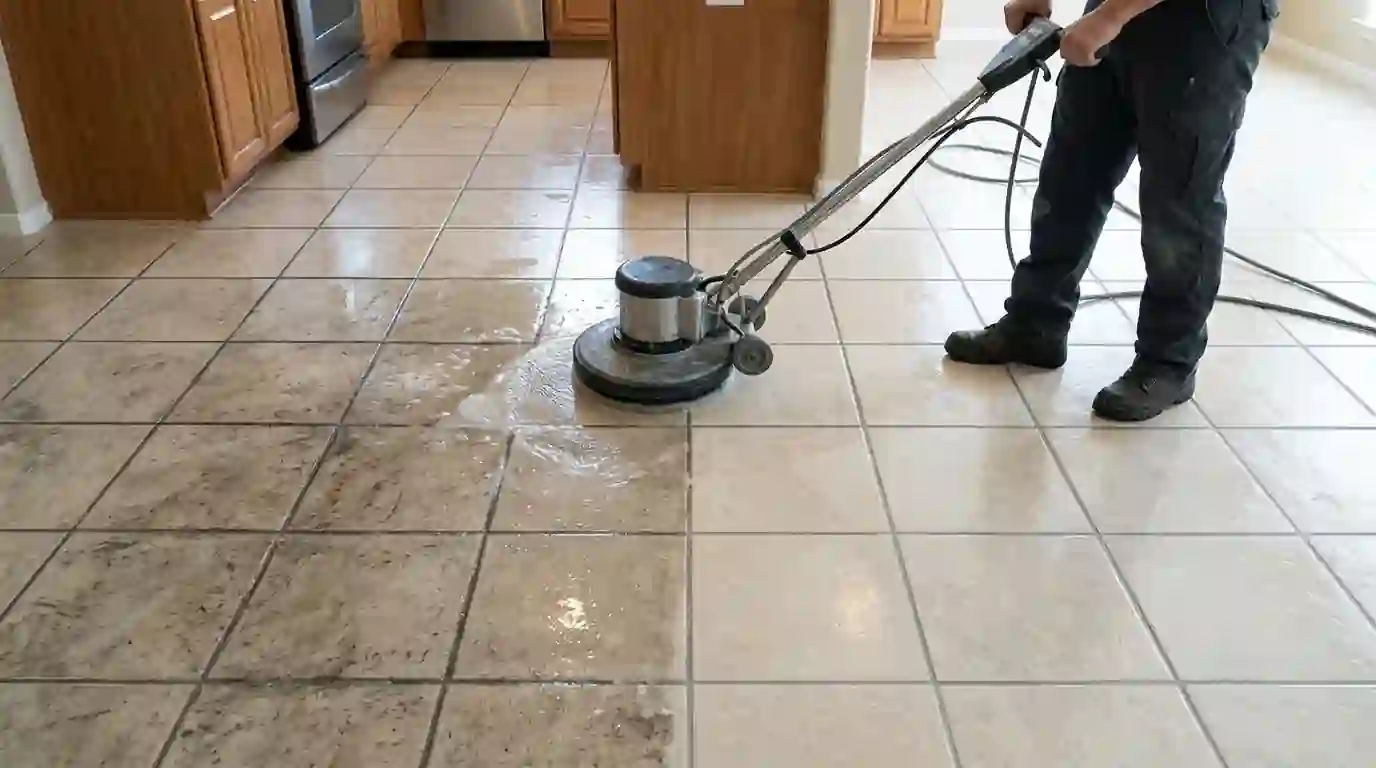
We first confirm what the tile is, since natural stone needs different products, covered under stone floor cleaning. On porcelain and ceramic, the cleaner dwells in the joints to break down grease and body oil. Brushes and a rotary tool scrub the lines, and the rinse water goes down and straight back up through a vacuum head, so the soil leaves the house instead of drying back into the grout.
What goes into the price of a grout cleaning
We price after seeing the floor, because square footage is only part of the picture.
- Square footage
- Price follows the area of tile cleaned.
- Grout width
- Wide sanded joints hold more soil than narrow ones.
- Soil level
- Long-neglected grout needs longer dwell and a second pass.
- Shower walls
- Vertical tile and soap film take more hand work.
- Sealing
- Sealer is its own line, priced by the area sealed.
Clear sealer or color sealer for your grout?
Both go on after cleaning. The choice depends on how the clean grout looks.
| Question | Clear penetrating sealer | Color sealer |
|---|---|---|
| What it does | Soaks into the grout and slows absorption | Coats the joint with a tinted sealing layer |
| How it looks | Grout keeps its cleaned color | Every joint turns one even color |
| Upkeep | Renewed as it wears in busy areas | Touched up where it wears or chips |
| Fits | Grout that cleaned up evenly | Patchy, stained or mismatched grout |
Keeping grout clean between visits
Safe to handle yourself
- Mop with a pH-neutral tile cleaner and fresh rinse water
- Squeegee the shower walls after the day's last shower
- Run the bath fan during and after showers
- Wipe spills off grout before they soak in
- Keep a mat at the garage door to catch grit
Time to call us
- Traffic lanes stay dark no matter how you mop
- Black spots in shower grout return days after scrubbing
- The floor might be natural stone rather than porcelain
- Shower grout feels soft or a tile moves when pressed
- You want the joints sealed or color sealed
Grout cleaning on kitchen, entry and hall floors
The first sign is a grid. The tile looks fine, but the joints along the path from the garage door to the sink have gone a shade or two darker than the joints under the table. Mopping harder does not change it, because the soil sits below the surface of the grout. We pre-treat the lines, scrub them with stiff nylon brushes and extract the rinse water. Sound grout is cleaned and kept. Joints that are cracked, crumbling or missing are pointed out before we start, since cleaning cannot rebuild them.
Grout sealing once the joints are clean
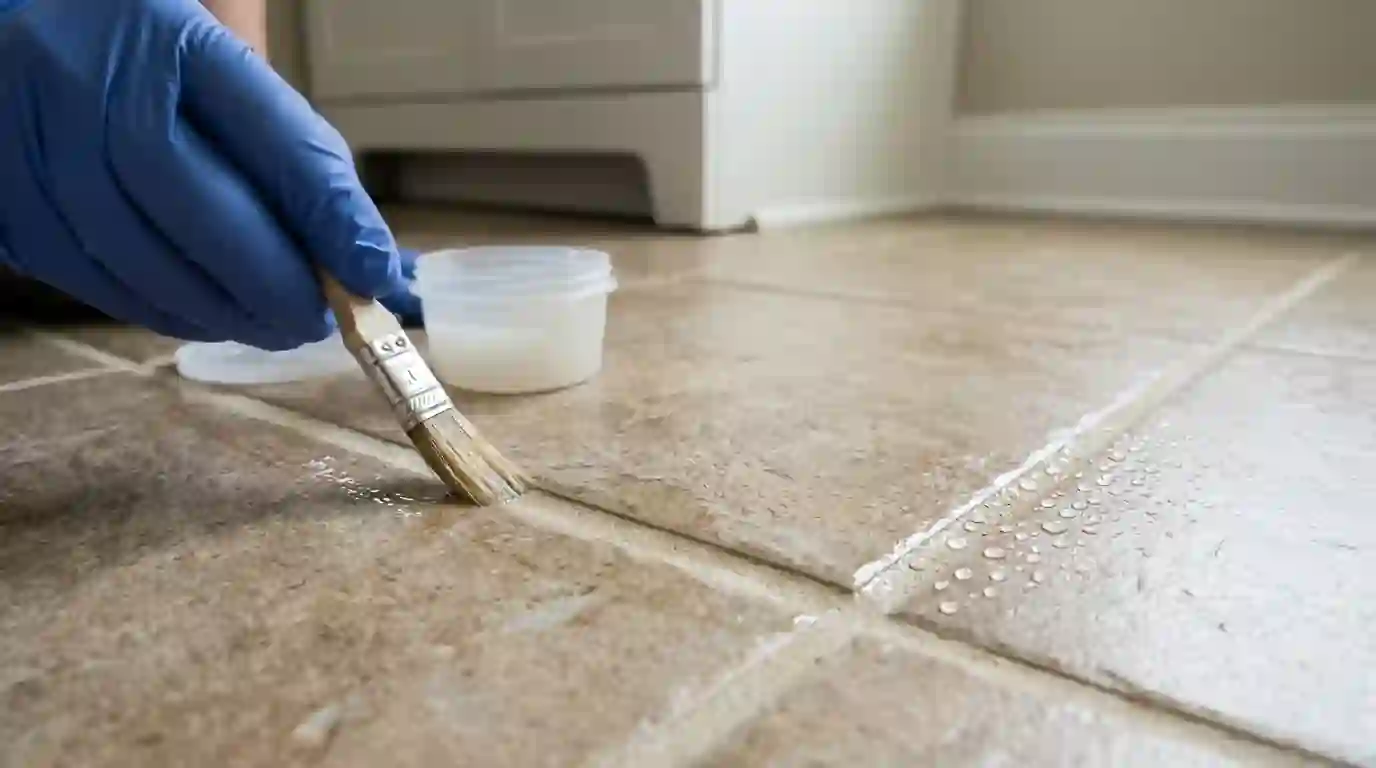
Freshly cleaned cement grout is at its most absorbent, which makes it the right moment to seal. A clear penetrating sealer soaks into the joints and slows how fast spills and mop water get in. It does not make grout stain-proof, and it wears with traffic, so a kitchen floor needs it renewed sooner than a guest bath. A color sealer coats the joint and evens out patchy grout that cleaning alone will not match. Epoxy grout is not porous, so it is cleaned and left unsealed.
Shower tile cleaning: soap film, mildew and caulk
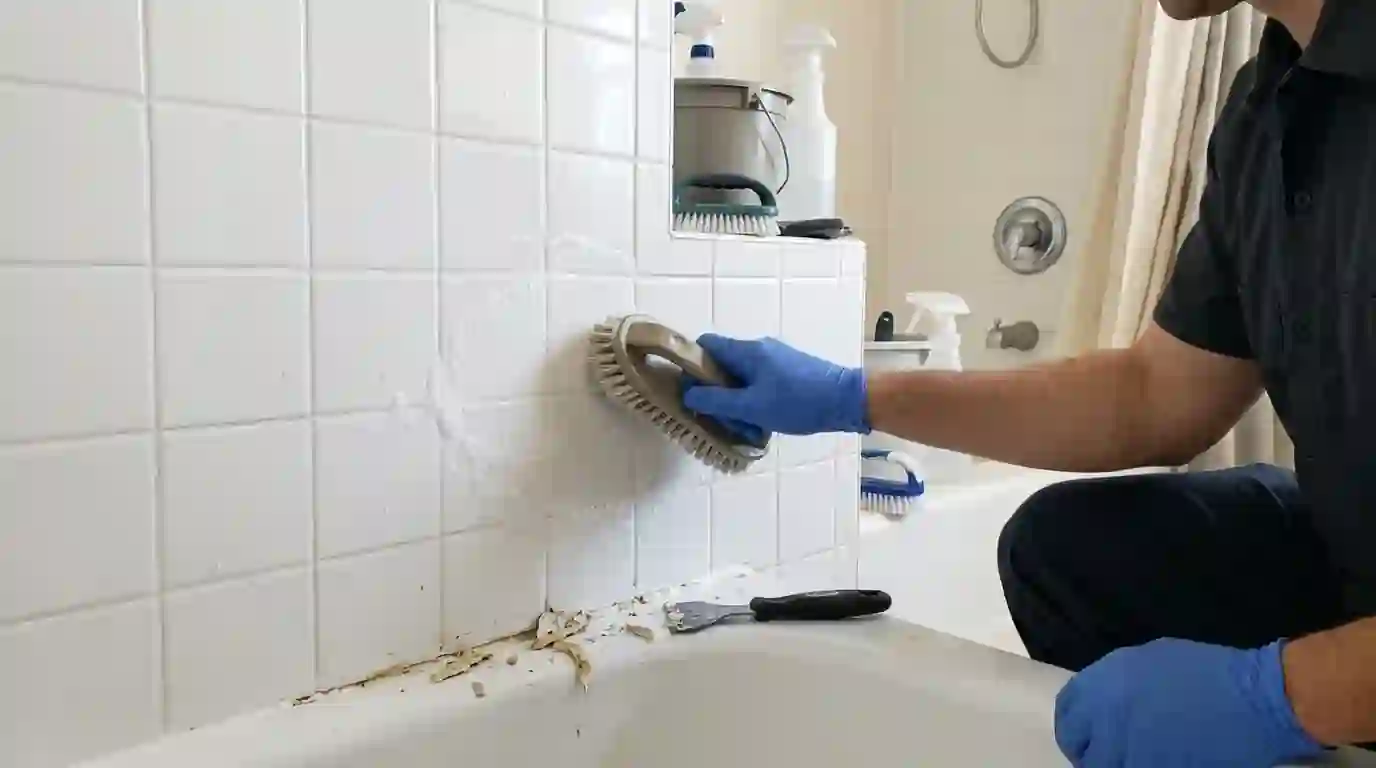
In a shower the trouble is soap film and mildew more than tracked-in dirt. Body wash and shampoo leave a dull, chalky layer on the tile, and the grout near the floor and in the corners stays damp long enough to grow dark spots. We dissolve the film, scrub the joints and rinse every wall. Mildew that grows into the silicone caulk at the corners cannot be cleaned out, so that caulk has to be cut and replaced. Soft grout or tile that moves when pressed can point to water getting behind the shower wall.
From the first look to a sealed joint
Identify the tile
Porcelain, ceramic or natural stone decides the cleaner.
Protect the edges
Baseboards, cabinet faces and nearby carpet are covered.
Dwell and scrub
The cleaner sits in the joints, then brushes work every line.
Rinse under vacuum
Hot water goes down and comes straight back up with the soil.
Dry and seal
Sealer goes on dry grout if you chose it.
Tile over slab floors in a humid Gulf Coast town
Many League City houses sit on concrete slabs, and tile suits a slab because it tolerates the moisture a slab can give off. The climate is harder on showers. Through the humid months a bathroom with a weak exhaust fan stays damp long after the last shower, so the corner grout never fully dries between uses. Kitchens get the opposite problem: sand, grass and grease tracked across light grout every day.
Grout cleaning questions from homeowners
Usually, when the darkening is soil. Grout stained by a spill or by mildew deep in the joint may lighten without matching, and a color sealer can even it out.
Socks are fine once the surface feels dry. If we sealed the grout, keep shoes and water off until the sealer cures per its label.
Not sound grout. Grout that is already cracked or crumbling can lose loose pieces under a hot rinse, which is why we point those joints out first and ease the pressure.
Not for routine use. Vinegar is an acid that slowly eats cement grout, and bleach can fade colored grout while leaving soil behind. A pH-neutral tile cleaner is the safer habit.
It depends on traffic. When water drops darken the grout instead of beading on it, the sealer has worn through, and kitchens and entries reach that point first.
