Updated October 2026
Quick answer
Stone floor cleaning in League City starts with naming the stone, because travertine and marble are calcium carbonate and an acid cleaner etches them. We clean with a stone-safe solution and soft agitation, extract the rinse, then test whether each area still repels water and seal it where it does not.
Why stone needs a gentler cleaner than tile
Travertine, marble and limestone are soft next to porcelain, and they react with acid. Vinegar, lemon, many bathroom sprays and some all-purpose cleaners leave a dull mark called an etch, which is the stone itself being dissolved. Grit is the other enemy. Sand carried in on shoes acts like sandpaper on a polished floor and wears a dull path through the traffic areas.
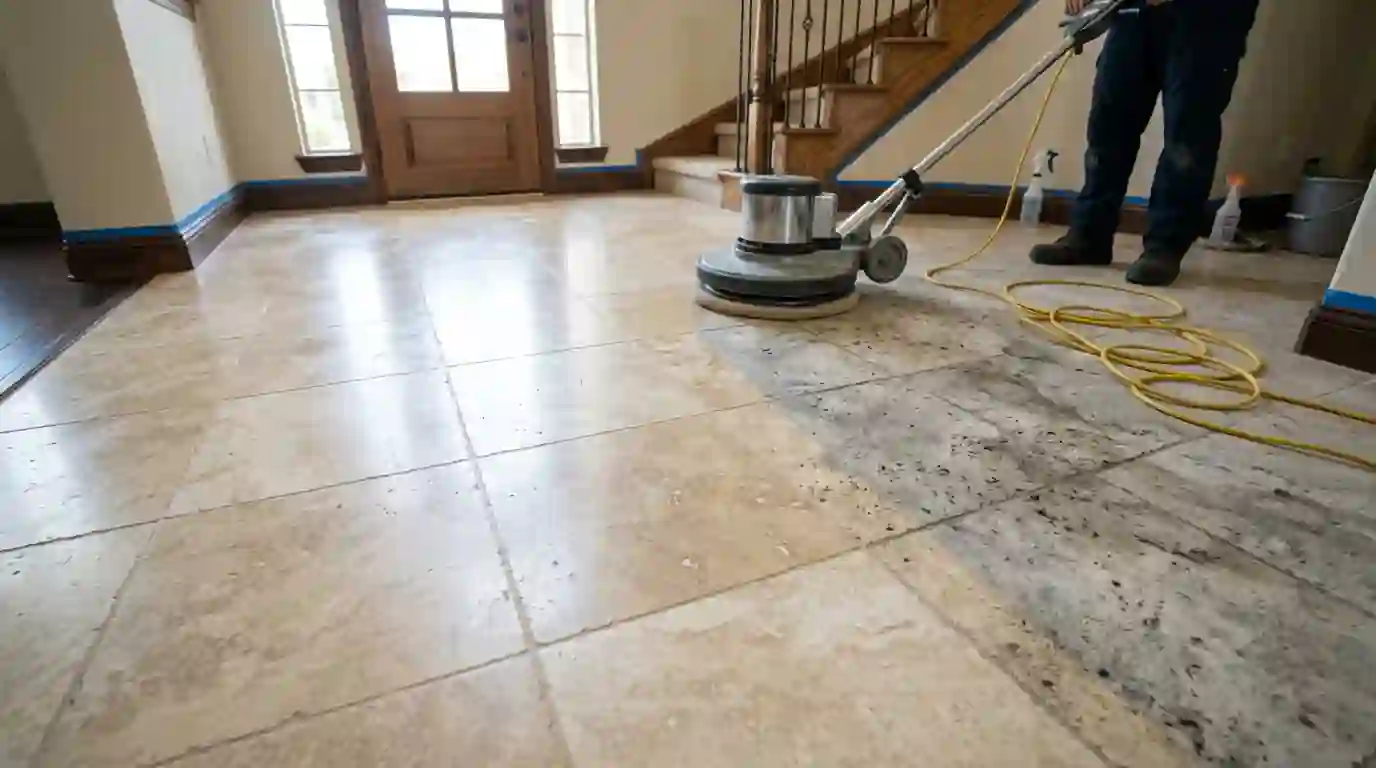
We use pH-neutral or stone-safe alkaline solutions, soft pads and brushes, and a hot rinse pulled back up by vacuum so nothing dries on the surface. Grout between the stones gets the same attention as on a tile and grout visit, with lighter pressure near filled holes. Cleaning lifts soil and residue, not etch marks or deep scratches, and we name the spots that will stay.
Why one stone floor costs more to clean than another
Stone jobs are priced after a look at the stone, its finish and the grout.
- Stone and finish
- Polished marble takes slower, gentler handling than tumbled travertine.
- Square footage
- Price follows the area cleaned.
- Fill and grout
- Worn fill and dark grout take extra hand work.
- Old product residue
- Wax or film from past cleaners may need stripping first.
- Sealing
- Priced by the area that still absorbs after the water test.
What to clean stone with at home, and what to avoid
A lot of stone damage starts with a cleaner that works fine on porcelain.
| Cleaner | What it does to stone | Our take |
|---|---|---|
| pH-neutral stone cleaner | Lifts soil without etching or stripping sealer | Use it for routine mopping |
| Vinegar or citrus cleaners | Acid dissolves the surface into dull etch marks | Keep them off stone |
| Bleach or ammonia | Strips sealer and can dull a polish over time | Avoid for regular cleaning |
| Steam mop | Heat softens sealer and can loosen travertine fill | Skip it on stone |
| Warm water and microfiber | Safe, though oily soil builds up | Fine between deeper cleanings |
Travertine floors with open holes and worn fill
Travertine forms with natural holes. Honed and polished tiles usually arrive with those holes packed with fill, while tumbled travertine keeps a pitted face that holds soil in every dip. Over time the fill can crack or pop out, leaving small pits that collect dirt and read as dark specks. We clean the face and the pits with soft brushes and keep the rinse pressure low around worn fill so no new holes open. Sound stone and fill are cleaned and kept. Larger open holes are noted, since refilling them is a separate repair.
Marble with dull paths and cloudy rings
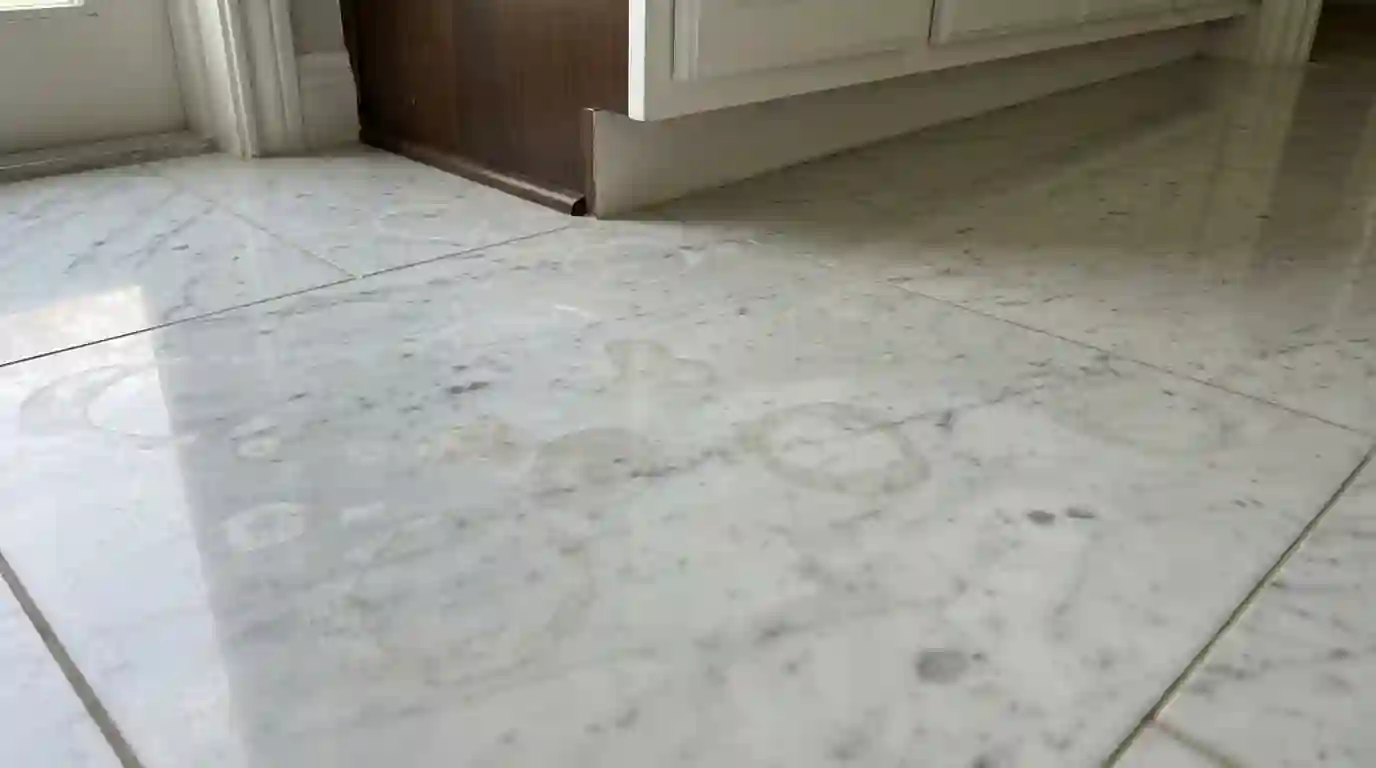
Polished marble shows wear quickly. A dull lane from the front door, cloudy rings where glasses sat and a hazy patch by the vanity are the usual complaints. Part of that is soil and residue from old cleaners, which a proper cleaning lifts. Part of it is etching or fine scratching in the stone itself, and no cleaner reverses that. We clean a test spot first so you can see which marks were surface film and which are in the marble. Etches and scratches can sometimes be honed and repolished, which is restoration work beyond a cleaning.
Sealing stone after cleaning, and when to skip it
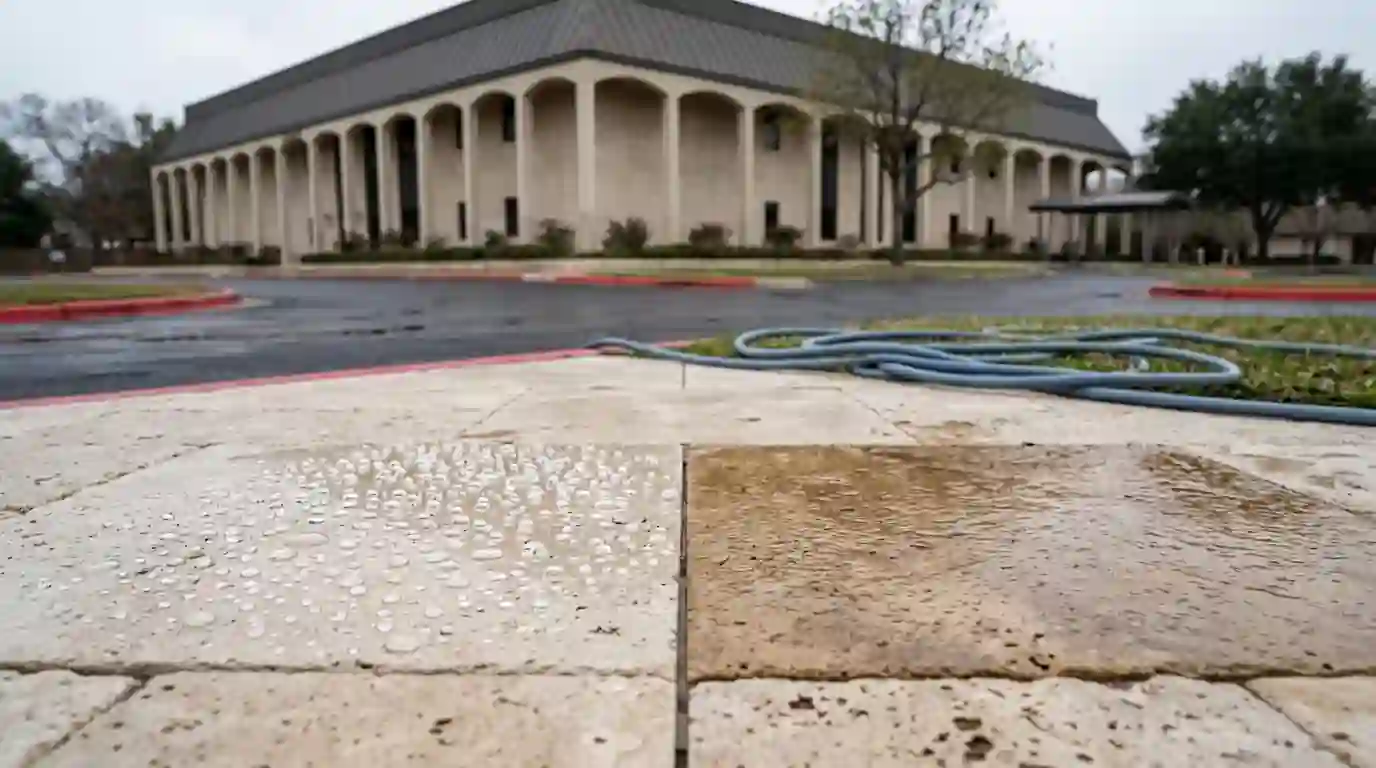
Most natural stone is porous, so oil, coffee and wine soak in and leave a dark stain. An impregnating sealer goes into the pores and slows that absorption. It does not stop etching, because acid attacks the stone surface the sealer sits beneath. We seal only after the floor is fully dry, and only where a water drop test shows the stone still drinks. Dense polished marble sometimes passes that test unsealed, and sealer that cannot soak in leaves a hazy film. Some floors get a full coat, some only the wet rooms.
Stone visit scope, from test spot to sealer
- Stone and finish identified before any product touches it
- A hidden test spot cleaned first
- Baseboards, rugs and wood edges protected
- Loose grit vacuumed off the floor
- Face, pits and grout cleaned with stone-safe products
- Rinse water extracted, not left to dry
- Water drop test, then sealer where the stone absorbs
How a stone floor goes from dull to sealed
Name the stone
We confirm the stone and finish and try a hidden spot.
Remove dry grit
Loose sand is vacuumed so it cannot scratch during wet cleaning.
Clean with stone-safe solution
Soft pads and brushes work the face, pits and grout.
Rinse and extract
A hot rinse goes down and the vacuum pulls the residue out.
Test and seal
Once dry, a water drop test decides where sealer goes.
Sand, bay days and humid air on a stone entry
In League City, sand comes in on shoes from the yard or a day on Galveston Bay, and it scratches polished marble like fine sandpaper. Humid months slow drying after a mop, so rinse water sits in travertine pits and grout longer than it would in a dry climate. A mat at every outside door and a dry dust mop protect stone here better than any bottle from the store.
Stone floor questions we hear most
Not with cleaning. An etch is damaged stone, so it needs polishing or honing. A cleaning does show clearly which marks are etches and which were only film.
We confirm it on the visit. Porcelain made to look like stone is common, and it tolerates stronger cleaners, so identifying it first changes the whole approach.
Light traffic in socks is usually fine once the surface is dry. Hold off on rugs, furniture and spills until the cure time printed on the sealer has passed.
No. An impregnating sealer sits inside the stone and should not change its sheen. Shine comes from the polish on the stone itself, not from a coating.
When water stops beading and starts darkening the stone. Kitchens and entries reach that point before a guest bath, so we test each room instead of resealing everything.
