
Quick answer
Galveston homes face storm surge, wind-driven rain and long stretches with nobody inside. The median Galveston home was built in 1973, and about 20 percent of housing predates 1940. We extract water, dry older wood framing and floors to measured targets, remove mold and treat odor at its source.
Second homes, prewar houses and the record Ike surge
When Hurricane Ike came ashore, it brought the highest storm surge recorded on the island since 1915, according to the Harris County Flood Control District. Surge water carries salt, silt and sewage, so anything porous it soaked is removed and the framing is washed before drying starts.
Galveston's housing skews old. The median home was built in 1973, and about 20 percent of the housing predates 1940. Houses that old can have solid wood floors and plaster or board walls, and each of those needs its own drying plan.
About 30 percent of Galveston housing units sit unoccupied, many as second homes. A closed house with the AC off builds humidity quickly, and a small leak has time to soak floors and feed mold before anyone opens the door.
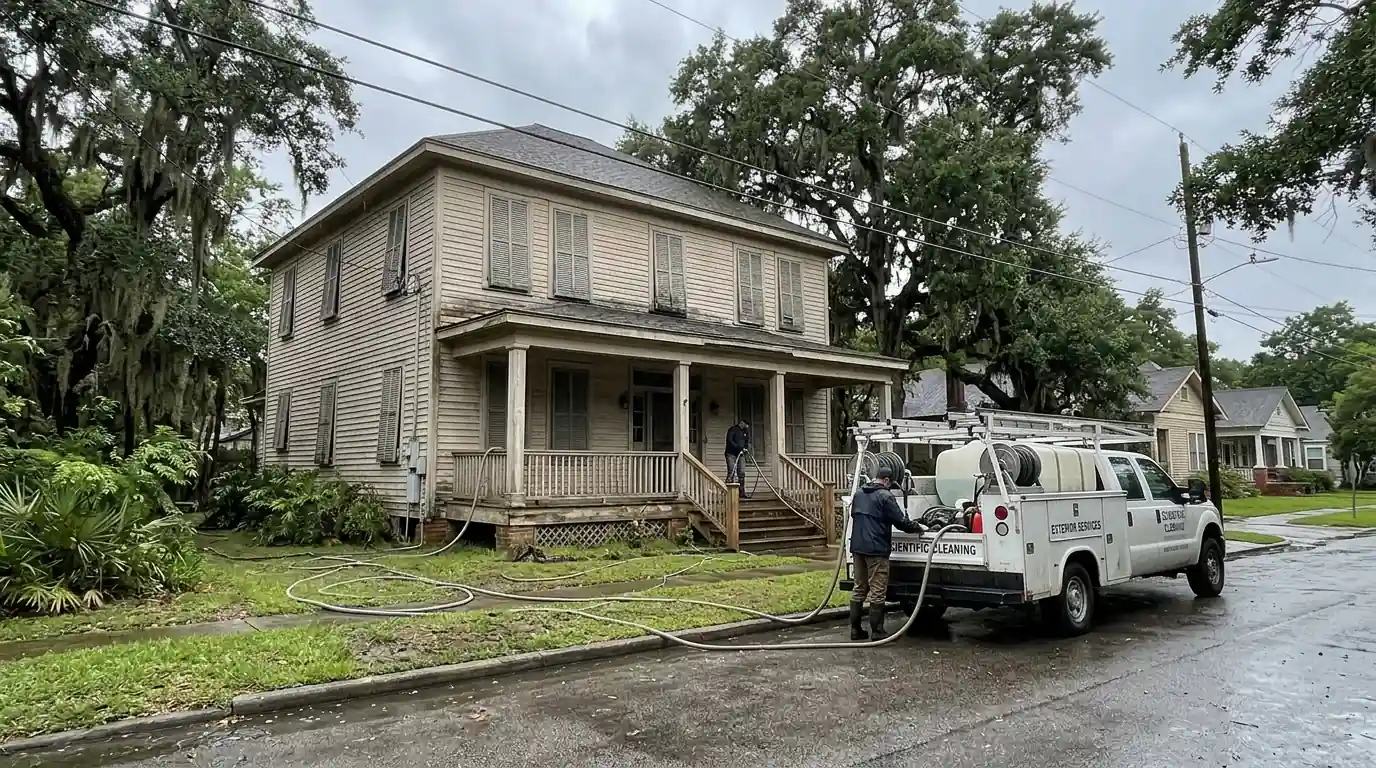
Six Galveston jobs tied to age, storms and empty houses
Looking after a Galveston house you do not live in full time
Shut the main when you leave
Close the water at the main and set the water heater to vacation mode. A failed hose then has nothing behind it.
Leave the AC running, not off
Keep the thermostat at a moderate setting so the system keeps pulling moisture from the air while you are away.
Arrange regular walk-throughs
A neighbor or manager who opens the door on a regular schedule can catch a leak or a musty smell early.
Put leak sensors by the water heater
Inexpensive sensors under the water heater, washer and sinks send a phone alert the moment water touches the floor.
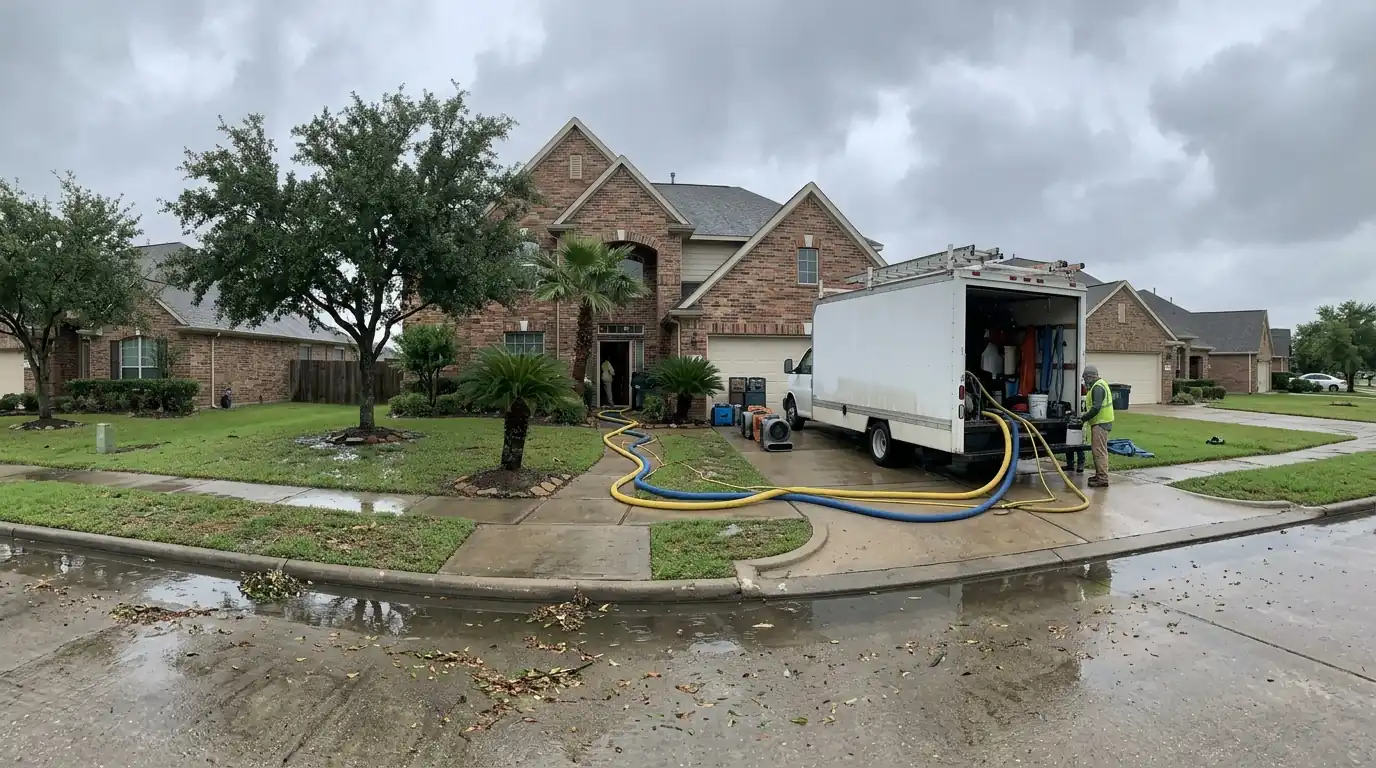
Water in a Galveston home right now? Call any hour.
Call (832) 737-0315Galveston owners ask about storms, mold and empty houses
Yes. Call at any hour, describe what a neighbor or manager found, and we will plan access with you. We send photos and readings as the work moves along, so you can follow it from wherever you are.
Do not scrub it or spray bleach, which can spread spores. Keep that room closed and call. We find the moisture source first, because mold returns if the wet material stays.
Often, if drying starts before the boards cup badly or the subfloor rots. We dry with floor mats and controlled dehumidification and read the boards on every visit. Surge-soaked floors are a harder call because of salt and silt.
Surge is rising water, so it falls under a flood policy. Wind and wind-driven rain are handled separately, and along the coast windstorm coverage is often its own policy. Keep the two kinds of damage documented apart.
We find the damp source, dry or remove it, clean the surfaces and run air filtration. Deodorizing without drying only hides the smell for a while. Our odor removal page explains the steps.
