
Quick answer
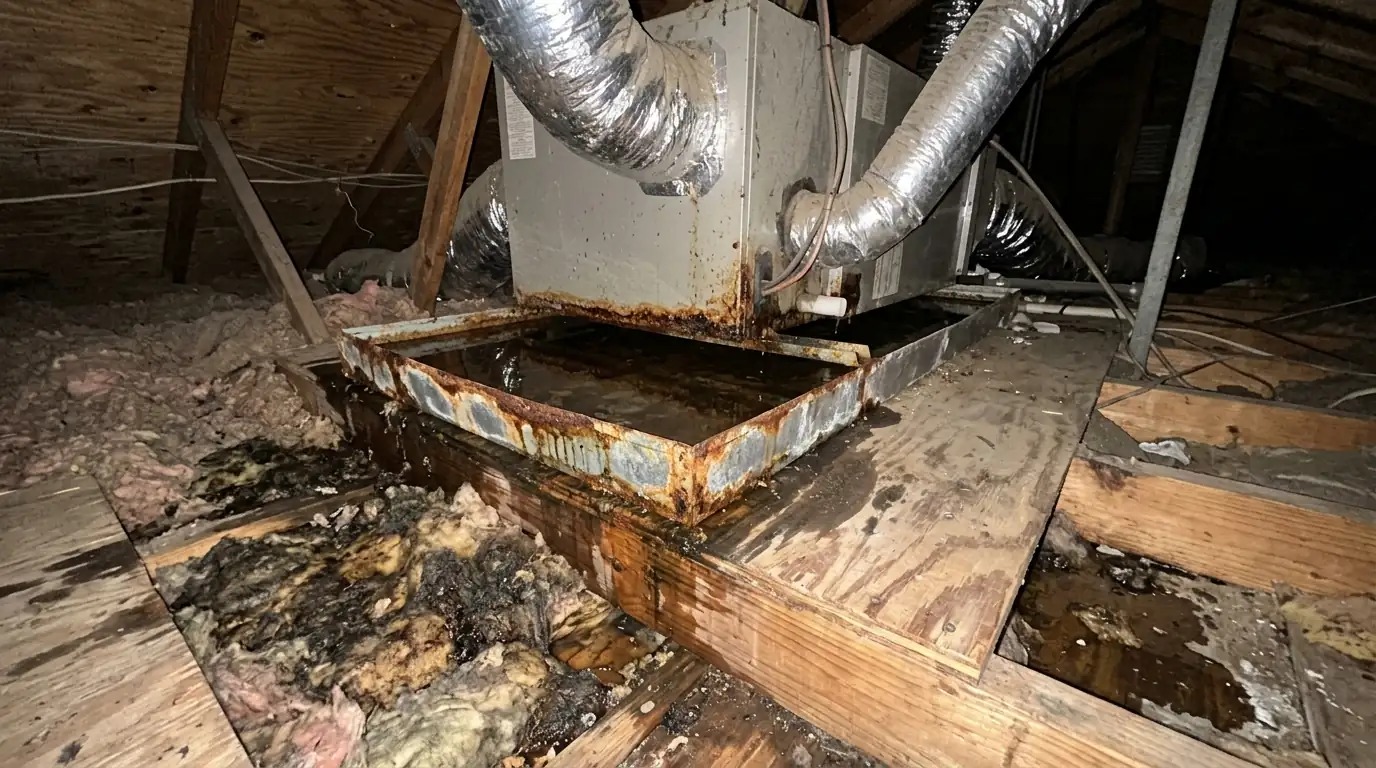
In Clear Lake, a stained or sagging ceiling often traces back to the attic, where the air handler, its drain pan and the roof deck all sit above the rooms. Near our League City office, the hot season runs about four months, and attic AC systems work hard through all of it.
Attic heat, storm season and Clear Lake ceilings
WeatherSpark puts League City's hot season at about four months, late May to late September, with August averaging a 91 degree high, and its muggy period at about 7.2 months, April 1 to November 8. Clear Lake shares that Gulf air. Through those months an attic air handler wrings water out of the house air nonstop, and a blocked condensate line or rusted pan turns it loose on the drywall below.
Storms add a second source. Hurricane Ike sent a 12 to 15 foot surge across Harris County, where Clear Lake sits, and storms like it also tear shingles and drive rain under soffits and flashing. That water lands on attic insulation first, well before a stain shows below.
Wet insulation is the part people miss. Batts and blown fill hold water against the drywall, so a ceiling can look dry from the room and still read wet. We check from both sides.
Six Clear Lake jobs that start above the ceiling
Attic checks any Clear Lake homeowner can do
Look in the drain pan each summer
With a flashlight, check the pan under the attic air handler for standing water, rust or algae.
Have a float switch added
An HVAC technician can add a float switch that shuts the AC off when the pan fills, before it overflows onto the ceiling.
Walk the house after a big storm
After heavy wind and rain, look up in every room. A new spot or ring in the ceiling is worth a call before it spreads.
Keep soffit vents open
Blocked soffit vents trap hot, damp air in the attic. Make sure insulation is not packed against them.

Water in a Clear Lake home right now? Call any hour.
Call (832) 737-0315Clear Lake ceiling and attic questions
If water is pooling and the ceiling sags, a small hole at the lowest point with a bucket below can prevent a collapse. Stay off ladders under a heavy sag and keep people out of the room.
Only after the drywall and insulation above it read dry. We dry it, seal the stain with a stain-blocking primer and paint. A ceiling that sagged or crumbles is replaced.
Attic air finds its way into the house through ceiling gaps, light fixtures and duct leaks, bringing spores and odor with it. Removal only lasts if the moisture source is fixed. Read about attic mold removal.
Sudden overflow damage is often covered, but long-term leaks and the mold they cause usually are not. Photos of the pan, the ceiling and our moisture readings show the adjuster what happened.
Call us, since the phone is answered 24/7. Turn the AC off at the thermostat if the drain pan is the likely source, move belongings out from under the drip and tell us which room it is in.
