
Quick answer
Webster is about 78 percent renters, and about 22 percent of its homes sit in buildings of 50 or more units, so one leak can reach several apartments. We dry each affected unit, keep separate moisture readings for owners and tenants, and clean carpet for turnovers.
Why a Webster leak is often a whole-building job
Webster's housing is close to the reverse of League City's. Census survey figures put Webster at about 78 percent renters, with about 22 percent of homes in buildings of 50 or more units. In League City, detached single-family houses make up about 77 percent of housing, and buildings of 50 or more units add about 8 percent.
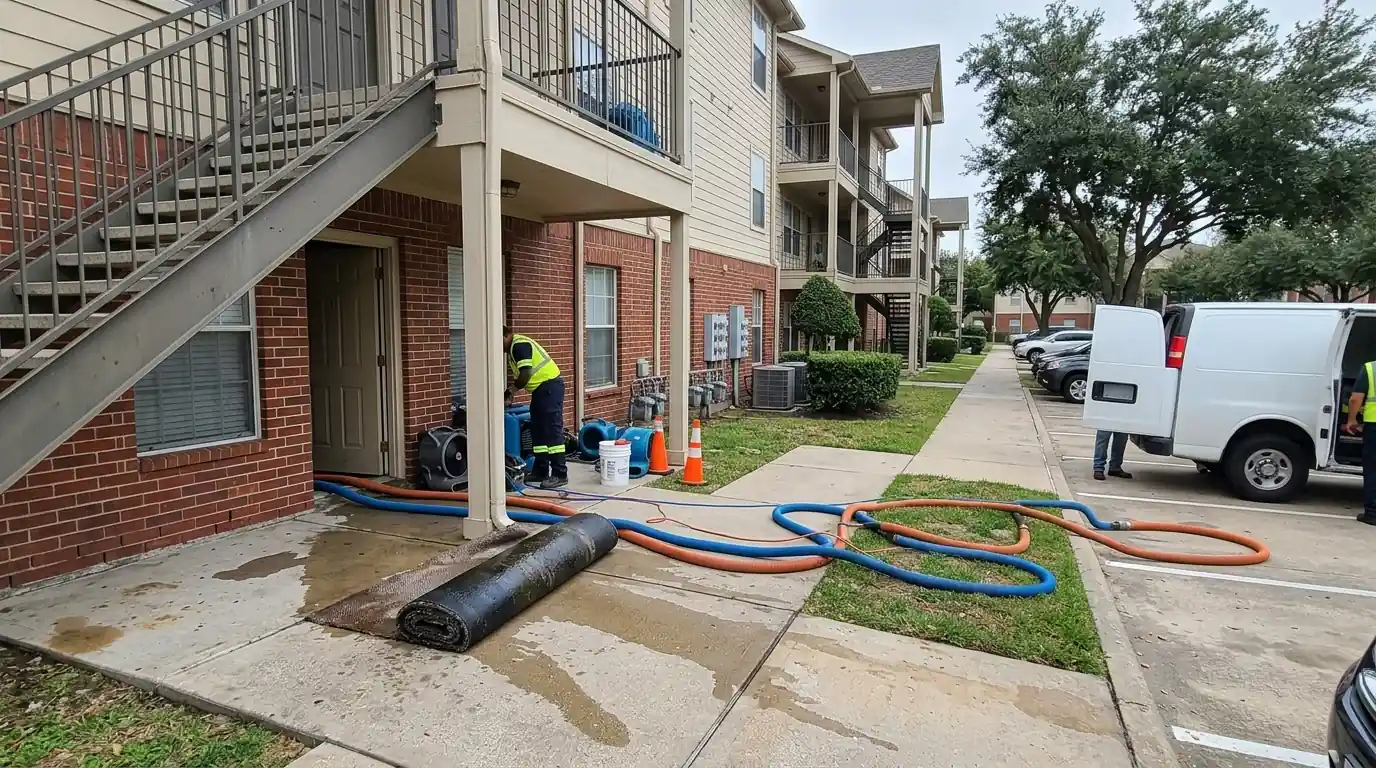
In a stacked building, water from a failed supply line or an overflowing tub runs down into the ceiling below and along shared walls. The first job is finding every unit it reached, which means reading ceilings, walls and floors next door and downstairs, not only in the unit where it started.
Owners and renters carry different coverage. Renters insurance usually protects a tenant's belongings, while the owner's policy covers the building, so we keep separate notes and photos for each unit and each party.
Six jobs that fit Webster apartments and rentals
For Webster tenants and property managers
Tenants: report leaks in writing
Text or email the manager with photos and the time you first noticed water. A written record protects you and gets the right people moving.
Managers: label each unit's shutoff
Mark which valve feeds which unit so whoever is on site at night can stop a leak without guessing.
Carry renters insurance
The building's policy covers the building, not your sofa or laptop. Renters coverage protects your own belongings after a leak.
Clean carpet at every turnover
Cleaning between tenants, before small spots set, keeps carpet in service longer than waiting for a deep stain.

Water in a Webster home right now? Call any hour.
Call (832) 737-0315Webster apartment and rental questions
Anyone can call, any hour. For work inside a rental, we coordinate with the owner or manager, since they control access and the building's insurance. Tenants can still get advice on protecting their things right away.
It depends on the cause and the policies involved. The owner's insurance usually handles the structure, and each tenant's renters policy covers their belongings. We document every unit so each claim has its own record.
Often, yes. Tell us how many units, the carpet condition and any pet odor, and we will plan the visit around access and drying time.
Not always. If urine reached the pad and subfloor, the pad is treated or replaced and the subfloor sealed. Here is why pet urine smell comes back after a surface clean.
Move belongings away, put a bucket under the drip, take photos and tell the manager right away. If the breaker panel is in your unit and the water is near lights or outlets, switch that circuit off.
