Updated October 2026
Quick answer
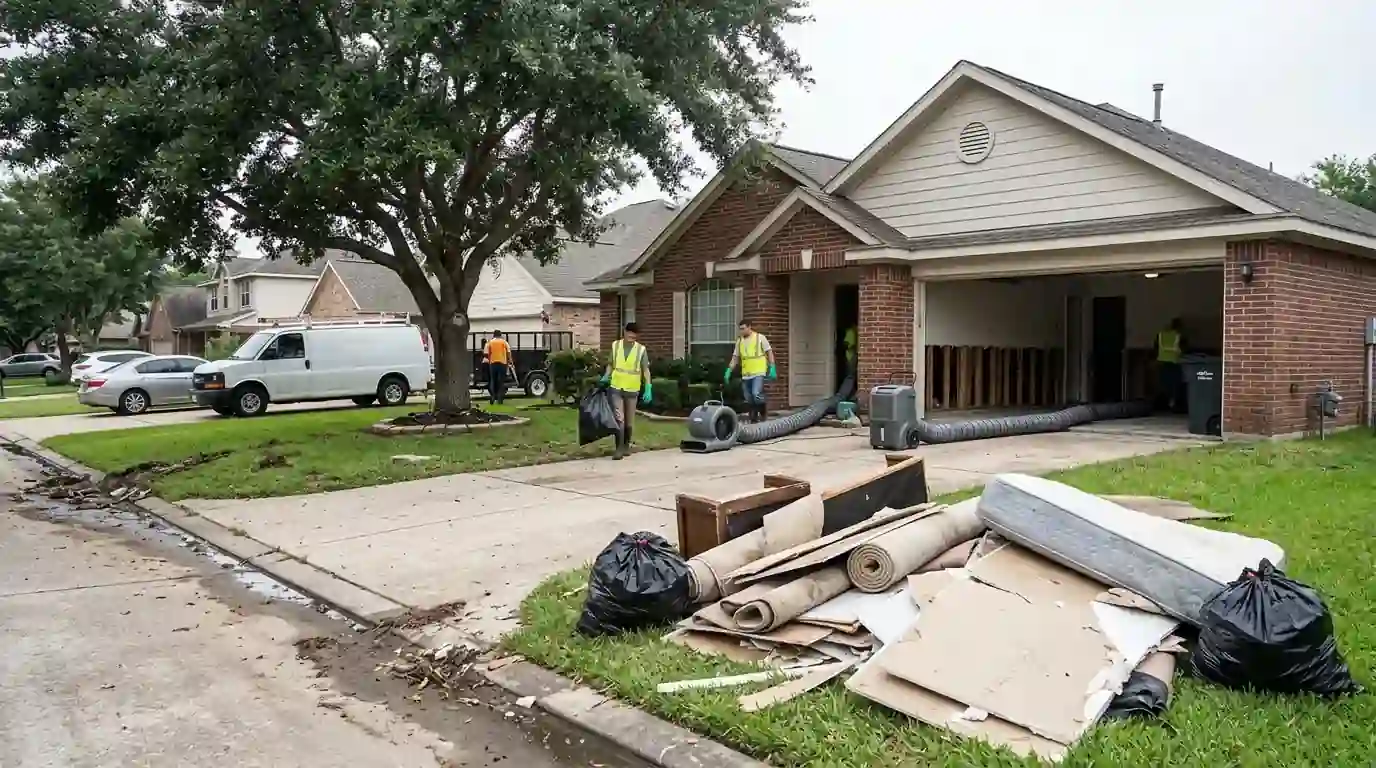
Cleaning up a sewage backup in League City means removing every porous material it soaked, such as carpet, pad and the lower drywall, then disinfecting and drying what remains. The line has to be cleared by a plumber before cleanup starts, or the next flush brings it back. Tile, slab and sealed cabinets can usually be kept.
Why sewage cleanup is mostly careful removal
Sewage is Category 3 water from the first second. It carries bacteria, viruses and parasites, and it soaks into anything porous. So most of the job is removal: carpet, pad, baseboards and drywall that it reached are cut out and bagged, while non-porous surfaces are scrubbed and disinfected. Drying only begins once the contamination is out of the room.
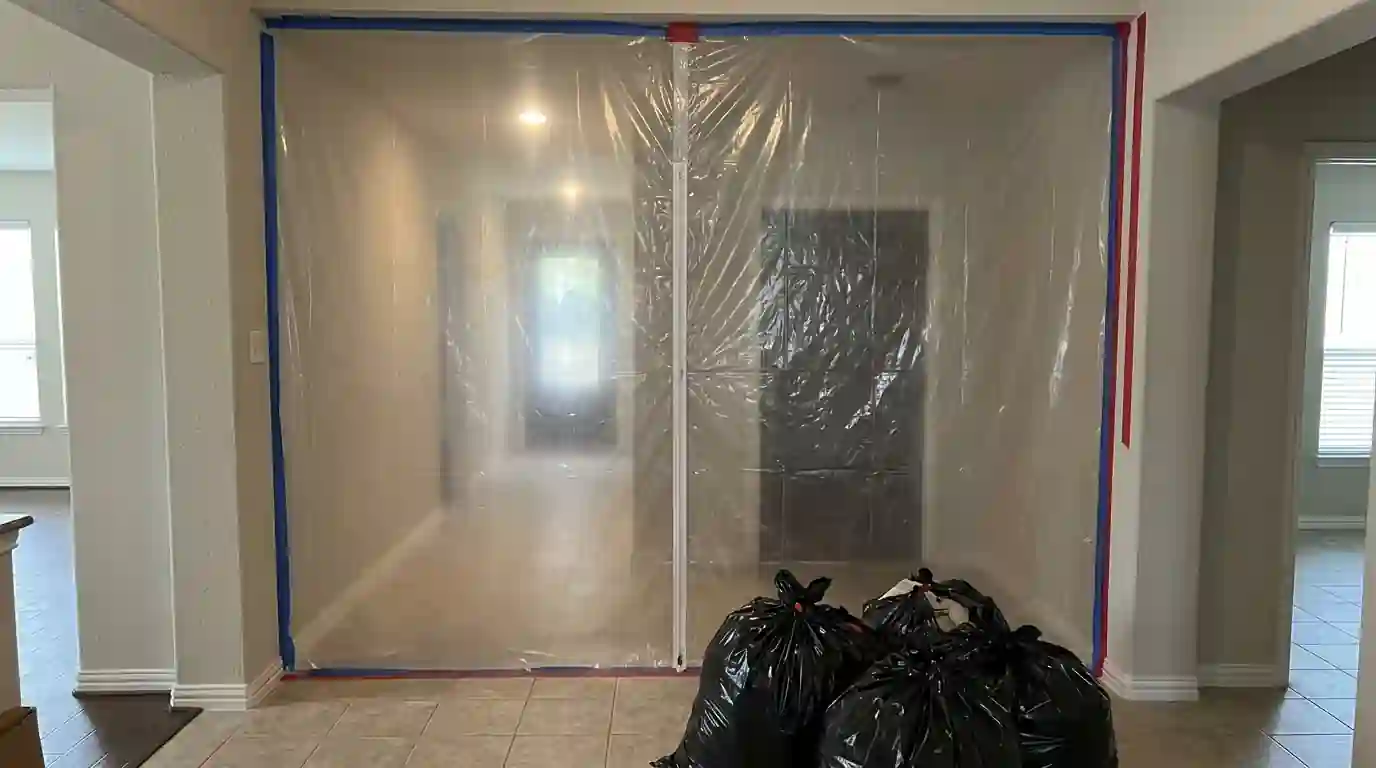
We seal the affected rooms off where we can, work in respirators, gloves and suits, and keep the HVAC from pulling that air through the ducts. After removal, every remaining surface is cleaned, rinsed, treated and dried. If a smell lingers in the slab or framing, treating the lingering odor comes next.
Toilet overflow
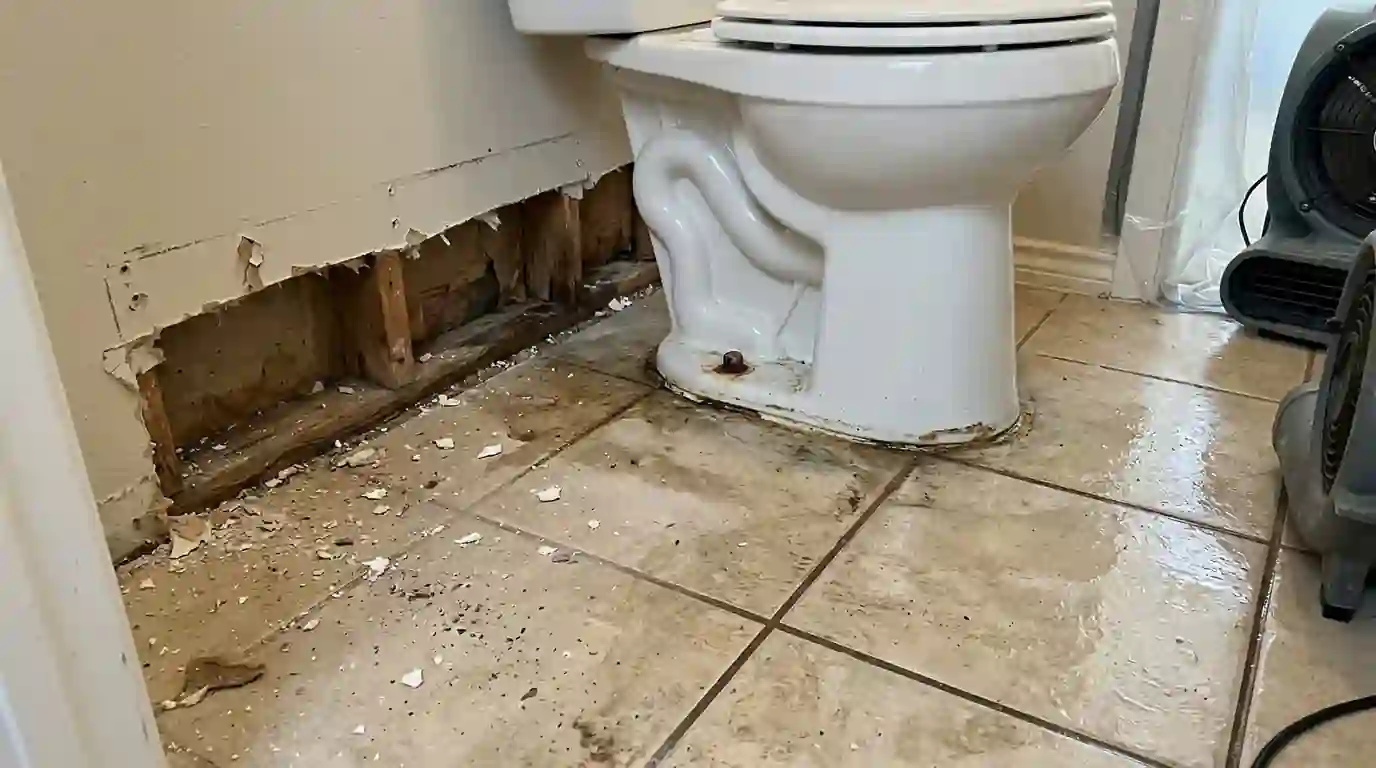
A toilet overflow looks contained, but the water slips under vanity cabinets, into the carpet at the bathroom door and through subfloor seams on a second floor. If the bowl held waste, it is Category 3 no matter how little spilled. We remove wet vinyl or carpet near the doorway, pull the baseboard and the bottom of any wet drywall, and disinfect the tile and the toilet base. Tile floors usually stay. Vanity bases made of particleboard that wicked the water are replaced, because raw particleboard cannot be reliably disinfected.
Main line backup
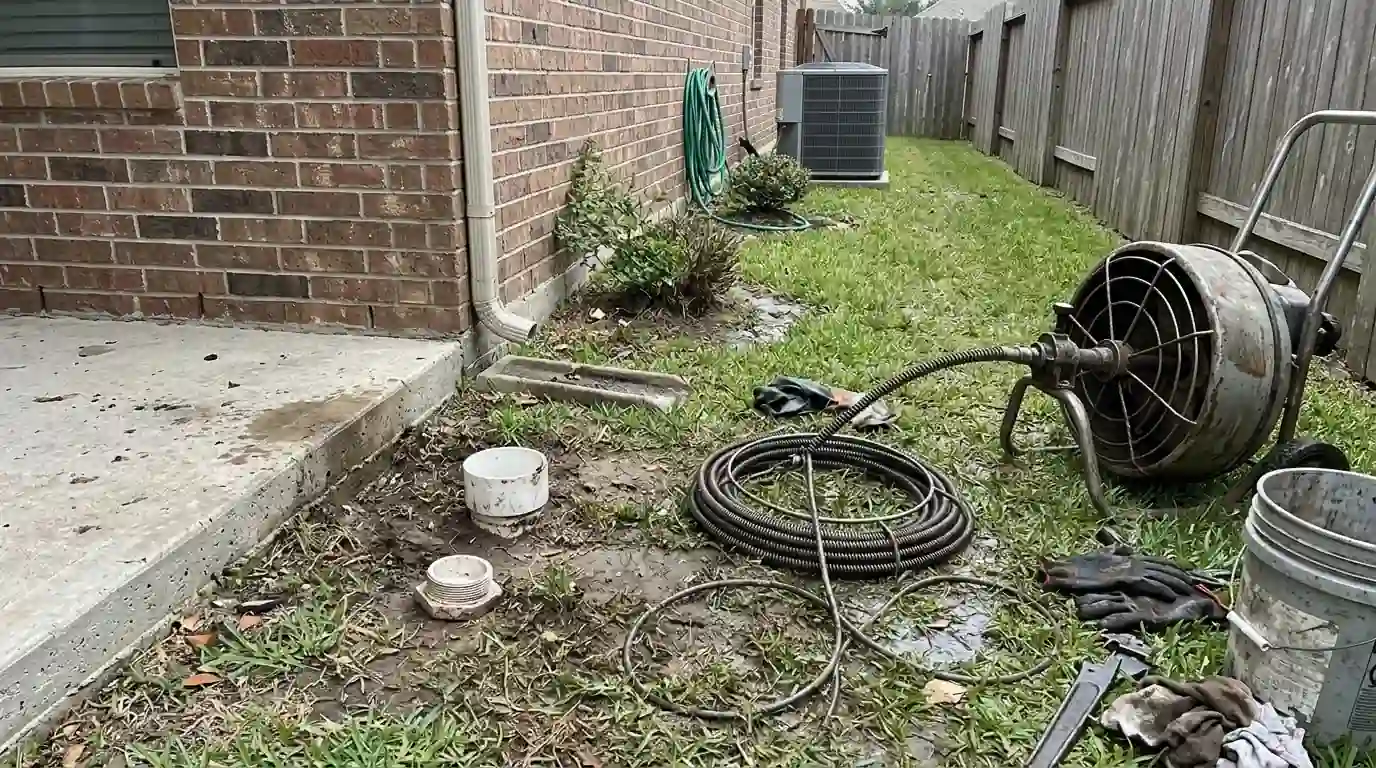
A main line backup rises at the lowest drains in the house, often a shower, tub or floor drain, and it returns every time anyone runs water. Gurgling toilets and several drains backing up together are the giveaway. Roots, grease, and cracked or sagging sections of older pipe are the usual causes. Once a plumber clears the line, we remove soaked materials in every room the backup reached, disinfect the slab and framing, and dry. A large backup often means whole rooms of carpet and the lower part of the walls have to go.
Shower and tub drain backup
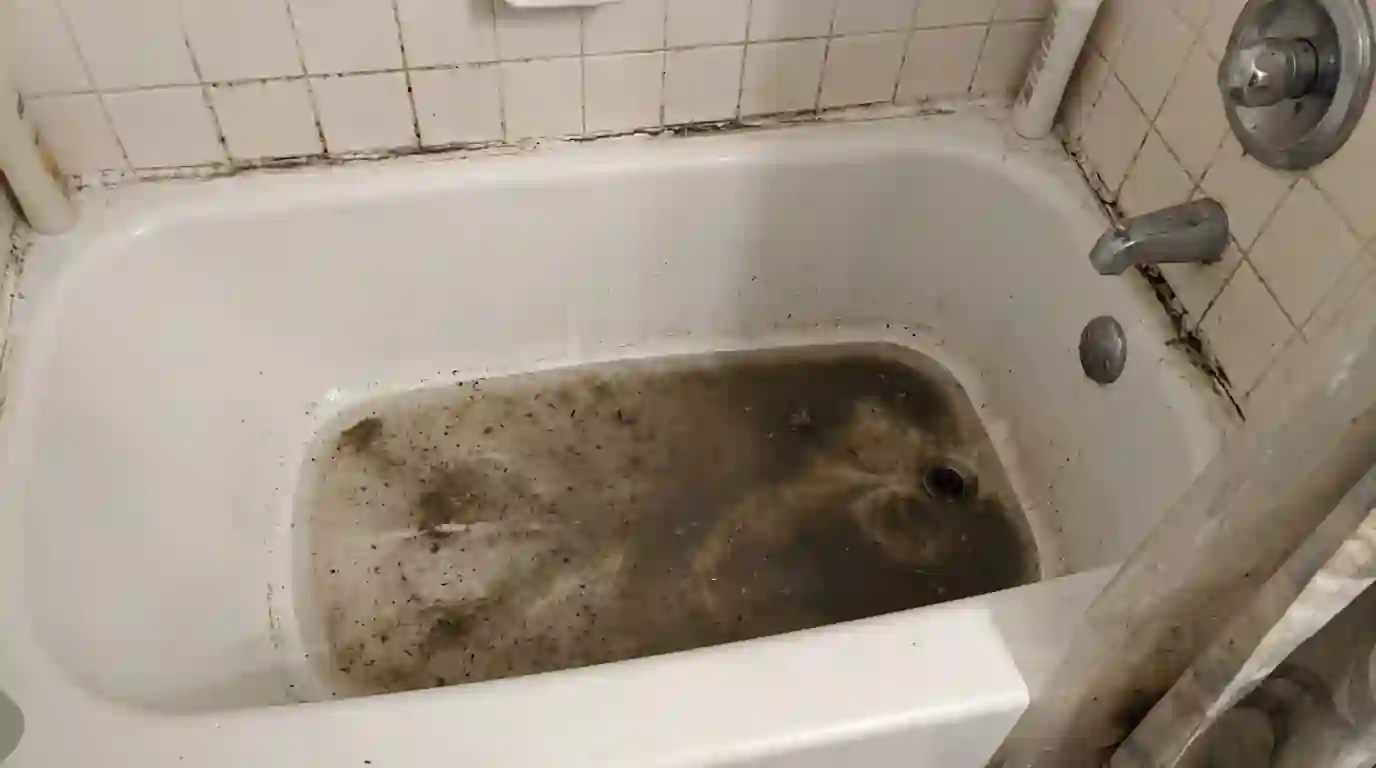
Dark water in a shower or tub that nobody ran usually means the main line is blocked downstream, and the lowest fixture is relieving the pressure. If it stays inside the tub, cleanup is mostly disinfecting the tub, the drain and the tile around them. When it spills over the curb or the tub edge, it reaches grout, baseboards and the floor beyond the bathroom, and those are handled as Category 3. We clean and disinfect the fixture, remove baseboard and any carpet the water reached, and dry the bottom of the wall.

Sewage on the floor? Stop running water and call us now.
Call (832) 737-0315What happens between the backup and a safe, dry room
Confirm the line is clear
We check that the blockage has been cleared so nothing more comes up.
Contain and protect
The rooms are sealed off, and the HVAC is kept from spreading the air.
Remove soaked materials
Carpet, pad, baseboard and wet drywall are bagged and carried out.
Clean and disinfect
Every remaining surface is scrubbed, rinsed and treated.
Dry and recheck
Drying runs until readings hit target, and the area is checked for odor.
Older sewer lines in Texas City and La Marque homes
Housing gets older in the towns around League City. Texas City's median build year is 1984, and nearly 39 percent of the housing stock dates from 1950 to 1979. In La Marque the median home dates to 1977, with about 35 percent built in the 1950s and 1960s. The mid-century houses among them often still drain through cast iron or clay sewer pipe, which cracks and takes in roots over decades, so a backup there deserves a camera inspection of the main line.
Safe first moves while you wait
Safe to handle yourself
- Stop running water anywhere in the house, toilets and washer included.
- Keep children and pets away from the affected rooms.
- Turn off the HVAC if the backup is near a return vent.
- Photograph the water, the fixtures and the damaged items.
- Call a plumber if the line is still blocked.
Time to call us
- Sewage reached carpet, baseboards or drywall.
- More than one room is affected.
- Someone in the house is pregnant, elderly or has a weakened immune system.
Included when we clean up a sewage backup
- Confirmation that the line has been cleared
- Containment around the affected rooms
- Protective gear for everyone working inside
- Removal of soaked carpet, pad, baseboard and drywall
- Scrubbing and disinfecting of every surface left
- Dehumidifiers and air movers until readings hit target
- Photos, readings and a disposal list for your claim
Why sewage cleanup costs more than a clean water job
Sewage work runs higher per square foot because more is removed and every remaining surface is disinfected. The ranges below cover per-foot work, one-room spills and multi-room backups.
- Rooms reached
- A bathroom spill and a backup through three rooms are different jobs.
- Flooring
- Carpet and pad are removed, while tile and sealed concrete are cleaned.
- Wall height
- How far up the drywall wicked sets how much has to come out.
- Cabinets
- Vanities and base cabinets with particleboard bottoms are usually replaced.
- Contents
- Rugs, upholstery and boxes on the floor add removal and disposal.
Published national planning ranges
- Sewage cleanup, per square foot: $7 to $15 or more per sq ft (homeguide.com, 2025)
- Sewage cleanup, single-room spill: $2,000 to $3,000 (homeguide.com, 2025)
- Sewage cleanup, multi-room backup: $3,000 to $7,000 (homeguide.com, 2025)
These are national figures from published cost guides, shown for planning only. They are not a quote and not our price list; your job is priced after we see it.
Sewage backup questions, answered plainly
Only if your policy carries a water backup or sewer backup endorsement, since standard policies usually exclude it. Keep photos for the adjuster either way.
A small spill on tile, with gloves and a disinfectant, yes. Once it reaches carpet, drywall or a second room, the soaked materials need professional removal.
Keep everyone, especially children, older relatives and pets, out of the affected rooms. If the only bathroom was hit, staying elsewhere until cleanup is done is wiser.
No. Installed carpet and its pad, once soaked by sewage, are replaced. Area rugs usually go too, unless contact was brief and a rug specialist can wash them.
Roots, grease buildup, things flushed that should not be, and broken or sagging pipe. A plumber's camera inspection shows which, and whether it will recur.
