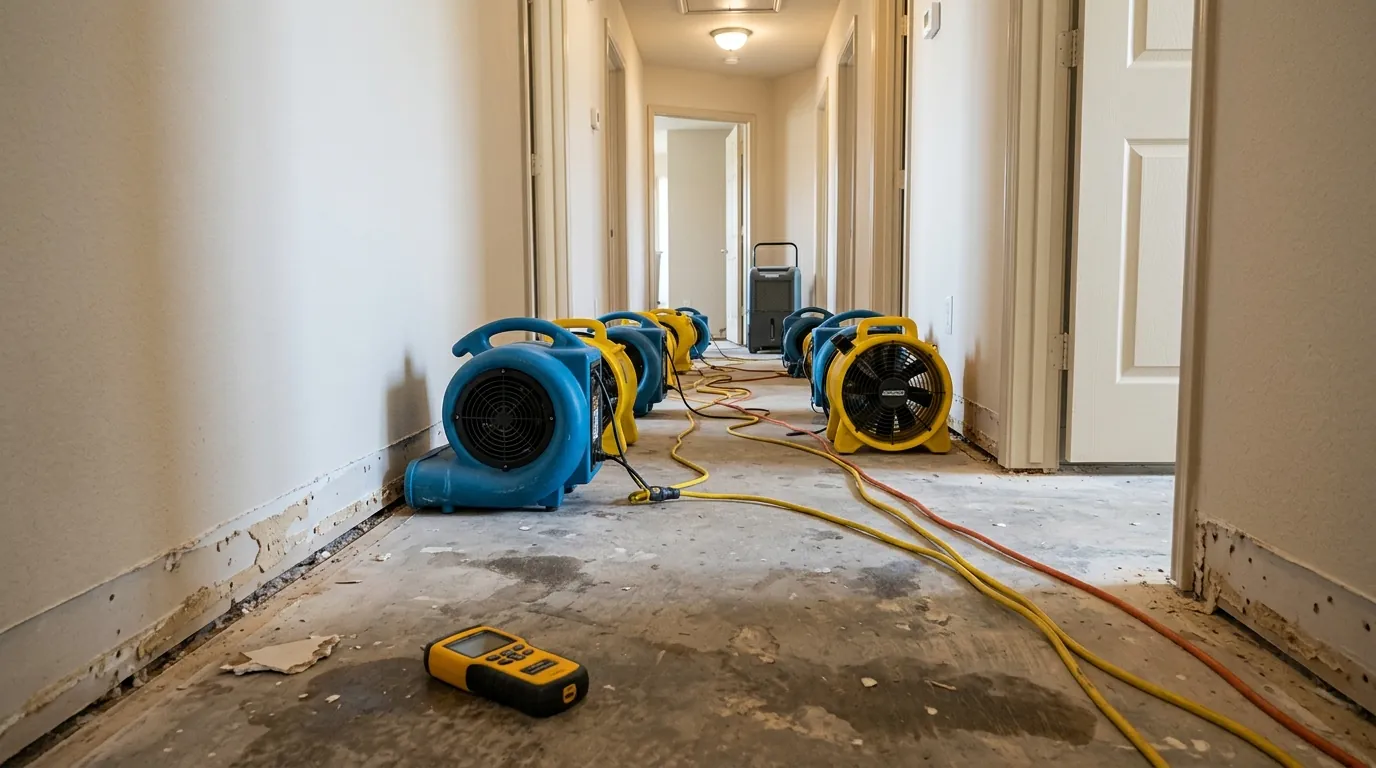
Updated October 2026
Quick answer
When an appliance leaks in a League City home, the water category decides the cleanup: a supply hose or water heater leaks clean water, while washer drain water and dishwasher wash water are gray from the start. Gray water means carpet pad goes, while clean water caught early can usually be dried in place.
Signs an appliance has been leaking quietly
Floor lifting by the dishwasher
Plank edges rise along the door.
Soft floor at the fridge
Flooring flexes or darkens near the ice maker line.
Rust at the heater base
A crusted ring or rusty water sits under the tank.
Damp laundry baseboard
Trim beside the washer swells or stains.
Musty air behind an appliance
An earthy smell when the unit is moved.
What changes when the leak comes from an appliance
Appliances leak from two kinds of lines. Supply hoses and the water heater tank carry clean water and run until a valve is closed. Drain hoses and wash cycles carry gray water with soap, food soil and lint. Both spread under the appliance first, where nobody looks, then into cabinets, flooring seams and the wall behind.
We read the floor under and around the unit and follow the water into the next room. Laminate near kitchens and laundry rooms is often the first casualty, covered under wood and laminate floor drying. Repairing the appliance itself is separate from the cleanup.
Washing machine overflow
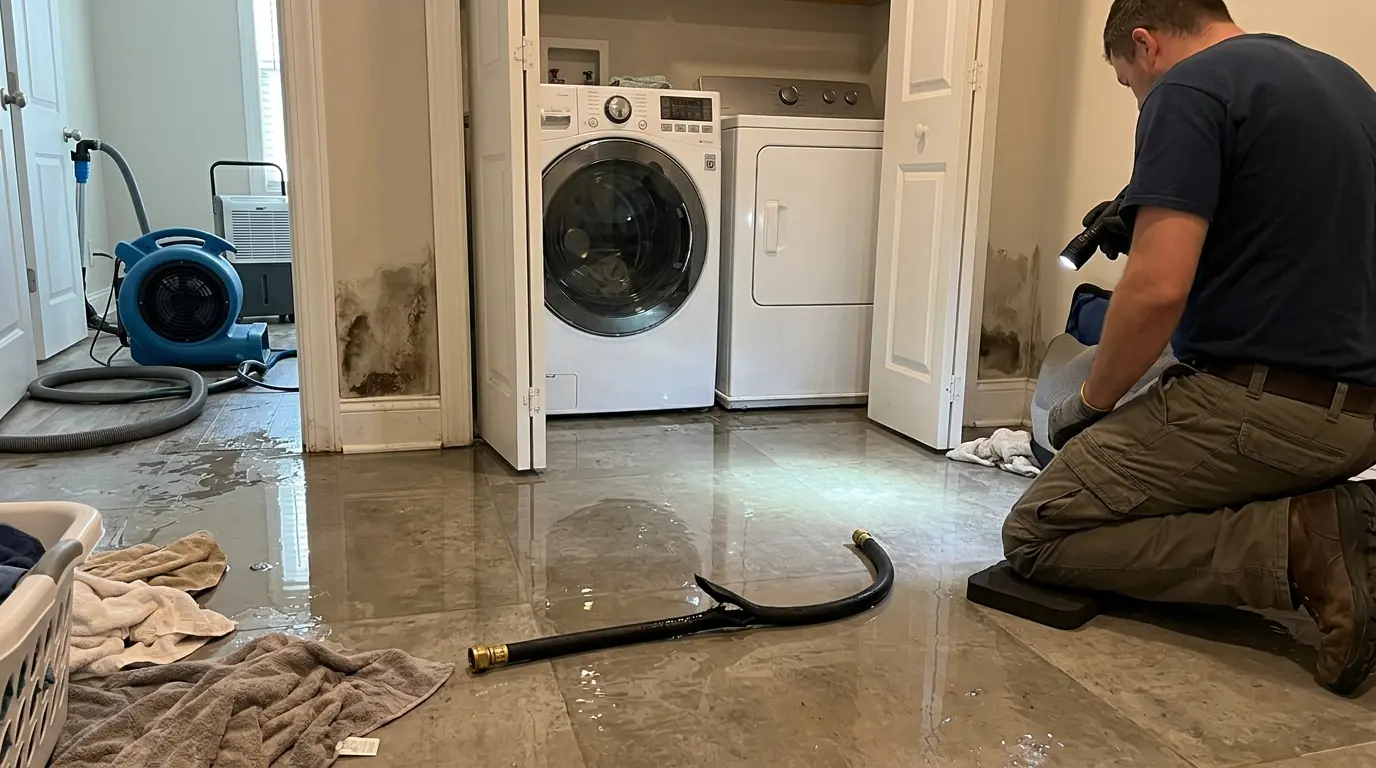
A washer floods three ways: a rubber fill hose bursts, the drain hose slips out of its standpipe, or a clogged standpipe backs up mid-cycle. Fill hose water is clean, while drain water is gray, carrying soap, lint and soil from the clothes. Laundry closets often share walls with carpeted rooms, so water crosses under the wall plate. Pad touched by drain water is replaced, while the carpet itself can usually be cleaned and dried. Drywall at the base of the laundry wall is dried or cut out depending on the water and the readings.
Dishwasher leaks
Dishwashers tend to leak slowly from a door gasket, a loose supply connection or a cracked drain hose, so a floor that has started to lift is usually the first clue. We read the floor around the unit and check the cabinet sides on both neighbors. Supply line water is clean, but water lost during a wash cycle is gray. Tile usually survives, while laminate and some engineered planks swell at the seams and come out. Swollen cabinet sides are photographed and listed for replacement.
Water heater tank failures
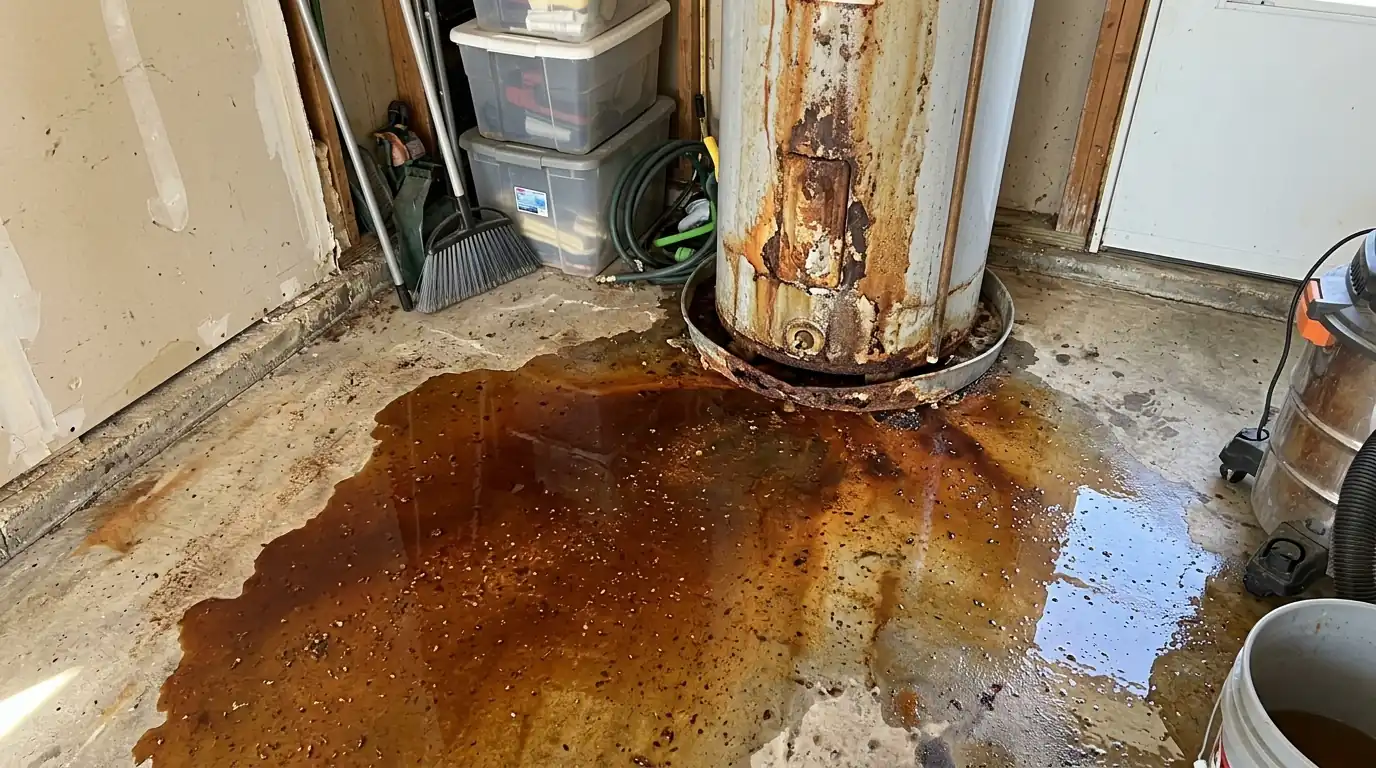
When a tank rusts through, it does not simply empty and stop. The cold supply keeps feeding the leak until someone closes the inlet valve. In a garage on a slab, much of that water runs toward the door. In a hall closet or an attic, it reaches carpet, drywall and the ceiling below. The water starts clean but often carries rust that stains carpet. We extract, dry the closet walls and subfloor, and treat the rust marks. An attic heater makes this a ceiling job too.
Refrigerator and freezer leaks
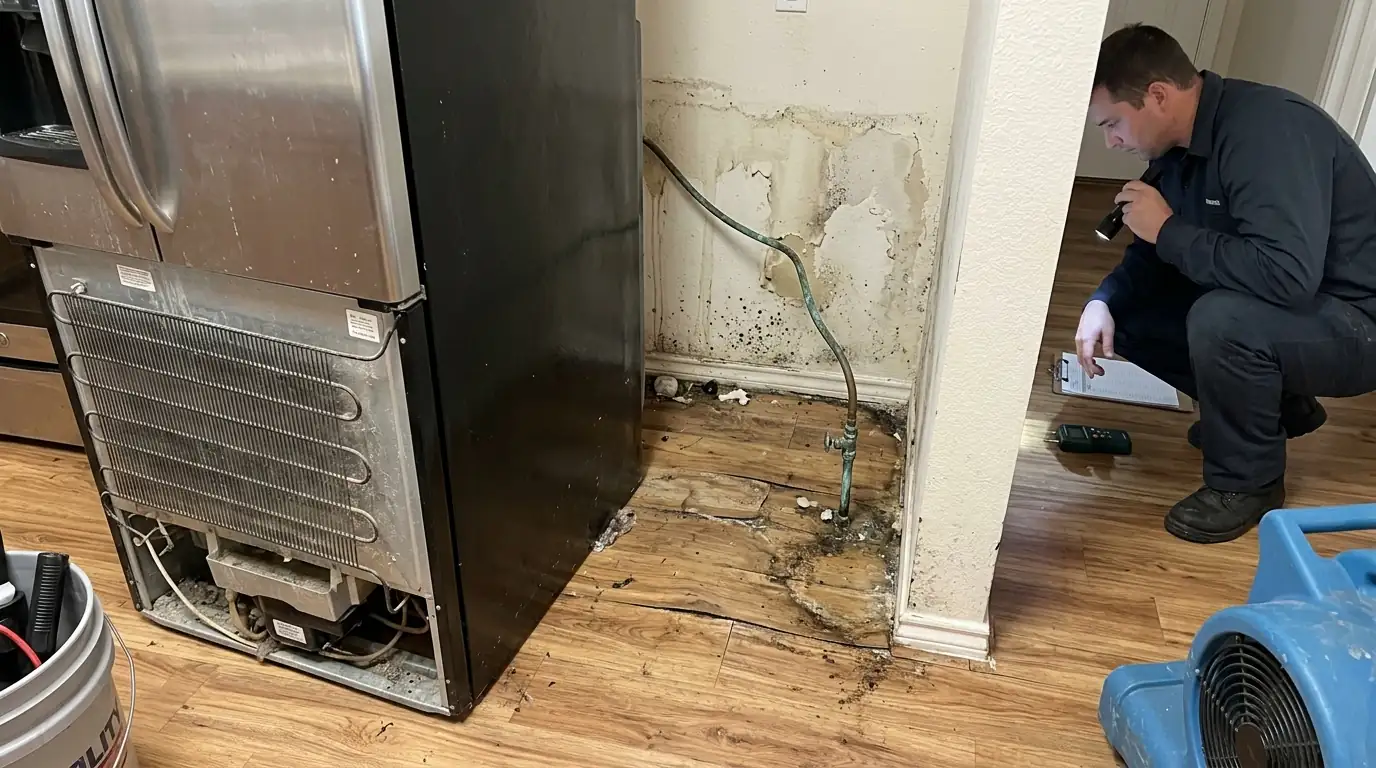
The thin water line feeding an ice maker or door dispenser can crack, pinch or loosen at the valve, and a slow drip behind the fridge can run for weeks. A clogged defrost drain does the same from inside the unit. By the time water shows at the front, it has often soaked under the flooring and up the back wall. We roll the fridge out, read the floor and drywall behind it, and check the hidden face of the drywall for growth, which may call for mold cleanup behind the fridge.
How an appliance leak cleanup unfolds
Isolate the appliance
Its supply valve and power are switched off.
Name the water
We tell you whether it is clean or gray before anything is removed.
Look underneath
Floors under and behind the unit are read, not guessed.
Extract and dry
Water comes out of flooring and cabinets, then equipment goes in.
Remove and record
Swollen parts come out, and photos and readings go into your file.
Closed-up second homes and slow appliance leaks in Galveston
About half of Galveston's housing was built in 1973 or earlier, the median year, and about 20 percent of it went up before 1940. For appliance leaks, a different figure matters more: roughly 30 percent of Galveston housing units stand empty, many as second homes. An empty house is where an ice maker line or washer hose does the most harm, because nobody hears the drip until the next visit. Before leaving a weekend place there, close the washer valves or the main shutoff.
What to do in the first few minutes
Safe to handle yourself
- Close the valve behind the washer, under the sink or on the heater's cold inlet
- Switch the appliance off at its breaker, or unplug it only if the plug is dry
- Turn a gas water heater's control to off
- Keep the failed hose for your adjuster
Time to call us
- Water ran under cabinets, flooring or a wall
- Washer or dishwasher water reached carpet
- The heater sits in an attic or a closet beside carpet
What moves the price of an appliance leak cleanup
Price turns mostly on clean versus gray water and on hidden run time.
- Clean or gray
- Drain or wash water means more removal than supply or tank water.
- Hidden run time
- A leak found weeks later has usually soaked subfloor and drywall.
- Floor type
- Tile often stays, while swollen laminate does not.
- Cabinets and closets
- Swollen cabinet sides and closet walls add removal and repair.
- Location in the house
- An attic water heater adds ceiling and insulation work.
Published national planning ranges
- Category 1 clean water, per square foot: $3.30 to $4.10 per sq ft (lawnstarter.com, 2026)
- Category 2 gray water, per square foot: $4.10 to $7 per sq ft (lawnstarter.com, 2026)
These are national figures from published cost guides, shown for planning only. They are not a quote and not our price list; your job is priced after we see it.
Common questions after an appliance floods the floor
Drain water is gray water, Category 2, even when it looks clear. Fill hose water is clean. The difference decides whether carpet pad can stay.
Often not much. A garage slab dries on its own unless water ran under a wall into the house, so we check the shared wall.
Rarely. Its fiberboard core puffs up along the joints and does not go back down. Vinyl plank and tile usually survive.
Warped flooring at the front of the fridge, a musty smell behind it, or a stained baseboard beside it all say yes.
Policies usually treat the failed appliance apart from the water damage it caused. Your adjuster separates the two, and we document the damage.
