Updated October 2026
Quick answer
A League City structural drying job is finished when the wet drywall, framing and subfloor read the same as dry material elsewhere in the house. That takes dehumidifiers, air movers and a closed room, with readings on every visit, because surfaces dry long before the inside of a wall does.
Moving water out of walls and into a drain line
Drying is a chain. Air movers sweep across wet surfaces so water leaves the material and enters the air. Dehumidifiers pull that water out of the air and send it down a hose to a drain. Warmth speeds up both halves. If any link is weak, the job stalls, and the walls stay wet while the room feels fine.
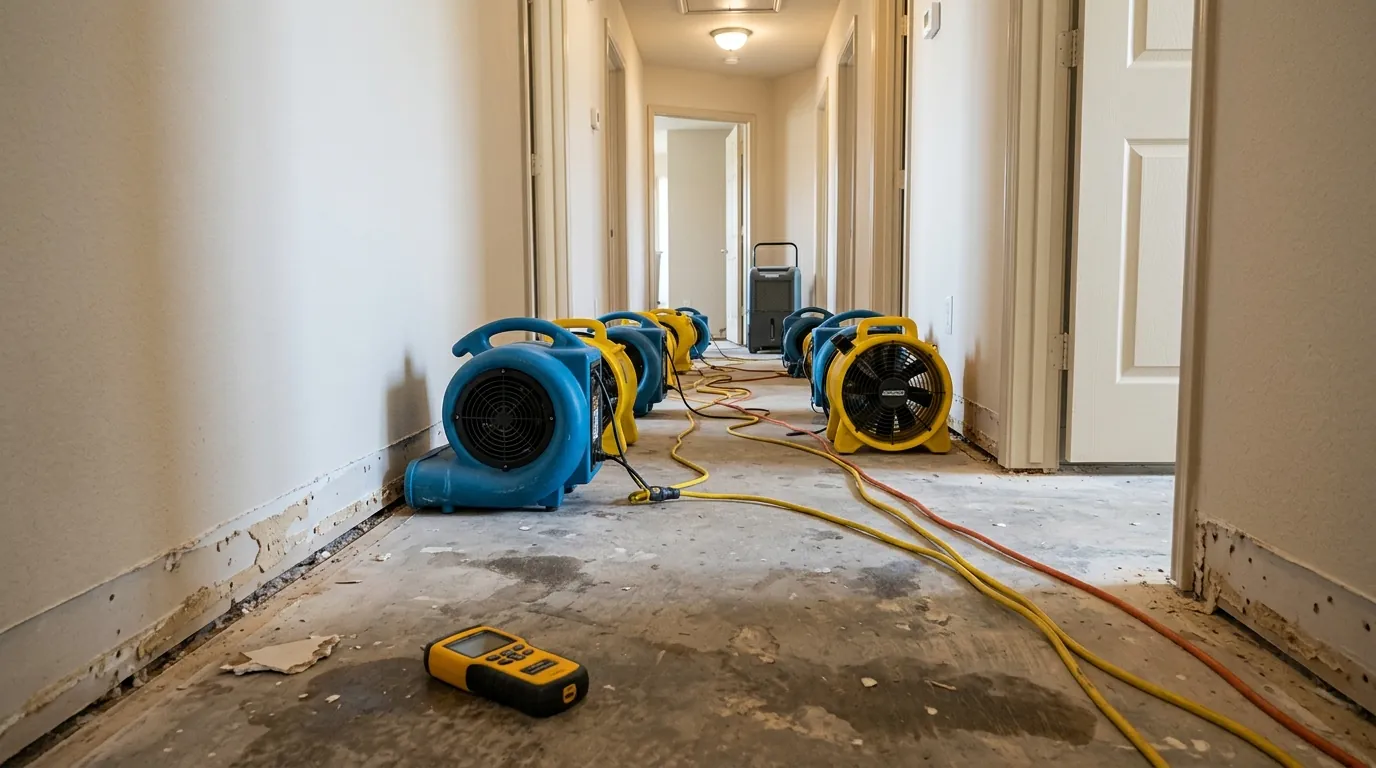
Equipment goes where the readings say, not where a guess says. A first visit with moisture mapping shows which walls, cabinets and floor sections are wet. As each area reaches its dry target, we pull units out of it and leave the rest running.
Dehumidifier setup
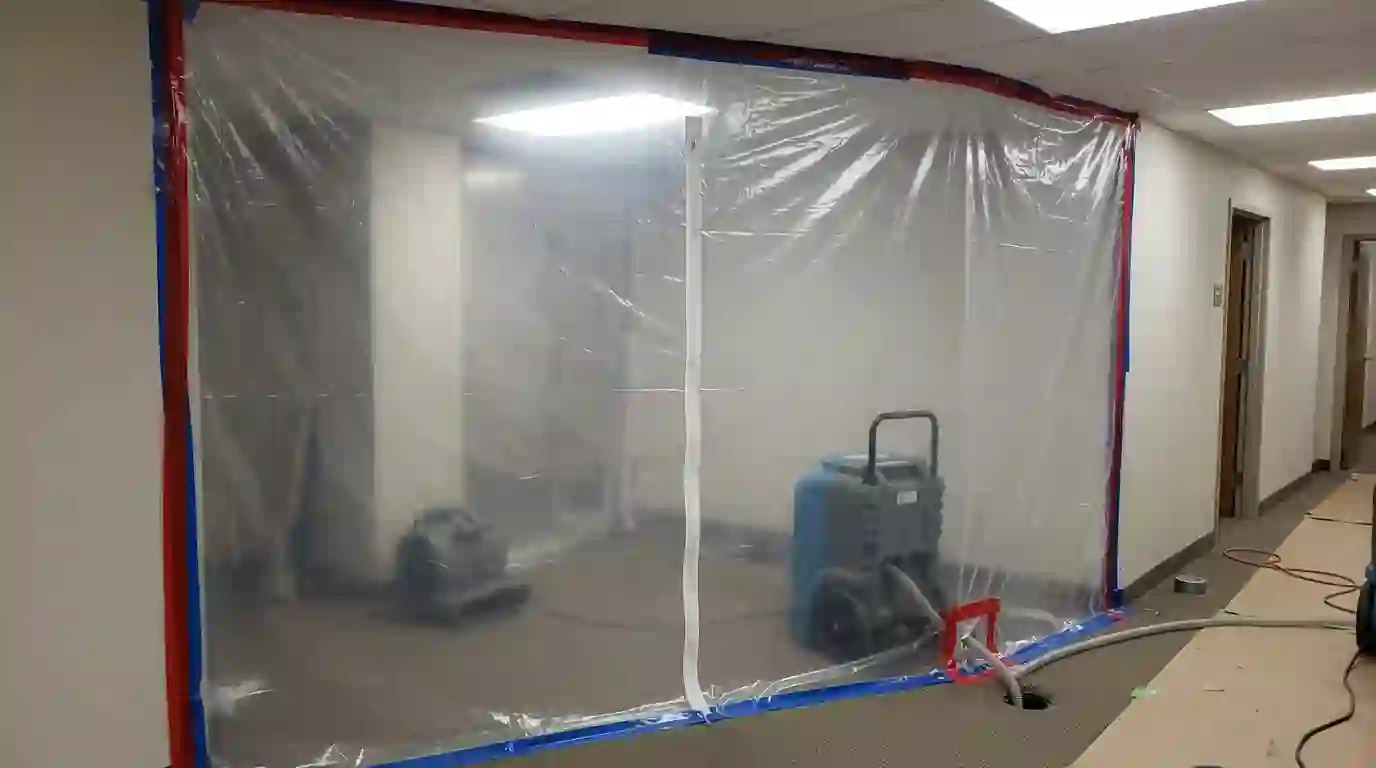
A household dehumidifier slows down as the room dries, which is exactly when a water job needs it most. Low-grain refrigerant units, the kind Dri-Eaz and Phoenix make, keep pulling water from air that already feels dry. We size them to the room volume and the amount of wet material, then close off the area with plastic sheeting so they work on that space alone. Condensate drains by hose, so nobody empties a bucket at night. Set up well, this is what lets drywall and carpet stay in place.
Air mover placement
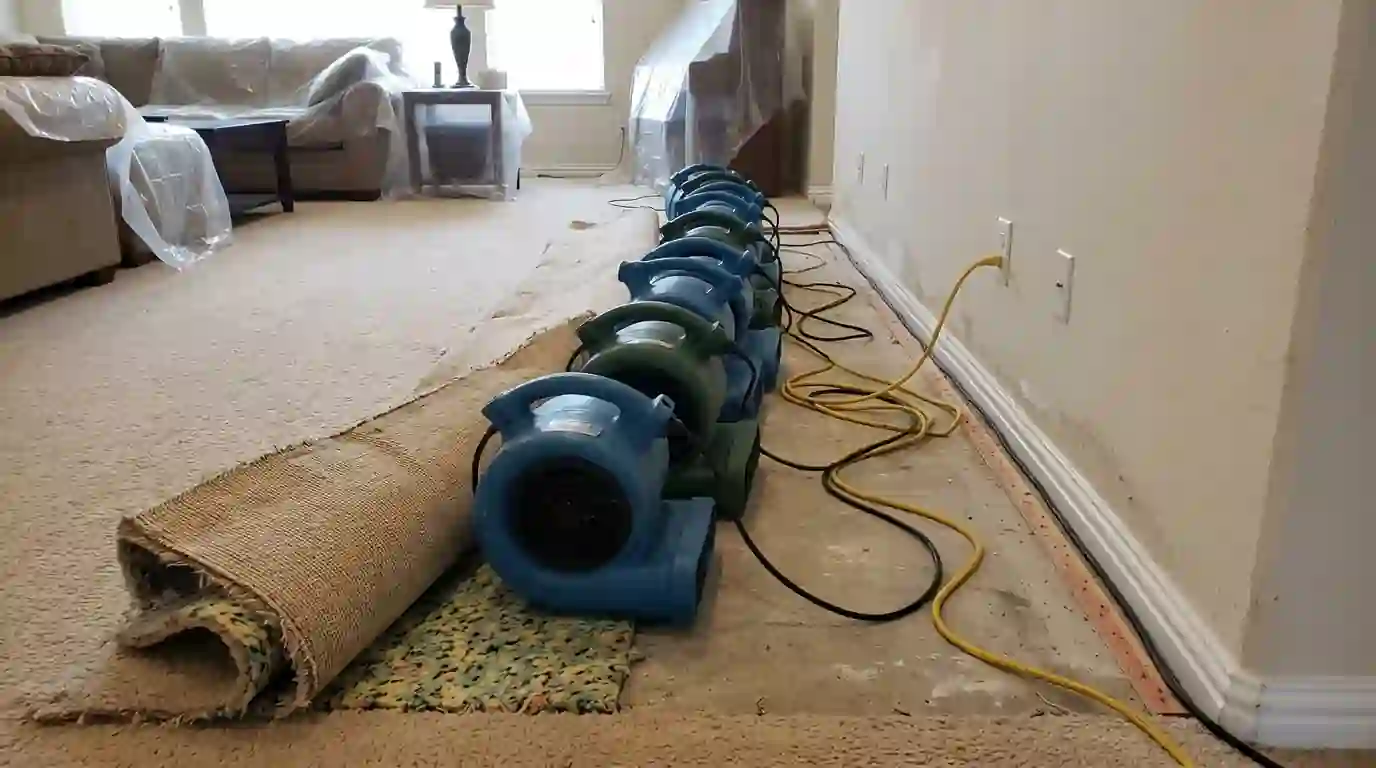
An air mover is not a fan pointed at the middle of the room. It is a low blower aimed along the base of a wet wall to strip away the damp layer of air clinging to the surface. We set units like the ones B-Air and XPOWER build around the room, angled the same way, at the sections where readings ran highest. Carpet left down gets air under its lifted edge. Too few units and the walls stall, while too many release more water than the dehumidifier can catch.
Wall cavity drying
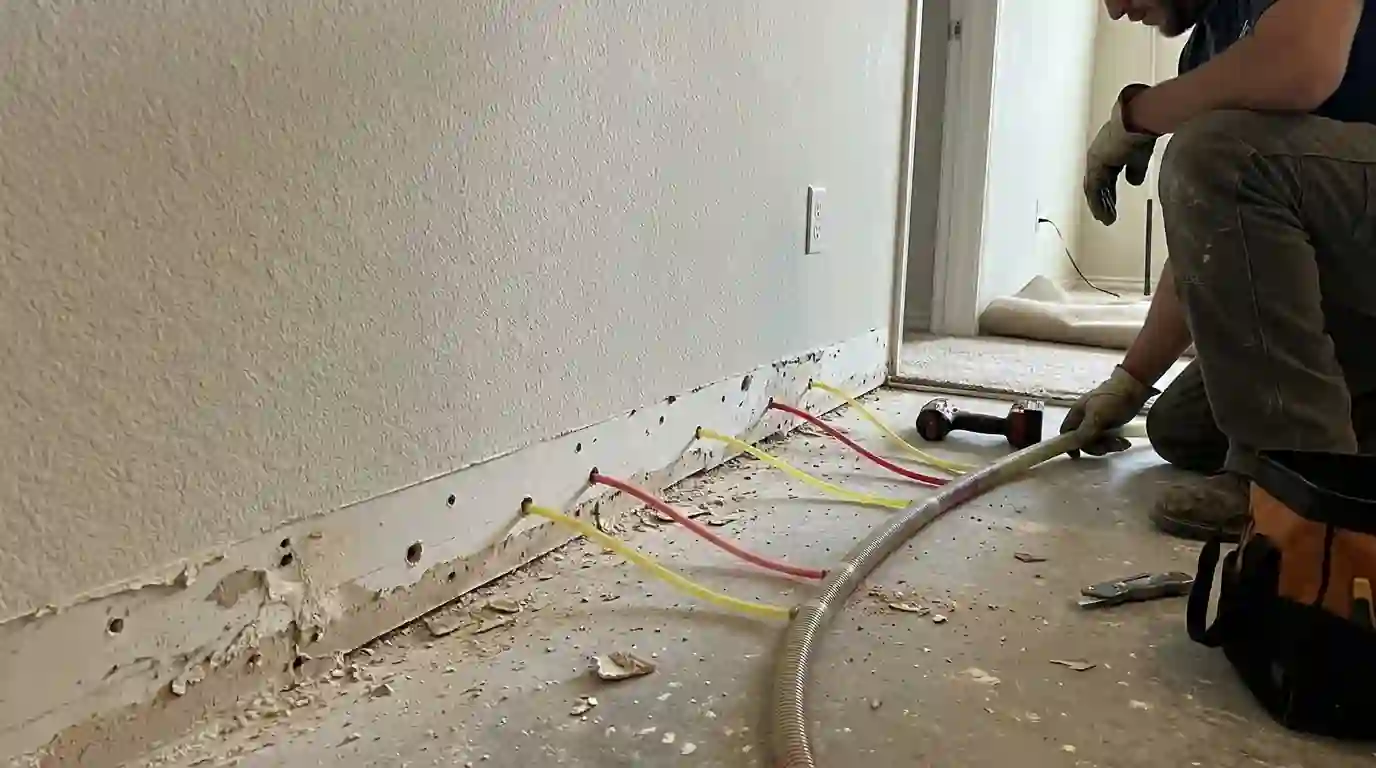
Water behind drywall sits in a closed box with no airflow, so the painted face can read dry while the cavity side and the bottom plate stay wet. On interior walls, we often drill small holes low on the wall, where the baseboard will cover them, and push dry air into the cavity. Exterior walls hold insulation that soaks up water, and vinyl wallpaper traps it, so those walls more often need the bottom opened. Then we switch to a measured flood cut instead of guessing.
Daily moisture readings
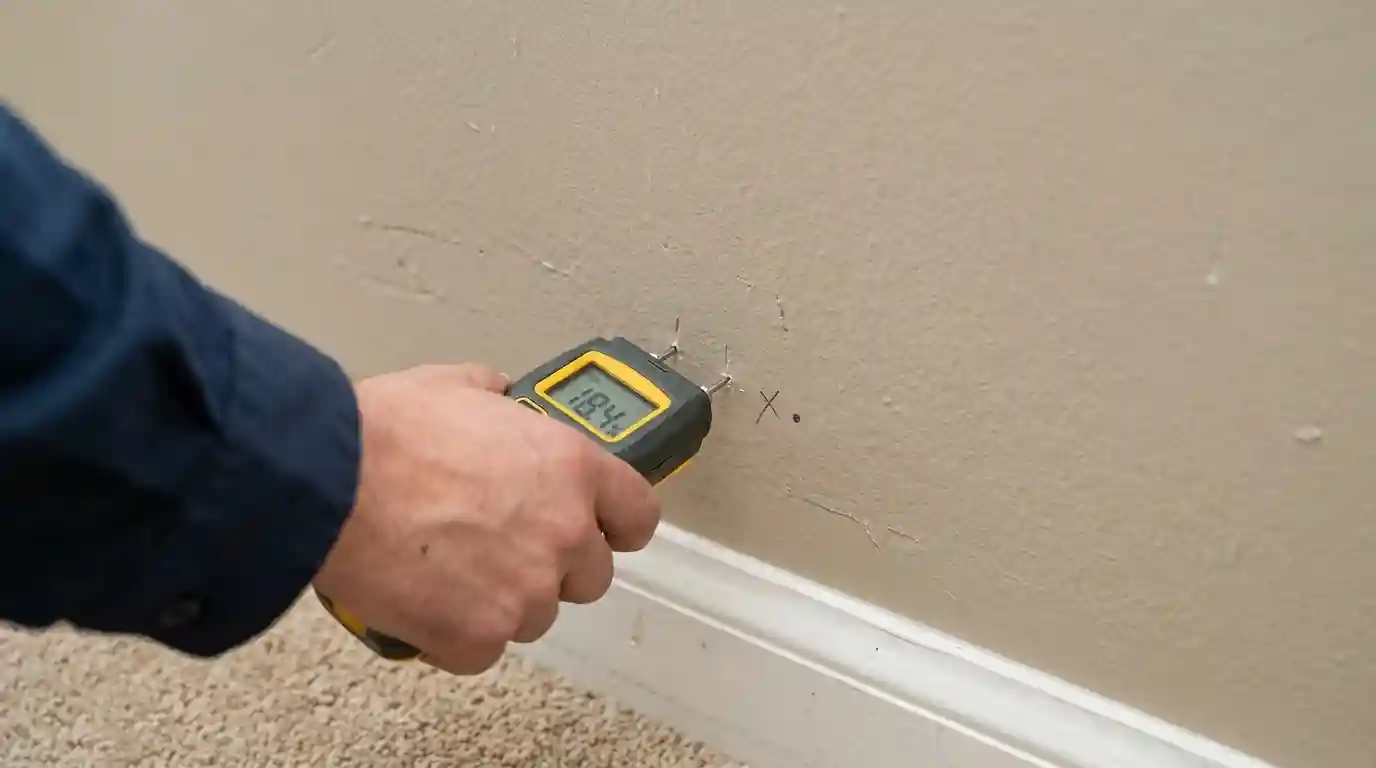
Each wet area gets marked reading points on the first visit, and we read the same points every time we return. Pin and pinless meters, the kind Protimeter, Delmhorst and Tramex make, give numbers for drywall, wood and concrete. A thermal camera such as a FLIR model shows cool patches, but we confirm each one with a meter, since a cold spot can also be an air leak. Humidity inside and outside the drying area is logged too. That record decides when equipment leaves, and it goes to your adjuster.
How a drying job runs from first reading to last
Read and mark
Every wet material is measured and the reading points are marked.
Set a dry standard
Unaffected walls and floors in the same house set the target.
Close and equip
The area is sealed, and equipment goes where the numbers point.
Return and adjust
Each visit we reread the same points and move equipment as zones dry.
Pull equipment and report
When every point meets the target, units leave and you get the log.
What decides how many days the equipment stays
There is no fixed count of days. Drywall and carpet give up water quickly, while hardwood, plaster, cabinet boxes and a slab release it slowly and set the pace. A leak caught early dries faster than one that soaked for a weekend.
Switching units off or opening windows adds time. More on the variables in how long structural drying takes.
Why open windows slow a League City dry-out
WeatherSpark counts about 7.2 months of muggy weather in League City each year, running April 1 through November 8 and peaking in July. For most of the year, then, outside air carries more water than a drying room should hold. Opening windows to air things out pulls that moisture straight back into the drywall. We keep the drying area closed, leave the home's air conditioning running at a normal setting, and let the dehumidifiers set the humidity inside.
What a drying visit covers
- Readings on drywall, trim, cabinets and subfloor
- A dry standard from unaffected materials in the house
- Plastic sheeting to close off the drying area
- Dehumidifiers sized to the room and the wet load
- Air movers aimed at wet wall bases and carpet edges
- Cavity drying through hidden holes where walls need it
- A moisture log with photos on every return visit
Equipment makers in professional drying, moisture detection and carpet extraction
What drives the cost of drying a house
Drying is usually priced on the affected area and the equipment it takes.
- Wet area
- More square footage means more dehumidifiers and air movers.
- Class of water
- Water that wicked high into walls takes more equipment than a damp edge.
- Materials
- Hardwood, plaster, cabinets and slab release water slowly and keep equipment on site longer.
- Wall cavities
- Insulated or wallpapered walls may need cavity drying or a partial opening.
- Monitoring visits
- Each return visit with readings is part of the job.
Published national planning ranges
- Water damage restoration, per square foot: $3.15 to $7.40 per sq ft (lawnstarter.com, 2026)
These are national figures from published cost guides, shown for planning only. They are not a quote and not our price list; your job is priced after we see it.
Drying questions from homeowners mid-job
Please leave them running. Drying stalls the moment airflow and dehumidification stop, and materials take moisture back from the air.
Air movers and refrigerant dehumidifiers both give off heat, and warmth speeds evaporation. A warm, closed room dries faster than a cold one.
Not on the Gulf Coast. Outside air here is usually wetter than the air inside the drying area, so open windows add water back.
Yes, it runs on household power around the clock. Keep that bill, since some claims cover the extra electricity.
We compare each reading point against dry walls of the same material in your house. When they match, that area is done, whatever the surface feels like.
