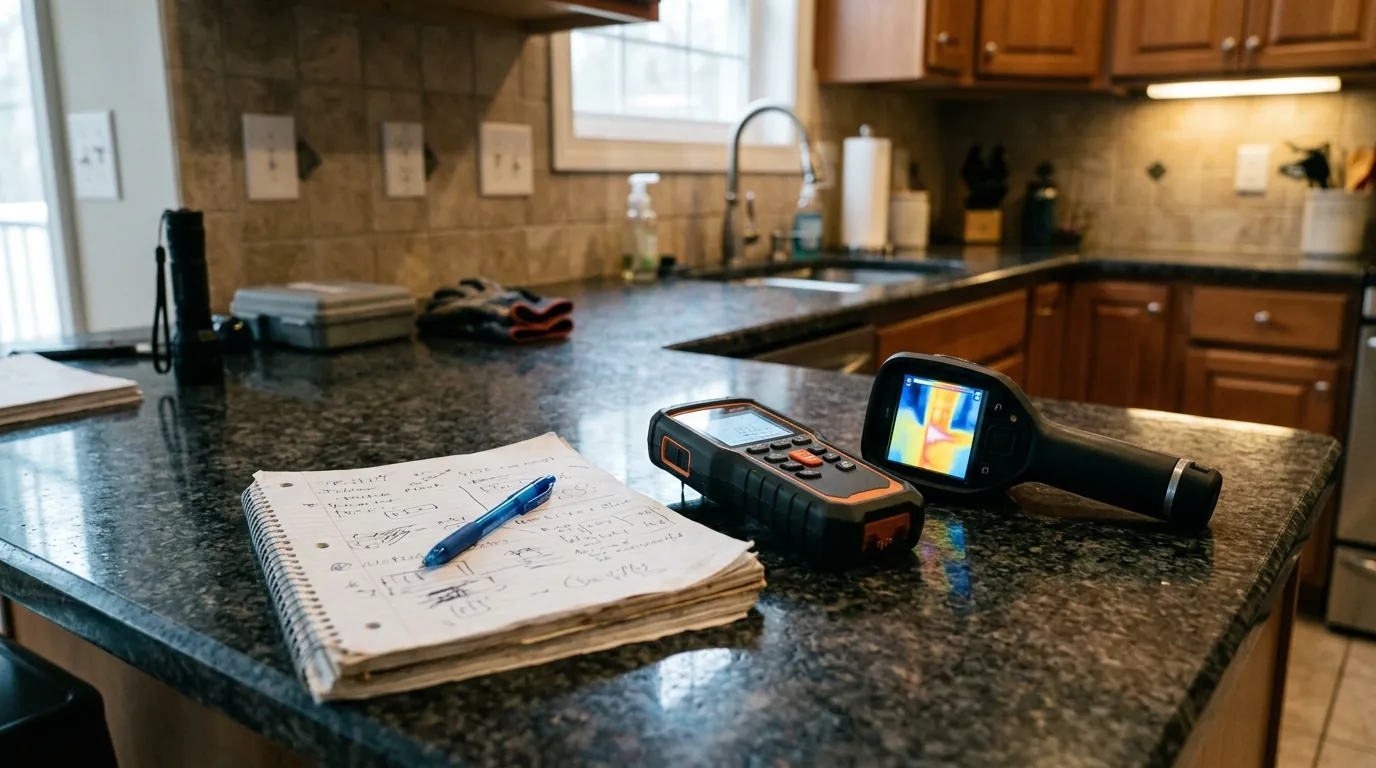
Quick answer
Structural drying is finished when every wet material reads close to the same material in an unaffected room, not after a set number of days. Carpet and open drywall on a clean water job usually dry first. Hardwood, cabinets, plaster and concrete slab take longer, and a late start, gray water or humid air can stretch any job.
Drying ends at a reading, not on a calendar
On the first visit we take readings from the same kind of material in a part of the house the water never reached. Those numbers become the dry goal for each wet surface. A wet drywall wall is done when it reads like a dry drywall wall in the next room, and the same goes for baseboard, subfloor and cabinet sides.
That is why nobody can honestly promise a finish date on the first day. We can tell you which materials are likely to finish early and which will hold the job open. After a few rounds of readings, the trend makes the remaining time much clearer. Equipment comes out of each room as its materials hit their goal, so a job often winds down room by room.
Which materials dry fast and which hold on
Materials give up water at very different speeds, and the slowest one in the room sets the schedule.
- Carpet and pad on a clean water job: usually among the first to dry once the water is extracted.
- Drywall with its face open to the room: fairly quick, as long as the cavity behind it is not soaked.
- Wall cavities with insulation: slower, since air cannot reach the wet side without help.
- Cabinets and toe kick spaces: slow, because the water sits in a closed, unvented box.
- Hardwood flooring: slow on purpose, because drying it too hard can crack and split the boards.
- Concrete slab under tile or vinyl plank: often the slowest, since concrete holds water deep and releases it gradually.
The drying classes in the industry standard follow the same logic, with hardwood, plaster and concrete in the hardest class. Our page on drying wood floors explains why that work cannot be rushed.
What stretches a drying job past the first estimate
Two jobs with the same wet square footage can finish days apart. These are the usual reasons.
- Late extraction. The longer water stands, the further it climbs up drywall and the deeper it soaks into the slab.
- Water category. Gray water and sewage mean removal and cleaning before drying can even begin.
- Closed spaces. Water under cabinets, behind a tub surround or inside a wall needs an opening before air can reach it.
- Damp outdoor air. Open windows and leaky doors let humid air in faster than the dehumidifiers can pull it out.
- Machines switched off. Turning equipment off at night for quiet costs real drying time.
Why League City humidity matters to the schedule
Drying is a moisture handoff. Air movers pull water out of wet materials into the air, and dehumidifiers pull it out of the air and send it down a drain hose. If the air in the house is already damp, materials give up their water more slowly. WeatherSpark counts about 7.2 months of muggy weather a year in League City, from April 1 to November 8, with July the muggiest month.
Through that season, opening the windows to air the house out works against the job. We close the drying area off, sometimes with plastic sheeting, so the dehumidifiers work on a smaller volume of air. Low-grain refrigerant dehumidifiers handle most homes. Desiccant units come in for hardwood and other dense materials that need very dry air.
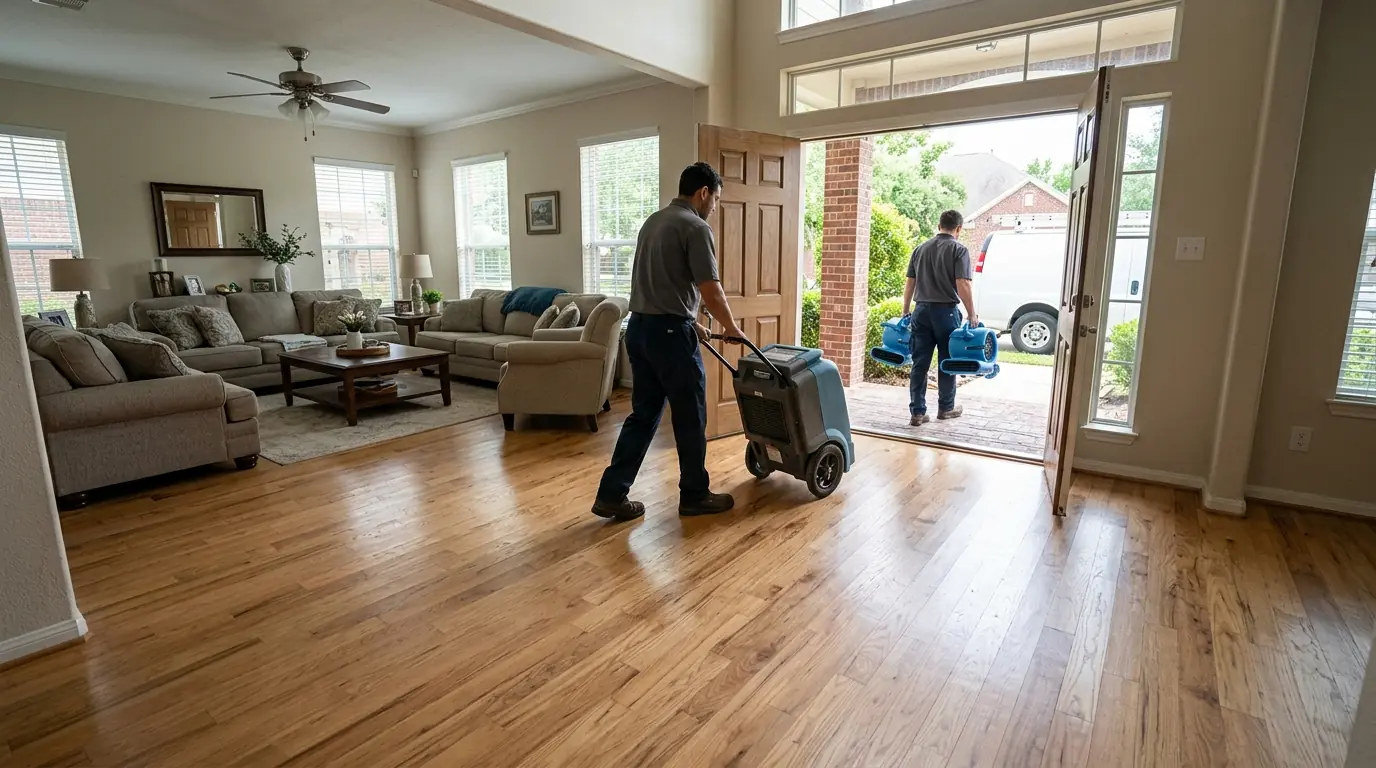
Equipment running and no end date yet? Call and we will go over the readings.
Call (832) 737-0315How we track progress on every visit
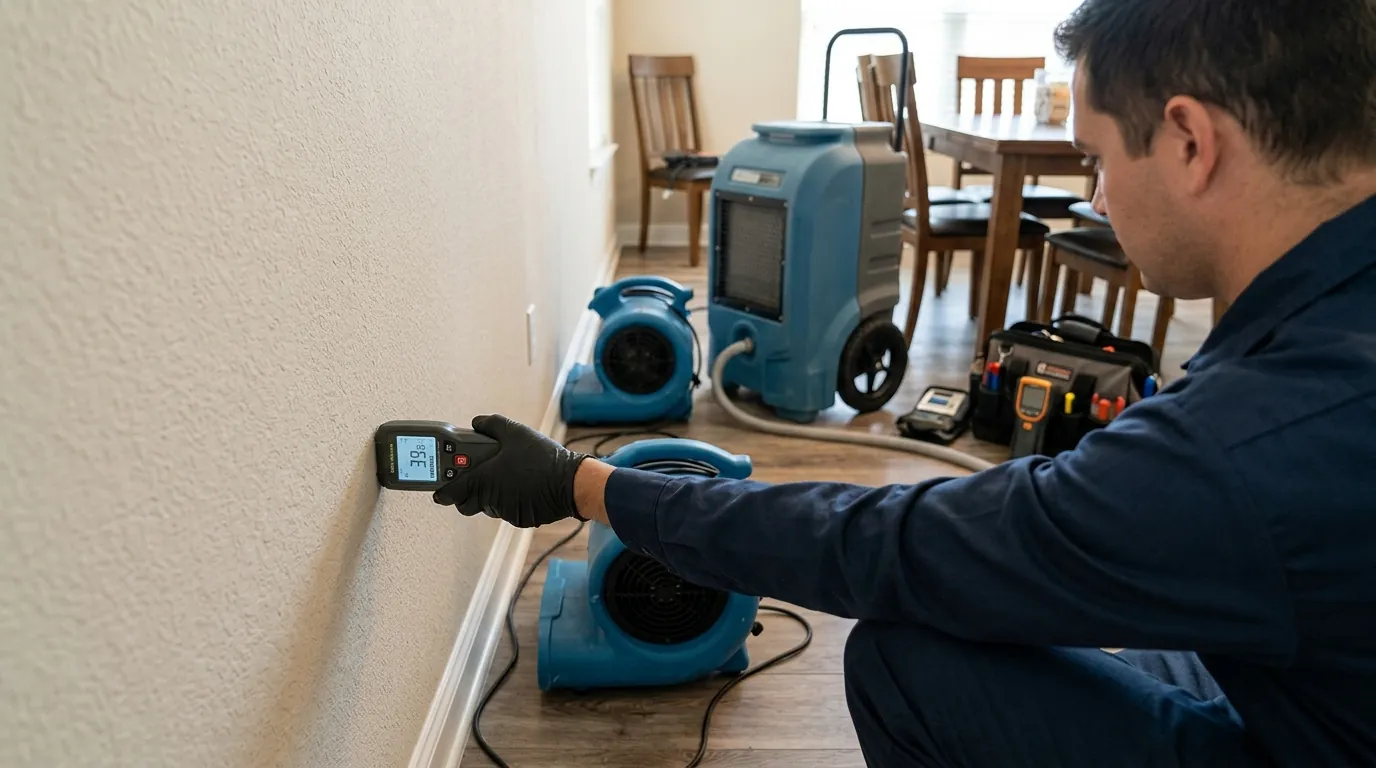
Each visit follows the same routine. We read every marked spot with pin and pinless moisture meters, check the temperature and humidity in the room and at the dehumidifier exhaust, and compare the numbers with the last visit. If a spot is not moving, we change the setup: turn an air mover, lay drying mats on a hardwood floor, or open a cavity that is holding water.
Those readings are the core of moisture mapping, and they become part of the job file your adjuster reviews. They also protect you later. A wall signed off by feel can hide wet framing that turns up as mold or peeling paint months afterward. You can see how the whole structural drying setup works on its own page.
What you can do to help it finish sooner
A few household habits make a real difference to the finish date.
- Leave every machine running, day and night, unless we say otherwise.
- Keep exterior doors and windows shut in the drying area.
- Leave the thermostat where we set it.
- Do not move air movers or close the plastic flaps we put up.
- Tell us if a breaker trips or a machine stops, so no drying time is lost.
- Give us access for readings on each scheduled visit.
Cutting the end of the job short is the one shortcut to avoid, because a cavity closed up wet gives mold exactly what it needs. Our article on how quickly mold starts after a leak covers that timing.
After the dry readings: repairs and putting rooms back
Drying and rebuilding are separate stages. Once the readings hit their goals, the equipment leaves and the openings get closed up. That means new drywall where flood cuts were made, baseboards back on, carpet re-stretched over new pad, then texture and paint matched. That stage is repair after water damage, and its timing depends on materials and the approved scope.
Cupped hardwood is left to settle before anyone sands it. Sanding a cupped floor before the wood is fully dry can leave it crowned, with the board centers higher than the edges, once the last moisture leaves.
Drying time questions
Because the finish line is a reading, and every material dries at its own rate. After the first few rounds of readings we can see the trend and give you a much better estimate for each room.
Ask us first. Air movers are loud, and we can sometimes turn a few down near a bedroom. Switching everything off overnight stops the drying and lets damp air settle back into the materials.
Yes, dehumidifiers and air movers draw power around the clock. Note the dates the equipment ran, and ask your adjuster whether the extra electricity can be included in the claim.
Small holes behind the baseboard let us push dry air into a wet cavity without cutting the drywall out. The baseboard covers them when it goes back on, and the wall can often be saved instead of replaced.
No. Many cupped hardwood floors flatten partly or fully as they dry. The floor is judged after the readings settle, and only then does anyone decide on sanding, board replacement or new flooring. See hardwood floor drying for detail.
