Quick answer
Pet urine smell comes back because the urine went deeper than the cleaning did. It passes the carpet, spreads in the pad, and can reach the tack strip and the subfloor, and the residue left behind pulls moisture from humid air and releases odor again. Lasting removal means treating every layer the urine reached, not only the fibers you can see.
Where urine goes in the first minute
Fresh urine is mostly water carrying urea, salts and other waste. Carpet fiber holds very little of it. The liquid runs through the backing into the pad, which spreads it sideways like a sponge, so the stain below often covers more floor than the one you can see.
As the water evaporates, bacteria break the urea down into ammonia, the sharp smell of a fresh accident. What stays behind is a dried film of salts and bacterial byproducts bound into the pad and the base of the fiber. That film is why a spot can look clean and still smell. Cat urine adds sulfur compounds that are especially stubborn.
Why muggy days wake the odor back up
Dried urine residue is hygroscopic, meaning it pulls water out of the air. On a cool, dry day it sits quietly. When the air turns humid, the residue takes on moisture, the bacteria in it become active again, and the odor rises out of the floor.
That is why the smell can seem seasonal on the Gulf Coast. It fades in a dry winter week and returns with the first humid stretch of spring, or whenever the AC is off for a few days. In League City, where the air stays humid for much of the year, that cycle repeats often.
Mopping, a spilled drink and a carpet cleaning all do the same thing on purpose. They rewet the residue, and the smell follows.
Why a carpet cleaning can make it worse for a few days
A general carpet cleaning pushes rinse water into the pile, and some of it reaches the residue in the pad. The wand recovers most of the water from the fiber but very little from the foam below. As the pad dries, dissolved residue wicks back up into the carpet, and the odor can be stronger than before.
Products matter as well. Store-bought deodorizers mostly add fragrance, and the urine smell is still there when the fragrance fades. Enzyme treatments do break the residue down, but they need contact, time and moderate temperature, so they belong before the hot rinse, not mixed into it.
Pad, tack strip, subfloor and walls: where the smell hides
A spot a pet has used more than once usually reaches several layers, and each layer needs its own fix:
- Carpet fiber and backing: flooded with treatment and pulled back out with a subsurface extraction tool that seals against the carpet.
- Pad: a soaked section is cut out and replaced, because foam holds residue that a rinse rarely clears completely.
- Tack strip: the wooden strip along the wall absorbs urine in corners, where pets like to go, and is replaced rather than cleaned.
- Subfloor: an upstairs wood subfloor or a downstairs slab soaks urine up through the pad, so it is treated, dried and sealed where the stain went deep.
- Baseboards and drywall: dogs that lift a leg and cats that spray mark walls, and urine wicks into the bottom of the drywall and behind the trim.
That layered approach is the core of pet urine and odor treatment. A cleaning that stops at the fiber smells fresh the day it is done and smells like urine again by the next humid spell.
Odor back after a cleaning? Call and ask about treating the pad and subfloor.
Call (832) 737-0315Finding the spots nobody knew about
Many homes with a urine odor have more spots than the owners realize. Old deposits dry invisible on many carpet colors, and a pet can still detect them long after people stop noticing.
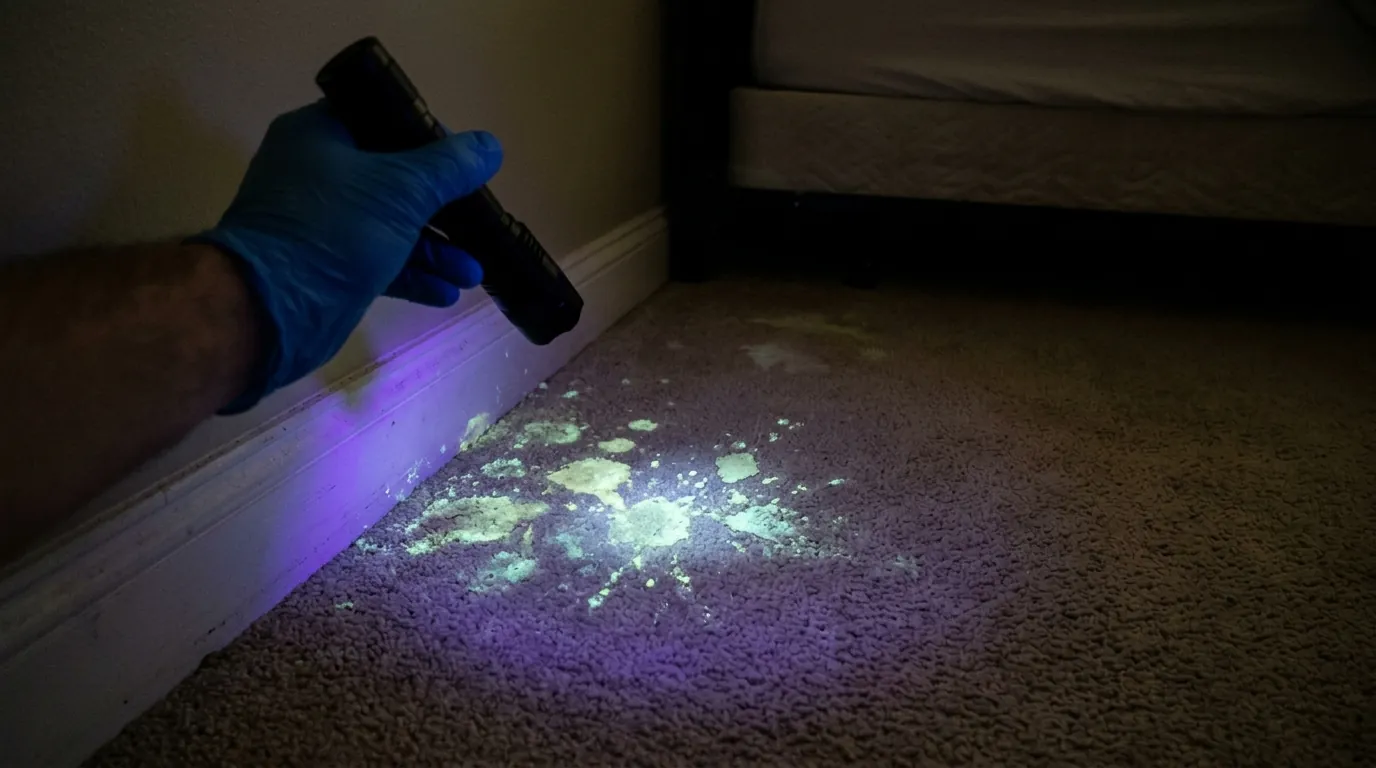
A UV light in a darkened room makes many urine deposits glow, which gives a first map. It is not perfect, since some cleaners and other stains glow too. So we confirm each suspect spot with a moisture probe. Urine residue reads damp even when the carpet is dry, because the salts hold water.
Mapping before treatment matters. Each spot left untreated is a reason for the pet to go back and a source for the smell to return.
Fresh accidents: what to do in the first ten minutes
Speed keeps a fresh accident out of the pad, and that is the single biggest thing a homeowner controls.
- Blot with a stack of white paper towels, standing on them to draw urine up, until a fresh towel comes away nearly dry.
- Apply an enzyme cleaner made for pet urine, using enough to reach the full depth of the accident, and leave it wet for the dwell time printed on the label.
- Avoid ammonia-based cleaners, since ammonia smells like urine to a pet and invites a repeat visit.
- Use one product at a time, because mixing products can cancel out what each one does.
- Keep the pet out of that room until the spot is fully treated and dry.
Bring in help when the smell covers a large area or several rooms, when spots return after treatment, when the carpet squishes, or when you smell it at the baseboards. Those signs mean urine is in the pad, tack strip or subfloor. Odor that has spread into upholstery, drywall or the whole house is a broader odor removal job.
When the carpet itself is past saving
Urine can bleach or shift carpet dye, and that color change stays even after the odor is gone. Repeated soaking can also weaken the latex that holds the backing layers together, so the layers loosen and pucker. The save-or-replace guide for wet carpet shows how to recognize that separation.
When a room has widespread dye damage or a separated backing, replacing the carpet and pad, and sealing the subfloor before the new carpet goes down, makes more sense than treating the same room every season. If the damage is limited to a small area, a carpet patch cut from a closet floor can sometimes replace it.
Questions pet owners ask about lingering urine odor
Rain usually raises indoor humidity, especially on cooler days when the AC runs less and removes less moisture. Dried urine residue absorbs that moisture and starts releasing odor again, which tells you residue is still sitting below the carpet.
On a fresh spot it can fully reach, often yes. Enzymes need contact and time, so they fail when too little product is used, when it dries too quickly, or when the urine sits in pad or subfloor below where the product went.
Usually not. Most cases clear with subsurface extraction, new pad in the worst spots and sealing of the subfloor underneath. Replacement makes sense when the dye is damaged, the backing has separated, or urine covers much of the room.
A strong, lingering ammonia smell is unpleasant and can irritate the eyes and airways of some people, especially in a closed room. For most homes the bigger problem is that the source keeps growing as pets return to the same spots.
A dog's nose is far keener than ours, so a spot that smells clean to you can still smell like a bathroom to the dog. Until every layer is treated, the spot reads as the right place to go. Blocking access while treatment dries helps break the habit.
