Quick answer
Stop the water first, at the fixture valve or the main shutoff. Then keep everyone away from wet outlets and sagging ceilings, photograph the damage before moving anything, and lift rugs, furniture and boxes off the wet floor. Call your insurer and a water damage company once the flow has stopped, because carpet pad and drywall keep soaking it up.
Minute one: find the valve that stops the water
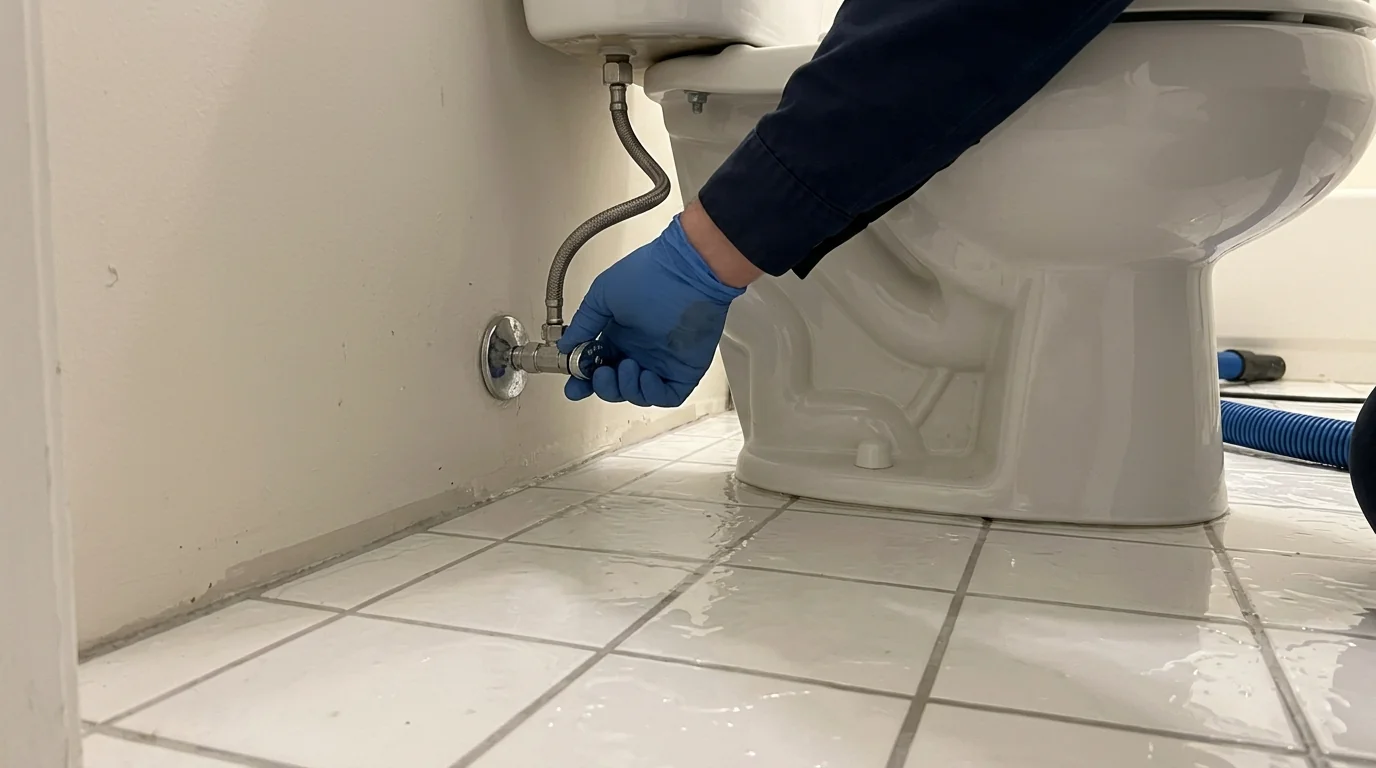
Every minute the water runs adds to what has to be dried or torn out, so the shutoff comes before towels, buckets or phone calls. Start at the fixture. Toilets, sinks and washing machines usually have a small stop valve on the wall or floor behind them, and the refrigerator line often has one under the kitchen sink. Turn the handle clockwise until it stops. If a braided supply hose has split, that one valve is often all you need.
If the water is coming from inside a wall, a ceiling or a line you cannot trace, go to the main shutoff. In many Houston-area slab homes it sits in the garage or on the outside wall where the water line enters the house. A leaking water heater is stopped at the cold supply valve on top of the tank, and its breaker or gas valve should be switched off too.
Water dripping from a ceiling in summer often comes from the attic air handler, where a clogged condensate line lets the drain pan overflow. Switching the system off at the thermostat stops it from making more water. Our page on ceiling and attic leaks covers what happens after that.
Make the room safe before you walk into it
Water and electricity share the same floor in most leaks. If water has reached outlets, power strips or cords lying on the carpet, do not wade in to unplug them. Shut off power to that area at the breaker panel only if you can reach the panel while standing on a dry floor. If you cannot do that safely, stay out of the room and call an electrician or the utility.
Look up before you walk under a wet ceiling. Drywall that bulges or sags is holding a surprising weight of water and can come down without warning. Keep children and pets out of the room, and leave ceiling lights and fans off in any ceiling that is dripping. If the water came from a toilet, a floor drain or outside, treat it as dirty and keep bare skin out of it.
Photograph it before you clean anything
Your adjuster may see the room days after the worst of it. Photos taken in the first hour show what they would otherwise miss: the depth of standing water, the stain line on the wall and the part that failed. Take wide shots of each room from the doorway, then close shots of the source, the floor and anything sitting in water. A short video walking through the house adds a timestamp.
Keep the broken part. A split supply hose, a cracked fitting or a failed washer valve is evidence of what happened, so ask the plumber to hand it back to you. Write down when you found the water and when you stopped it. We add moisture readings and an itemized scope to that record through our insurance documentation help.
Lift what water ruins fastest off the floor
Some belongings lose the race against water quickly, and most of them are easy to move. Pull area rugs off wet carpet, since a rug can bleed its dye into the carpet below. Slide foil squares or plastic lids under the legs of wood furniture that has to stay, which keeps stain and rust marks off the carpet.
- Rugs, floor cushions and pet beds sitting on the wet area.
- Books, paper files, boxed photos and children's artwork.
- Electronics, chargers and power strips, once the power is off.
- Cardboard boxes in closets, which wick water up from the bottom.
Leave heavy pieces, built-ins and anything you cannot lift without wading. Those can be blocked up or moved during a contents pack-out once the water is out.
Cannot find the shutoff or the source? Call and stay on the line with us.
Call (832) 737-0315Five mistakes that turn a small leak into a big job
Most of what we tear out after a leak was ruined by water that sat, not water that ran. A few common reactions make that worse.
- Running a household vacuum over wet carpet. It is not built for water and creates a shock risk.
- Shutting the house up and turning the heat on. Warm, still, damp air speeds up odor and mold.
- Pulling carpet off the tack strip bare-handed. The strip is studded with sharp pins.
- Spraying bleach on wet drywall. It dries nothing and adds more water to the wall.
- Waiting to see whether it dries on its own. Pad and drywall hold water long after the surface feels dry.
A wet/dry shop vacuum on tile or vinyl is fine for a small spill. When water has reached the carpet pad or crept past the baseboard, it needs professional water extraction and measured drying, not box fans pointed at the floor.
Is it clean water, gray water or sewage?
Where the water came from decides what can be saved, so it helps to know before anyone starts pulling up flooring. A burst supply line, a leaking water heater or a sink overflow starts as clean water. A washing machine drain or a dishwasher gives you gray water. A toilet backing up from the sewer line, or water that came in from outside, is the dirtiest kind and can carry bacteria.
Our guide to the three water categories explains what each one means for carpet, pad and drywall. If the source is a sewer backup, skip the towels and keep everyone out of the room, because sewage backup cleanup follows a stricter set of rules.
Who to call, and in what order
Call a plumber if the leak is in a pipe you cannot isolate, and call your insurance carrier to report the loss and get a claim number. Policies generally ask you to take reasonable steps to keep damage from spreading, so starting extraction and drying is normally part of meeting that duty. See what homeowners insurance usually covers for the general picture, then read the water section of your own policy.
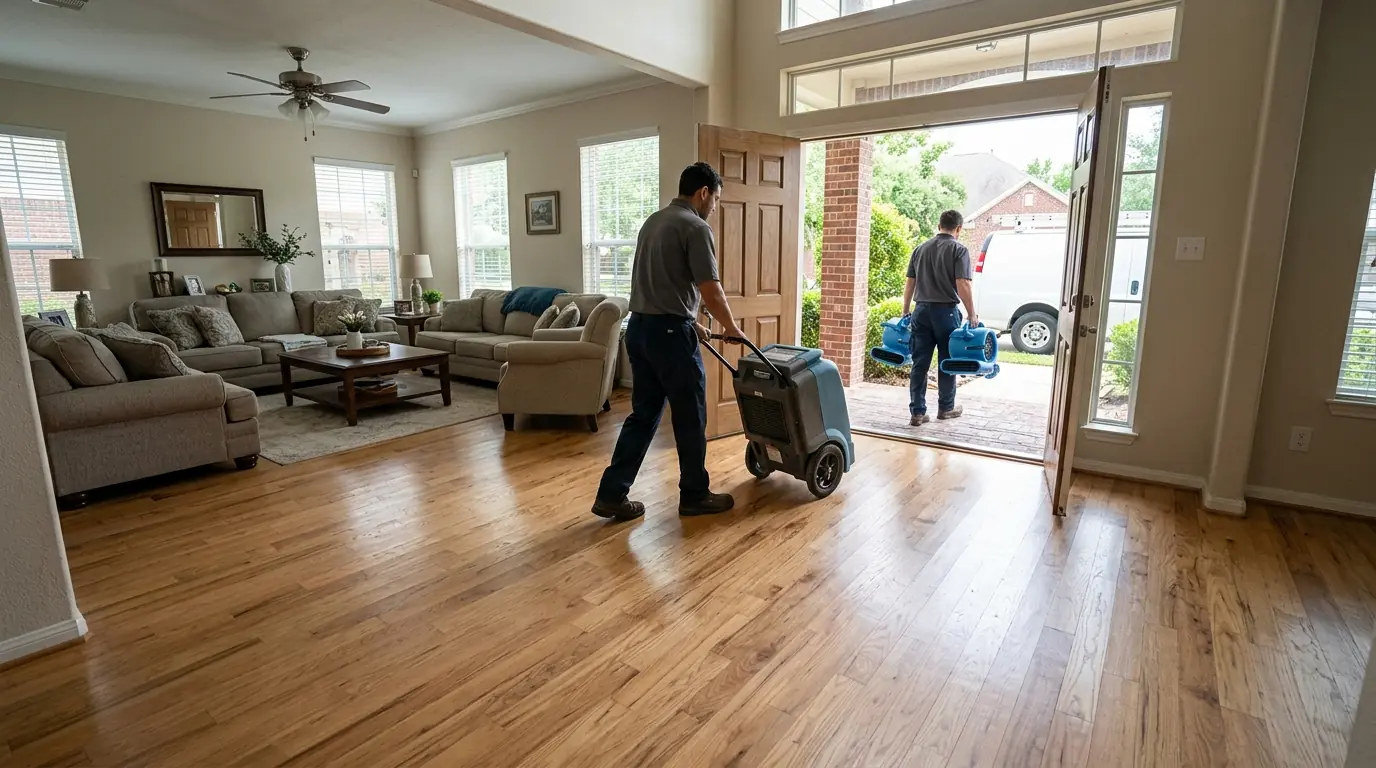
Then call us. We answer 24/7, and the first thing we do on the phone is make sure the water is off. In the house, we read every wet material with meters, sort the water by category and set drying where the readings point. Those same readings tell us when the house is actually dry.
First-hour questions we hear on the phone
Usually, if the water was clean, power to the wet rooms is off and no ceiling is sagging. A sewage backup, a burning electrical smell or water near the breaker panel are reasons to stay elsewhere until those are dealt with.
On tile, vinyl or sealed wood with a small spill, they can. Once water has soaked into carpet pad or wicked up drywall, towels and box fans dry the surface and leave the water underneath, where it keeps feeding odor and mold.
Usually not. Photograph everything, report the loss and keep the failed part. Carriers normally expect drying to begin while the claim is open, since waiting lets the damage grow. If you are unsure, check your own policy or ask your agent.
Check the garage walls, the outside walls near a hose bib and the meter box in the yard near the street. The meter box valve may need a meter key. If none of those work, call us and we will help you track it down by phone.
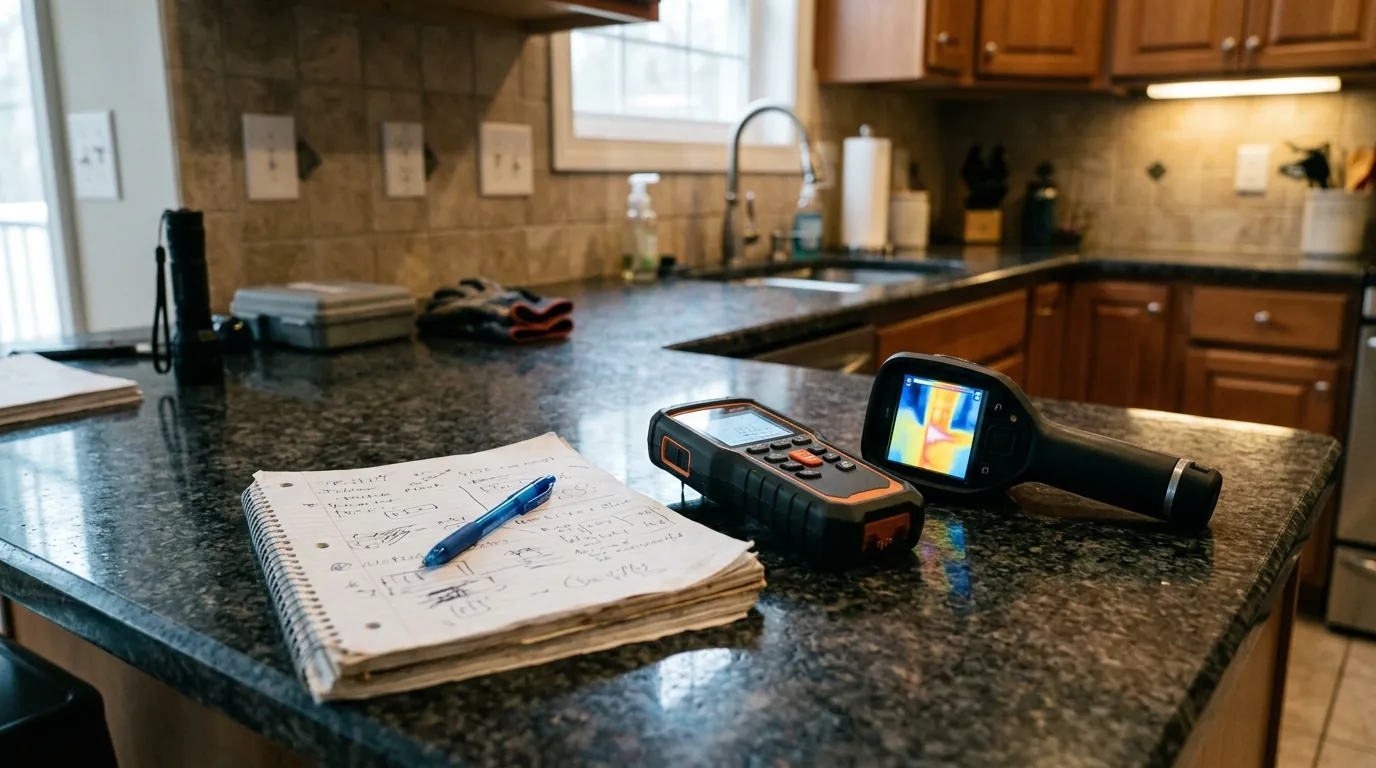
Look for baseboards that feel soft, paint that bubbles or a damp line creeping up the drywall. Often there is nothing to see, which is why we check walls with moisture meters and a thermal camera instead of guessing from the surface.
