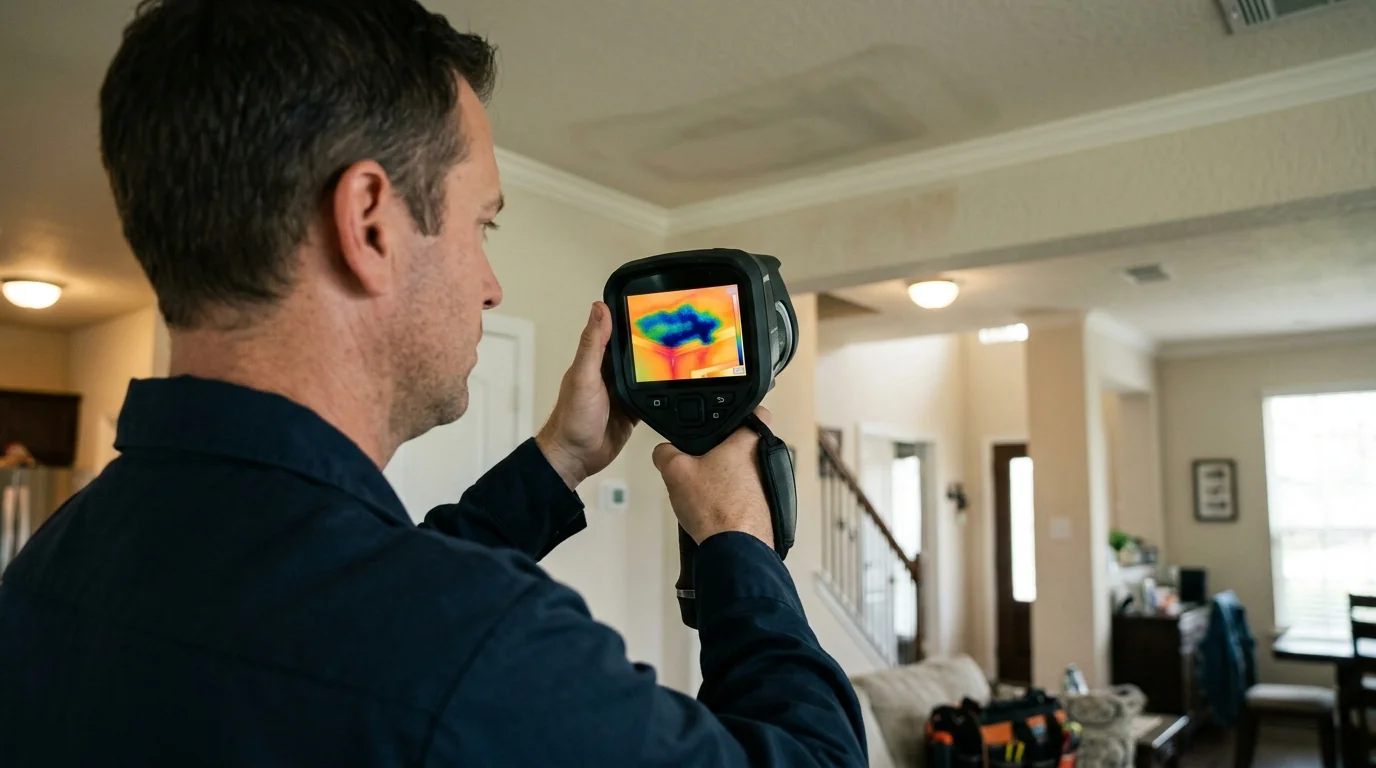
Quick answer
Category 1 is clean water from a sanitary source, such as a burst supply line. Category 2 is gray water with real contamination, such as a washing machine drain. Category 3 is grossly contaminated water, such as sewage or floodwater from outside. The category sets how much carpet, pad and drywall can be saved, and water can slide into a worse category as it sits.
Where the three categories come from
Restorers and insurance adjusters mostly work from the same reference, the IICRC S500 standard for water damage. It sorts water by how contaminated it is, not by how much of it there is. That distinction matters, because a little sewage under a vanity can call for more removal than clean water spread across a whole living room.
The same standard has a second scale, the drying class, which describes how much water the materials took on and how hard they will be to dry. Class runs from 1, a small area with little absorbed water, to 4, dense materials like hardwood, plaster and concrete that need specialty drying. Category is about safety and what to keep. Class is about equipment and time.
Category 1: clean water, and why speed still matters
Category 1 water comes from a sanitary source and poses no substantial risk if someone touches or swallows it. Typical examples are a split supply line to a toilet or sink, a leaking water heater tank, a refrigerator ice maker line and a bathtub that overflowed with no soap or soil in it. Rain falling straight through a roof opening can start here too, though wind-driven hurricane rain is classed differently.
This is the category with the most room to save things. Carpet and pad can often be extracted and dried where they lie, and a wall that meters back down to its dry reading can stay up. The catch is that clean water does not stay clean. It picks up dust, soil and whatever lives in the carpet backing. A clean loss that sits in a warm house can be handled as Category 2 by the time anyone measures it. Supply line and burst pipe leaks are the classic Category 1 job.
Category 2: gray water from appliances and drains
Category 2 water carries enough contamination that it can make people sick if they touch or swallow it. The usual sources in a house are a washing machine drain hose, a dishwasher discharge and a toilet overflow with urine but no feces. A broken aquarium belongs here, and an overflowing attic AC drain pan that has grown slime is often treated the same way.
With gray water the carpet pad is normally removed and thrown out, because its foam holds the contamination and cannot be cleaned through. The carpet itself can often be cleaned, treated and dried in place. Hard flooring, cabinets and drywall are judged on how long the water sat and how far it wicked. Every surface it touched is cleaned and given an antimicrobial treatment before drying is finished. Washer and dishwasher leaks are typical gray water jobs.
Category 3: sewage, floodwater and anything from outside
Category 3 is grossly contaminated water that can carry bacteria, viruses, chemicals and silt. It includes sewage, a toilet backing up from beyond its trap, and any water that rises from a creek, a bayou or the street and comes in under the door. Seawater and wind-driven rain from a hurricane are placed here as well.
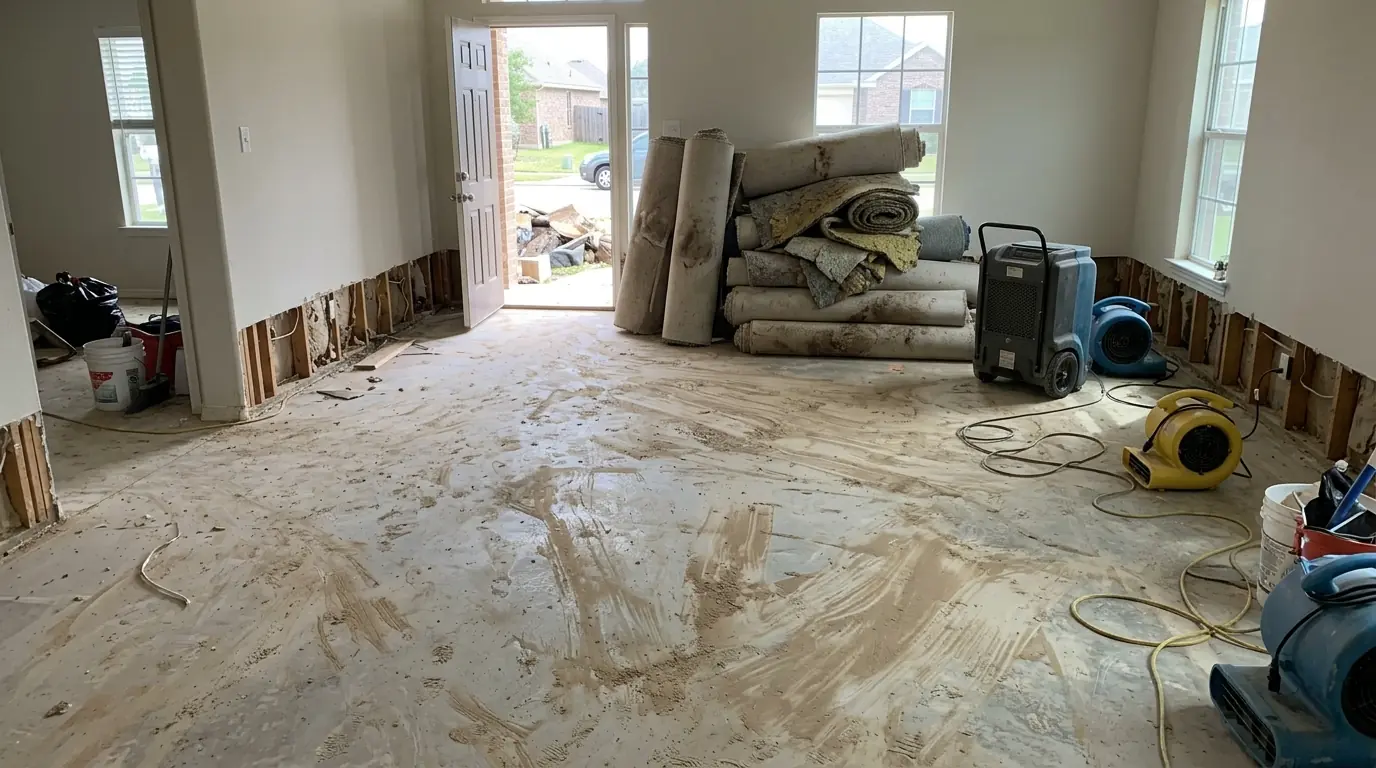
Porous materials that Category 3 water touches are removed and bagged, not cleaned. That means carpet, pad, drywall up past the wet line, wet insulation, mattresses and most upholstered furniture. Studs, slab, tile and solid wood furniture can usually be cleaned, treated and dried. We close the work area off with plastic and wear gloves, boots and respirators during tear-out.
In League City, Clear Creek rising is a flood story that keeps coming back. Creek water that reaches a house is Category 3 from the first minute, however clear it looks. Our flood cleanup and sewage cleanup pages walk through how those jobs run.
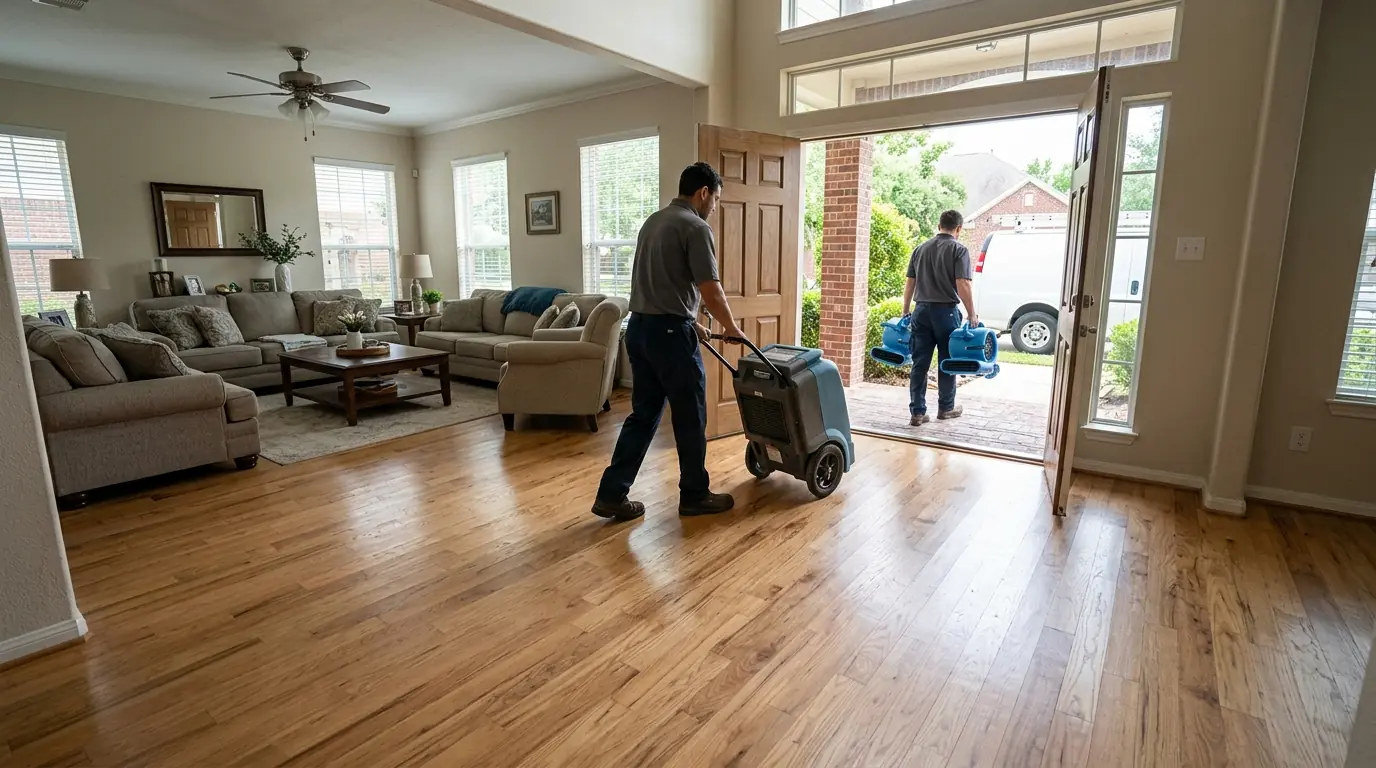
Not sure what kind of water it is? Call and describe the source to us.
Call (832) 737-0315How a leak slides from one category to the next
Categories are not fixed at the moment of the leak. Water gets worse with time, warmth and contact with dirty materials. Clean water that runs across a dusty subfloor, soaks into old pad or sits under a vanity begins to grow bacteria. That is why the category we write down reflects what we find in the house, not only the source.
Heat speeds the change. League City's hot season stretches about four months, from late May to late September, and August highs average 91 degrees. A water heater that leaks into a closed garage in August will not hold Category 1 for long. Gray water drifts toward Category 3 the same way, which is one more reason to get extraction started early.
What each category means for carpet, pad and walls
The category drives most of what you will see on the scope of work. Here is the usual starting point for each one, before readings and time are factored in.
- Category 1: carpet and pad usually dried in place, and drywall kept if it reaches its dry reading.
- Category 2: pad removed and discarded, carpet cleaned and often dried in place, and drywall judged on wicking and time.
- Category 3: carpet, pad and wet drywall removed, flood cuts made above the wet line, and studs and slab cleaned and treated.
These are starting points, not rules for every room. A Category 1 loss that sat too long may still lose its pad, and a solid cabinet in a Category 2 kitchen can often be saved. If carpet is the question, our article on saving or replacing wet carpet goes further.
Staying safe at home before anyone arrives
If you are not sure of the category, treat the water as the dirtier one. Keep children, pets and anyone with a weak immune system out of the room. Wear rubber gloves and boots if you have to step in, and wash your hands and clothes afterward. For a sewage backup, turn off the air handler if its return grille sits in the affected area, so it does not pull that air through the house.
When you call, tell us exactly what overflowed or came in. That one detail lets us bring the right protective gear and set honest expectations about what can stay. If water is still moving, our first-hour checklist covers shutoffs and safety.
Water category questions homeowners ask
The restorer in the house makes the first call, based on the source, how long the water sat and what it ran across. Your adjuster reviews it, so we record the source, photos and readings that support the category in the job file.
Not by the time it overflows. An attic condensate pan collects dust, and the standing water in it often grows slime. Water spilling from it is usually treated as Category 2, even though the condensate starts out as moisture pulled from the air.
Wall-to-wall carpet and pad that Category 3 water soaked are removed, because the contamination gets into the backing and pad where cleaning cannot reach. Some area rugs can be saved with specialized rug cleaning, judged case by case, with no promise of the result.
It affects how much is removed and replaced, which shows up in the scope. It does not decide coverage on its own. What caused the water, and what your policy says about that cause, is what your carrier looks at.
Not usually. Solid wood and metal furniture can be cleaned and dried. Upholstered pieces that only got wet at the feet can often be cleaned as well. Anything that soaked gray water up into its cushions is judged one piece at a time.
