Quick answer
Ask any water damage company five things before work starts: whether they measure moisture and share the readings, whether they explain the water category before tearing anything out, whether you get a written scope, how they document the job for your adjuster, and who handles your belongings. Specific answers to those five predict a well-run job.
Will you measure moisture and show me the readings?
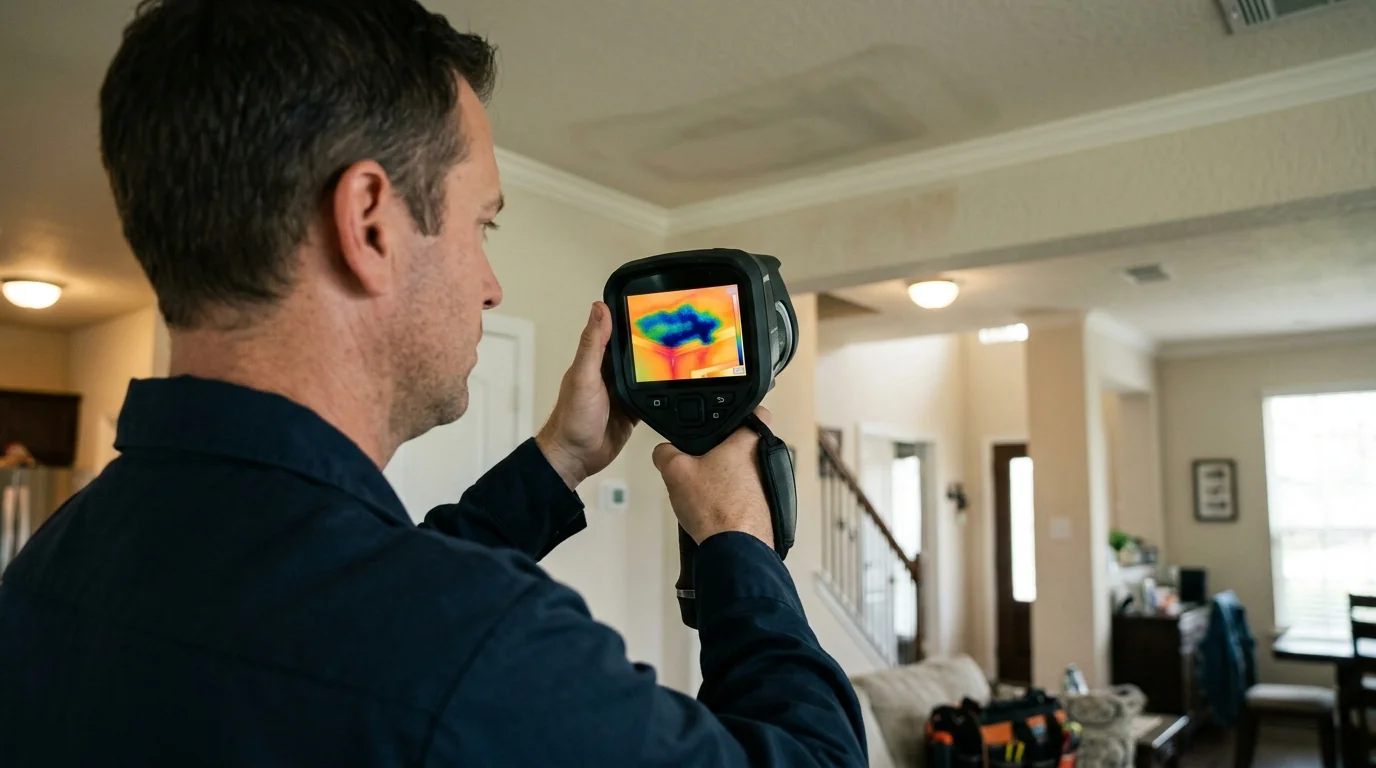
Drying is a measured job. Drywall, framing, subfloor and carpet pad each have moisture levels that pin and pinless meters can read, and a thermal camera shows the cool patterns that point to water behind surfaces. A company that measures can tell you which materials are wet, how wet, and how far the water went.
Listen for how they decide the job is done. A sound answer sets a dry goal from readings taken on matching, undamaged material elsewhere in the house, then reads the same marked spots on every visit until the wet areas match. Those readings should be written down and given to you, not carried in someone's head.
Ask what happens if the readings stop dropping. Drying stalls for reasons, such as water trapped behind a cabinet or vinyl wallpaper holding moisture in, and the plan should change when the readings say so. Our moisture mapping page shows what that record looks like, and our article on how long drying takes explains what sets the schedule.
Will you name the water category before anything comes out?
What gets torn out depends heavily on the category. Clean water from a supply line often lets carpet, pad and drywall dry in place. Gray water from an appliance usually means new pad. Sewage or floodwater from outside means porous materials are removed. Our explainer on Category 1, 2 and 3 water goes through each one.
Ask the company to name the category and say why before the first cut. Then ask what will be removed, what will be dried in place, and what would change that plan. A clear answer sounds like this: the water is Category 1, the carpet and pad can be dried, and the bottom of this wall gets opened only if its readings do not come down.
Removal decisions should trace back to the readings and the category. Flood cuts are routine in a house where floodwater came in from outside, while one wet bathroom wall from a clean supply line may need no cut at all.
Can I see the scope in writing before the work grows?
A written scope lists what will be done, room by room: the area being dried, materials being removed, equipment being set, cleaning and antimicrobial steps, and anything held for later repair. It should exist early, before most of the work is billed, and be updated when the job changes.
Ask how changes are handled. If readings find water inside a wall nobody expected, the scope grows, and you should hear about it and see the change written down before that work starts. Ask too how the job is priced, whether by line item, by square foot or by equipment day, so the final invoice holds no surprises.
The scope should also show where drying ends and rebuilding begins. Putting drywall, baseboards, paint and flooring back is its own stage of work, and you should know whether the same company is quoting the repairs after drying or whether you will hire that part separately.
How will you document the job for my adjuster?
Your adjuster was not there when the water was on the floor. What they see is the file: photos of the source and the damage before anything moves, moisture readings from the first day and every day after, the equipment placed and for how long, and an itemized list of what was done. A well-kept file makes the claim easier to settle.
Ask whether estimates are written in the line-item format adjusters work with, and whether you get copies of the photos and drying logs. Ask whether the company talks with your adjuster directly or sends the file through you.
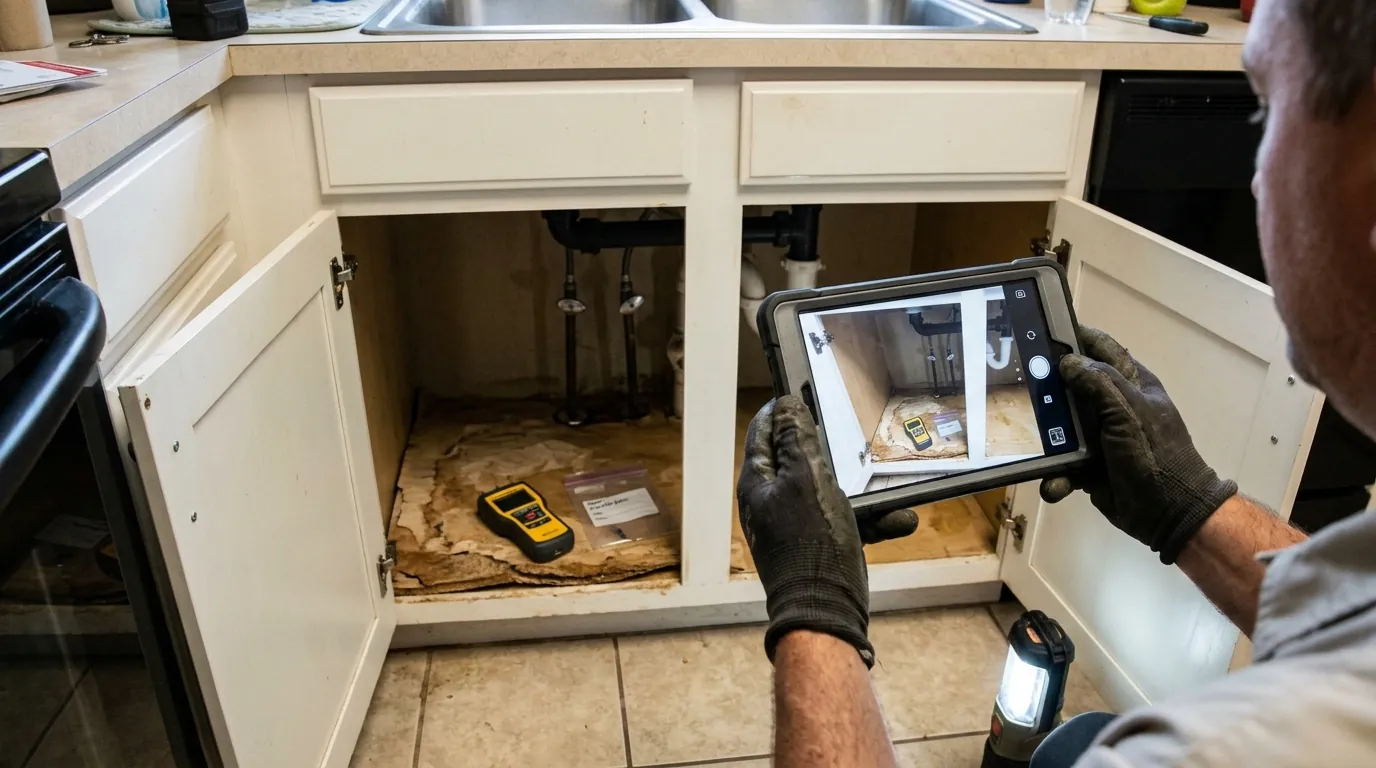
Ask about removed materials as well. Adjusters sometimes want to see them, so everything should be photographed before it goes to the curb, with labeled samples of carpet, pad and cabinet material kept back. Our page on help with claim paperwork covers that file in more detail.
Choosing help with water on the floor? Call and ask us all five questions.
Call (832) 737-0315Who handles my furniture and belongings?
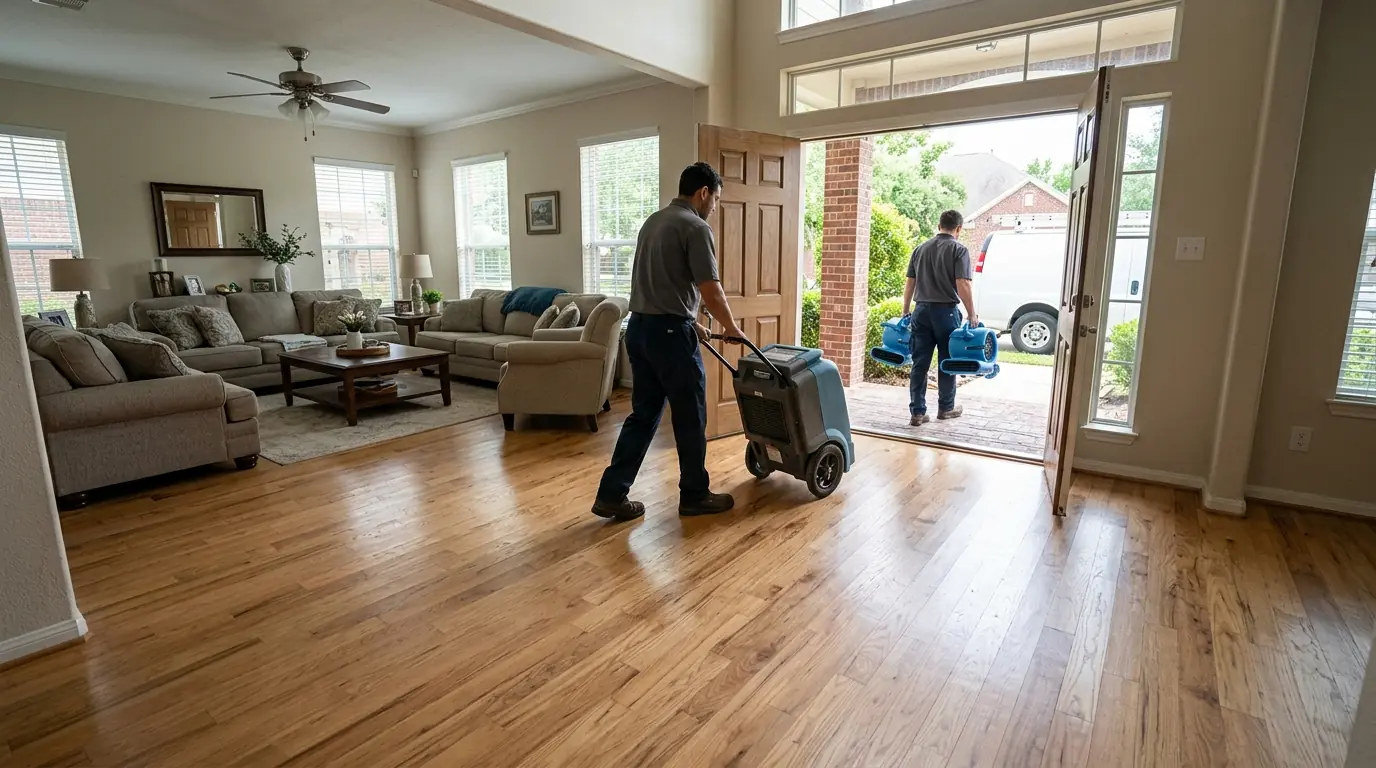
Water damage work moves around your things. Furniture comes off wet carpet, cabinets may need emptying, and a room being dried or rebuilt may need to be cleared entirely. Ask who does that, where the items go, and how they are tracked.
A careful answer covers a photo inventory before anything moves, boxes labeled by room, and a plan for wet items: what can be cleaned, what needs a specialist, and what is a loss. Items that cannot be saved should be photographed and listed before disposal, with your okay, because that list becomes part of the claim.
For bigger losses, contents pack-out means packing the affected rooms, moving everything out of the work area, cleaning what can be saved, and bringing it back when the rooms are ready.
More questions worth asking on the first call
A company that understands water will ask you questions on the first call too: where the water is coming from, whether it has stopped, how long it has run, what is wet, and whether anything smells like sewage. Then it is your turn.
- Who will be working in my house, and who do I call with questions during the job?
- How often will someone come back to take readings?
- What should I avoid while the equipment runs, such as switching it off at night or opening windows?
- What paperwork will you ask me to sign, and can I keep a copy of every page?
- What do you need from me, such as access, a claim number or decisions about belongings?
Read each form before you sign it. A work authorization lets the company start. Some forms also direct payment from the claim to the company or hand over rights under your policy, and you should know which kind you are signing.
Keeping your head when the whole street is calling for help
Harvey left roughly 19,000 houses and other structures damaged across Galveston County, the Galveston County Daily News reported. When that many buildings are hit at once, whole streets are looking for help together, and these questions are easiest to forget exactly when they matter most.
Good answers are specific. They name instruments, categories, documents and people, and they come with a willingness to show you the readings and explain a removal before it happens. An answer that stays vague on any of the five questions deserves a follow-up before you sign, whoever gives it, including us.
Questions about hiring help for water damage
Usually not. Most homeowner policies expect reasonable steps to stop further damage, and drying cannot wait for an inspection. Photograph everything first, keep samples of removed materials, and tell the adjuster that work has started.
Preferred company lists are common, and in many cases the choice of who works in your house stays with you. Read your policy and ask your adjuster how it works on your claim.
For the emergency drying, usually one, because water keeps spreading while you compare. Ask the five process questions on the phone and decide. For the repair stage after drying, there is time to compare written scopes from more than one company.
The date of each visit, the materials read, the reading at each marked spot, the dry goal for each material, the equipment running in each room, and notes on any change in plan. A photo of each reading, meter against the wall or floor, lets anyone verify it later.
Not always. Sewage, floodwater and swollen particleboard really do need to come out. Ask what category the water is, what the readings show, and why each removal is needed. A specific answer usually settles the question.
