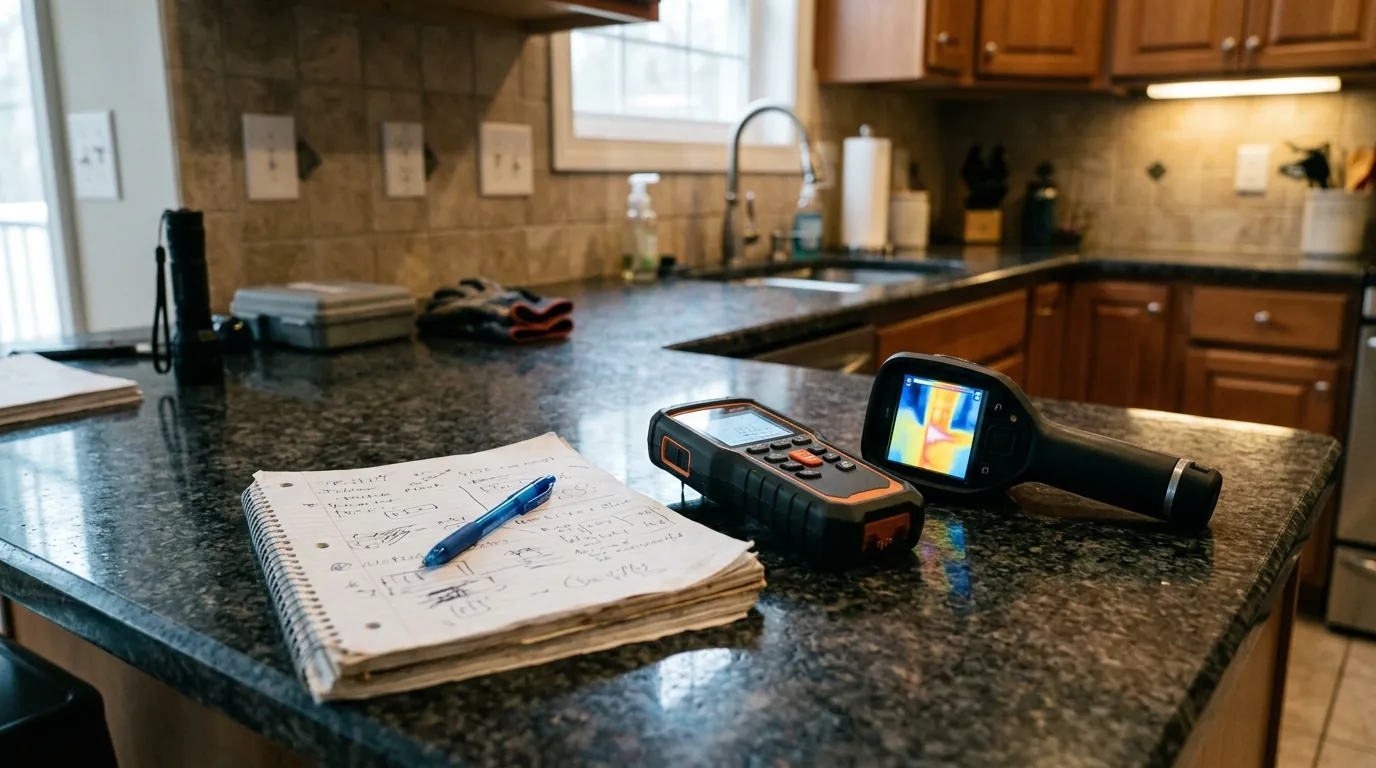
Quick answer
Hurricane season on the Gulf Coast runs June through November. Before June, check the roof, gutters and window seals on your League City house, and review your homeowners, wind and flood coverage. Record every room on video and learn how to shut off water and power. When a storm is coming, lift belongings off the floor and close up the house.
Three kinds of storm water, three different problems
Storm water gets into a house three ways. Wind-driven rain is pushed sideways through window frames, door thresholds, soffit vents and gaps in siding. Roof leaks come through shingles, flashing or decking that the wind has lifted or torn. Rising water comes in at floor level from flooded streets, creeks or storm surge. Each one calls for different prep, and each can fall under a different insurance policy.
The Gulf has delivered all three. Hurricane Ike came ashore on Galveston Island on September 13, 2008, and pushed a 12 to 15 foot surge across Harris County, where 2,550 homes flooded from surge and 1,300 more from rain. Harvey did its damage mostly with rain, and Galveston County counted about 19,000 damaged houses and structures.
The rainy months sit inside the season
A storm does not need a name to put water in a house. June and September are League City's rainiest months, averaging about 4.6 inches of rain each, and both fall inside hurricane season. A hard June downpour tests the same roof, gutters and door seals a hurricane would. Treat it as a dress rehearsal: note where water pooled or came in, and get it fixed before the busier part of the season.
Before June: the roof, gutters and gaps around windows
The quiet months are the time to find the openings a storm will use. Walk around the house and look at it the way water would.
- Shingles that are lifted, cracked or missing, and flashing pulled away at vents, chimneys and walls.
- Gutters packed with leaves, and downspouts that dump water against the slab instead of away from it.
- Dried, cracked caulk around window frames and exterior door trim.
- Door sweeps and threshold seals that let daylight through.
- Brick weep holes buried by mulch or soil. Clear them but never seal them, since they let wall moisture drain out.
- Water stains on the attic decking around vents, plus the AC condensate pan and its float switch.
Get roof damage repaired before the season rather than after the first storm finds it. If wind opens the roof anyway, emergency tarping and board-up keeps the next rain band out while repairs are lined up.
Paperwork to settle while the Gulf is calm
Read your homeowners policy, any separate windstorm policy and your flood policy, or confirm that you do not have one. New flood coverage generally has to clear a waiting period before it applies, so it needs to be in place long before a storm forms. Look at your wind or hurricane deductible too, since it is often figured differently from the regular one. Our guide to how homeowners and flood policies split water damage covers the general lines.
Then make a record of the house as it is today. Walk every room with your phone recording video, open closets and cabinets, and say out loud what you are filming. Photograph serial numbers on the TV, computers and major appliances. Save the files somewhere off the phone, and keep paper policies in a sealed plastic bag with your go-bag.
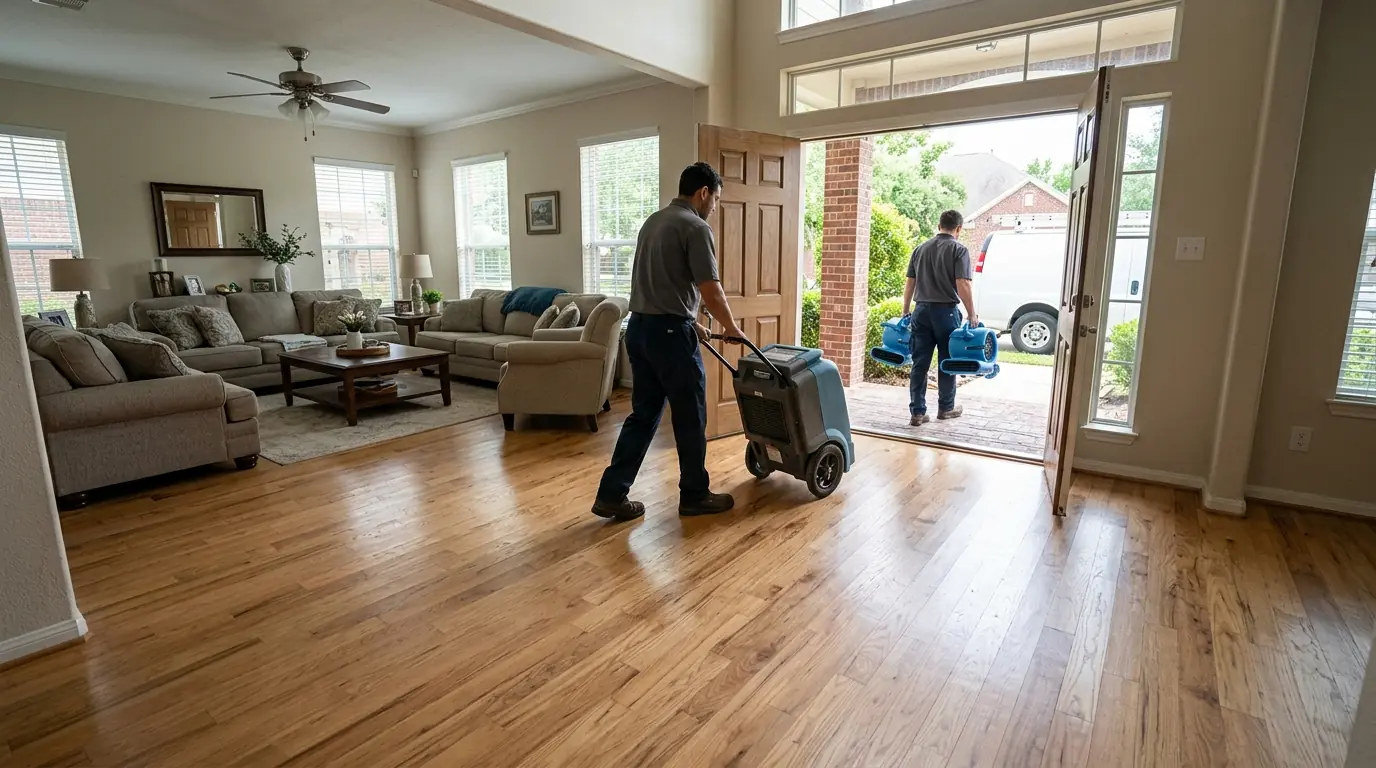
Storm water inside the house? Phone us day or night to plan the next steps.
Call (832) 737-0315When a storm is in the Gulf
Once a forecast track points at the upper Texas coast, the job shifts to protecting what is inside. Follow official evacuation orders first, because nothing on this list is worth staying for.
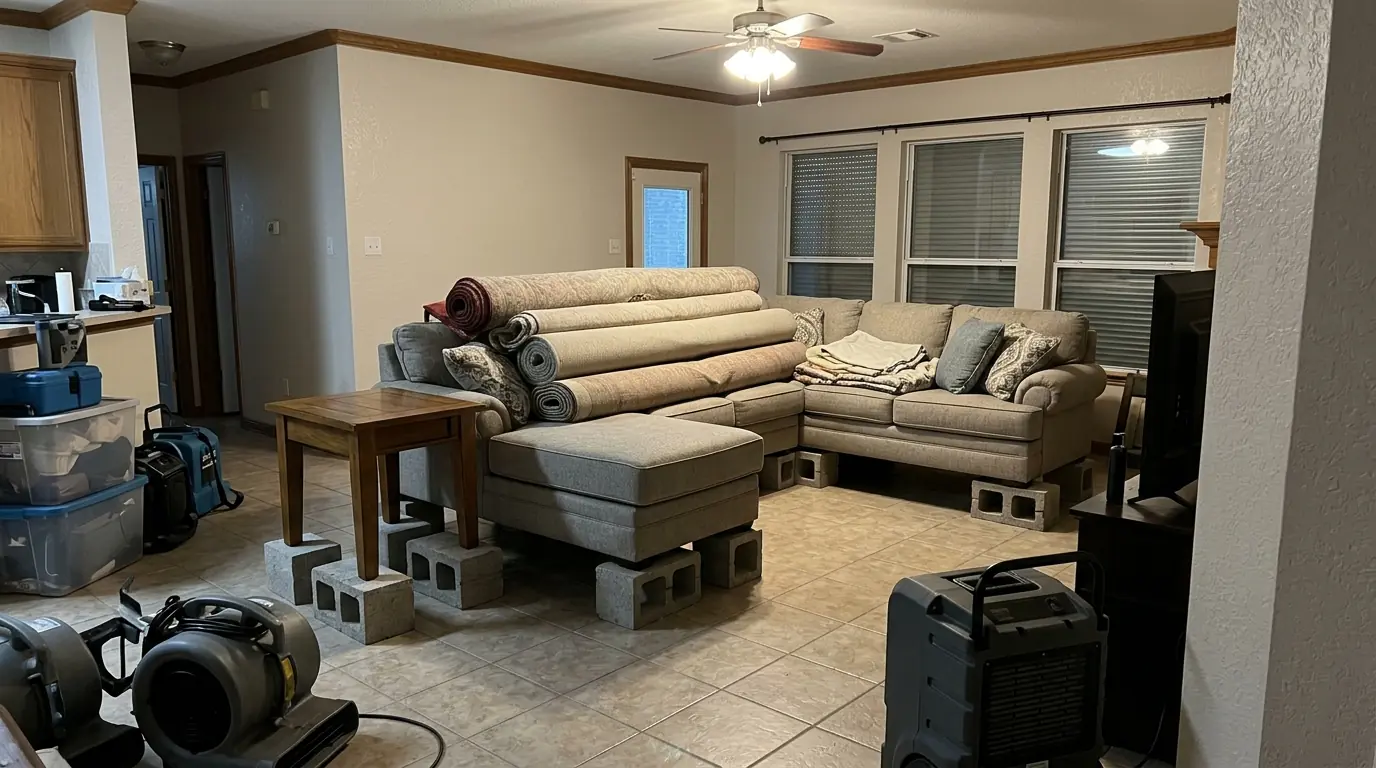
- Set furniture legs on blocks, and move rugs, electronics and boxes off the floor or upstairs.
- Empty lower kitchen and bathroom cabinets of paper goods and anything valuable.
- Put documents, photos and keepsakes in sealed bins on a high shelf.
- Bring in patio furniture and anything wind could throw through a window.
- Stage plastic sheeting, tape, towels and a wet/dry vacuum where you can reach them.
- Learn how to shut off the main water valve and the main breaker.
League City has installed stream gauges so residents can watch for flash flooding, and Clear Creek rising is something the city has faced again and again. Watch those readings as rain bands come through, not only the storm track.
If you evacuate, close the house up the right way
A house left shut for days in late summer can grow mold even if no storm water gets in. With the power out, the AC stops pulling humidity, and the air inside drifts toward the damp air outside.
Before you leave, turn off the main water valve so a failed supply line cannot run for days in an empty house. Switch off the water heater or set it to its vacation setting, unplug electronics and leave interior doors open so air can move. When you return and the power is safe, get the AC running right away, then walk every room looking and smelling for water before you unpack.
After the storm: safety, photos, then drying
Wait for officials to say it is safe to return, and walk the outside before you go in. Stay out of standing water inside until the power is off. Water that came in from outside during a hurricane, whether it rose or was driven in by wind, is treated as Category 3, and soaked carpet, pad and drywall will have to come out. Our explainer on water categories covers why.
Photograph everything before cleanup, including the water line on walls and furniture. Then start removing water and drying as soon as you can. Flood cuts take out the wet drywall and insulation along the bottom of the walls so the framing can dry. Roof and window leaks follow the path of storm water damage cleanup, and rising water goes through flood cleanup and restoration.
Hurricane water questions from League City homeowners
No. Tape does not keep glass from breaking and can leave larger, more dangerous shards. Shutters or fitted plywood protect the glass, and sound caulk and seals are what keep wind-driven rain out of the frame.
They can slow shallow water at a door, which buys time to move belongings. They do not seal a house, because water also finds gaps in the slab edge, the walls and the plumbing. Treat them as a delay, not a barrier.
Stay out of the attic while the wind is high. Set buckets and towels under drips, move belongings away and keep everyone out from under any ceiling that bulges. Call for tarping once the wind drops and the roof is safe to work on.
It depends on your policy and on how the water got in. Many policies treat rain differently depending on whether wind first broke an opening in the roof or a wall. Rain that seeps past closed windows with no wind damage may be excluded, so read your wind and water sections and ask your agent before the season.
As soon as the house is safe to enter and the power situation allows. Wet drywall and pad in a hot, humid house after a Gulf storm do not wait long before odor and mold set in. Photograph first, then extract and dry.
